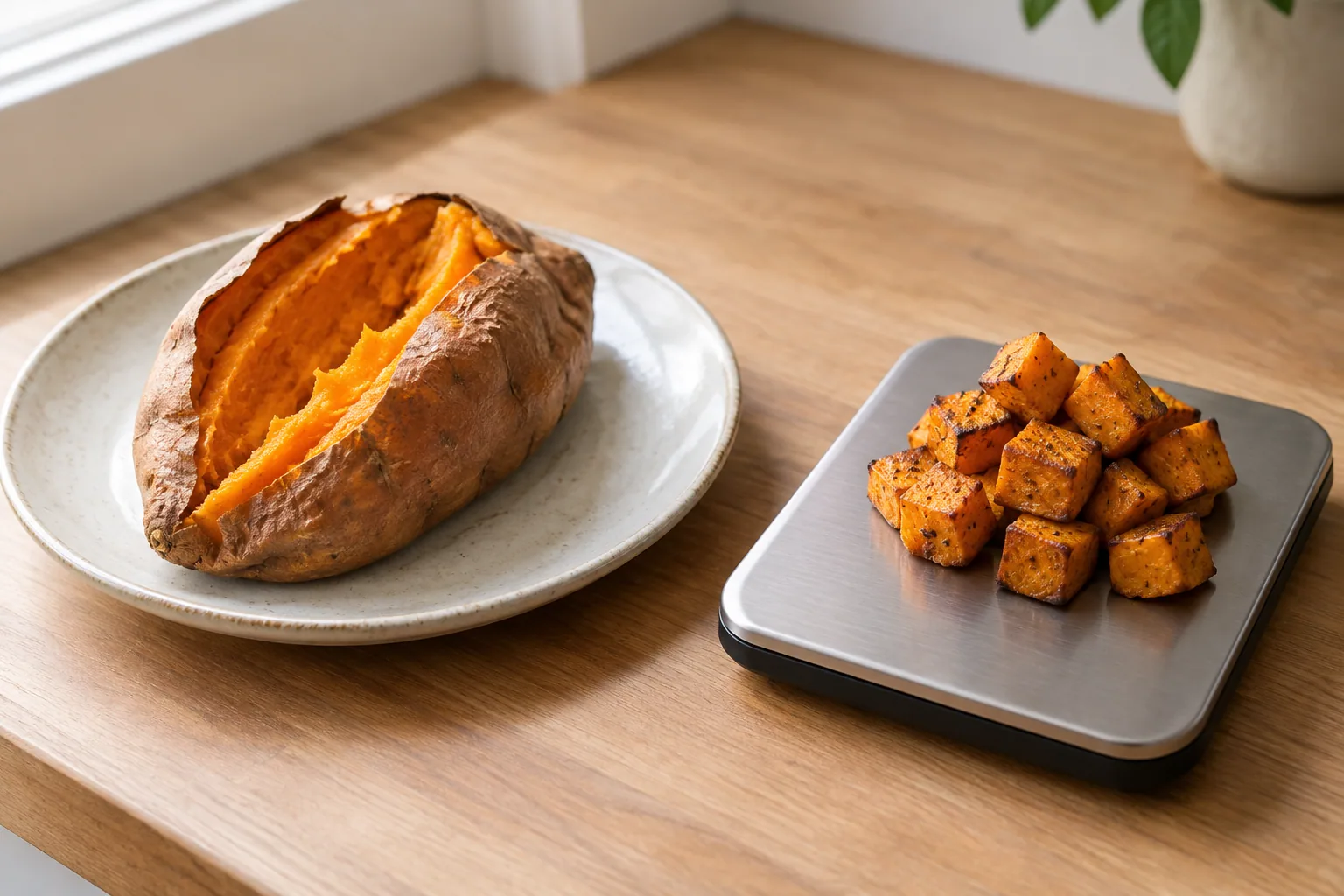
A 100 g serving of baked sweet potato flesh, cooked in its skin but eaten without the skin, has about 17.4 g net carbs. A 100 g serving boiled without skin has about 15.2 g net carbs. Those are weight-based portions, not counts for a whole potato, so weigh what you plan to eat before deciding how it fits your daily budget.
How many net carbs are in a sweet potato?
For plain sweet potato, calculate net carbs as total carbohydrate minus dietary fiber. The preparation and skin description matter: “baked in skin, flesh” describes the flesh cooked inside the peel, not a serving that includes the peel.
| Edible serving and preparation | Total carbohydrate | Fiber | Calculated net carbs | Nutrition reference |
|---|---|---|---|---|
| 100 g baked flesh, cooked in skin, without salt; skin excluded from serving | 20.7 g | 3.3 g | 17.4 g | Keto Recipes baked sweet potato reference |
| 100 g boiled sweet potato, without skin | 17.72 g | 2.5 g | 15.22 g, or about 15.2 g | Growables boiled sweet potato nutrition sheet |
These figures describe plain sweet potato. Butter, milk, sauces, sugar, and other additions need their own entries.
A “medium sweet potato” is less useful unless the nutrition entry specifies both its edible weight and preparation. Do not treat a flesh-only value as a verified count for a whole potato eaten with its skin.
Why weighing your portion beats counting one potato
Small, medium, and large are inconsistent shopping descriptions. You can get a more useful estimate by weighing the edible portion and matching it to the right nutrition entry.
- Choose the matching preparation. Use baked-flesh data for baked flesh or boiled-without-skin data for peeled, boiled sweet potato.
- Put your plate or bowl on a kitchen scale and zero it.
- Add only the sweet potato you will eat. Exclude discarded peel.
- Calculate: portion weight in grams ÷ 100 × net carbs per 100 g.
- Log toppings and other ingredients separately.
For example, 50 g of baked sweet potato flesh, with the skin excluded, provides about 8.7 g net carbs, calculated from the baked reference above: 50 ÷ 100 × 17.4.
Keep raw weights paired with raw nutrition data and cooked weights paired with matching cooked data. Weighing a potato before roasting, then applying a cooked value to that raw weight, mixes two different measurements.
Baked, boiled, mashed, and fried sweet potatoes compared
The equal-weight comparison above puts boiled, peeled sweet potato below baked flesh in net carbs per 100 g. Cooking changes water content, which changes how concentrated the carbohydrates are by weight; it does not make the carbohydrates disappear.
| What you are eating | Nutrition entry to choose | Common counting mistake |
|---|---|---|
| Baked sweet potato flesh | Baked flesh, with the same skin status as your serving | Counting an unweighed whole potato as “medium” |
| Boiled, peeled pieces | Boiled, without skin | Using the weight before boiling with cooked nutrition data |
| Plain mash | A matching plain mashed entry, or your measured boiled ingredients | Assuming every mash contains only sweet potato |
| Fries or packaged mash | The exact product’s nutrition label and stated serving | Using a generic plain sweet potato entry |
Plain mash and sweetened mash need different calculations
Mashing plain boiled sweet potato changes its shape, not the ingredients you need to count. For a homemade recipe, total the carbohydrates and fiber from all ingredients, then divide the batch into measured portions.
Milk, sugar, syrup, and sauces make a recipe different from plain mash. At a restaurant, ask: “Is the sweet potato mash plain, or does it contain milk, sugar, or syrup?” If the restaurant publishes nutrition information, use that specific side dish rather than a generic entry.
Frozen fries need a product-specific check
Frozen fries may include coatings or seasonings, so one brand’s values cannot stand in for another’s. Match the label’s serving weight and whether that weight refers to the product frozen or prepared.
Use a barcode check for the exact packaged fries, mash, or prepared side rather than relying on a plain sweet potato entry. Count any dipping sauce separately.
Can sweet potatoes fit your daily keto carb limit?
Sweet potatoes are relatively carb-dense, but the useful question is how much room your chosen portion leaves for everything else. A food does not become universally allowed or banned simply because you follow keto or eat low-carb.
The 50 g baked-flesh portion above uses about 8.7 g of your remaining net-carb budget, before you count the rest of the meal. If that exceeds what you have left, reduce the portion or choose another side. If it fits, still account for vegetables, dressings, sauces, drinks, and snacks.
A net-carb tracker with a customized daily budget can help you compare the serving with your remaining allowance. Fitting a numerical budget does not guarantee ketosis.
Ways to use a smaller portion or choose a substitute
Use sweet potato as one component of the meal rather than automatically making it the main side:
- Chicken salad topping: Add a weighed portion of plain cooked sweet potato, then log the dressing and other toppings separately.
- Roasted side: Serve a measured portion alongside protein and nonstarchy vegetables. Count glazes or sauces separately.
- Partial mash substitution: Replace part of the sweet potato with cauliflower. Expect a milder flavor and a different consistency, and calculate the full recipe.
- Roasting alternative: Try radishes or turnips if their flavor and texture suit your meal. They will not reproduce sweet potato’s sweetness exactly.
For another side-dish option, see the serving and preparation guidance for cabbage. If you shop the freezer aisle, this guide to frozen vegetables and seasoned or sauced products explains what to check.
For a packaged side, first check the actual serving on the label. Then scan its barcode in Keeto, adjust for the amount you intend to eat, and compare its net carbs with your remaining daily budget.
FAQ
Are sweet potatoes and yams the same for carb counting?
No. True yams and sweet potatoes are different foods, although some stores label sweet potatoes as “yams.” Check the package or produce description, then choose a nutrition entry that matches the actual food and preparation.
Do purple sweet potatoes have fewer net carbs than orange sweet potatoes?
Do not assume purple sweet potatoes have fewer net carbs based on color alone. You need comparable nutrition information for the specific varieties, with the same edible weight, preparation, and skin status. Before logging a portion, look for a variety-specific entry or the exact product label rather than applying a color-based discount.