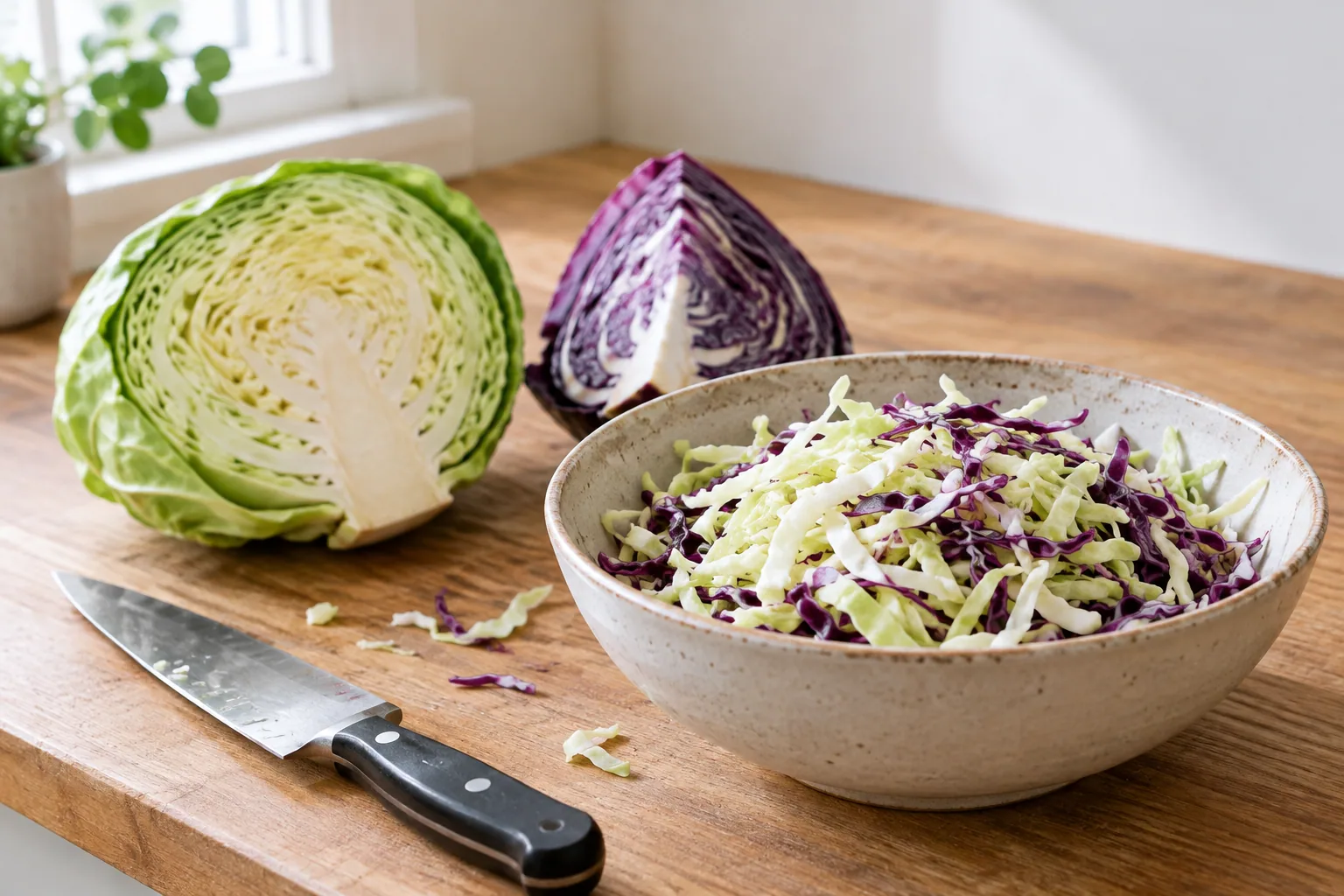
Plain cabbage can fit a keto diet, as long as your portion fits the carb budget you have left for the day. Check sweetened coleslaw, glazed cabbage, and dishes with sauces separately: they aren’t nutritionally interchangeable with plain cabbage.
Cabbage can fit a keto diet
You don’t need to avoid cabbage just because it contains carbohydrates. Count the portion you actually eat, along with the other ingredients in your meal. No single food guarantees that you’ll stay in ketosis.
For plain cabbage, net carbs means total carbohydrate minus dietary fiber. Use those figures from the same nutrition label or food database entry, and make sure the serving weight and raw or cooked state match your portion.
At the store, a whole head or a bag of plain shredded cabbage gives you control over the dressing, seasoning, and portion. A prepared cabbage salad needs a closer label check before you decide how much fits.
Compare cabbage varieties using the same serving weight
Green, red, savoy, and napa cabbage can all be options for a low-carb meal. Don’t assume they have identical carb counts, though, or substitute one variety’s nutrition entry for another when tracking closely.
Use the following 100-gram comparison portions to keep the measurement consistent. These are reference weights, not prescribed serving sizes. For carb figures, choose a matching USDA FoodData Central entry or the package’s nutrition label rather than using an unverified estimate.
| Cabbage variety | State to look up | Comparison portion | Practical use |
|---|---|---|---|
| Green | Raw | 100 g | Shred for slaw, sauté, or use leaves for wraps |
| Red | Raw | 100 g | Shred for salads or cook as a side; check for sweetened glazes |
| Savoy | Raw | 100 g | Use the crinkled leaves for wraps or slice into a skillet meal |
| Napa | Raw | 100 g | Chop for bowls, stir-fries, or soups |
A cup is not a fixed weight. Finely shredded cabbage packs differently from large chopped pieces, and pressing it into the cup changes how much you’re serving. A kitchen scale makes comparisons easier, especially if your remaining carb budget is small.
Red cabbage doesn’t need a separate yes-or-no keto rule. Look up red cabbage specifically, weigh your portion, and check what goes into the recipe. Braised red cabbage with sugar or a sweet glaze needs different accounting from plain shredded red cabbage.
Cooked cabbage needs a cooked serving entry
A cup of cooked cabbage is not interchangeable with a cup of raw shredded cabbage. Cooking softens the leaves and changes their water content, so more cabbage may fit into the same cup. Cooking does not make its carbohydrates disappear.
Match your tracking method to how you prepare it:
- Steaming: Weigh the cooked portion and use an entry for plain steamed cabbage when available. Count any sauce separately.
- Sautéing: For a skillet recipe, record the raw cabbage and other ingredients before cooking, then divide the finished dish into portions.
- Roasting: Track the ingredients for the whole tray, then account for the share you eat. Water loss can make a cooked serving smaller in volume without removing its carbs.
Avoid weighing cooked cabbage and logging it as the same weight of raw cabbage. For a batch recipe, a reliable approach is to total the ingredients first, weigh the finished batch, and calculate your portion’s share of that batch.
Onions, glazes, breading, and sauces belong in the meal calculation too. If you’re ordering out, ask: “Is the cabbage cooked with sugar, a glaze, or a premixed sauce? Can I get the sauce on the side?”
Check coleslaw, sauerkraut, and kimchi before buying
Plain shredded slaw mix is an ingredient. Dressed coleslaw is a finished recipe, often with ingredients you can’t judge by looking at the cabbage. If a mix includes carrots or other vegetables, use the blend’s label rather than logging the entire bag as cabbage.
Use this grocery-store checklist:
- Read the serving size and weight. Compare that amount with what you expect to eat, not just what the manufacturer calls a serving.
- Check total carbohydrate and fiber. Calculate net carbs for the labeled serving if that’s how you track your intake.
- Read the ingredients. Look for sugar, honey, syrup, fruit, starch, and sweetened dressings. Their presence calls for checking the amount, not an automatic rejection.
- Scale to your portion. If you eat more than the labeled serving, increase the carb amount accordingly.
- Check separate components. A slaw kit’s dressing or topping packet may need separate accounting. Read whether the nutrition information includes everything in the bag.
Sauerkraut and kimchi are not automatically carb-free because they’re fermented. Recipes vary, and sweetened pickled cabbage needs its own label check. Follow the label’s serving description, including whether it refers to drained cabbage or cabbage with liquid; draining isn’t a reliable way to calculate a carb reduction.
Keeto can scan packaged slaw mixes, fermented cabbage, and accompanying sauces to show net carbs and their share of your daily budget. You can use the keto barcode scanner while comparing products, then confirm that the portion you log matches what you eat.
If you’re also buying vegetables for later in the week, use this guide to choosing frozen vegetables for keto to assess other convenient options.
Build cabbage meals around the budget you have left
Start with your remaining daily carb allowance, then account for the whole meal rather than treating cabbage as unlimited. Choose a weighed portion, add the other ingredients, and adjust before cooking if the total doesn’t fit.
These combinations give you a straightforward starting point:
| Meal | How to build it | Ingredients to check separately |
|---|---|---|
| Cabbage and eggs | Sauté shredded cabbage, then add eggs | Onion, ketchup, bottled sauces, seasoning blends |
| Chicken cabbage bowl | Top raw or cooked cabbage with chicken | Marinades, dressing, sweet chili sauce, crunchy toppings |
| Cabbage-leaf wraps | Fill softened leaves with ground meat | Rice, breadcrumbs, tomato sauce, packaged filling mixes |
For a batch of cabbage wraps, count the cabbage, filling, and sauce for the entire recipe, then divide according to the portions you actually make. Don’t assume equal-looking wraps contain equal amounts of filling if you’re tracking closely.
To turn what’s already in your kitchen into dinner, manually enter cabbage and your available ingredients in the keto recipe generator. Start with a specific request, such as “Use cabbage, eggs, and chicken; avoid sweetened sauces,” then check the suggested portion and ingredient amounts against your remaining carb budget.