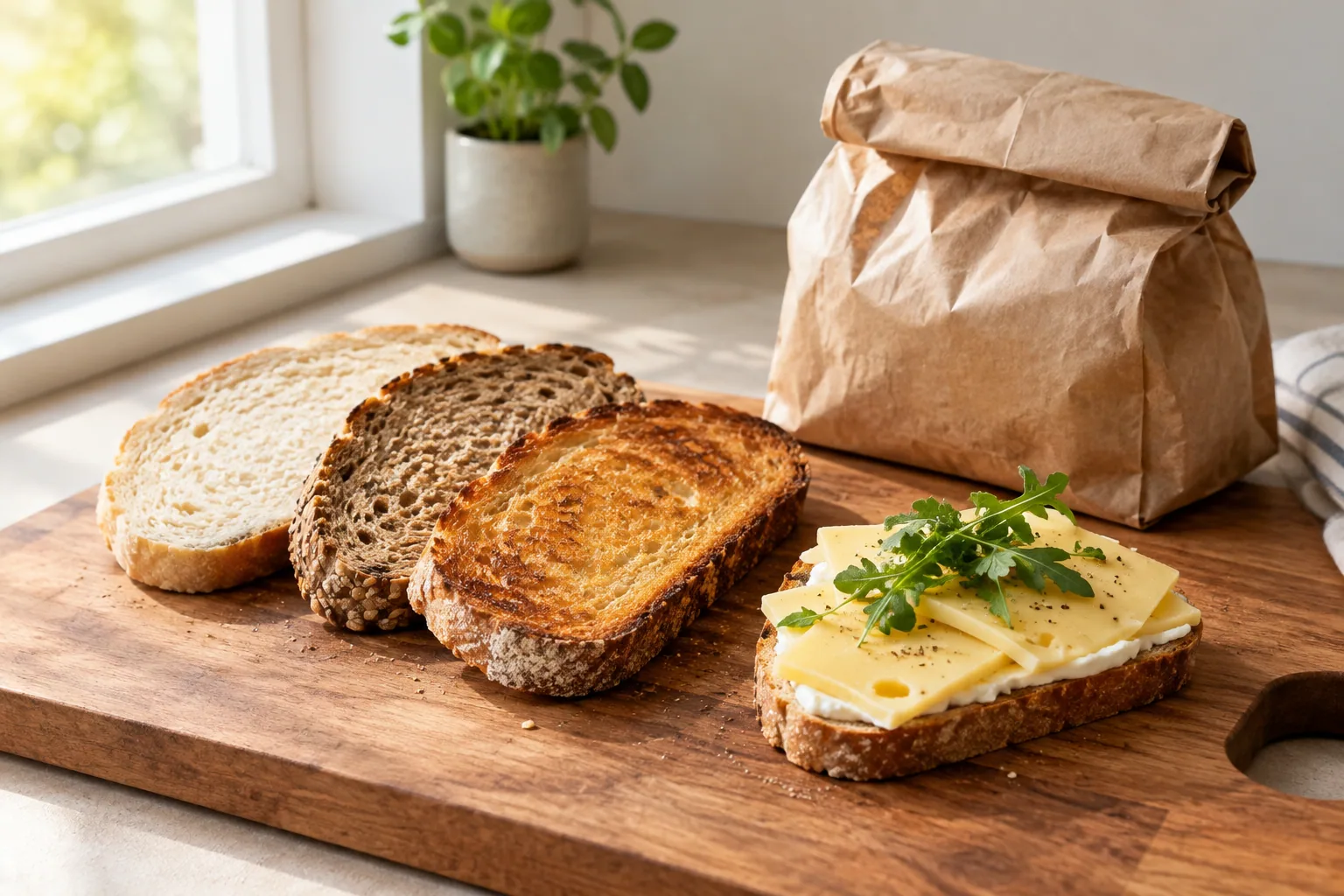
Start with Hero Bread Classic White or ThinSlim Foods Zero Net Carb Bread Plain if your priority is the lowest stated net carbs per slice. Nature’s Own Life Keto Soft White is another option to compare for sandwiches, while Sola Seeded belongs on your shortlist if you prefer a seeded loaf. There’s no verified taste-test winner here: choose by your actual sandwich portion, the current package label, and the price at your store.
The best keto breads to buy at a glance
These four packaged breads are worth checking, but the available product information does not establish current nationwide stock, current prices, or every loaf size. Treat the figures below as a starting point, then confirm the exact package before buying, especially if an older review shows different nutrition.
| Exact product to look for | Labeled serving and weight | Total carbs per serving | Fiber per serving | Stated net carbs per serving | Best reason to compare it |
|---|---|---|---|---|---|
| ThinSlim Foods Zero Net Carb Bread Plain | 1 slice, 28 g; loaf size not confirmed | Not confirmed in the available information | 7 g | 0 g | A plain option with a stated zero-net-carb serving |
| Hero Bread Classic White | 1 slice, 30 g; loaf size not confirmed | 11 g | 11 g | 0 g | A white-bread option with a documented total-carb and fiber breakdown |
| Nature’s Own Life Keto Soft White | 1 slice, 28 g; 16 oz loaf | 10 g | 9 g | 1 g | An alternative when this exact variety is available locally |
| Sola Seeded Bread | Slice weight and loaf size not confirmed | Check current package | Check current package | Check current package | A seeded option to investigate rather than another plain white loaf |
The ThinSlim Foods figures come from the manufacturer, while the Hero Bread figures come from a retailer listing.
The Nature’s Own figures also come from a retailer listing. Sola’s inclusion is based on a published brand comparison, not a verified current manufacturer label, so it needs more checking before you buy.
No lowest-price winner is established. Current loaf prices, slice counts, shipping charges, and local stock have not been verified as of October 26, 2026. The retailer links above identify places to check, not a guarantee of availability.
Choose bread for the way you actually eat it
Compare two-slice sandwiches, not just single-slice claims
A sandwich usually uses more bread than a single-slice serving. Using the listed figures above, two slices of Hero Classic White total 60 g of bread, with 22 g total carbs, 22 g fiber, and 0 g stated net carbs. Two slices of Nature’s Own Life Keto Soft White total 56 g, with 20 g total carbs, 18 g fiber, and 2 g stated net carbs.
Those are calculations from the listed servings, not independent testing. Add your filling, spread, and side dish before deciding whether the whole meal fits your remaining carb budget.
Slice weight also does not tell you slice width. A heavier slice could be thicker rather than wider, so check package photos or the loaf itself if you need room for a large sandwich filling. Smaller slices may work well for snack sandwiches but require more pieces for your usual lunch.
Buy one loaf before committing to toast every morning
There is no firsthand texture or toast comparison behind this shortlist. A product name such as “Soft White” is not independent evidence of softness, and a low net-carb figure tells you nothing about browning or whether a slice holds together under a topping.
For your first purchase:
- Choose one loaf rather than a bulk order.
- Try one slice plain and one prepared according to the package directions.
- Check whether it holds your usual sandwich filling without tearing.
- Decide whether you like it enough to finish the loaf before paying for a multipack.
If you read customer reviews, look for comments about the exact variety and recent packaging. Feedback about another loaf from the same brand may not help you choose.
Check the exact label before adding a loaf to your cart
A keto claim does not mean carb-free. Hero’s listed serving, for example, contains total carbohydrate even though its stated net-carb figure is zero.
Use this bread-specific checklist:
- Match the full product name. White, seeded, and other varieties from one brand can have different labels.
- Check slices per serving and grams per slice. Calculate the amount you will actually eat.
- Read total carbs, fiber, and added sugars. Do not substitute a front-of-package claim for the Nutrition Facts panel.
- Compare the stated net carbs with the label calculation. For the Hero and Nature’s Own listings above, total carbs minus fiber matches the stated net carbs. If another loaf uses additional deductions, check how the manufacturer explains them.
- Read the ingredients and allergen statement. Look for wheat or gluten if you need to avoid them, and note modified starches and added fibers without automatically treating them as disqualifying.
Label arithmetic is not a personal response test. It helps you compare portions, but it does not establish that every bread will affect every person identically.
For more detail, use the guide to reading nutrition labels for keto. While shopping, check the exact packaged loaf by barcode rather than relying on the brand name alone.
Keeto can show a scanned product’s net carbs and share of your daily carb budget. Still match the result to the package in your hand, especially if the serving size or recipe has changed.
Compare grocery prices by slice and by weight
Without verified current prices, calling any of these loaves the cheapest would be misleading. Compare the options actually available for your delivery address or local store, using the same purchase conditions.
Record these details on your phone:
| Detail to record | What to check |
|---|---|
| Retailer and date | Your selected store or delivery location, plus the day checked |
| Exact loaf and pack size | Product variety, ounces per loaf, and number of loaves |
| Slice count | Use the package count when available; mark an estimate as approximate |
| Regular price | Keep it separate from coupons, subscriptions, and member discounts |
| Delivered cost | Include shipping or fees when comparing an online order with a store purchase |
Calculate price per slice = loaf price ÷ slice count. Also calculate price per ounce = loaf price ÷ loaf ounces, so small slices do not look like better value simply because there are more of them.
For a multipack, use the total number of slices and total weight across all loaves. A lower unit price only saves money if your household can use or store the extra bread.
Regional branding and local stock can vary. If you find an Arnold, Oroweat, Brownberry, Lewis Healthy Life, or Franz keto loaf instead, check that exact product rather than borrowing the nutrition figures from another brand or variety.
Store and serve your loaf without wasting it
Follow the storage instructions on the loaf you buy. Do not assume a shelf-stable grocery loaf, a refrigerated loaf, and a frozen product should all be handled the same way; check instructions after opening as well as before opening.
If the manufacturer permits freezing, separate the bread into the portions you normally use before freezing it. Keep the package directions, and follow them for thawing or preparing frozen slices rather than guessing at a toaster setting.
Keep your first meals simple so you can judge the bread itself:
- Sandwich: chicken or turkey, lettuce, and a measured amount of your usual spread.
- Breakfast toast: egg with a topping that fits your meal plan.
- Open-faced snack: one slice with cheese or another preferred topping, if one slice is enough for you.
Spreads, sauces, and toppings count toward the meal’s carbs too. Check their labels rather than assuming the bread is the only ingredient that needs attention.
Before checkout, confirm the label, choose a realistic portion, compare unit prices, and buy only what you can use or store. Add the chosen loaf and its fillings to your next grocery shopping list so you shop for complete meals.
FAQ
Is keto bread gluten free?
No. “Keto” describes how a product is marketed for a low-carb eating pattern; it does not establish that the bread is gluten free. Check the exact package’s gluten-free labeling, ingredients, and allergen statement rather than relying on its net-carb claim.
Can you make keto bread at home instead of buying it?
Yes, homemade bread is an alternative if you cannot find a packaged loaf that fits your preferences or budget. Compare the recipe’s serving size and ingredient cost with the portions you actually eat, rather than assuming homemade is automatically lower in carbs or cheaper. Start with this almond-flour keto bread recipe, then add the ingredients to your grocery list.