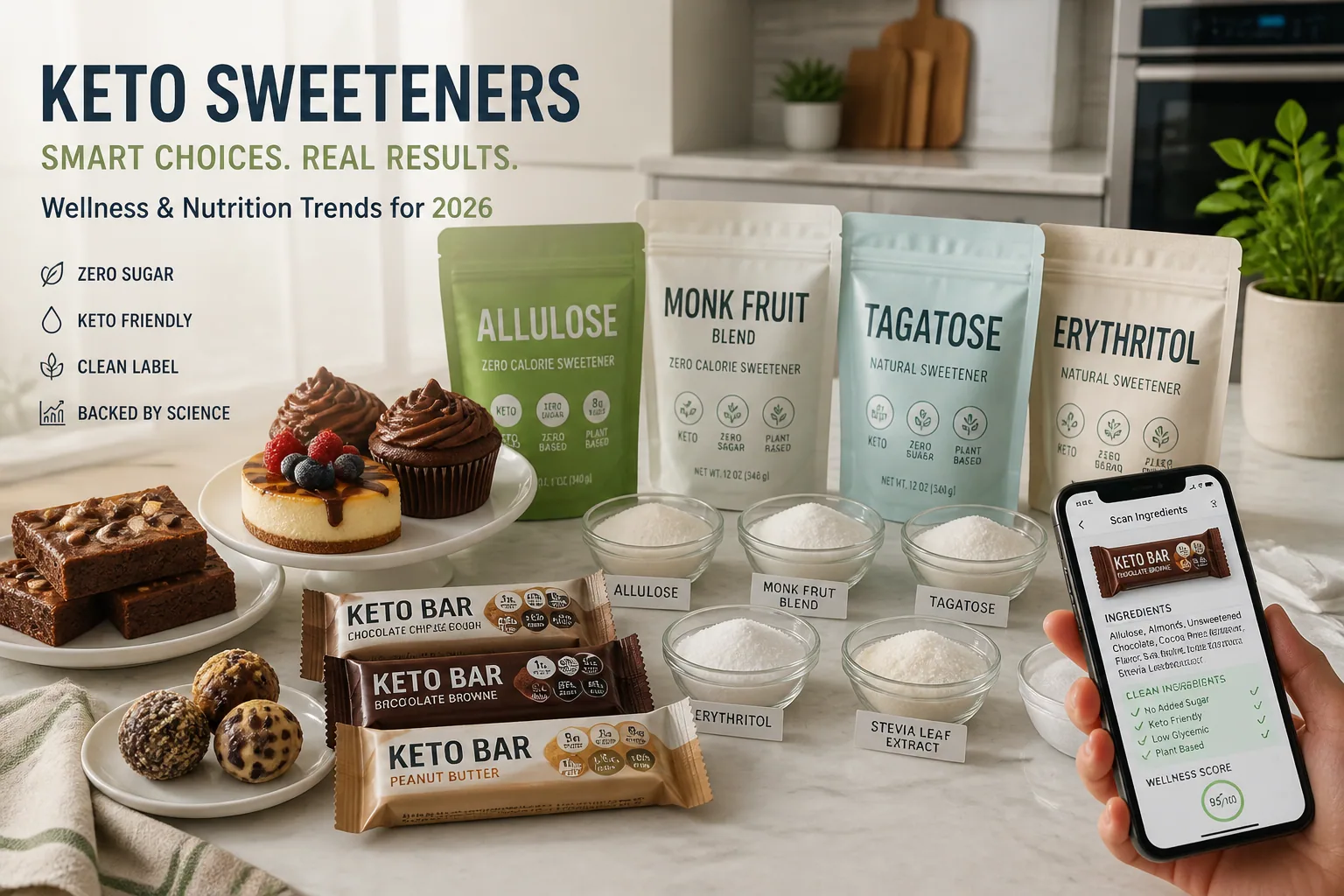
The Rise of Sugar-Free Sweeteners: How Keto-Friendly Alternatives Are Changing Desserts and Snacks in 2026
Sugar-free sweeteners are having a major moment in 2026, and the reason is bigger than simple calorie cutting. Keto shoppers now want sweeteners that behave more like sugar in real food: they need browning in cookies, moisture in cakes, clean sweetness in drinks, and fewer digestive surprises in everyday snacks. That shift is pushing the market beyond the old defaults like erythritol and stevia into a more interesting mix of allulose, monk fruit blends, tagatose, and newer bulking ingredients that help desserts feel complete instead of just technically sweet.
This matters because keto is no longer only about avoiding sugar. People are also reading labels more carefully, asking how sweetener blends affect net carbs, and looking for packaged foods that support ketosis without compromising texture or taste. The best options in 2026 are the ones that work in the pan, on the palate, and on the nutrition label at the same time.
Why Sugar-Free Sweeteners Are Surging in 2026
The current surge is driven by three things: better formulation science, more label awareness, and a stronger demand for desserts and snacks that feel indulgent without pushing glucose up. In the earlier wave of keto products, many brands leaned on erythritol and stevia because they were easy to use and widely available. But those ingredients often came with tradeoffs such as cooling effects, aftertaste, weak browning, or brittle textures.
Today’s keto consumer wants more than a sweet taste. They want a brownie that actually browns, a muffin that stays moist, a cookie that spreads properly, and a snack bar that does not taste like a lab experiment. That is why sweetener systems are becoming more layered, with one ingredient providing bulk, another delivering sweetness, and a third handling flavor balance. In other words, formulation now matters as much as the sweetener name on the front of the package.
Beyond Stevia and Erythritol: The New Generation of Keto Sweeteners
Erythritol and stevia still matter, but they are increasingly being used as supporting players rather than standalone solutions. Research on erythritol in baked bread shows why. In a 2025 study replacing sucrose with erythritol in gluten-free bread, the browning index dropped by 23 percent to 34 percent, and Maillard reaction markers also declined substantially as erythritol increased. That means the more erythritol you use, the harder it becomes to mimic the visual and flavor depth of real sugar in baked goods. Source: https://sciencerep.up.poznan.pl/handle/item/4454
That limitation has opened the door for newer sweeteners that can do more than just deliver sweetness. Allulose and tagatose are especially important because they are rare sugars with real functional behavior in baking. Monk fruit, meanwhile, is increasingly used not as a bulk sweetener but as a high-intensity flavor tool inside blends. The result is a more sophisticated market where the best products are designed around structure, moisture, and heat behavior, not just sweetness intensity.
Allulose Explained: Taste, Texture, Browning, and Keto Impact
Allulose has become one of the most valuable sugar alternatives for keto baking because it behaves more like sugar than most other sweeteners. It provides about 70 percent of sucrose’s sweetness, dissolves cleanly, helps retain moisture, and browns through Maillard reaction in a way that makes cookies, cakes, and sauces feel much closer to traditional recipes. A recent comparison of keto baking sweeteners described allulose as the best all-round choice because it mimics sugar’s browning and caramelization, retains moisture, and dissolves well, though it can brown faster than sucrose, so lower oven temperatures or shorter bake times are often recommended. Source: https://whyz.com/learn/guides/best-sweetener-for-keto-baking/
Allulose also has an important advantage for keto shoppers: it is metabolically excluded from net carb calculations on U.S. nutrition labels, making it especially attractive for packaged foods where carb counting matters. It is hygroscopic, so it helps baked goods stay soft, and it does not crystallize the way sugar does. The main caution is tolerance, since higher doses, often above around 40 grams per day, may cause digestive discomfort in some people. Source: https://ada.cooking/ingredient-substitution/sugar-substitutes-guide/
From a metabolic standpoint, allulose is also promising. A meta-analysis of 20 controlled human trials, including 12 on allulose and 8 on tagatose with about 1,033 participants total, found that both sweeteners significantly reduced post-meal glucose and insulin excursions compared with sucrose. That makes allulose more than a baking helper. It is part of the broader shift toward sweeteners that support ketogenic eating without creating the same glycemic burden as sugar. Source: https://ajcn.nutrition.org/article/S0002-9165(26)00123-1/fulltext
Monk Fruit Blends: Why Formulation Matters More Than the Front Label
Monk fruit is often advertised as a clean, natural sugar substitute, but the real story is usually in the blend. Monk fruit sweetness comes from mogrosides, especially mogroside V, and purity has a huge effect on taste. Low-purity extracts, around 10 to 30 percent mogroside V, tend to produce off-notes, while higher-purity extracts in the 50 to 60 percent range give a cleaner, rounder sweetness. Source: https://whyz.com/learn/guides/monk-fruit-aftertaste/
This is why monk fruit works best when it is paired with a bulk ingredient such as allulose or another functional sweetener. On its own, monk fruit does not provide the structure or volume that baked goods need. In a blend, however, it helps reduce the aftertaste issues that sometimes show up with stevia, while allulose or a fiber-based bulking system handles texture. That is also why many consumers find monk fruit blends more pleasant than pure high-intensity sweeteners: they are usually formulated to smooth out sharp edges rather than to carry the whole recipe by themselves.
Compared with stevia, monk fruit is usually perceived as milder, warmer, and more sugar-like. Stevia can work well, especially when higher-quality Reb A or Reb M extracts are used, but lower-grade products often leave a bitter or metallic finish. Monk fruit is often easier to enjoy in desserts where you want sweetness without a lingering herbal note. Source: https://whyz.com/learn/guides/monk-fruit-vs-stevia/
Tagatose and Other Emerging Alternatives to Watch
Tagatose is one of the most interesting sweeteners to watch in 2026 because it behaves like a true functional sugar substitute, not just a flavoring agent. It has about 90 to 92 percent of sugar’s sweetness, acts as a bulking sweetener, and has GRAS status in the United States. It also browns strongly because of its high reactivity under heat, which makes it valuable in applications where caramel notes and toasted color matter. Its caloric value is around 1.5 kcal per gram in the U.S., so it is not calorie-free, but it remains far lower impact than sucrose for many uses. Source: https://www.sciencedirect.com/topics/agricultural-and-biological-sciences/tagatose
The human data are especially encouraging. The meta-analysis mentioned earlier found that tagatose significantly reduces post-meal glucose and insulin excursions compared with sucrose, and it also showed a modest reduction in HbA1c of minus 0.25 percent. That makes tagatose relevant not only for dessert performance but also for people who care about long-term glycemic control. Source: https://ajcn.nutrition.org/article/S0002-9165(26)00123-1/fulltext
In practical baking tests, tagatose can produce softer biscuits, lower glass transition temperatures, and stronger browning than sugar in some formulations. Studies of biscuits made with full sucrose replacement by rare sugars found that allulose and tagatose both lowered glass transition temperatures and increased browning, while tagatose gave a notably softer texture. That kind of behavior is exactly what many keto product developers want when they are trying to recreate chewy cookies or tender snack bars. Source: https://www.sciencedirect.com/science/article/pii/S2667025925000366
Other emerging alternatives, including fibers and next-gen rare sugar systems, are increasingly used as texture builders. They are not always the star of the sweet taste, but they help solve the structural problems that earlier sugar-free products struggled with. In many cases, the best results come from combining a rare sugar with a bulk fiber and a small amount of high-intensity sweetener.
Bulking Agents, Fibers, and Fillers: The Hidden Players in Keto Treats
A lot of keto shoppers focus on the sweetener name, but the hidden ingredient list often explains the real quality of the product. Bulking agents and fibers determine whether a dessert feels like a real dessert or a compressed protein puck. They influence chew, spread, moisture retention, and the way the sweetener behaves under heat.
This is especially important because high-intensity sweeteners like monk fruit and stevia do not provide the mass needed for baked goods. If a brand wants a cookie to spread properly, or a brownie to stay soft, it needs a supporting system. That may include allulose, tagatose, soluble fibers, resistant dextrins, or other low-impact fillers that improve mouthfeel without spiking carbs. The key is not whether a product says sugar-free. The key is whether the ingredient system is built to act like food.
This is where many shoppers get misled by front-label claims. A product can say keto-friendly while still using ingredients that add enough digestible carbs, sugar alcohols, or filler-heavy bulking agents to affect a strict keto plan. Reading the full ingredient list is essential, especially when blends are used to make the sweetener system look cleaner than it really is.
How Sweeteners Change Baking and Snack Texture
Sweeteners do much more than add taste. They change water activity, crystal formation, browning, spread, and shelf life. Erythritol tends to be useful for sweetness and bulk but often falls short on browning and can create a cooling sensation. Allulose and tagatose are more valuable in baked goods because they participate in the same heat-driven reactions that create golden crusts and rich flavor.
That is why allulose often excels in cakes, cookies, syrups, and glazes, while tagatose is especially strong where browning and softness matter. Monk fruit and stevia are usually best when they are used to finish the sweetness profile, not to create texture. If you have ever eaten a keto dessert that was sweet but oddly dry, brittle, or flat-tasting, the problem was probably not the sweetness alone. It was the missing structural chemistry.
Even small formulation changes can have a big effect. Lower oven temperatures, shorter bake times, or a shift from erythritol-heavy blends to allulose-rich blends can change a recipe from pale and dry to golden and tender. That is why commercial keto brands are increasingly reformulating older products rather than simply swapping in a new sweetener and hoping for the best.
What Science Says About Glycemic Response, Insulin, and Ketosis
The most important question for keto eaters is not just how sweet something tastes, but how it affects blood sugar, insulin, and ketosis. The strongest recent evidence suggests that allulose and tagatose are useful here because they reduce post-meal glucose and insulin excursions compared with sucrose. The meta-analysis of 20 controlled trials supports that conclusion and adds weight to the idea that rare sugars can fit into low-carb eating patterns more safely than traditional sweeteners that behave like sugar. Source: https://ajcn.nutrition.org/article/S0002-9165(26)00123-1/fulltext
That said, no single sweetener solves everything. A sweetener may have low glycemic impact yet still cause digestive distress, or it may taste excellent while adding enough hidden carbs to matter in a strict keto diet. Ketosis is influenced by total carbohydrate intake, serving size, and overall diet composition, so the best sweetener is the one that works at the serving size you actually use.
The practical takeaway is that newer sweeteners are making keto more sustainable. They allow dessert and snack products to taste more like their sugar-based originals, which may help adherence. But they should still be used with a clear understanding of serving size, ingredient composition, and your own tolerance.
Do ‘Zero Sugar’ and ‘Keto-Friendly’ Claims Really Mean Low Impact?
Not always. A zero sugar label does not automatically mean a product is low carb, low impact, or keto appropriate. Some products rely on sugar alcohols, fibers, and sweetener blends that still contribute digestible carbohydrates in real-world servings. Others are technically sugar-free but use enough filler to make net carb calculations more complicated than the front panel suggests.
Keto-friendly claims should be treated as starting points, not conclusions. The label may be accurate from a regulatory standpoint and still be unhelpful for a strict ketogenic eater. For example, a product might contain allulose, monk fruit, chicory fiber, and starch-based fillers in a combination that looks elegant on the front but adds up differently once you calculate the serving size and your daily carb allowance.
This is why shoppers increasingly want tools that help decode the label quickly. In a busy grocery aisle, the question is not whether a product sounds keto. The question is whether it actually fits your carb budget in the amount you plan to eat.
How to Scan Labels for Hidden Sweetener Blends and Net Carbs
The most useful label-reading habit is to start with the ingredient list, then check the nutrition facts, and finally compare the serving size to your real eating pattern. Look for sweetener blends that combine high-intensity sweeteners with bulk ingredients, because those blends are often where the true carb and texture story lives. Pay special attention to terms like maltodextrin, starches, syrups, sugar alcohols, and added fibers that may affect net impact differently depending on the product.
If you want to make this process easier in the store, a scanner can help remove the guesswork. Keeto - Keto Made Easy lets you scan a product’s barcode, instantly see whether it is keto-friendly, and check how many net carbs it contains along with what percentage of your daily carb budget it represents. For people who are comparing sweetened snacks and desserts on the go, that can save a lot of time and mental math. You can learn more here: https://findthe.app/keeto-5m0vbj
A smart rule of thumb is to be skeptical of products that rely on vague front-label claims while burying the actual sweetener system in a long ingredient list. The shorter and more transparent the formulation, the easier it is to judge whether the product really fits your plan.
How to Choose the Best Sweetener for Desserts, Snacks, and Everyday Use
The best sweetener depends on what you are making. For baking, allulose is often the strongest all-around choice because it handles browning, moisture, and dissolving better than most alternatives. Tagatose is excellent when you want stronger caramel notes and softer textures, especially in biscuits, cookies, or lightly browned snacks. Monk fruit works best as part of a blend, especially when paired with a bulk sweetener that rounds out its profile.
For beverages and no-bake products, high-intensity sweeteners can work well when texture is not a concern. Stevia may still be useful, especially in improved purified forms, but monk fruit is often preferred by consumers who want a milder finish. Erythritol remains common because it is familiar and useful in many blends, but it is less likely than allulose or tagatose to recreate sugar-like browning and softness on its own.
If your priority is strict keto compliance, choose based on both ingredient quality and serving size. If your priority is taste and texture, rare sugars and well-designed blends usually outperform older single-ingredient approaches. If your priority is convenience, a label-scanning tool can help you move faster without sacrificing consistency.
The Bottom Line: Smarter Sweetener Choices for Keto in 2026
The rise of sugar-free sweeteners in 2026 is not just about removing sugar. It is about replacing sugar with ingredients that actually function in food. Allulose and tagatose are leading the way because they offer better browning, moisture, and more favorable glycemic behavior than many older options. Monk fruit and stevia still have a role, but they work best in thoughtfully designed blends. Erythritol remains useful, yet its limitations are clearer than ever in baked goods and other texture-sensitive foods.
For keto shoppers, the winning strategy is simple: do not stop at the front label. Read the ingredient list, understand the blend, consider how the sweetener behaves in real food, and check whether the serving fits your carb budget. In 2026, the smartest keto choices are not just sugar-free. They are formulation-aware, label-savvy, and built to support both pleasure and ketosis.