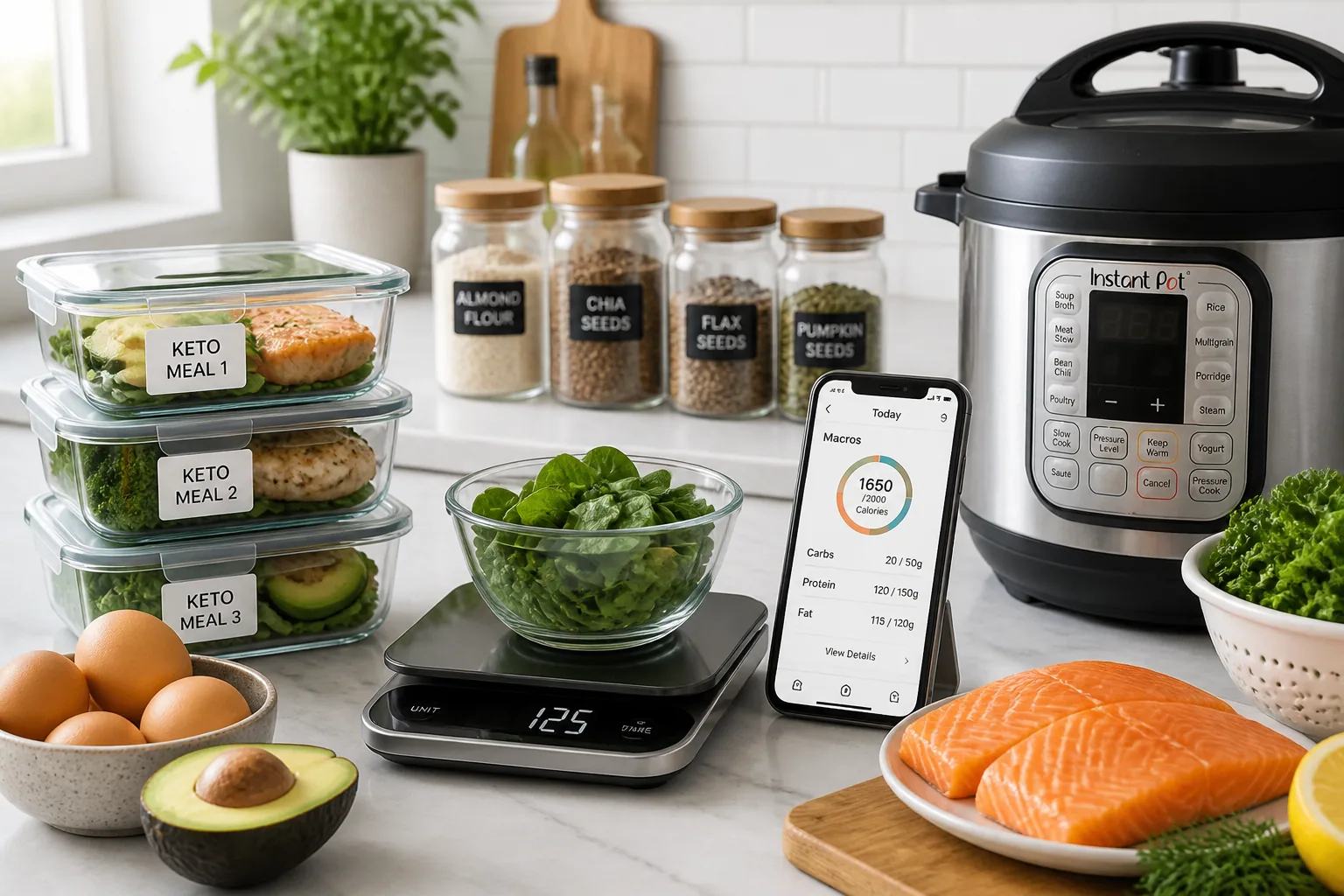
The Keto Tools That Actually Save You Time and Sanity
Keto can be simple in theory and surprisingly messy in real life. The first week often starts with good intentions, then turns into label reading, macro math, food waste, and a fridge full of ingredients that do not quite become meals. That is usually where beginners get overwhelmed. The problem is not that keto is too complicated. The problem is that most people try to do it without a system.
A good keto setup does not need to be fancy or expensive. It needs to reduce decisions, prevent avoidable mistakes, and make the healthy choice the easy one. In practice, that means a few practical tools, a handful of repeatable routines, and a kitchen that supports your goals instead of fighting them. If you build it right, keto becomes much more sustainable, especially on busy weeks.
Why Keto Feels Overwhelming at First
The hardest part of keto is rarely cooking itself. It is everything around cooking. You have to think about net carbs, hidden sugars, portion sizes, meal timing, leftovers, spoilage, and whether a recipe will actually fit your day. For beginners, every grocery trip can feel like a test. For busy low-carb eaters, every extra step becomes a reason to order takeout or eat the same meal again.
That is why the best keto tools are not just about convenience. They reduce decision fatigue. They also reduce the kinds of small errors that add up fast, like overpouring oil, underestimating carbs in sauces, or throwing out wilted vegetables because there was no plan for them. A well-chosen tool can save time, money, and a lot of mental energy.
The Essential Keto Tools Worth Buying First
If you are starting from scratch, do not try to buy every gadget marketed to low-carb eaters. The tools that matter most are the ones that help you measure accurately, store food safely, and cook in batches with minimal attention. In other words, buy for repetition, not novelty.
The core keto toolkit usually starts with a digital food scale, a few strong meal-prep containers, one hands-off cooker like a slow cooker or Instant Pot, and storage that keeps ingredients fresh for longer. After that, you can add simple support systems like labels, fridge zones, and a good tracking app. Those basics solve most of the problems people blame on keto itself.
How a Digital Food Scale Prevents Macro Mistakes
A digital kitchen scale is probably the most valuable keto tool you can buy first. The reason is simple: keto works best when your portions are real, not estimated. Research on digital kitchen scales notes that many models are accurate to within ±0.1 to 1 gram for most weights, which makes macro calculations much more reliable. That matters more than it sounds. Even an error of 2 grams of olive oil can change a high-fat keto meal by about 18 calories, according to the Digital Kitchen Scale Guide: https://kitchencortex.com/digital-kitchen-scale-guide/
On keto, small measurement mistakes are not just calorie mistakes. They are carb mistakes, fat mistakes, and sometimes protein mistakes. If you are trying to stay in a specific range, eyeballing a tablespoon of nut butter or a serving of cheese can easily throw off the day. A scale removes the guesswork and makes your tracking cleaner from the beginning.
The best part is that a scale is cheap compared with the cost of wasted food and repeated trial-and-error. It also helps you learn what normal portions actually look like. After a few weeks of weighing common foods, you will need it less often, but you will still be glad you have it for anything that is calorie-dense or carb-sensitive.
Best Meal-Prep Containers for Busy Keto Weeks
Meal-prep containers are one of the most practical keto purchases because they turn one cooking session into several ready-to-eat meals. That matters when your schedule gets chaotic. If lunch is already packed and dinner is already portioned, you are far less likely to improvise with snacks or takeout.
Research consistently shows that meal prepping reduces waste and helps keep food usable longer. One source found that meal prepping with proper containers reduces household food waste by about 47% compared with daily cooking routines, while meal boxes with pre-portioned ingredients achieved around 38% less total food waste than cooking from scratch with store-bought ingredients. That is a big win for both your budget and your fridge. Sources: https://www.messbrands.com/meal-prep/why-does-meal-prepping-reduce-food-waste/ and https://phys.org/news/2022-10-cooking-meal-household-food-38new.html
For keto, the best containers are usually leak-resistant, stackable, microwave-safe if you use microwaves, and easy to label. Clear containers help you see what is inside, which reduces forgotten leftovers. Smaller compartment containers are useful for keeping proteins, vegetables, and sauces separate until you are ready to eat. Bigger containers work well for soups, casseroles, burger bowls, and batch-cooked meats.
The real goal is not just storage. It is friction reduction. When the food is already portioned and visible, you save time on both the front end and the back end. You cook once, pack once, and clean up once.
Slow Cookers, Instant Pots, and Other Hands-Off Helpers
Hands-off cooking tools are especially useful for keto because so many staple foods take time to become tender and flavorful. Beef roast, chicken thighs, stew meat, soups, shredded pork, and broth-based meals are all easier when the appliance does the work for you. This is where slow cookers and Instant Pots earn their place.
If speed matters, the Instant Pot is the standout choice. Research comparing cooking methods found that an Instant Pot typically speeds up cooking by 70% to 97% versus a slow cooker for meals like beef roast, stew, chicken thighs, and beans. Pressure cookers in general can reduce cooking time by 50% to 90% compared with stovetop simmering, which is especially helpful for tougher proteins and dense vegetables. Sources: https://kitchengearaudit.com/cookers/instant-pot-vs-slow-cooker and https://www.consumersearch.com/home-garden/modern-pressure-cookers-beat-stovetop-simmering-time
That time savings really adds up on weeknights. Even a simple tomato sauce can be dramatically faster in an Instant Pot. One case study found it cut hands-on and total cook time by about 70% versus stovetop methods, mostly because of shorter cook times and less constant stirring: https://spice.alibaba.com/spice-basics/instant-pot-tomato-sauce--fast--foolproof-method
A slow cooker still has value if you want true set-it-and-forget-it convenience and do not mind the longer cook time. But if your main problem is that dinner needs to happen now, pressure cooking is usually the better keto tool. Either way, these appliances turn tough, affordable ingredients into meal-prep staples without requiring much attention.
Smart Storage to Keep Keto Food Fresh and Mold-Free
Keto ingredients can be more expensive than people expect, especially if you buy quality meat, cheese, cream, berries, nuts, and specialty items. That makes storage a bigger deal. If food spoils before you use it, the diet quickly feels expensive and frustrating.
The smartest storage setup is simple: use airtight containers, keep the fridge organized by category, and store the most perishable foods where you can actually see them. If you can see leftovers, cooked proteins, washed greens, and prepped ingredients at eye level, you are more likely to use them before they go bad. This is where a first in, first out system helps. Put older food in front, newer food behind, and rotate regularly.
Built-in systems like labels, FIFO fridge organization, and clear visibility are recommended in waste-reduction guidance from the EPA, even when they are not always easy to quantify in studies. The practical point is straightforward: when food is easier to identify and easier to grab, it gets eaten instead of forgotten. Source: https://www.epa.gov/sites/default/files/2015-08/documents/reducing_wasted_food_pkg_tool.pdf?jumpid=va_d6813fxvmu%2Fdesignjet-t1000%2F
For mold resistance, do not overlook drying and cooling routines. Let cooked food cool before sealing it, keep wet ingredients separate when possible, and avoid cramming warm containers into a crowded fridge. Moisture and trapped heat are what shorten shelf life fastest. A little organization here protects both your groceries and your sanity.
Labeling Systems That Reduce Decision Fatigue
One of the quietest sources of keto stress is having food, but not knowing what it is, when it was made, or whether it still fits your plan. Labels solve that immediately. A marker and a roll of tape can save you from opening the same container three times, doing the smell test, and still not feeling sure.
Good labeling is not about being obsessive. It is about making future-you less tired. Label containers with the meal name, date, and if needed, the macros per serving. If you batch cook often, use a simple meal template like protein plus vegetable plus sauce so every container follows the same format. That consistency makes both packing and tracking much easier.
Meal templates are especially helpful for beginners because they remove the need to invent a new dinner every night. If Monday is taco bowls, Tuesday is chicken and broccoli, and Wednesday is a soup or stew, planning becomes lighter. You spend less time deciding and more time eating what already works.
Barcode Scanners and Macro Apps That Catch Hidden Carbs
Keto beginners often get tripped up by packaged foods. A sauce, dressing, protein bar, or seasoning blend can look harmless and still contain enough sugar or starch to matter. That is why barcode scanning is such a useful shortcut.
Modern nutrition apps have become much better at this kind of tracking. A 2026 Nutrition Research Review reported that AI-powered nutrition apps now achieve a mean absolute percentage error of about 1.2% for calorie estimates, which is on par with weighed food records used by dietitians. The same review noted less than 5% error across macros when image-based tools are paired with barcode scanners. Source: https://nutrition-research-review.com/articles/digital-nutrition-monitoring-meta-analysis-2026/
That means the tech is finally good enough to be genuinely useful, not just flashy. A barcode scanner helps you check net carbs in seconds at the store. A macro app helps you see patterns over the day. Together, they reduce guesswork and make it easier to catch hidden carbs before they turn into a frustrating stall or a surprise overage.
This is also where a product like Keeto - Keto Made Easy fits naturally. Its barcode scanning, carb budget tracking, and product history features are useful if you want fast answers while grocery shopping, and it also includes AI-generated keto recipes and shopping lists. You can check it out here: https://findthe.app/keeto-5m0vbj
How AI Recipe Tools Can Simplify Keto Meal Planning
AI recipe tools are useful because they take some of the planning burden off your plate. Instead of staring into the fridge and hoping inspiration shows up, you can enter ingredients you already have and get a structured meal idea with macros and instructions. That makes it easier to cook from what you own instead of buying more food you do not need.
The best AI tools for keto are not trying to replace your judgment. They are there to speed up the boring part. They help you combine ingredients into meals, estimate nutrition, and generate shopping lists so you do not forget the one item that holds the whole week together. When paired with barcode scanning, they can also help you avoid accidental carb creep from packaged ingredients.
The practical benefit is less mental clutter. You do not have to start from zero every day. You can build from a few reliable templates, then let the tool fill in the gaps. That is exactly the kind of support that makes keto feel realistic rather than restrictive.
Budget-Friendly Keto Tools That Deliver the Best Value
The best keto tools are not necessarily the most expensive ones. In fact, the highest-return purchases are usually the simplest. A scale beats a fancy gadget. A good container set beats random storage tubs. One reliable cooker beats several single-purpose appliances you barely use.
If you are on a budget, prioritize in this order: digital scale, meal-prep containers, one hands-off cooker, labels, and a tracking app or scanner. That sequence covers the biggest sources of wasted time and money. After that, add specialty tools only if they solve a real problem in your routine.
The reason this matters is that keto already changes your grocery habits. You are likely spending more attention on food quality and labeling than before. The right tools make that shift easier, not more expensive. When a purchase reduces spoilage, prevents macro errors, or saves even 15 minutes a day, it usually pays for itself quickly.
A Simple Keto Workflow for Saving Time Every Day
The easiest way to make keto sustainable is to use the same workflow every week. Here is a simple version that works for most beginners and busy eaters. First, scan or check your groceries before buying them. Second, batch cook one or two proteins. Third, portion meals into labeled containers. Fourth, place the next two days of food where you can see them first in the fridge. Fifth, use your tracking app or macro log to confirm you are staying in range.
This workflow works because it reduces decisions at each step. You are not deciding what to eat from scratch three times a day. You are just choosing from meals you already planned. That shift alone can make keto feel much less tiring.
It also protects consistency. Keto tends to work better when your food environment is supportive. If the scale is ready, the containers are clean, the cooker is available, and the labels are clear, you are much more likely to follow through. Good systems beat motivation almost every time.
Final Thoughts: Build a Keto Kitchen That Works for Real Life
A practical keto kitchen is not about having every trendy device. It is about having the right basics that cut down on mistakes, cleanup, and decision fatigue. A digital scale helps you measure correctly. Meal-prep containers keep food ready. Slow cookers and Instant Pots remove hands-on time. Smart storage and labels reduce waste. Barcode scanners, macro apps, and AI recipe tools make the whole process easier to maintain.
If you are new to keto, start small and build a system that matches your actual life, not your ideal routine. The goal is not perfection. The goal is a kitchen that helps you stay consistent without burning out. When your tools work with you, keto stops feeling like a full-time project and starts feeling like a normal way to eat.