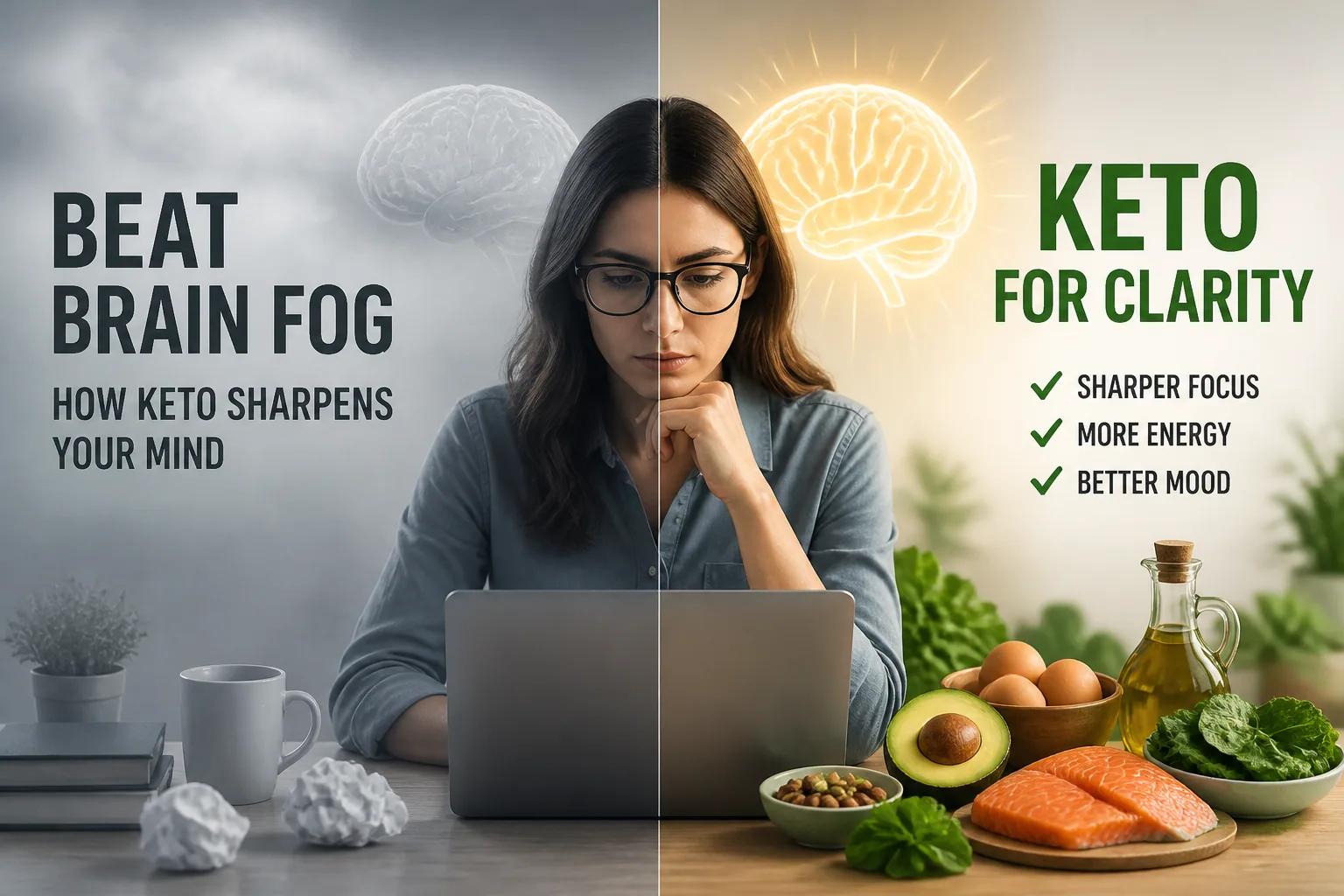
The Keto-Mind Connection: How Low-Carb Eating Can Boost Mental Clarity, Mood, and Focus
For years, keto has mostly been discussed as a weight-loss strategy. But a growing number of clinicians, researchers, and everyday low-carb eaters are asking a different question: what if the real value of ketosis is not only physical, but mental? Many people who try keto report less brain fog, steadier energy, better concentration, and a more even mood. That does not mean keto is a cure-all, but it does mean the conversation is expanding beyond the scale and into the brain.
This matters because the brain is energy-hungry, and the way it gets that energy may influence how we think and feel. In metabolic psychiatry and cognitive research, ketogenic eating is being explored as a possible support for mood stability, executive function, and mental clarity. The idea is not that low-carb eating replaces therapy or medication. Rather, it may create a more stable metabolic environment that helps some people function better day to day.
Why Keto Is Entering the Mental Health Conversation
The interest in keto and mental health is not coming out of nowhere. A growing body of research suggests that metabolic health and brain health are closely connected. When blood sugar swings are frequent, some people notice the classic pattern of a quick spike in energy followed by a crash, often paired with irritability, poor concentration, or cravings. For certain people, especially those who feel mentally sluggish after carb-heavy meals, keto appears to flatten that roller coaster.
Researchers are also looking at mitochondrial function, oxidative stress, inflammation, and brain glucose metabolism as potential links between diet and mental performance. In clinical psychology and serious mental illness research, ketogenic metabolic therapy is being examined because it may address some of the same biological patterns seen in mood and cognitive disorders, including glucose hypometabolism and neurotransmitter imbalance. See the reviews here: https://pmc.ncbi.nlm.nih.gov/articles/PMC11464436/ and https://pmc.ncbi.nlm.nih.gov/articles/PMC9728807/
How Ketones Fuel the Brain Differently Than Glucose
In a ketogenic diet, carbohydrate intake is reduced enough that the body begins producing ketones from fat. These ketones become an alternative fuel source for the brain. Instead of relying mainly on glucose, the brain can use beta-hydroxybutyrate and acetoacetate, which may provide a steadier energy supply for some people.
This is one reason keto is so interesting for mental clarity. If your usual pattern is afternoon sluggishness or mental fog after meals, a more stable fuel source may feel noticeably different. Ketones may also influence signaling pathways related to inflammation, stress resilience, and neurotransmission, which helps explain why the keto conversation has moved beyond metabolism and into cognition.
That said, brain fuel is only part of the picture. Sleep, hydration, stress, micronutrients, and total calorie intake all affect how sharp you feel. Keto may help, but it works best when the basics are in place.
What Metabolic Psychiatry Says About Mood and Cognition
Metabolic psychiatry is an emerging field that looks at how metabolism affects psychiatric symptoms. The basic premise is simple: if the brain and body are not metabolically well, mood and cognition may suffer. Low-carb and ketogenic approaches are being studied because they may improve mitochondrial efficiency, reduce inflammation, and stabilize energy availability in the brain.
This does not mean every mental health issue is caused by diet. But it does suggest that for some people, especially those with symptoms that overlap with metabolic dysfunction, nutrition can be a meaningful part of the treatment picture. The exciting part is that this field is still young, which means there is room for both optimism and caution.
A recent article on ketogenic diets in clinical psychology notes that animal and human studies suggest possible benefits for pathological brain states associated with mental illness, including improvements in mitochondrial dysfunction, oxidative stress, inflammation, neurotransmitter balance, and glucose hypometabolism. The broader review of ketogenic metabolic therapy in serious mental illness makes similar points, while also emphasizing that the evidence is still developing. Sources: https://pmc.ncbi.nlm.nih.gov/articles/PMC11464436/ and https://pmc.ncbi.nlm.nih.gov/articles/PMC9728807/
Potential Benefits for Brain Fog, Focus, Energy, and Anxiety
For many keto-curious readers, the first noticeable change is not dramatic weight loss. It is usually mental. People often describe clearer thinking, fewer energy dips, and less of that heavy, foggy feeling that can follow high-carb meals. Busy professionals, parents, students, and shift workers may find that a more stable eating pattern supports concentration across the day.
The research is mixed, but encouraging in some areas. A 2023 systematic review found that over 80% of 27 human studies reported favorable effects of ketogenic diet interventions on cognition, including working memory, attention, and executive function, and none reported harmful cognitive effects. That does not prove keto is superior for everyone, but it does suggest the diet deserves serious attention in cognitive health discussions. Source: https://pubmed.ncbi.nlm.nih.gov/36354157/
Mood is more nuanced. In one randomized controlled trial of overweight volunteers, a low-carbohydrate ketogenic diet led to greater reductions in negative affect and hunger than a low-fat diet after adjusting for BMI changes over time. On the other hand, a crossover study in healthy, normal-weight adults found no significant differences in cognitive function, mood, or sleep after three weeks of nutritional ketosis compared with a high-carbohydrate, low-fat diet. Together, these findings suggest that keto may help some people more than others, and context matters. Sources: https://pubmed.ncbi.nlm.nih.gov/17228046/ and https://www.sciencedirect.com/science/article/pii/S0002916522011832
What the Current Research Can and Cannot Prove
The evidence base for keto and mental performance is promising, but it is not definitive. In populations with mild cognitive impairment, a 6-month randomized controlled trial found that a ketogenic medium-chain triglyceride drink twice daily improved executive function, episodic memory, and language, with higher ketone levels linked to greater improvement. In Alzheimer’s disease, a meta-analysis of 10 randomized trials found improvements in cognitive and mental state scores, though lipid markers such as LDL and triglycerides also increased. Sources: https://pubmed.ncbi.nlm.nih.gov/33103819/ and https://pubmed.ncbi.nlm.nih.gov/38943982/
That is important because it shows both the potential and the trade-offs. Some interventions may help cognition, but they can also affect cholesterol, triglycerides, or overall nutrition status. Also, much of the mental health evidence still comes from small studies, animal models, case series, or uncontrolled reports. A recent case series described complete remission of depression and anxiety in some individuals under stringent ketogenic metabolic therapy, but these are preliminary observations, not proof. Source: https://valia.health/wp-content/uploads/valia-library/Mental Health/Complete remission of depression and anxiety using a ketogenic diet- case series.pdf
The safest interpretation is this: keto may be a useful tool for brain health and mood support, especially in carefully selected people, but it is not a universal solution.
How to Start Keto for Mental Clarity: Macros, Protein, and Carbs
If your main goal is mental clarity rather than aggressive fat loss, start conservatively and focus on consistency. A common keto starting point is to keep net carbs low enough to enter and maintain ketosis, usually around 20 to 30 grams per day for many people, though individual tolerance varies. Protein should be adequate, not extreme. Too little protein can harm satiety, recovery, and mental energy. Too much is usually less of a problem than people think, but if you are trying to maintain nutritional ketosis, it helps to keep protein steady and not let carbs creep up.
A simple structure is often easiest: build meals around a quality protein source, a low-carb vegetable, and a fat source that helps you feel satisfied. The goal is not to drown everything in fat. The goal is to create a stable, sustainable intake pattern that supports your brain and avoids big blood sugar swings.
If grocery shopping is where you tend to lose track of carbs, a tool like Keeto - Keto Made Easy can help make the process simpler. You can scan products, check net carbs instantly, and keep your daily carb budget in view without doing mental math every time you shop: https://findthe.app/keeto-5m0vbj
The Role of Electrolytes, Omega-3s, B Vitamins, Magnesium, and Sleep
One reason people feel worse when they start keto is not the diet itself, but the electrolyte shift. When carbs drop, water and sodium losses often rise. That can create headaches, fatigue, dizziness, irritability, and what people call the keto flu. Prioritizing sodium, potassium, and magnesium can make a dramatic difference in how your brain feels during the transition.
Magnesium is especially important because it supports relaxation, muscle function, and nervous system regulation. Many people also benefit from adequate omega-3 intake, which may support brain health and inflammation balance. B vitamins matter too, because low-carb eating still needs micronutrient density, not just fat and protein. Leafy greens, eggs, seafood, meat, and well-chosen supplements can help fill gaps if needed.
Sleep is just as important as supplements. If you are sleeping poorly, even perfect macros will not rescue focus. Keto may help some people feel more stable, but sleep deprivation can erase those gains quickly. A consistent sleep schedule, less late-night snacking, and enough daylight exposure can all improve cognitive outcomes.
Meal Timing, Caffeine, and Blood Sugar Stability for Better Focus
Once you are in ketosis, meal timing becomes another lever. Some people think more clearly when they avoid constant grazing and allow longer breaks between meals. Others prefer a breakfast because it improves morning focus. There is no single best pattern, but the idea is to reduce volatility. If skipping meals makes you shaky, anxious, or obsessive about food, then a more regular schedule may work better.
Caffeine can be helpful, but keto and caffeine can be a powerful combination, especially in the early phase. If you already feel wired, anxious, or sleep-deprived, too much caffeine may make things worse. The same goes for very long fasting windows if your stress response is already high. Stable blood sugar is not just about carbohydrate intake. It is also about stress load, hydration, and recovery.
For focus, the best pattern is usually the one that gives you steady energy without jitters, crashes, or afternoon brain fog. That may mean moderate caffeine, earlier meals, and less snacking.
How to Track Mood, Attention, Sleep, and Physical Markers
If you want to know whether keto is helping your mental clarity, track it like an experiment. Start before you change anything and record a baseline for mood, focus, energy, sleep, and appetite. Then follow the same metrics daily for at least two weeks. A quick 1 to 10 score for each category is often enough.
You can also monitor physical signs that often reflect how well your keto approach is working: hunger stability, cravings, bowel regularity, workout performance, resting energy, and whether you feel clear-headed or irritable. If you want a more objective signal, some people track blood ketones or blood glucose, but the numbers should support your experience, not replace it.
If mental clarity improves but sleep gets worse, that is still useful information. If energy rises but anxiety increases, you may need to adjust caffeine, calories, electrolytes, or meal timing. The point of tracking is not perfection. It is feedback.
When Keto May Not Be Appropriate or Needs Medical Supervision
Keto is not for everyone. People with a history of eating disorders, certain metabolic or pancreatic conditions, gallbladder issues, kidney disease, or pregnancy should be especially cautious and seek medical guidance. Anyone taking diabetes medications, blood pressure medications, or other drugs that can be affected by dietary changes should not start keto casually.
You should also be careful if you notice worsening anxiety, obsessive food thoughts, sleep disruption, constipation, or persistent fatigue. Those are signs that the plan may need adjustment. In mental health contexts, the diet should be seen as a possible adjunct, not a replacement for professional care.
The same caution applies if you are pursuing keto for cognitive symptoms that could have another cause, such as thyroid issues, anemia, sleep apnea, depression, medication side effects, or nutrient deficiencies. Diet can help, but diagnosis still matters.
How to Combine Keto Safely With Therapy, Medication, and Existing Treatment
If you already work with a therapist, psychiatrist, or primary care clinician, keto can be discussed as one part of a broader treatment plan. That is the safest approach. If you are on medication, do not stop or change doses on your own simply because your mood or focus improves. Sometimes better symptoms are real, and sometimes they reflect the early momentum of a new routine.
The best framework is collaborative. Tell your clinician that you are trying a ketogenic or lower-carb pattern for mental clarity and ask what to monitor. If you have bipolar disorder, major depression, anxiety, or a history of severe symptoms, supervision is especially important. Nutrition may support your treatment, but it should not be used to self-manage unstable or high-risk mental health conditions alone.
Used carefully, keto can be one more tool in the toolbox. Therapy still supports coping and behavior change. Medication may still be necessary. Sleep, exercise, and social support still matter. Keto is most effective when it fits into that bigger picture.
A Realistic 2-Week Starter Protocol for Keto-Curious Readers
Week 1 is about transition, not perfection. Keep meals simple and consistent. Choose protein at each meal, add low-carb vegetables, and remove obvious carb-heavy trigger foods. Aim for adequate sodium, drink water regularly, and do not panic if energy dips for a few days. That phase is often the body adjusting to a new fuel source.
Week 2 is about observation. Notice whether your morning energy, afternoon focus, cravings, mood stability, and sleep are changing. If you feel clearer, keep going and refine the plan. If you feel worse, look at the basics first: calories, protein, electrolytes, hydration, and caffeine. Many problems blamed on keto are actually problems of implementation.
A practical two-week target might look like this: keep carbs consistently low, eat enough protein, include healthy fats for satiety, and use vegetables and mineral-rich foods to support nutrient intake. Track how you feel each day, not just what the scale says. The most useful keto outcome for many readers is not dramatic restriction, but a calmer, more focused mind that is easier to live in.