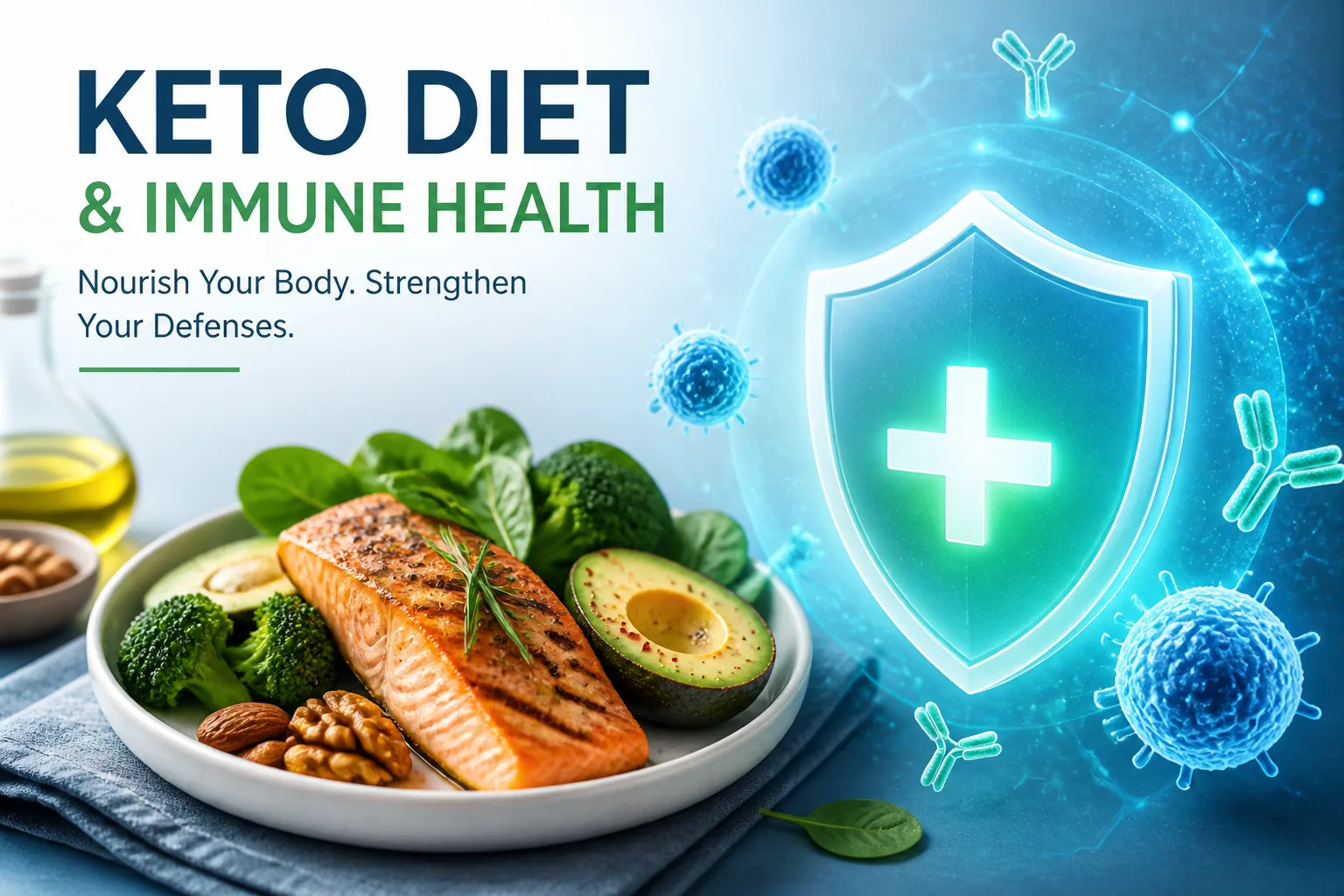
The Immune Connection: How Keto Affects Your Body’s Defenses and What to Do About It
A ketogenic diet is often discussed in terms of fat loss, appetite control, and blood sugar stability. But your immune system is also deeply affected by what you eat, especially when carbohydrate intake drops very low. That matters because immunity is not just about avoiding colds. It affects how your body handles inflammation, how well you recover, how you respond to vaccines, and how resilient you are during stress, illness, or intense training.
Recent research suggests keto can change both innate and adaptive immunity. Some effects may be helpful, especially when excess body fat and chronic inflammation are part of the picture. Other effects raise important questions about long-term immune memory, gut health, and whether a very strict ketogenic approach is always the best option. The real answer is more nuanced than “keto is good” or “keto is bad” for immunity.
Why Immune Health Matters on Keto
If you are following keto, your immune system does not stop needing support just because weight loss is happening. In fact, immune health becomes even more important because dietary restriction can change energy availability, gut microbiome composition, and nutrient intake all at once. Your immune cells are constantly adapting to fuel sources, hormones, and inflammatory signals. Keto changes all three.
For some people, those changes may help lower inflammation and improve metabolic health. For others, especially if calories, fiber, or micronutrients are too low, the same diet can make recovery harder or leave defenses less robust. That is why the immune conversation around keto should go beyond the scale and look at the full picture.
What Keto Does in the Body Beyond Fat Burning
When carbohydrate intake is very low, the liver produces ketone bodies, especially beta-hydroxybutyrate or BHB. These are not just alternative fuels. BHB also acts like a signaling molecule, influencing inflammation pathways, immune cell metabolism, and gene expression. In other words, keto changes how the body communicates with immune cells, not just how it burns energy.
One important pathway is the NLRP3 inflammasome, an innate immune sensor involved in inflammatory signaling. Research suggests BHB can suppress NLRP3 activation, reducing the inflammatory cascade triggered by reactive oxygen species, endoplasmic reticulum stress, and potassium efflux. A 2023 narrative review on fasting and ketogenic interventions highlighted this anti-inflammatory mechanism as one reason keto may influence immune function beyond weight loss: https://www.sciencedirect.com/science/article/pii/S2319417023001142
At the same time, keto changes the fuel preferences of immune cells. Some immune cells rely heavily on glucose during activation, while others can adapt better to fatty acid oxidation and ketone use. That fuel shift may help explain why some inflammatory pathways calm down on keto, while some aspects of immune memory may not be strengthened in the same way.
What New Research Says About Keto and Adaptive Immunity
One of the most interesting recent findings comes from a human crossover study comparing a vegan diet and a ketogenic diet. After only a short period, switching to keto rapidly upregulated pathways related to adaptive immunity, including T cells and B cells. By contrast, the vegan phase upregulated innate immune and antiviral response pathways. This suggests that diet can alter immune signaling surprisingly quickly, and that different dietary patterns can push the immune system in different directions. Source: NIH, January 2024 https://www.nih.gov/news-events/news-releases/switching-vegan-or-ketogenic-diet-rapidly-impacts-immune-system
Adaptive immunity is the arm of the immune system that remembers previous exposures and helps you respond more efficiently later. T cells coordinate responses and kill infected cells, while B cells help produce antibodies. If keto shifts these pathways, the effects could show up in infection resilience, vaccine response, or long-term immune memory, not just day-to-day inflammation.
A recent review in Autoimmunity Reviews also argued that low-carbohydrate diets may influence immune cell metabolism by moving cells away from glycolysis and toward fatty acid oxidation and ketone utilization. It also highlighted effects on the gut microbiota, gut barrier integrity, systemic immune signaling, and epigenetic regulation such as histone deacetylation. That gives keto a much broader immune footprint than most people expect.
T Cells, B Cells, Infections, and Vaccine Response
T cells are especially sensitive to the metabolic environment. Some data suggest keto may promote beneficial shifts in certain T-cell populations. For example, a mouse study found that ketogenesis activated metabolically protective gamma delta T cells in visceral adipose tissue, helping restrain inflammation. But the same work also warned that long-term ketogenic feeding may deplete these cells and impair metabolic health, showing that duration matters just as much as the diet itself. Source: https://www.nature.com/articles/s42255-019-0160-6
There are also signs that keto can shift regulatory T-cell activity in some disease settings. In a 12-week pilot study in generalized myasthenia gravis, a ketogenic diet was safe, well tolerated, and associated with favorable trends in immunological markers, including decreased serum calprotectin and positive shifts in regulatory T-cell subsets. Clinical outcomes such as fatigue and muscle strength also improved. Source: https://www.sciencedirect.com/science/article/pii/S0896841126000405
B cells are just as important because they produce antibodies and help form immune memory. This is where things get more complicated. A 2026 study reported that fasting impaired humoral immunological memory by depleting plasma cells in bone marrow, apparently through beta-hydroxybutyrate acting via HCAR2 and downregulating CXCR4. Since plasma cells are central to maintaining antibody levels after infection or vaccination, this raises a caution flag for people doing prolonged or very aggressive carbohydrate restriction. Source: https://www.sciencedirect.com/science/article/pii/S1074761326000038/pdf
That does not mean keto automatically weakens vaccine response in everyone. It does mean that if you are on a long-term strict ketogenic diet, especially during periods of stress, illness, or repeated infection exposure, it is worth thinking about whether your immune memory is being fully supported. The current evidence suggests the immune system may be reorganized by keto, not simply strengthened or weakened across the board.
Keto, Inflammation, and Recovery: Potential Benefits and Tradeoffs
For many people, the clearest benefit of keto is a drop in inflammatory burden. A large meta-analysis of 44 randomized controlled trials found that ketogenic diets lowered TNF-alpha and IL-6 compared with control diets. The effect was strongest in shorter trials, in people aged 50 or younger, and in those with BMI above 30. The same analysis did not find significant overall changes in IL-8, IL-10, or C-reactive protein. Source: Ji et al., 2025 https://pubmed.ncbi.nlm.nih.gov/38219223/
A separate meta-analysis in overweight and obese adults found significant reductions in CRP with ketogenic diets, along with a trend toward lower IL-6. That aligns with the idea that keto can be especially helpful when chronic low-grade inflammation is driven by excess adiposity and insulin resistance. Source: https://pmc.ncbi.nlm.nih.gov/articles/PMC11643700/
That said, lower inflammation is not always the same thing as better immune function. Inflammation is part of defense and recovery. If it is excessive, it becomes harmful. If it is too suppressed in the wrong context, you may not mount ideal responses to infection or tissue repair. The goal is balance, not the lowest inflammatory signal possible.
Some conditions may benefit from these anti-inflammatory effects more than others. In metabolic syndrome, recent reviews report improved glucose-insulin metabolism, less visceral fat, and lower inflammatory mediators such as IL-1beta, IL-18, and NF-kappaB activity. In autoimmune or inflammatory disorders, keto may also help regulate overactive immune responses. But if someone is already lean, highly active, underfed, or struggling with recurrent illness, the same anti-inflammatory shift may need closer monitoring.
Full Keto vs Moderate Low-Carb vs Exogenous Ketones
Not all low-carb strategies create the same immune effects. A strict ketogenic diet usually means keeping carbohydrates very low enough to maintain nutritional ketosis. Moderate low-carb eating may reduce glucose swings and inflammation without pushing the body into deep ketosis. Exogenous ketones raise blood ketone levels temporarily, but they are not the same as changing your whole metabolism through food restriction.
A recent study on oral ketone salts and ketone esters found that although these supplements increased circulating beta-hydroxybutyrate, they did not measurably change CD8+ T-cell cytokine production, functional capacity, or mitochondrial energy metabolism over three weeks in healthy people. Even combining ketone salts with a non-ketogenic carbohydrate-restricted diet had no effect. Source: https://pubmed.ncbi.nlm.nih.gov/41829948/
That is important because it suggests the immune effects of keto are not caused by ketones alone. Food composition, energy intake, fiber, gut changes, and longer-term metabolic adaptation all seem to matter. If your goal is blood sugar control and appetite regulation, a moderate low-carb approach may be enough. If your goal is deeper ketosis, you should understand that deeper ketosis may also mean stronger shifts in immune signaling, for better or worse.
For people who want to stay keto while making daily food choices easier, a tool like Keeto - Keto Made Easy can help by scanning products, checking net carbs, and keeping intake within a chosen limit. It is especially useful if you are trying to stay consistent without constantly doing carb math, and you can find it here: https://findthe.app/keeto-5m0vbj
Who May Benefit Most and Who Should Be More Careful
People who are overweight, have metabolic syndrome, or deal with chronic low-grade inflammation may be the most likely to benefit from keto’s immune-related effects. That is where the evidence for reduced inflammatory markers is strongest. Some autoimmune conditions may also respond well, especially when the diet improves symptom burden, metabolic flexibility, and inflammatory tone.
On the other hand, people who may need more caution include those with recurrent infections, poor appetite, a history of restrictive eating, low body weight, very high training loads, pregnancy or breastfeeding, or known issues with micronutrient deficiency. Anyone relying on long-term strict keto should also be thoughtful about vaccine timing, recovery from illness, and whether their diet is too narrow to support immune memory.
This is not a reason to avoid keto altogether. It is a reason to individualize it. A shorter therapeutic ketogenic phase may make sense for some people, while a moderate low-carb plan may be more sustainable and less likely to create immune tradeoffs for others.
Gut Health, Fiber, and the Microbiome on a Low-Carb Diet
The gut is one of the biggest bridges between diet and immunity. A large share of immune activity is influenced by the intestinal barrier, gut microbes, and the metabolites they produce. Because many ketogenic diets remove grains, beans, fruit, and some starchy vegetables, fiber intake can drop sharply if the plan is not built carefully.
That matters because the microbiome helps regulate inflammation, barrier integrity, and immune tolerance. Low-carbohydrate diets can influence microbiota composition in ways that may be beneficial in some contexts, but a poorly designed keto diet can also reduce fermentable fiber and limit short-chain fatty acid production. Since the recent Autoimmunity Reviews paper noted gut microbiota and barrier effects as part of low-carb immune mechanisms, the microbiome should be treated as a core part of the strategy, not an afterthought.
Practical low-carb fiber sources include leafy greens, avocado, chia, flax, psyllium, olives, nuts, seeds, and selected non-starchy vegetables. The goal is not just staying in ketosis. The goal is supporting a gut environment that can keep your immune system regulated and resilient.
Key Nutrients That Support Immunity on Keto
A keto diet can absolutely be nutrient-dense, but only if it is planned with intention. Because many common carbohydrate foods are removed, some nutrients need extra attention. These include vitamin C, folate, magnesium, potassium, selenium, zinc, iron, vitamin D, and omega-3 fats, depending on food choices and personal needs.
Protein is also essential. Immune cells depend on amino acids for growth, repair, and antibody production. Some people on keto focus so heavily on fat that protein becomes too low, which can undermine recovery and make it harder to maintain muscle and immune competence. Choosing adequate protein from eggs, fish, poultry, Greek yogurt if tolerated, tofu, or other suitable sources can make a meaningful difference.
Fermented foods may also help some people feel better on low-carb plans, especially if they improve digestive tolerance and diversify the gut ecosystem. Examples include unsweetened yogurt, kefir, sauerkraut, kimchi, and other low-sugar fermented options. If these foods do not work for you, prioritize tolerated fiber-rich plant foods instead.
Common Mistakes That May Undermine Your Defenses
One common mistake is making keto too extreme for too long. If carbohydrate intake is near zero, calories are too low, protein is inadequate, and vegetables are limited, immune resilience can suffer. Another mistake is assuming that ketone supplements can replace a well-formulated ketogenic diet. The evidence so far suggests they do not produce the same immune changes as actual dietary ketosis.
Another issue is ignoring sleep, stress, and recovery. Immune health is not only about macros. Chronic stress and poor sleep increase inflammatory load and can blunt immune response no matter how clean the diet is. Overtraining while under-eating is another frequent problem, especially in people using keto for body composition or endurance goals.
Finally, many people do not transition out of keto when it stops serving them. If your immune markers worsen, your energy drops, or you start getting sick more often, that is useful data. It may mean you need more carbs, more fiber, more total energy, or just a less aggressive version of low-carb eating.
Practical Ways to Make Keto More Immune-Friendly
If you want to keep keto but support immune health, focus on a few fundamentals. First, choose a more sustainable carb level if strict ketosis is not necessary. Second, prioritize protein at each meal. Third, build meals around whole foods instead of packaged low-carb products whenever possible.
Aim for plenty of non-starchy vegetables and enough fiber to support the microbiome. Include fats from olive oil, avocado, nuts, seeds, and fatty fish rather than relying entirely on processed fat sources. Make sure you are getting enough sleep, managing stress, and not chronically under-eating. These are not optional extras. They are part of an immune-supportive ketogenic lifestyle.
If you are using keto for a therapeutic reason, such as metabolic syndrome or an autoimmune condition, consider periodic reassessment. The research shows potential benefits in inflammation and immune signaling, but also points to situations where long-term deep ketosis may not be ideal. A moderate low-carb version may preserve many metabolic benefits while reducing risk of immune tradeoffs.
Bottom Line: How to Use Keto Without Compromising Immune Health
Keto can meaningfully affect the immune system. It may lower inflammatory markers like TNF-alpha, IL-6, and CRP, reduce some pathways tied to chronic inflammation, and improve certain autoimmune or metabolic conditions. But it can also reshape adaptive immunity, influence T cells and B cells, and potentially affect long-term humoral memory if the diet is too restrictive for too long.
The smartest way to approach keto is not to treat it as a one-size-fits-all immune booster. It is a metabolic tool with real immune effects. For some people, that is a major advantage. For others, a moderate low-carb plan may be safer and more sustainable. The best version of keto is the one that supports your goals without sacrificing recovery, gut health, or your body’s ability to defend itself.