Smart Snacking for Keto: How to Stay in Ketosis Between Meals
Snacking on keto can be a useful tool or a hidden obstacle. When you choose the right foods, snacks can help you bridge longer gaps between meals, prevent overeating later, and keep your energy steady. When you choose the wrong ones, they can quietly add enough carbs to push you out of ketosis or stall your progress. The goal is not to snack as little as possible just for the sake of it. The goal is to snack smart, with foods that support your macros, satisfy hunger, and fit cleanly into your daily carb budget.
A classic ketogenic diet is usually built around roughly 70 to 75 percent fat, 20 to 25 percent protein, and only 5 to 10 percent carbohydrates. In practical terms, that often means keeping net carbs around 25 to 50 grams per day on a 2,000-calorie diet, depending on your individual needs and how strictly you follow keto. Research on keto macros also emphasizes that net carbs are what matter most, not just total carbs, because fiber and certain sugar alcohols are treated differently by the body. Sources: https://www.healthcalcpro.com/guides/keto-diet-complete-guide and https://macronutrients.com/guides/keto-macros-guide/
Why Snacking Can Make or Break Your Keto Progress
Keto works best when your carbohydrate intake stays consistently low enough to keep your body relying on fat for fuel. That is why mindless snacking can become a problem fast. Even small bites throughout the day can stack up, especially if the snacks are branded as healthy, low carb, or keto but still contain starches, added sugars, or portion sizes that are easy to underestimate. A handful of crackers, a sweetened yogurt cup, or even a few “keto” cookies can turn into a meaningful carb load by the end of the day.
On the other hand, strategic snacking can help you stick with the plan. Many people find that a well-timed keto snack reduces cravings, keeps them from arriving at dinner overly hungry, and makes it easier to avoid impulse eating. The key is understanding when a snack is actually needed and what it should contain. If you snack because you are genuinely hungry, recovering from a workout, or stretching time between meals, keto-friendly snacks can be helpful. If you snack out of habit or boredom, the best strategy may be to drink water, wait a little, and see whether the craving passes.
What Makes a Snack Truly Keto-Friendly?
A truly keto-friendly snack is not just low in carbs. It also supports satiety and keeps blood sugar steady. That usually means combining fat with a moderate amount of protein and very few digestible carbs. Cleveland Clinic recommends keto snacks that include quality protein, healthy fats, and minimal carbs, such as nuts and seeds, cheese, vegetables with guacamole, or nut-based spreads. Source: https://health.clevelandclinic.org/keto-friendly-snack-ideas-to-hold-you-over-till-dinner
This is where label literacy matters. A snack can look keto on the front of the package and still be a poor choice if it uses low-quality fillers, hidden sugars, or too much protein for your target ratio. Keto snacks should ideally be built from whole or minimally processed ingredients such as eggs, cheese, olives, avocado, nuts, seeds, jerky with no added sugar, or low-carb vegetables paired with fats. The fewer surprises in the ingredient list, the easier it is to stay in ketosis.
The Ideal Keto Snack Macro Balance: Fat, Protein, Fiber, and Net Carbs
The best keto snacks usually follow a simple formula: enough fat to satisfy, a moderate amount of protein to curb hunger, fiber to improve fullness, and very low net carbs. Net carbs are typically calculated by subtracting dietary fiber and most sugar alcohols from total carbs. In formula form, that is: net carbs = total carbs - fiber - sugar alcohols. Source: https://www.under20carbs.com/why-keto/net-carbs
That said, not all sugar alcohols behave the same way. Erythritol has a glycemic index of 0 and is often fully subtracted from net carbs, while maltitol has a much higher glycemic impact and can still raise blood sugar. So if you see maltitol near the top of a snack label, be cautious. Healthline notes that maltitol should be limited or counted more carefully than erythritol when you are trying to stay keto. Source: https://www.healthline.com/nutrition/sugar-alcohol-keto
In practice, many people aim for snacks under 5 grams of net carbs per serving, especially if they are eating more than one snack a day or have a strict carb limit. That gives you enough room to fit snacks into the day without accidentally using up a large portion of your daily allowance. If your snack also contains some fiber or fat, even better, because that can help blunt hunger and reduce the urge to keep eating.
Best High-Fat, Low-Carb Snacks With Minimal Prep
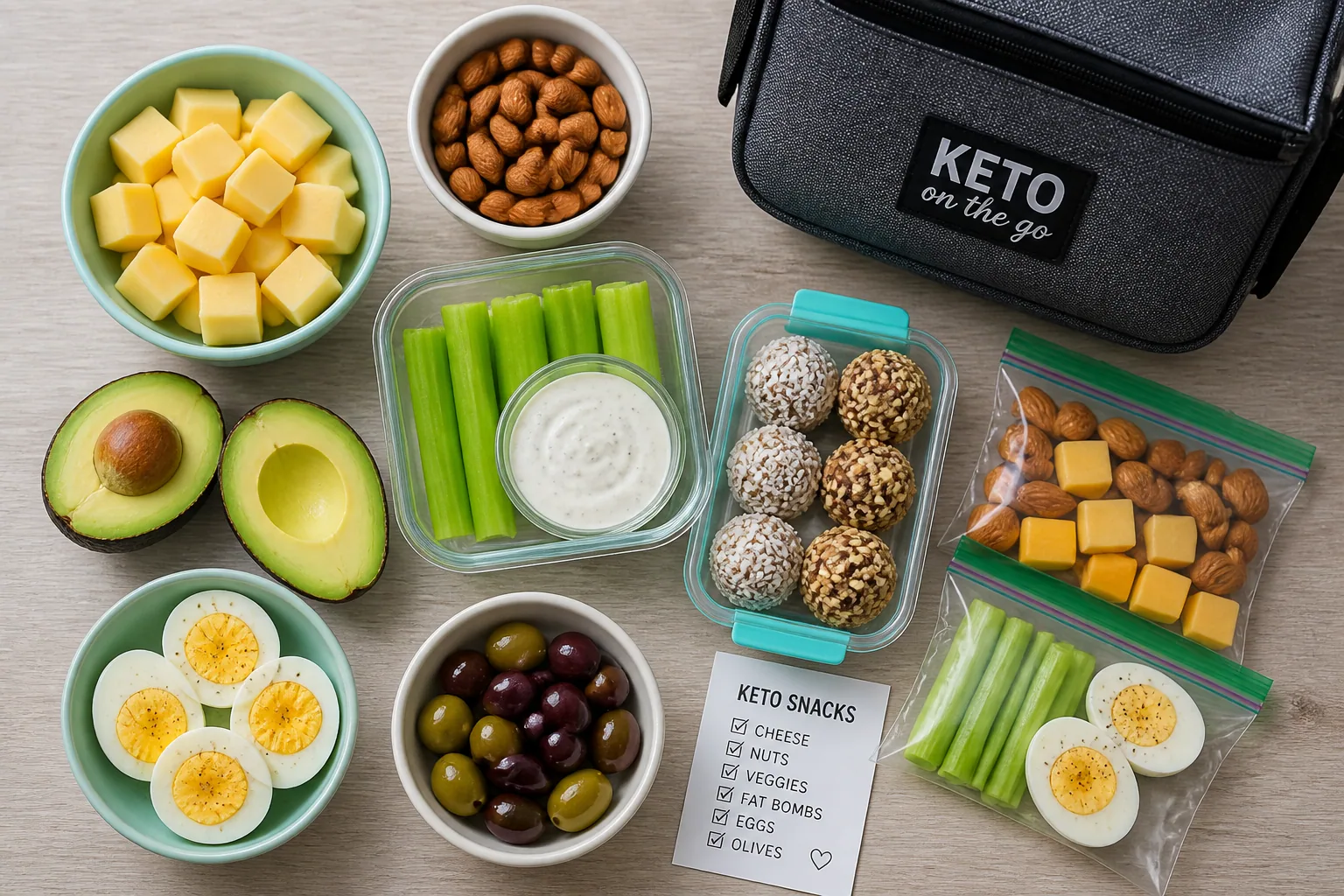
If you want keto snacks that are fast, practical, and easy to repeat, keep a short list of reliable staples. Hard-boiled eggs are one of the simplest options, with about 0.6 grams of net carbs each. Cheese slices or cheese sticks usually land around 1 gram of net carbs. Olives often fall between 0 and 1 gram. Avocado with salt can be about 2 grams of net carbs depending on the portion. Beef jerky with no added sugar can range from about 1 to 3 grams of net carbs. Source: https://ketodietcorner.com/keto-recipes/keto-snacks/
These snacks work because they are satisfying without requiring a lot of prep. Eggs provide protein and fat. Cheese is portable and easy to portion. Olives and avocado deliver healthy fats with very little sugar. Jerky can be useful when you need something more filling, especially on the go, but it is important to choose versions without added sweeteners or starches. If you keep a few of these foods on hand, you can avoid scrambling for convenience snacks that are not keto friendly.
Sweet Keto Snacks for Cravings Without the Carb Spike
Sweet cravings are one of the hardest parts of any low-carb plan, and they often show up when you are tired, stressed, or used to finishing meals with dessert. The best keto answer is not to ignore the craving completely, but to redirect it with foods that are sweet enough to feel satisfying while still staying low in carbs. A few berries in a measured portion, dark chocolate with 85 percent cacao or higher, or a homemade fat bomb can be enough to take the edge off without knocking you off track.
When choosing sweet keto snacks, pay attention to sweeteners and serving sizes. Some products are marketed as sugar-free or keto but rely on sugar alcohols that do not affect everyone equally. Erythritol is generally a safer bet than maltitol. You should also be careful with nut bars, chocolate snacks, and protein bites because they often contain enough hidden carbs to make them less keto-friendly than they first appear. A small sweet snack can fit into keto, but only if you treat it like part of your carb budget, not a free food.
If you prefer to make your own sweet snacks, it helps to batch them in advance. Homemade fat bombs, cacao coconut bites, or whipped cream with a few raspberries can be easier to portion than store-bought desserts. That way you get control over the ingredients and avoid the frustration of thinking something is low carb only to discover that the label is doing a lot of marketing work.
Savory Keto Snacks for Work, Travel, and Busy Days
Savory snacks are often the easiest to manage on a busy schedule because they tend to be less tempting to overeat than sweet snacks. They also travel better in many cases. Cheese crisps, meat sticks, pickles, olives, single-serve nut butter packets, and packets of nuts or seeds can all be useful when you are stuck in meetings, on the road, or running errands. Low-carb snack lists for kids and travelers frequently include the same portable options for exactly this reason. Sources: https://lowcarbpantryguide.com/low-carb-snacks-for-kids/ and https://ketogenic.com/16-keto-travel-snacks-to-munch-on-the-go/
If you are packing snacks for work or travel, choose items that do not require refrigeration when possible, or use an insulated bag if needed. Jerky, cheese crisps, nuts, and individual olive packs are easy to carry. Pickles and canned or pouch tuna can also work if you need something more filling, though they are better suited to a desk, car cooler, or hotel room than a pocket or purse. The best savory keto snacks are the ones you will actually eat consistently without having to overthink them.
For families, kid-friendly low-carb snacks can be surprisingly practical. Small portions of cheese, meat sticks without added sugar, berries in limited amounts, and nut butter packets can work well when the goal is to reduce carb-heavy snacking without making it feel restrictive. The more predictable the snack, the easier it is to keep both adults and kids on the same general track.
How Often Should You Snack on Keto?
There is no universal rule for keto snacking frequency. Some people snack once a day, some only when they are unusually active, and some do best with no snacks at all. Keto often reduces appetite on its own, which means many people naturally move toward zero to one snack per day after they adapt. Research and expert guidance suggest that snack frequency should depend on hunger, meal spacing, and calorie needs rather than a rigid schedule. Sources: https://www.lifeextension.com/wellness/weight/how-often-should-you-snack and https://ketodietcorner.com/keto-recipes/keto-snacks/
If you are newly starting keto, you may snack more often during the transition period while your body adjusts to lower carbohydrate intake. That is normal. The important thing is to make those snacks intentional and measured. Once you are settled in, many people find they need fewer snacks because meals become more satisfying and cravings diminish. If you feel compelled to snack all day, it may be worth checking whether your meals contain enough protein, fat, and fiber to keep you full for longer.
How to Fit Snacks Into Your Daily Carb Budget
The easiest way to keep snacks from sabotaging keto is to budget for them the same way you budget for meals. If your daily net carb target is 20 grams, then a 3-gram snack is a meaningful part of the day. If you aim for 30 or 40 grams of net carbs, you have a little more flexibility, but the principle is the same: snacks need to be planned, not improvised.
A practical method is to decide in advance how many carbs you want to reserve for snacks. For example, you might leave 5 grams of net carbs for one snack and distribute the rest across meals. That approach keeps you from accidentally using too much of your allowance on packaged snack foods or little tastes throughout the day. If you are strict keto, this kind of planning becomes even more important because the margin for error is smaller.
This is also where a tool like Keeto - Keto Made Easy can make life simpler. Instead of guessing at a label in the grocery aisle, you can scan a product barcode and instantly see whether it is keto-friendly, how many net carbs it contains, and what percentage of your daily carb budget it uses. You can learn more here: https://findthe.app/keeto-5m0vbj
How to Read Labels on Packaged Keto Snacks
Packaged keto snacks can be convenient, but the front label is often the least useful part of the package. Claims like low carb, keto, or sugar free do not automatically mean the product is ideal for ketosis. In fact, net carb labeling is not tightly regulated by the FDA, so the responsibility falls on you to inspect the nutrition facts panel and ingredient list carefully. UCLA Health explains that net carbs are calculated as carbs minus fiber and sugar alcohols, but that does not mean every product using that language is equally keto-friendly. Source: https://www.uclahealth.org/news/article/net-carbs-are-carbs-minus-fiber-and-sugar-alcohols
When reading a label, start with total carbs, then subtract fiber and any sugar alcohols that truly behave like keto-friendly sweeteners. After that, look at the ingredients. If you see sugar, starch, maltodextrin, rice flour, wheat flour, potato starch, or multiple forms of syrup, the snack may not be as low carb as the front of the package suggests. Also check the serving size. A snack that appears to have only 2 grams of net carbs may contain two or three servings per package, which changes the math quickly.
A good rule is to be skeptical of anything that requires you to do complicated mental gymnastics just to justify eating it. If the label is confusing, the ingredient list is long, or the carb count seems too good to be true, it is worth choosing a simpler snack instead.
Hidden Carbs, Sugar Alcohols, and Misleading Keto Claims to Watch For
The biggest traps in keto snacking are hidden carbs and misleading sweeteners. Some products rely on sugar alcohols like maltitol, which can affect blood sugar much more than people expect. Others hide carbs in ingredients that sound harmless, such as tapioca fiber, modified starch, or low-sugar blends that still add up over time. Even if a snack technically fits the numbers, it may still trigger cravings if it tastes very sweet or encourages overeating.
Another common issue is over-trusting products with big keto branding. Just because something is labeled keto does not mean it belongs in your daily routine. Some are fine occasionally, but they are not necessarily better than whole-food snacks. When in doubt, compare the snack to a simpler option like cheese, eggs, olives, nuts, or avocado. If the packaged product has more ingredients than a homemade snack and less satiety, it may not be worth the carb budget.
Smart Portioning and Snack Prep Tips
Portioning is one of the easiest ways to make keto snacking sustainable. Nuts, seeds, cheese, and fat bombs can all be overconsumed if they are eaten from a large bag or container. Pre-portioning snacks into small containers or bags helps you stay aware of how much you are actually eating. It also makes it easier to grab something quickly when hunger hits, which reduces the chance of reaching for a non-keto convenience food instead.
A smart snack-prep routine might include boiling a batch of eggs, slicing vegetables like cucumber or celery, portioning nuts into single-serve containers, keeping packets of nut butter in a drawer or bag, and preparing a few homemade energy bites or fat bombs. Keto snack prep works best when it is boring in the best possible way: repeatable, fast, and easy to maintain. The more friction you remove, the more likely you are to stick with it.
For people who travel often, a mini snack kit can be a game changer. Keep a small stash of shelf-stable snacks in your work bag, car, or suitcase so you are not forced to rely on airport food, gas station snacks, or vending machines. Planning ahead is not just about convenience. It is a practical defense against hunger-driven decisions that can derail your ketosis.
How to Stock a Keto Snack Kit for Home, Office, and Travel
A good keto snack kit should cover three scenarios: immediate hunger at home, quick access at work, and emergency backup during travel. At home, keep ready-to-eat staples visible in the fridge, such as boiled eggs, cheese, olives, and sliced vegetables. At the office, store shelf-stable items like jerky, nuts, nut butter packets, and individual seed packs in a drawer. For travel, include a small bag with protein-rich and fat-rich snacks that do not spoil easily.
The point of a snack kit is not to encourage constant eating. It is to make sure that if you do need a snack, the best option is the easiest option. A well-stocked kit can reduce decision fatigue and keep you from getting stuck between meals with no keto-friendly choice in sight. If you want to stay consistent, convenience matters just as much as nutritional theory.
Common Keto Snacking Mistakes and How to Avoid Them
One of the most common mistakes is eating snacks that are too close to dessert. If a snack is very sweet and highly processed, it can keep cravings active instead of settling them. Another mistake is treating fat as an unlimited free pass. Even on keto, calories still matter, and very calorie-dense snacks like nuts, cheese, and fat bombs can slow progress if portions get out of hand.
A third mistake is snacking without checking whether you are truly hungry. Sometimes thirst, stress, boredom, or poor meal composition is the real issue. If you are reaching for snacks constantly, it may help to evaluate your meals first. Do you have enough protein? Are you eating enough vegetables and fiber? Are your meals too small to carry you to the next one? Fixing the cause often reduces the need for snacking at all.
Finally, do not assume every keto snack is safe just because it fits a label claim. When products use clever marketing or vague carb counts, always verify the ingredients and serving size before making them a regular habit. Consistency matters more than novelty.
A Simple Snack Strategy to Stay in Ketosis Between Meals
The simplest keto snacking strategy is this: choose whole-food snacks first, keep portions small and intentional, and reserve packaged snacks for convenience, not as your foundation. Build your default snack list around foods that are naturally low in net carbs, satisfying, and easy to keep on hand. That might be eggs, cheese, olives, avocado, jerky without added sugar, nuts in measured portions, or vegetables with guacamole or nut butter.
From there, fit snacks into your carb budget instead of letting them happen by accident. If you use a tracker or a scanner, you can make faster decisions and avoid hidden-carb surprises. Keep your snack prep simple, stock your home and workspaces well, and treat labels with a healthy dose of skepticism. The more predictable your snack system is, the easier it becomes to stay in ketosis between meals without feeling deprived.