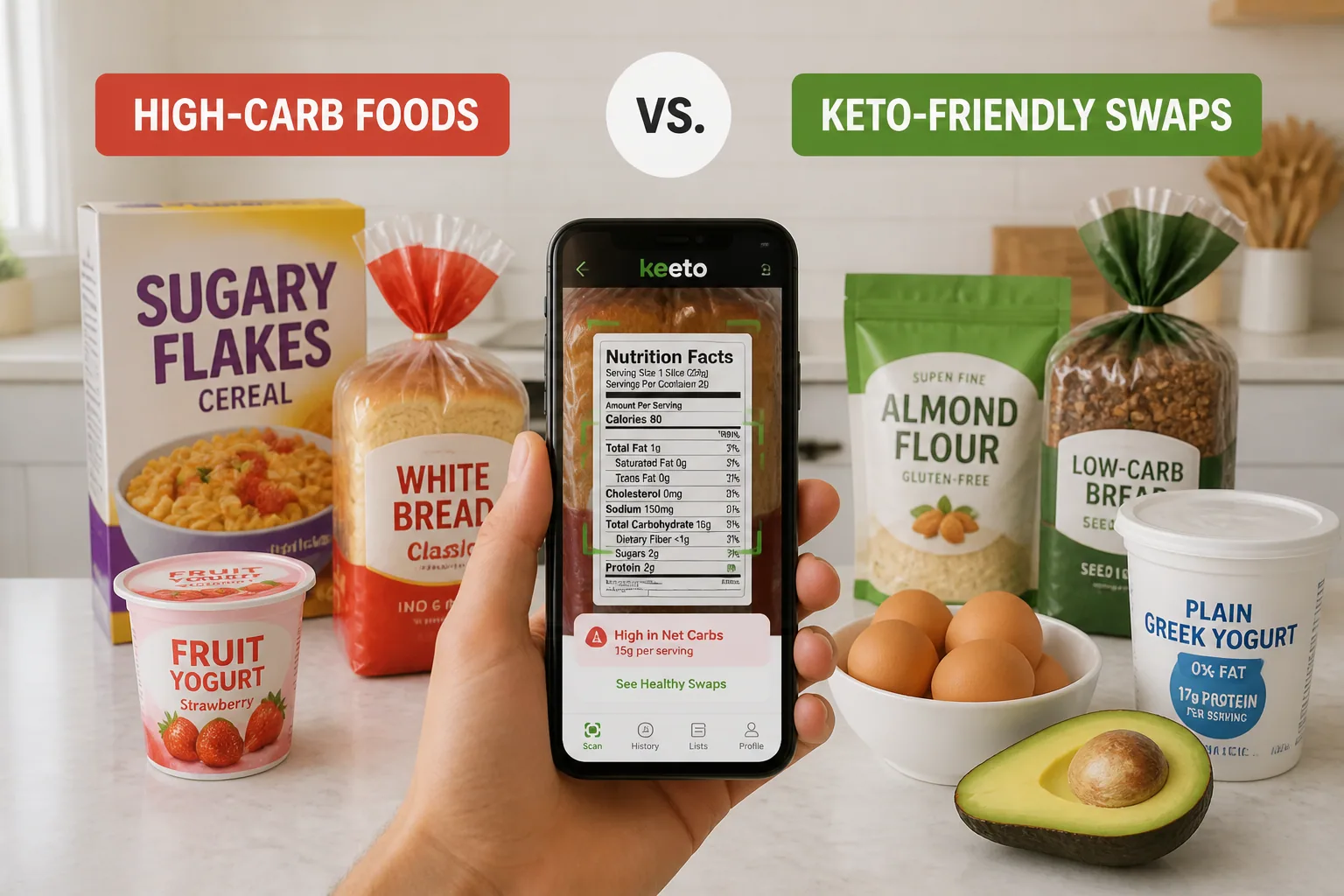
Smart Keto Swaps: Upgrade Your Pantry for Effortless Low-Carb Shopping
Starting keto can feel simple in theory and surprisingly tricky in the grocery aisle. The biggest challenge is rarely the meal itself. It is the pantry. A box of cereal, a loaf of bread, a tub of yogurt, a bag of flour, and a few sauces can quietly push your carb count far higher than you expect. The good news is that smart keto swaps do not have to be expensive, complicated, or overly restrictive. Once you know which staples to replace and what to look for on labels, low-carb shopping becomes much easier to manage.
This guide breaks down the most common pantry items people forget to swap, shows you how to spot genuinely keto-friendly alternatives, and explains how small changes can save a surprising number of net carbs over time. It also covers how to use a scanner like Keeto to check products quickly in-store, uncover hidden sugars, and avoid ingredients that look keto-friendly but are not. The goal is simple: help you build a pantry that supports ketosis without turning every grocery trip into a math problem.
Why Smart Keto Swaps Make Low-Carb Living Easier
One of the easiest ways to stay consistent on keto is to make your everyday food choices less demanding. If your pantry still looks like a standard high-carb kitchen, every snack, breakfast, and quick meal becomes a decision point. That is where people tend to slip. Smart swaps reduce friction. They make the low-carb option the convenient option.
There is also a psychological benefit. When you replace familiar foods instead of deleting them entirely, keto feels less like deprivation and more like an upgrade. You are not giving up toast, cereal, pancakes, or creamy sauces. You are changing the version you keep on hand so that the default choice fits your goals. That is why pantry planning matters just as much as meal planning.
These swaps also help you manage appetite and cravings. Many keto-friendly alternatives use fiber-rich ingredients, full-fat dairy, nuts, seeds, or low-glycemic sweeteners that are more filling than refined starches and added sugar. That means fewer blood sugar swings and, often, fewer random snack attacks later in the day.
The Most Common High-Carb Pantry Staples to Replace
If you are new to low-carb eating, the obvious problem foods are usually bread, pasta, rice, and sweets. But the pantry items people most often forget to swap are the ones used daily in small amounts. These are the ingredients that quietly add up.
Cereal is a major one. Traditional boxed cereals can be extremely carb-heavy, and once milk is added, the total rises fast. Research cited by Macronutrients.com notes that cereal plus 2% milk can easily reach 30 to 50 g net carbs per bowl, with some examples landing around 48 g total carbs. That is basically a full day of carbs for many strict keto eaters.
Bread is another common issue. Regular sliced bread often contains about 15 g net carbs per slice, which means a sandwich can consume most of your carb budget before lunch even begins. By contrast, many keto breads made with almond flour, coconut flour, and psyllium husk fall closer to 1 to 5 g net carbs per slice, according to ScienceInsights and Is It Keto. Sources: https://scienceinsights.org/is-keto-bread-healthy-or-just-lower-in-carbs/ and https://isitketo.org/bread
Yogurt is another sneaky one. A typical low-fat or non-fat regular yogurt serving can contain about 12 to 14 g of carbohydrates, mostly from lactose and added sugar. Plain Greek yogurt cuts that roughly in half, often landing around 6 to 7 g carbs per 170 g serving while offering more protein. GoodRx and Macronutrients.com both note that Greek yogurt can be a better fit for low-carb eating. Sources: https://www.goodrx.com/well-being/diet-nutrition/greek-yogurt-vs-regular-yogurt and https://macronutrients.com/foods/greek-yogurt-macros/
Flour is easy to overlook because it is usually not eaten on its own. But regular white or whole wheat flour can have 65 to 75 g net carbs per 100 g, which makes it one of the least keto-friendly pantry items around. Keto flours like almond flour and coconut flour tend to fall much lower, typically in the 10 to 20 g net carb range per 100 g, thanks to their fat and fiber content. Sources: https://ketolens.com/food/keto-bread and https://dev.bakerpedia.com/wp-content/uploads/simple-file-list/Baking-Keto-Pocket-Guide_V1_3-min.pdf.
Sauces, condiments, and snack foods also deserve attention. Ketchup, barbecue sauce, flavored nuts, protein bars, and salad dressings often hide sugar under a long ingredient list. Even if the label looks reasonable at first glance, a few grams per serving can pile up quickly when you use them daily.
What to Look for in a Truly Keto-Friendly Alternative
A good keto swap is not just lower in carbs. It should also be practical, satisfying, and realistic for everyday use. The best options tend to share a few traits. They use ingredients that are naturally lower in digestible carbs, they avoid added sugar, and they offer enough fat, fiber, or protein to keep you full.
For baked goods and cereals, look for ingredients like almond flour, coconut flour, flaxseed, chia, psyllium husk, eggs, nuts, and seeds. These ingredients reduce net carbs while adding structure and satiety. For dairy products, full-fat or whole-milk versions can be better than low-fat versions because they often contain fewer fillers and less added sugar. KetoLens notes that unsweetened whole-milk yogurt still contains natural lactose, usually around 4 to 6 g carbs per 100 g, so portion control still matters.
Sweeteners matter too. Allulose and erythritol are among the lowest-impact options for keto, and both are often treated differently from regular sugars on labels. WHYZ and Diet Doctor note that allulose has a glycemic index near zero and can brown or caramelize in a way that feels more like sugar in recipes. Sources: https://whyz.com/learn/guides/best-sweetener-for-keto/ and https://www.dietdoctor.com/low-carb/keto/sweeteners
At the same time, some products are not as keto-friendly as they first appear. Maltitol and isomalto-oligosaccharides, often shortened to IMO, can behave much more like regular carbs in the body than many shoppers expect. KetoPeek and LowCarb Avenue note that IMO was rejected by the FDA as dietary fiber, and maltitol is often flagged in keto sweetener rankings because it can still raise blood sugar. Sources: https://www.ketopeek.com/learn/keto-breads and https://www.lowcarbavenue.com/wiki/sugar-alcohols-keto/
The label should also be simple enough to trust. A truly keto-friendly product usually has transparent macros, a short ingredient list, and no need for guesswork around serving sizes or sugar alcohol behavior.
Easy Swaps for Cereal, Bread, Yogurt, Flour, and Snacks
The easiest keto swaps are the ones that preserve the original use case. You are not trying to reinvent breakfast. You are trying to make breakfast fit your carb goals.
For cereal, replace sugary boxed brands with nut-based or seed-based alternatives. Many keto cereals are built around almonds, coconut, chia, flax, or wheat-free protein blends. The main advantage is portion control with much lower carbs. Instead of 30 to 50 g net carbs in a bowl, some keto cereals come in around 4 g net carbs per serving, which makes them far more workable for a low-carb morning routine.
For bread, choose options made with almond flour, coconut flour, psyllium husk, and eggs. These ingredients mimic the texture of traditional bread better than you might expect. They also make it easier to keep sandwiches, toast, and breakfast slices in rotation without blowing through your carb limit. The difference is dramatic: one regular slice can bring about 15 g net carbs, while keto bread may stay in the 1 to 5 g range per slice.
For yogurt, the best move is often plain Greek yogurt or full-fat unsweetened yogurt, then adding your own keto-friendly flavoring. A few berries, cinnamon, chia seeds, or a low-carb sweetener can make a big difference without turning the bowl into a sugar bomb. The key is to avoid fruit-on-the-bottom cups, honey blends, and flavored yogurts that can pack in a lot more sugar than expected.
For flour, almond flour and coconut flour are the core pantry staples. Almond flour tends to work best for cookies, muffins, pancakes, and many savory recipes. Coconut flour absorbs more liquid and usually needs eggs or additional moisture, but it is still a useful low-carb option. If you bake often, these two flours are worth keeping on hand because they cover a lot of ground.
For snacks, focus on foods that naturally fit keto instead of trying to make every snack feel like dessert. Cheese crisps, nuts, seeds, olives, jerky with no added sugar, hard-boiled eggs, and avocado-based snacks can all work well. They are also usually easier on your budget than highly processed keto snack bars.
Side-by-Side Macro Comparisons: How Small Changes Save Big Net Carbs
The real value of keto swaps becomes clear when you compare the numbers side by side. A single change can look small, but over a week or month the savings can be enormous.
Take breakfast cereal. A standard bowl of cereal with milk can easily land around 40 to 50 g net carbs. If you swap that for a keto cereal with about 4 g net carbs, you may save 36 to 46 g in just one meal. If that happens five mornings a week, that is 180 to 230 g net carbs avoided weekly, before you even count snacks or lunch.
Bread is another simple example. Two slices of regular bread at roughly 15 g net carbs each equals about 30 g net carbs for a sandwich base. Two slices of keto bread at 1 to 5 g net carbs each can bring that total down to 2 to 10 g. That is a savings of 20 to 28 g every time you make a sandwich or toast breakfast.
Yogurt shows a similar pattern. A regular yogurt serving may contain 12 to 14 g carbs, while plain Greek yogurt may sit around 6 to 7 g per serving. That means you could save about 6 to 8 g per bowl, and more if you replace a flavored or sweetened version.
Flour is not usually eaten in single servings, but it matters in batch cooking. Replacing one cup of white flour in a recipe with a keto flour blend can slash the carb load dramatically, especially when the recipe is split into multiple portions. This is one reason keto baking feels less restrictive once your pantry is stocked properly.
These numbers are not just about strict compliance. They also create flexibility. When your pantry is filled with lower-carb versions of everyday staples, you can spend your carb budget on the foods you actually care about instead of losing it to breakfast and condiments.
How to Use Keeto’s Scanner to Check Net Carbs and Hidden Sugars
Even when a package looks keto-friendly, the easiest way to verify it is to scan it before you buy it. That is where Keeto can save a lot of time. Instead of pulling out a calculator in the aisle, you can scan a barcode and get an instant keto verdict, including net carbs and how much of your daily carb budget the product uses. If you want a faster way to compare products while shopping, you can check out Keeto here: https://findthe.app/keeto-5m0vbj.
This matters because labels can be misleading. A product may claim to be low sugar, high fiber, or keto-friendly, but the actual serving size may be tiny or the ingredient list may include sweeteners and starches that do not work well for ketosis. A scanner helps you move past the front-of-pack marketing and focus on the real data.
Keeto is especially useful for spotting hidden sugars and tracking how individual items affect your day. If you have a 20 g strict keto limit or a 30 g moderate limit, seeing the percentage of your carb budget on each scan makes shopping more concrete. That can prevent the common mistake of assuming that one item is harmless when it actually takes up a large chunk of your daily allowance.
It also helps when testing new swaps. If you are deciding between two bread brands, two yogurts, or two snack bars, scanning both can make the choice obvious. Over time, that habit builds better intuition about what belongs in your pantry and what does not.
Deceptive Label Terms That Can Trick Keto Shoppers
Keto shopping gets much easier once you learn which label terms deserve extra caution. Some phrases sound healthy or low-carb but can hide real carb content.
One of the most common traps is the word fiber. Fiber is useful, but some products use fibers or fiber-like ingredients that do not behave the way shoppers expect. IMO is a good example because it is sometimes marketed as fiber even though it may not act like one metabolically. That is why reading the ingredient list matters just as much as reading the nutrition panel.
Another label trap is sugar alcohol. Not all sugar alcohols are equal. Erythritol is generally much more keto-friendly than maltitol, while maltitol can raise blood sugar more substantially. If a product relies heavily on maltitol, it may not fit a strict keto approach even if the label looks promising.
Also watch for terms like natural sweetener, no added sugar, and reduced sugar. These statements do not automatically mean low carb. A product can have no added sugar and still contain enough starches, fruit concentrates, or malt-based ingredients to push the net carbs up.
If a package lists multiple ingredients you would not normally keep in your own kitchen, that is a sign to slow down and verify. The more processed the item, the more likely it is that the carb count or digestibility will be less favorable than it first appears.
Budget-Friendly Ways to Stock a Keto Pantry
A keto pantry does not need to be built entirely from premium specialty products. In fact, the most affordable approach is usually to anchor your kitchen with whole foods and use specialty items selectively.
The cheapest keto staples are often eggs, chicken thighs, ground beef, butter, cheese, frozen vegetables, and full-fat dairy. A weekly keto grocery plan for one person can be done for around $75, according to Hearthlight, especially when the focus stays on simple proteins and vegetables rather than packaged snacks. Source: https://hearthlight.app/blog/keto-grocery-list-budget-friendly
Buying in bulk also helps. Olive oil, nuts, almond flour, and certain sweeteners often cost less per serving when purchased in larger quantities. Keto Diet Deli notes that choosing store-brand or discount-brand versions of keto flours and sweeteners, plus prioritizing whole foods over processed keto products, can reduce pantry-building costs by 25 to 40 percent. Source: https://ketodietdeli.com/keto-pantry-staples-to-keep-on-a-tight-budget/
Another useful strategy is to keep specialty products as supports, not centerpieces. A keto bread loaf can be worth it if it helps you stay on plan, but it does not need to become your daily dietary foundation. The same goes for keto cereal, dessert mixes, and snack bars. Use them strategically, not automatically.
The simplest budget rule is to ask whether the product is solving a real problem. If a cheaper whole-food version works just as well, choose that first. Save the premium keto swaps for the foods you miss most.
Specialty Keto Products vs Everyday Grocery Store Staples
Specialty keto products are helpful, but they are not the whole story. In some cases, they make keto feel easier and more sustainable. In other cases, they can become expensive habits that do not improve your actual diet quality.
Everyday grocery store staples often win on value, versatility, and nutrition density. Eggs can become breakfast, lunch, or dinner. Plain Greek yogurt can be a snack or ingredient. Almond flour can bake muffins, pancakes, or coatings. Frozen vegetables stretch meals without much planning. These foods support keto without requiring much explanation.
Specialty products are best when they replace the specific food you struggle to give up. If toast keeps pulling you off track, keto bread may be worth the spend. If cereal is your weak point, a lower-carb cereal can help you keep your routine. But if you are buying five different premium snacks just because they are labeled keto, your pantry may become more expensive without becoming more useful.
The best pantry is balanced. It includes practical staples for real meals, a few specialty items for convenience, and enough flexibility that you do not feel boxed into a narrow food list.
A Simple Weekly Keto Swap Plan to Start Using Today
If you want to start without overthinking it, focus on one swap category per week. That keeps the process manageable and gives you time to learn what you actually like.
Week 1, swap breakfast. Replace cereal with a keto cereal or a low-carb breakfast like eggs, plain Greek yogurt, or chia pudding. Check the label before buying and aim for the lowest net carb option that still feels satisfying.
Week 2, swap bread. Try a keto bread or a breadless option for sandwiches, toast, or burger buns. Compare slices side by side so you can see whether the alternative is truly worth it.
Week 3, swap dairy snacks. Move from sweetened yogurt cups to plain Greek yogurt or full-fat unsweetened yogurt, then add your own flavor. This is one of the easiest ways to reduce sugar without feeling like you gave up dessert entirely.
Week 4, swap flour and baking basics. Buy almond flour or coconut flour and use them for one simple recipe first, like pancakes, muffins, or a quick bread. This helps you learn how keto baking behaves before you stock up too heavily.
Week 5, review sauces and snacks. Scan or compare the products you use most often. Look for hidden sugars, starches, and confusing sweeteners. Keep the winners, replace the rest, and build from there.
The point is not perfection. It is momentum. Once your pantry is aligned with your goals, keto stops feeling like a constant battle at the store. You know what to buy, what to avoid, and how to make low-carb choices without slowing down your day.