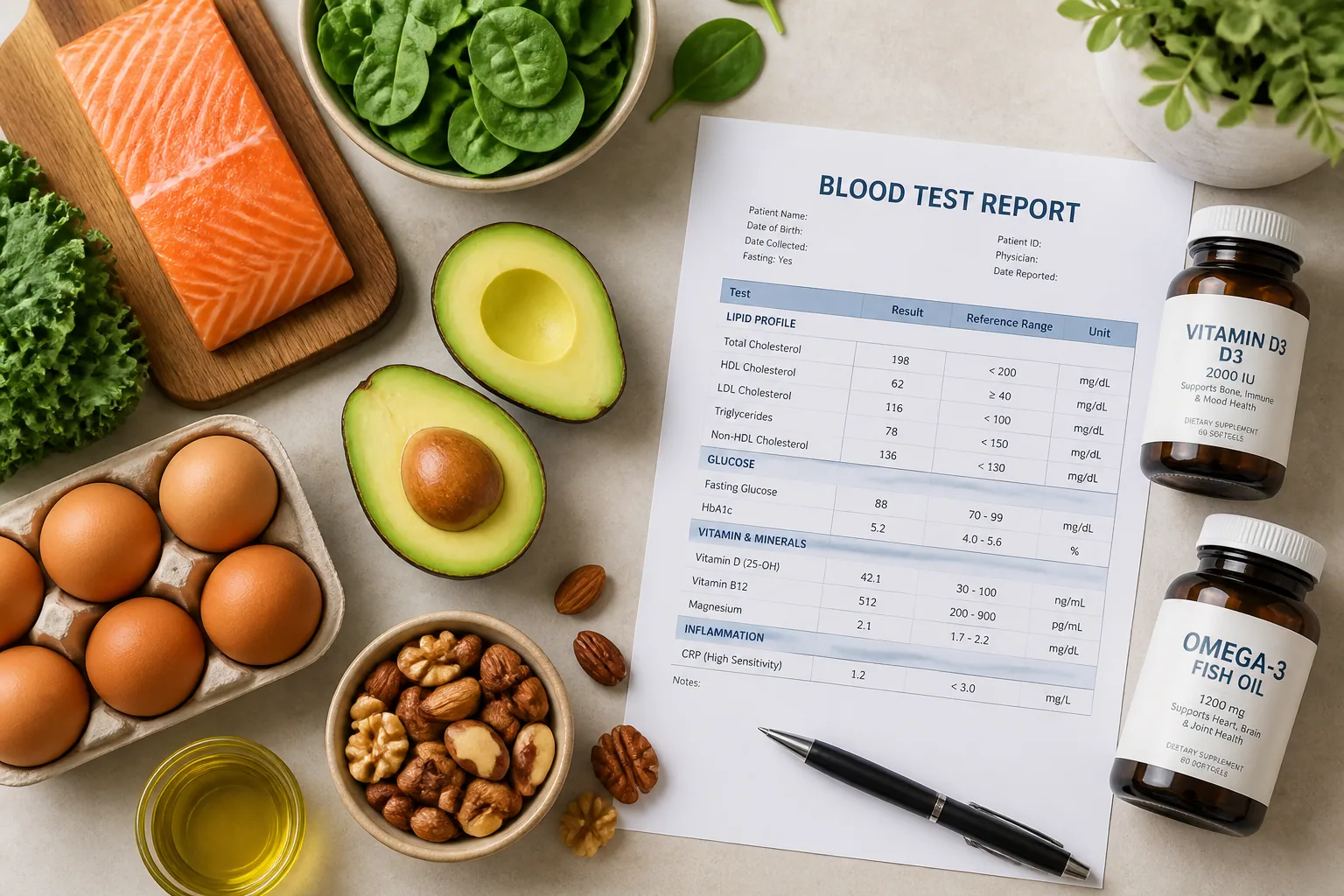
Should You Test for Nutritional Deficiencies on Keto? What Labs to Track and How Often
If you have been doing keto for a few months or longer, you may notice that the diet feels very different from the first few weeks. Energy can stabilize, hunger often drops, and body composition may improve. But over time, some people also run into cramps, fatigue, sleep issues, constipation, stalled performance, unexpected thyroid shifts, or blood work changes that raise questions. That is where lab testing becomes useful. It does not mean keto is automatically causing a deficiency, but it can help you catch patterns early, adjust your food choices, and avoid guessing when something feels off.
The main idea is simple: keto can be very effective, but it is still a dietary pattern, and any pattern can create gaps if it becomes too repetitive. Restricting whole food groups can reduce intake of certain vitamins and minerals, and the metabolic changes of ketosis can also affect fluid balance, thyroid markers, and lipids. A smart testing plan helps you separate harmless adaptation from a real issue that needs action.
Why Keto Followers Should Care About Nutrient Testing
In the early phase of keto, a lot of symptoms are driven by fluid shifts and electrolyte loss. Later on, the bigger question becomes whether your food variety is broad enough to cover micronutrients and whether your routine labs still look healthy. This matters especially if you have been strict for months, eat a narrow food list, train hard, are under high stress, or already have a history of thyroid issues, anemia, low vitamin D, or high cholesterol.
Research suggests that keto can lower intake of several nutrients even when blood levels do not immediately crash. In a 12-week study of obese adults on a ketogenic diet, intakes of magnesium, calcium, iron, phosphorus, and potassium all fell below recommended values, while serum levels stayed within range except for calcium, which dropped significantly from about 2.52 to 2.36 mmol/L. The same study also found water-soluble vitamin intakes, including some B vitamins, were too low even though serum deficiency signals were not yet obvious. Source: https://pubmed.ncbi.nlm.nih.gov/31445313/
That is the key point. Blood work does not always show a problem right away, but it can still warn you that your diet is drifting in the wrong direction. Testing is most helpful when you use it alongside symptoms, diet review, and your medical history.
The Most Common Nutritional Gaps on Keto and What Causes Them
The most common gaps on keto tend to come from two places: reduced food variety and lower intake of certain food groups. When carbs go down, many people also reduce fruit, legumes, grains, and some starchy vegetables. If the diet is built mostly around meat, cheese, eggs, oils, and a few low-carb vegetables, you may end up short on magnesium, potassium, calcium, folate, thiamine, and sometimes vitamin C, zinc, or iron depending on your food choices.
A clinical overview of keto-related micronutrient issues notes that deficiencies commonly seen or at risk on keto include B12, calcium, zinc, iron, vitamin E, and some fatty acids. That does not mean everyone on keto will become deficient, but it does mean the diet should be built with intention rather than convenience alone. Source: https://www.ncbi.nlm.nih.gov/books/NBK603752/
Another reason labs matter is that some markers can shift without immediate symptoms. You may feel fine while intake is gradually falling short. Or you may feel tired, crampy, or foggy because of electrolytes, even though your standard lab panel still looks technically normal. In both cases, context matters more than a single number.
Electrolytes First: Sodium, Potassium, and Magnesium
If you only track one area early in keto, start with electrolytes. Sodium is often the first to change because lower insulin levels increase sodium and water loss through the kidneys. That can show up as headaches, dizziness, weakness, reduced exercise tolerance, or the classic keto flu feeling. Potassium and magnesium also deserve attention because they influence nerve signaling, muscle function, and heart rhythm.
Potassium is especially important if you are active, sweat a lot, or eat very few vegetables. Magnesium is worth watching if you deal with muscle cramps, poor sleep, constipation, palpitations, or stress. Even when serum magnesium looks normal, intake may still be too low, so diet history matters. The 12-week study above found magnesium intake below recommendations despite serum values staying within range, which is a good example of why symptoms and intake are both important.
A practical takeaway is to think of electrolytes as daily maintenance, not as a once-a-year lab concern. If you are having recurring cramps, lightheadedness, or headaches, it may be smarter to review sodium, potassium, magnesium intake first before assuming something more complicated is going on.
Vitamin D, B Vitamins, and Other Micronutrients Worth Watching
Vitamin D is one of the most common labs to follow on any diet, but it can matter even more on keto if your food choices are limited or you spend little time in the sun. Many people on keto also do not eat enough dairy or fortified foods, which can affect calcium intake too. Some keto care centers routinely check 25-hydroxy vitamin D at baseline and follow-up, along with CBC and CMP, especially for longer-term follow-up. Source: https://pmc.ncbi.nlm.nih.gov/articles/PMC8610544/
B vitamins are another area to keep in mind. The 12-week keto study found that water-soluble vitamin intake was too low despite no immediate serum warning signs. That is a reminder that diet quality matters just as much as carbohydrate restriction. If you do not eat enough leafy greens, eggs, seafood, organ meats, nuts, and varied vegetables, you can slowly drift into low intake territory even if your keto macros look perfect.
Depending on your history, it may also be worth discussing zinc, iron studies, B12, selenium, copper, vitamin A, and vitamin E with a clinician. You do not need every micronutrient test all the time, but if you are symptomatic, vegetarian, highly restricted, or have anemia or fatigue, a broader look can be helpful.
Thyroid, Hormones, and Metabolic Markers on Long-Term Keto
Thyroid testing is a common point of confusion on keto. Some people see shifts in thyroid labs and panic, while others assume any change is automatically harmful. The reality is more nuanced. In one pilot crossover trial comparing three weeks of keto with a high-carb diet, keto led to significantly lower plasma T3 and significantly higher T4, with no change in TSH. Source: https://pmc.ncbi.nlm.nih.gov/articles/PMC9165850/
That pattern does not automatically mean thyroid disease. In some cases, it may reflect an adaptation to lower carbohydrate intake, lower insulin, or changes in peripheral conversion of thyroid hormones. But if you already have hypothyroidism, persistent fatigue, cold intolerance, hair shedding, constipation, or stalled recovery, it is reasonable to include TSH, free T4, and sometimes free T3 in your lab plan.
Hormonal markers can also behave differently depending on body composition. In long-term keto, especially among lean individuals, LDL changes have been linked to body composition and thyroid hormones more than to saturated fat alone. In one study of lean, healthy women on long-term keto, LDL-C change was strongly associated with body composition, especially lean mass, and free T3/T4, but not saturated fat intake or BMI alone. Source: https://pmc.ncbi.nlm.nih.gov/articles/PMC10768172/
Lipid Panels and Other Routine Blood Tests to Track
Lipid testing is essential on keto, and not because keto is automatically bad for cholesterol. It is because the response varies widely. Some people see a clear drop in triglycerides and a better TG/HDL pattern, while others see LDL-C and total cholesterol rise, sometimes substantially. A meta-analysis of 62 randomized controlled trials found triglycerides dropped by about 20 mg/dL and HDL-C rose by about 3.6 mg/dL, but LDL-C rose by about 8.5 mg/dL and total cholesterol by about 8.1 mg/dL versus control diets. Source: https://www.sciencedirect.com/science/article/pii/S1530891X26000261
That is why one person can feel better on keto and improve their triglycerides while another person sees a lipid pattern that deserves closer attention. In normal-weight adults, ketogenic diets have been associated with larger cholesterol increases, including roughly 57 mg/dL higher total cholesterol and about 42 mg/dL higher LDL-C in one review, alongside higher HDL-C and apoA and apoB. Source: https://pubmed.ncbi.nlm.nih.gov/36931263/
For routine monitoring, a fasting lipid profile is the minimum. Depending on your risk profile and how your doctor practices, it may also make sense to ask about apoB, non-HDL-C, and triglycerides. These can provide more nuance than LDL-C alone, especially if LDL rises on keto but triglycerides and HDL improve.
The Most Useful Keto-Related Labs and What They Measure
A practical keto lab panel usually starts with a few core tests and expands only when needed. Common baseline tests include a CBC, comprehensive metabolic panel, fasting lipid profile, 25-hydroxy vitamin D, and sometimes total and free carnitine. Some centers also check zinc, while fewer routinely check B12, vitamin A, vitamin E, copper, or selenium. Source: https://pmc.ncbi.nlm.nih.gov/articles/PMC8610544/
Here is what the most useful labs tend to tell you. A CBC can show anemia, infection patterns, or general blood health. A CMP gives a snapshot of liver enzymes, kidney markers, glucose, sodium, potassium, calcium, albumin, and bicarbonate. A lipid panel tracks cholesterol response. Vitamin D reflects longer-term status, not just what you ate yesterday. If you are symptomatic, adding ferritin, iron studies, B12, folate, magnesium, and thyroid tests can fill in the gaps.
If you are trying to understand whether a result is clinically important, the safest approach is to look for trends, not one-off numbers. One mildly abnormal lab may simply reflect recent illness, dehydration, exercise, or supplement use. A repeated change over time is more meaningful.
How Often Should You Test? A Practical Timeline
Testing frequency should match your goals and risk factors. If you are new to keto, have symptoms, or have a medical condition, testing more often is reasonable. If you have been stable for a while, you can usually space things out. In keto therapy centers, follow-up often happens at 3 months, 6 months, and 1 year, then moves to 6- or 12-month intervals if things remain stable. Source: https://pmc.ncbi.nlm.nih.gov/articles/PMC8610544/
A practical approach looks like this: baseline before or soon after starting keto, then repeat at about 3 months if you are making a major diet change or have symptoms, then again around 6 months if anything was off. After that, annual testing is often enough for healthy, stable people, but people with lipid concerns, thyroid disease, kidney issues, anemia, or heavy training may need closer follow-up.
If you are unsure, symptoms should guide you. Recurring fatigue, cramps, constipation, dizziness, hair loss, menstrual changes, or unexpected lipid shifts are all reasons to test sooner rather than later.
How to Interpret Results Without Overreacting
The biggest mistake people make with keto labs is treating every borderline number as a crisis. The better approach is to ask three questions. Is the value truly abnormal? Is it changing over time? Does it match what you feel? If the answer to only one of those is yes, the result may not be as important as it looks.
For example, a small LDL rise can happen on keto without immediate harm, but a much larger or persistent increase deserves a deeper look, especially if apoB or non-HDL-C also rise. Likewise, a normal serum magnesium does not always mean magnesium intake is adequate, especially if cramps or poor sleep are telling a different story. And a lower T3 on keto does not always mean thyroid failure, but it should not be ignored if symptoms are stacking up.
The goal is not to chase perfect numbers. The goal is to identify useful patterns and make targeted changes before they become bigger problems.
Diet Tweaks and Supplements That Can Correct Common Issues
If your labs or symptoms suggest a problem, the first fix is usually food. Add more low-carb vegetables, rotate protein sources, include seafood, eggs, dairy if tolerated, nuts, seeds, and avocado, and avoid letting keto become a two or three food diet. More variety often improves magnesium, potassium, folate, calcium, and trace minerals naturally.
Supplements can help too, but they should be targeted. A review of keto nutrition recommendations notes that a multivitamin and mineral meeting RDA levels is often advised, with additional calcium and vitamin D3 likely valuable long term. Magnesium supplementation is generally reserved for symptoms or confirmed low levels rather than used automatically for everyone. Source: https://pmc.ncbi.nlm.nih.gov/articles/PMC8610544/
If lipids rise too much, the response is usually not to abandon keto immediately. It may be more useful to adjust saturated fat intake, add more fiber from low-carb vegetables, emphasize unsaturated fats, and retest. If electrolytes are the issue, sodium and magnesium intake may need attention. If thyroid labs and symptoms are both concerning, you may need medical guidance rather than a simple diet tweak.
Red Flags That Mean You Should Talk to a Healthcare Provider
You should not try to self-manage everything with keto labs if you have any major red flags. Get medical advice if you have chest pain, fainting, irregular heartbeat, severe weakness, persistent vomiting, major unexplained weight loss, worsening constipation, significant hair loss, menstrual disruption, or signs of anemia such as shortness of breath and unusual fatigue. Also seek help if you have known kidney disease, a thyroid condition, a history of eating disorder, or lipid values that rise sharply and stay elevated.
It is also worth speaking with a clinician if you are pregnant, breastfeeding, taking diabetes medication, using blood pressure medication, or following keto for a medical reason such as epilepsy. These situations can change what should be monitored and how often.
Real-World Keto Lab Stories: What Changed and What Helped
Consider a long-term keto follower who felt mostly fine but kept getting calf cramps and poor sleep. Their labs were normal, but a diet review showed low magnesium-rich foods and inconsistent sodium intake. After increasing mineral-rich vegetables, adding broth and a targeted magnesium supplement, the cramps improved within a few weeks. The lesson was that symptoms came first, and labs mainly helped rule out more serious issues.
Another example is the person who loved keto for appetite control and blood sugar stability but saw LDL rise significantly at a follow-up lipid panel. Instead of abandoning the diet right away, they shifted from heavy butter and cheese use toward olive oil, avocado, nuts, seeds, and more non-starchy vegetables, then repeated the panel. Their triglycerides stayed low, HDL remained good, and LDL improved enough to keep the plan sustainable.
These kinds of adjustments are often the real value of lab-guided keto. The numbers do not just label you as healthy or unhealthy. They help you decide what to change.
A Simple Long-Term Lab Checklist for Staying Healthy on Keto
If you want a streamlined plan, start with baseline CBC, CMP, fasting lipid profile, and 25-hydroxy vitamin D. If symptoms or history suggest it, add magnesium, ferritin, iron studies, B12, folate, TSH, free T4, and possibly free T3. Recheck at around 3 months if you are newly adapting, then at 6 months and 1 year if changes need follow-up. Once stable, annual testing is often reasonable for many people.
Just as important, keep your food routine easy to review. A tool like Keeto - Keto Made Easy can make it simpler to scan products, track net carbs, and build meals that are more varied and less repetitive, which can indirectly support better nutrient intake over time. You can learn more here: https://findthe.app/keeto-5m0vbj
The bottom line is that keto does not require obsessive testing, but it does reward smart monitoring. If you track the right labs at the right time, pay attention to symptoms, and keep your meals nutrient dense, you can stay on keto longer with fewer surprises and better long-term results.