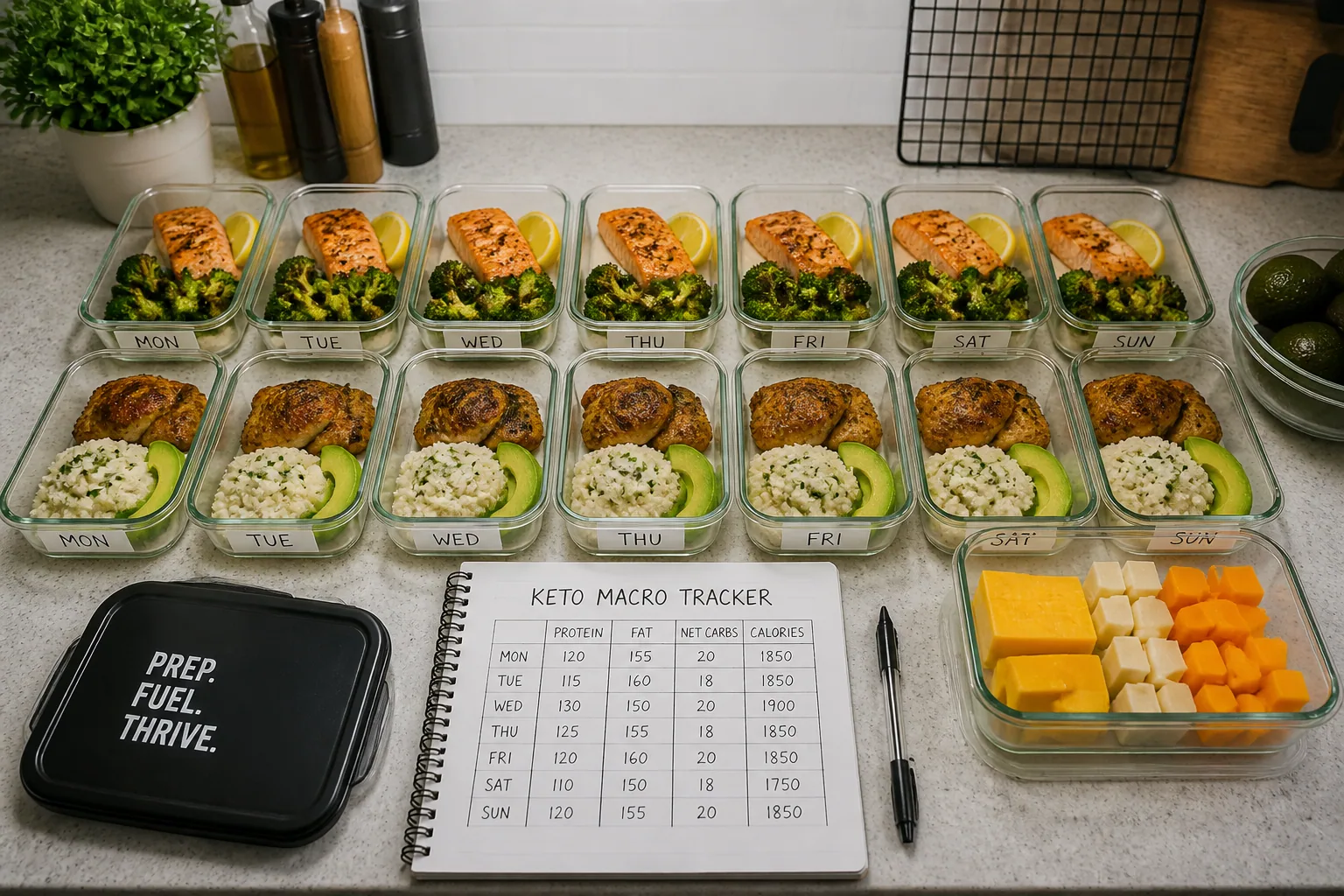
Optimal Keto Meal Prep: How to Plan, Prep, and Preserve Quality for a Full Week
Keto meal prep works best when it is treated like a system, not a pile of recipes. The goal is not to cook seven identical containers of food and hope for the best. The goal is to build a repeatable weekly structure with a few meals that reheat well, stay within your carb target, and still taste good on day four or day six. That means planning for texture, food safety, and macro accuracy from the start, instead of trying to fix soggy vegetables or dry chicken after the fact.
If you have ever opened a container on Wednesday and found limp broccoli, rubbery eggs, or a dressing that pushed your net carbs higher than expected, you have already seen why keto prep fails. The problem usually is not effort. It is design. With the right rotation, cooking method, storage plan, and reheating rules, a full week of keto meals becomes much easier to manage and a lot more enjoyable to eat.
Why Most Keto Meal Prep Fails by Midweek
Most meal prep breaks down for the same few reasons. First, people cook everything the same way, even though different foods hold quality differently. Chicken breast dries out faster than thighs, salmon spoils faster than beef, and steamed zucchini turns watery much sooner than roasted cauliflower. Second, they store foods together that should be kept separate, which leads to sogginess and blandness. Third, they plan for calories but forget about hidden carbs in sauces, marinades, and packaged proteins.
Food safety is another major issue. Cooked keto proteins such as chicken, beef, and pork generally last 3 to 4 days in the fridge when stored in airtight containers at 40°F or below, according to KitchenReal. Seafood is shorter lived, with salmon and prawns typically needing to be eaten within 2 to 3 days. That means a true full-week plan needs more than one storage strategy, especially if you want the last few days to taste as good as the first. For reference, see https://kitchenreal.com/how-long-cooked-meals-last-in-the-fridge-for-meal-prep/
The other common failure is boredom. If every lunch is just meat and broccoli, the diet feels restrictive very quickly. The fix is not to cook seven different meals. It is to build a small rotation with enough contrast in flavor, texture, and fat profile that each day feels different without adding a lot of work.
Build a 3-to-4 Meal Rotation That Prevents Burnout
A strong keto prep week usually relies on 3 to 4 repeatable meals instead of 7 separate ones. That keeps the prep simple while still giving you variety. A good rotation might include one chicken-based meal, one beef or pork meal, one egg-based breakfast or brunch meal, and one seafood or casserole option if you know you will eat it early in the week. This structure makes shopping easier, batch cooking more efficient, and portion control more consistent.
The key is to vary the meal format, not necessarily the ingredients in a dramatic way. For example, shredded chicken can be used in a salad bowl one day, a lettuce wrap the next, and a cauliflower rice bowl later in the week. Ground beef can become taco bowls, stuffed peppers, or a casserole base. This approach reduces decision fatigue because you are choosing from a few templates rather than inventing dinner every night.
When building the rotation, try to include at least one meal that tastes great cold or at room temperature, one that reheats best in an oven or air fryer, and one that uses a sauce stored separately. That mix gives you flexibility when your schedule changes. It also helps preserve quality because not every meal needs the same reheating treatment.
How to Choose Keto Meals That Reheat Well
The best keto meal prep meals are not just low in carbs. They are structurally stable. Foods with a little fat, moderate moisture, and enough surface area to brown usually reheat better than lean, delicate, or watery foods. Think roasted chicken thighs, meatballs, taco beef, egg bakes, cauliflower mash, roasted Brussels sprouts, and casseroles with a sturdy base.
In general, dishes that rely on crispness, fresh herbs, or fragile dairy need more care. A creamy sauce can split if overheated. Fresh greens can wilt too fast. Breaded keto coatings can go soft in the fridge unless reheated in dry heat. For best results, choose dishes that can survive a second cooking moment without collapsing in texture.
Soups, stews, and casseroles can be excellent prep foods as long as they are not overloaded with delicate dairy. KitchenReal notes that properly cooled soups and stews, stored in airtight shallow containers, may last 5 to 6 days in the fridge if the temperature stays at 40°F or below. That makes them especially useful for the middle or latter part of a prep week, when you want something easy and filling without having to cook again. Source: https://kitchenreal.com/how-long-cooked-meals-last-in-the-fridge-for-meal-prep/
As a rule, the more moisture a food contains, the more important your storage and reheating method becomes. If you know a dish will be microwaved, choose recipes that tolerate gentle steam. If you plan to use an oven or air fryer, choose meals that benefit from dry heat and a little re-crisping.
Best Batch-Cooking Methods for Proteins Without Drying Them Out
Protein is usually the most expensive part of keto meal prep, so it pays to cook it carefully. Dry, overcooked meat is one of the fastest ways to make meal prep feel punishing. The best methods are the ones that preserve fat, moisture, and carryover cooking.
For chicken, thighs tend to be more forgiving than breasts because their higher fat content keeps them moist after reheating. Roasting or baking them at moderate heat, then slicing after resting, usually gives better results than blasting them at high heat. For beef, ground beef is incredibly prep friendly because it stays juicy, absorbs seasoning well, and reheats without much texture loss. Pork shoulder, meatballs, and braised cuts also hold up very well over several days.
Seafood needs special handling. Since salmon and prawns are best eaten within 2 to 3 days in the refrigerator, they are often better suited to the first half of the week or to a freezer plan. If you do prep fish, avoid overcooking it on day one. Slightly undercooked salmon can reheat more gracefully than salmon that was already pushed too far in the oven. Seafood tends to dry out quickly, so very gentle reheating matters even more than usual.
A simple rule helps here: cook proteins to just done, let them rest, and keep sauces off until serving. That approach protects texture and makes the food more adaptable. It also lets you use one protein in multiple meals without it tasting identical each time.
How to Store Non-Starchy Vegetables So They Stay Crisp, Not Mushy
Vegetables are where many keto prep containers lose their appeal. Cauliflower, broccoli, green beans, asparagus, zucchini, and cabbage can all work beautifully, but only if they are cooked and stored with moisture in mind. The main rule is simple: avoid overcooking at the prep stage.
Roasting usually gives better texture than boiling or steaming for many keto vegetables because it removes excess water and concentrates flavor. If you do steam vegetables, keep them slightly firm. They will soften a bit more when reheated. For high-moisture vegetables like zucchini and mushrooms, quick sautéing or roasting can prevent that sad, wet texture that often shows up on day three.
SummitPlate notes that non-starchy roasted or steamed vegetables typically remain good for 3 to 5 days, and in some cases up to 5 to 7 days when preparation is optimal. That makes them a strong fit for most full-week keto plans, especially if you portion the more delicate vegetables into the earlier days. See https://www.summitplate.com/kitchen-tips/meal-prep-food-safety
To keep vegetables crisp, store them separately from sauces and juicy meats when possible. If the vegetables are likely to release water, put a paper towel in the container or use a divided container with a drier compartment. Reheat them in a skillet or air fryer if you want to restore some texture instead of just steaming them in the microwave.
Keeping Cheese, Sauces, and High-Fat Add-Ons Fresh and Keto-Friendly
Keto meals often depend on fat for satisfaction, but fat components can be the easiest to mishandle. Cheese can become greasy or clumpy, cream sauces can break, and dressings can hide a surprising amount of sugar. The best approach is to treat fats as deliberate add-ons rather than mixing everything into the main container.
Store shredded cheese, sliced avocado, sour cream, pesto, aioli, butter, olive oil, and other high-fat additions separately whenever possible. That gives you more control over texture and macro balance. It also prevents foods from becoming soggy before you eat them. If you know a meal needs a rich finish, add the fat at serving time instead of during prep.
This is also where hidden carbs can sneak in. DrBerg points out that condiments and sauces such as ketchup, BBQ sauce, teriyaki, and even some light dressings often contain added sugars or starches. Flavored dairy products and processed meats can also contain fillers such as maltodextrin or dextrose. More on that here: https://www.drberg.com/blog/hidden-carbs
If you want better control over your keto macros, it helps to keep sauces simple. Use olive oil and lemon, garlic butter, sugar-free mayonnaise-based dressings, or homemade pan sauces where you can measure every ingredient. Even a tiny amount of sugar in a marinade can add up over a week if you are eating the same meal repeatedly.
Protecting Your Macros: Hidden Carbs, Fat Loss, and Portion Accuracy
A good keto prep plan does more than keep you full. It protects the logic of the diet. That means measuring ingredients, checking labels, and understanding where carbs can hide. The most common problem is not the obvious starch on the plate. It is the seasoning, marinade, coating, or packaged ingredient that quietly pushes a meal over target.
Processed meats are a frequent issue. Sausages, cured bacon, and pre-seasoned meats often contain sugar or starch in the curing or flavoring process. Even dairy products can vary widely. When you are building meals in advance, it is worth choosing plain ingredients and seasoning them yourself so you know exactly what is going into the container.
This is where a tool like Keeto - Keto Made Easy can be useful in a real-world prep workflow. If you are shopping for meal prep ingredients and want to verify whether a packaged product fits your carb target, you can scan it and check net carbs quickly at https://findthe.app/keeto-5m0vbj. That kind of instant label check can save time and help you avoid guesswork in the grocery aisle.
Portion accuracy matters just as much as ingredient choice. A keto meal can become too high in calories or too low in fat if portions are inconsistent across the week. Divide proteins evenly, portion vegetables by weight if needed, and add fats intentionally rather than pouring them on at random. That keeps your macro pattern steady and makes it much easier to see whether the diet is actually working for you.
The Best Containers for Keto Meal Prep
Container choice affects both food quality and convenience. Glass containers with airtight lids are often the best option because they help prevent moisture loss, resist odor absorption, and go from fridge to microwave more cleanly than many plastic alternatives. They also make it easier to see what is inside, which helps with the FIFO method, or first in, first out.
Shallow containers are especially helpful because food cools faster and more evenly in them. That matters for safety and for texture. A deep container can trap heat in the center much longer, which can keep food in the danger zone too long after cooking. If you are dividing large batches, use smaller containers or spread the food out before refrigerating.
Divided containers can be useful if you want to keep meat, vegetables, and sauces separate without using multiple boxes. They are not perfect for every meal, but they help preserve texture and make weekday grabbing simpler. For foods with a lot of sauce or moisture, however, a separate sauce cup may still be the better choice.
Fridge vs. Freezer: What to Store Where for Maximum Quality
A full-week keto plan almost always benefits from a fridge and freezer combination. The first four days of meals are usually best kept in the refrigerator, while days 5 through 7 can be frozen and thawed as needed. Mealift specifically recommends storing days 1 to 4 in the fridge and freezing days 5 to 7 for a seven-day prep cycle. Source: https://www.mealift.app/blog/how-to-store-meal-prep
The freezer is especially useful for proteins, soups, stews, casseroles, and cooked vegetables that will still perform reasonably well after thawing. Freezing extends life to around 2 to 3 months, though quality will decline if the food is frozen or reheated poorly. For that reason, it is smart to freeze only foods that can handle a little texture loss.
Not everything belongs in the freezer. Some dairy-heavy dishes separate badly. Avocado does not thaw well. Crisp vegetables can become soft. If a food is already fragile, it is usually better to keep it for the first few days of the week or prep it fresh later. The freezer is a tool for preservation, but not every keto ingredient is freezer friendly.
Safe Cooling, Storage Times, and Reheating Rules
Food safety should be built into the prep process, not treated as an afterthought. A good standard is to cool hot food to about 70°F within 2 hours, then refrigerate it promptly. Food should not sit in the danger zone of 40 to 140°F for more than 2 hours total. This is especially important for high-protein meals, dairy-heavy dishes, and anything you plan to eat over several days.
Use shallow containers so meals cool faster. Label each container with the cook date and use-by date. Keep older meals toward the front of the fridge so they get eaten first. This simple FIFO habit prevents waste and reduces the chance that a meal gets forgotten until it is no longer ideal to eat.
Typical storage windows matter. Most cooked chicken, beef, and pork should be used within 3 to 4 days in the refrigerator. Hard-boiled eggs, when unpeeled, can last up to 7 days, which makes them useful for a full prep week. Soups and stews can stretch a bit longer if stored correctly, but seafood should be handled more cautiously and used earlier. These timelines are practical guardrails, not suggestions to stretch food past its best condition.
Reheating matters too. Use the oven or air fryer when you want to restore crispness in meats, and use light sautéing when you want vegetables to taste fresher. Avoid blasting food on high heat, because overcooking can make already cooked protein dry and vegetables mushy. Reheat only what you need, and keep sauces separate until the final minute.
A Sample 7-Day Keto Prep Workflow for Busy Schedules
A realistic weekly workflow can make keto feel much easier. Start with one prep day and one short midweek refresh, rather than expecting everything to survive untouched for seven days. On prep day, choose 3 to 4 meals, shop for plain ingredients, and cook the most stable foods first. Batch-cook proteins, roast vegetables, prepare one or two sauces, and portion high-fat add-ons into separate containers.
Here is a simple structure that works for many people. Days 1 and 2 can use the most delicate foods, such as seafood, fresh greens, or avocado-based toppings. Days 3 and 4 can cover roasted chicken, beef bowls, or casseroles. Days 5 to 7 can use frozen meals that you move to the fridge the night before, or foods that were designed for longer storage such as soups, stews, egg bakes, or meatballs.
A practical prep day might look like this: cook two proteins, roast two non-starchy vegetables, make one batch of cauliflower rice, mix one sauce, hard-boil a few eggs, and portion cheese or butter separately. From there, assemble containers by matching protein with a vegetable and adding the sauce only when you are ready to eat. That keeps your meals from turning into one-note leftovers.
If you want to streamline shopping and ingredient verification while building this workflow, Keeto - Keto Made Easy can help you scan packaged foods, track daily carb limits, and even generate keto-friendly recipe ideas from ingredients you already have. It is a practical way to keep the prep process aligned with your macros without doing a lot of manual math.
Common Keto Meal Prep Mistakes and How to Avoid Them
The first common mistake is overcooking during batch prep. If the food is already dry when it goes into the fridge, reheating will only make it worse. The second is mixing everything together too early, which turns crisp vegetables soggy and makes sauces water down the whole meal. Keep components separate whenever you can.
Another mistake is ignoring ingredient labels. A meal may look keto on the surface but still carry hidden carbs from seasoning blends, marinades, dressings, or processed meats. Checking labels before cooking is far easier than trying to salvage a week of meals after the fact. The same goes for calorie-dense fats. Keto does not mean unlimited fat. Portioning still matters.
People also often try to refrigerate everything for the full week. That usually hurts quality and can be unsafe for more perishable foods. A better plan is to refrigerate the meals that are safe for 3 to 4 days and freeze the rest. Then thaw them in the refrigerator before use. That preserves both flavor and safety much better than leaving everything in one big stack of containers.
Finally, many meal preppers forget that texture is part of compliance. If the food does not taste good, you will not stick with the plan. The smartest keto prep systems protect flavor, protect macros, and protect convenience at the same time. Once you build around those three goals, meal prep stops feeling like a compromise and starts feeling like a real advantage.