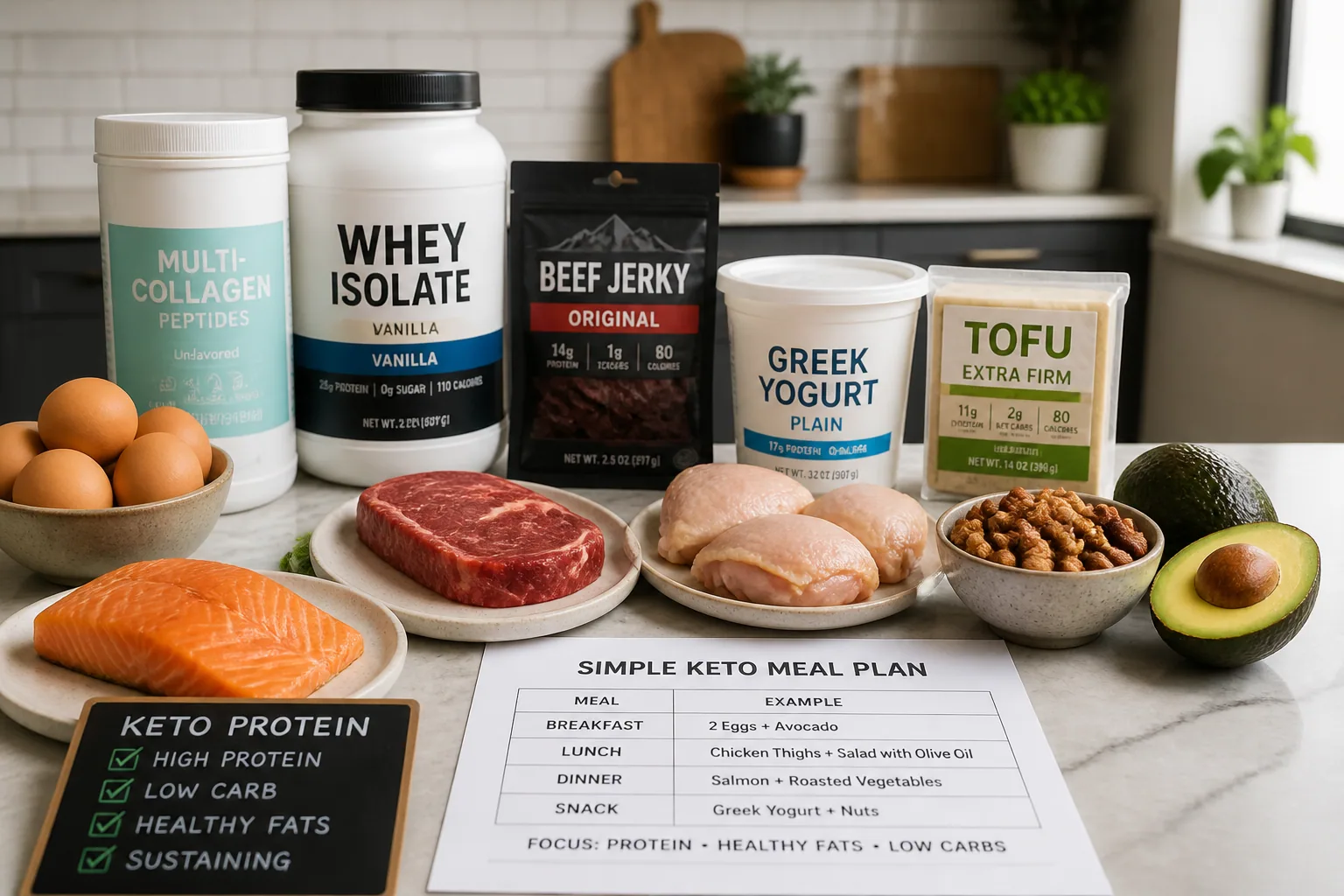
Maximizing Keto Protein Quality: Which Sources Best Support Fat Loss, Muscle, and Ketosis?
Protein is one of the most misunderstood parts of keto. A lot of people focus almost entirely on carbs and fat, then treat protein like a side note. But once you start caring about fat loss, muscle retention, satiety, energy, and long-term health, protein quality becomes one of the biggest levers you can pull.
On keto, the goal is not just to eat “enough” protein. It is to choose protein sources that actually deliver the amino acids your body can use, with the least friction for your budget, digestion, preferences, and lifestyle. That is where concepts like bioavailability, digestibility, and amino acid profile start to matter in a very practical way.
In this guide, we will break down which protein sources work best on keto, how much protein you really need, whether too much protein actually kicks you out of ketosis, and how to build meals that support your goals without turning every grocery trip into a spreadsheet. If you want a faster way to check packaged keto foods while shopping, a tool like Keeto - Keto Made Easy can help you scan products and instantly see whether they fit your carb target: https://findthe.app/keeto-5m0vbj
Why Protein Quality Matters More Than Most Keto Followers Realize
Keto is often sold as a high-fat diet, but protein is what keeps it functional. Protein supports muscle repair, recovery, hormone production, immune function, and satiety. If protein quality is poor, you may technically hit your grams for the day while still underdelivering the amino acids needed to maintain lean tissue.
This matters even more during weight loss. In a calorie deficit, your body becomes more protective of energy, and inadequate protein can make it easier to lose muscle along with fat. That is one reason ketogenic diets often use moderate to relatively high protein intakes. Research summarized in a review on ketogenic diets found average protein intake tends to be around 1.8 g/kg body weight, which is higher than many comparison diets and helps with satiety, fat loss, and preservation of fat-free mass. Source: https://pmc.ncbi.nlm.nih.gov/articles/PMC11212571/
Protein quality also affects how satisfied you feel after meals. A protein that is easier to digest and richer in essential amino acids can create a stronger post-meal effect for muscle protein synthesis and fullness than a lower-quality option with less favorable digestibility. On keto, that can translate into fewer cravings, fewer between-meal snacks, and easier adherence.
What Makes a Protein “High Quality” on Keto?
A high-quality protein is not just one with a high gram count. It is a protein that delivers a complete and well-balanced set of essential amino acids, is digested efficiently, and is absorbed in a form your body can actually use.
The main things to look at are amino acid profile, digestibility, and leucine content. Leucine is especially important because it helps trigger muscle protein synthesis. Animal-based proteins often win here because they tend to be more complete and more balanced in amino acids than most plant sources.
Research comparing protein quality measures like PDCAAS and DIAAS shows that many plant-based whole foods are lower in limiting amino acids, such as lysine or sulfur-containing amino acids, and may also contain anti-nutritional factors that reduce digestibility. Animal proteins, by contrast, generally score higher on digestibility and amino acid completeness. One review notes animal proteins often have digestibility around 95%, while plant sources are more commonly around 80% to 92%. Source: https://pubs.rsc.org/en/content/articlehtml/2016/fo/c5fo01530h
That does not mean plant proteins are useless. It means you need to be more intentional. On keto, where carbs are limited, you cannot rely on large servings of legumes or grains to make up a weak amino acid profile. You need to choose plant proteins strategically and often combine them.
Bioavailability Explained: Whey, Eggs, Meat, Collagen, Soy, and More
Bioavailability describes how much of a protein’s amino acids become available to the body after digestion. Two foods can contain the same number of grams of protein, but one may provide more usable essential amino acids than the other.
Animal proteins are usually the best performers here. In a study comparing post-meal amino acid availability, animal-based proteins like lean pork and eggs provided significantly greater essential amino acid bioavailability than plant-based proteins such as black beans or almonds when matched by ounce-equivalent servings. Source: https://pmc.ncbi.nlm.nih.gov/articles/PMC10343739/
Whey is one of the best-known high-quality proteins because it is highly digestible, rapidly absorbed, and naturally rich in leucine. That makes it a strong choice after training or anytime you want a convenient muscle-supporting protein. Eggs are another standout because they are highly bioavailable, nutrient-dense, and easy to fit into a keto pattern.
Meat, poultry, and fish are also excellent because they provide complete amino acid profiles, well-absorbed iron, zinc, B vitamins, and generally strong satiety. Collagen, however, is different. It can be useful for connective tissue support, skin, and joints, but it is not a complete muscle-building protein because it is low in several essential amino acids and particularly low in tryptophan. On keto, collagen can be a helpful add-on, but it should not replace a complete protein source if your main goal is preserving or building muscle.
Soy deserves special mention because it is one of the few plant proteins with a relatively strong amino acid profile. Tofu, tempeh, and edamame can work well on keto in moderate portions, especially for people avoiding meat or dairy. Still, individual digestibility and carb content matter, and the quality advantage is usually strongest when soy is minimally processed and paired within a well-designed meal.
Animal vs Plant Protein on Keto: Pros, Trade-Offs, and Best Uses
Animal proteins have the easiest path to high quality on keto. They are typically more complete, more digestible, and more concentrated in the amino acids that support muscle repair. That is why eggs, fish, beef, chicken, pork, and whey are so useful when fat loss and body recomposition are the main goals.
The trade-off is that animal foods can be more expensive, less sustainable for some people, and not always ideal for dietary preferences or digestive comfort. Some people also need to limit certain sources because of cholesterol concerns, food sensitivities, religious practices, or ethical choices.
Plant proteins can still absolutely work, but they often require more planning. Tofu, tempeh, hemp hearts, chia, pumpkin seeds, nuts, and carefully portioned legumes can all contribute protein. The challenge is that many plant foods bring either more carbs, less protein density, or a less complete amino acid profile. This is why a person eating plant-based keto usually needs to think about protein combinations more carefully than someone eating eggs and meat.
A practical way to think about it is this: animal protein is usually the easiest route to high-quality keto protein, but plant protein can be a good fit when you are willing to plan around digestibility, total protein dose, and carb limits.
Whole Foods vs Processed Protein: Does Convenience Cost You Results?
Whole foods usually give you the best combination of satiety, micronutrients, and predictable digestion. A steak, salmon fillet, egg omelet, or tofu stir-fry usually provides more nutritional value than a highly processed bar or snack that happens to contain protein.
That said, convenience has value. The real question is not whether processed protein is inherently bad. It is whether it helps you hit your goals without pushing you over carbs, causing digestive issues, or displacing better foods too often.
Protein powders, jerky, meat sticks, canned fish, and ready-to-eat keto products can all be useful tools, especially when life gets busy. They just should not become the foundation of your diet. Many processed items are lower in satiety per calorie than whole foods, and some use sugar alcohols, starches, gums, or fillers to improve texture and shelf life.
The best approach is usually a hybrid one: base your meals on whole-food proteins, then use processed options as a bridge when convenience matters. That keeps your diet practical without sacrificing quality.
Can Too Much Protein Kick You Out of Ketosis? The Truth About Gluconeogenesis
This is one of the most common keto fears, and it is often overstated. Protein can increase gluconeogenesis, which is the body’s production of glucose from non-carbohydrate sources. But that does not mean every extra gram of protein automatically turns into glucose or kicks you out of ketosis.
The body uses gluconeogenesis as a demand-driven process. It helps maintain blood sugar when needed, especially because some tissues still rely on glucose. A high-protein, very low-carb diet does increase gluconeogenesis, and the process is metabolically costly. One study estimates the energy cost is roughly 33% of the energy value of the glucose produced. Source: https://www.sciencedirect.com/science/article/pii/S0002916523265399
In practical terms, this means protein is not a problem by default. What matters is context. If you are eating enough total calories, keeping carbs low, and using protein to support your training or satiety needs, protein is more likely to help ketosis adherence than harm it.
For most people, the bigger mistake is not too much protein. It is too little protein, especially when trying to lose fat without losing muscle.
How Much Protein Do You Need for Fat Loss, Muscle Gain, and Healthy Aging?
Your ideal protein intake depends on your goal, body size, activity level, and how aggressive your calorie deficit is. There is no single perfect number for every keto follower.
For general ketogenic dieting, a common pattern is roughly 10% to 20% of calories from protein. Harvard’s Nutrition Source describes a typical keto split as about 70% to 80% fat, 5% to 10% carbohydrates, and 10% to 20% protein. On a 2000-calorie plan, that often works out to around 75 g protein per day, though many active people need more. Source: https://nutritionsource.hsph.harvard.edu/healthy-weight/diet-reviews/ketogenic-diet/
For fat loss during calorie restriction, research suggests that increasing protein to about 30% of total calories, or roughly 1 to 1.2 g/kg ideal body weight per day, can help reduce fat mass while preserving lean body mass. Source: https://pmc.ncbi.nlm.nih.gov/articles/PMC8017325/
For people undergoing major weight loss, including very low-calorie diets or post-surgical situations, a range of about 1.2 to 2.0 g/kg of reference body weight is often recommended to protect lean mass and support metabolic health. Source: https://pmc.ncbi.nlm.nih.gov/articles/PMC11327213/
For resistance-trained athletes in a cutting phase, needs can be even higher. A review recommends 2.2 to 3.0 g/kg of body weight per day, spread across 3 to 6 meals, with each meal providing about 0.40 to 0.55 g/kg. Source: https://pmc.ncbi.nlm.nih.gov/articles/PMC8471721/
For healthy aging, protein quality becomes especially important because older adults are more vulnerable to muscle loss and need enough leucine-rich, digestible protein to maintain function. In that case, spreading protein across meals and choosing high-quality sources becomes more important than trying to keep protein unusually low.
Best Keto Protein Strategies When Calories Are Low
When calories are low, every bite needs to work harder. Protein is especially valuable here because it helps preserve lean mass, improves satiety, and makes the diet easier to sustain.
The best strategy is usually to prioritize high-quality, leaner proteins first. That means eggs, chicken breast, turkey, fish, shrimp, lean beef, Greek yogurt if tolerated, and whey protein if it fits your digestion and goals. These foods make it easier to hit your protein target without overshooting calories.
At the same time, you still need enough fat to stay satisfied on keto. If protein gets too high and fat gets too low, some people feel flat, hungry, or mentally drained. The answer is not to slash protein. It is to choose the right fat sources, such as olive oil, avocado, butter, nuts, seeds, and fatty fish, while keeping protein adequate.
If you are dieting hard, think in terms of protein as the anchor, fat as the satiety tool, and carbs as the limited variable. That mental model is usually more useful than obsessing over ratios alone.
Smart Protein Choices for Vegetarians, Dairy-Free Eaters, and People With Allergies
A ketogenic diet can be adapted for many dietary restrictions, but protein quality takes more planning when you remove common animal foods.
Vegetarians can use eggs, Greek yogurt, cottage cheese, whey, tofu, tempeh, and select low-carb plant foods to build a strong protein base. Soy-based foods are especially useful because they are more complete than many other plant proteins. If dairy is tolerated, whey and Greek yogurt can make it much easier to reach a high-quality protein target with minimal carbs.
For dairy-free eaters, the best options often include eggs, meat, fish, seafood, soy, pea protein blends, and seed-based additions. If you are using plant-based powders, it is worth checking the amino acid profile rather than assuming all protein grams are equal.
For people with allergies, label reading is crucial. Nuts, dairy, soy, eggs, and shellfish are common triggers, and many packaged keto items are made around one of these ingredients. In these cases, the best protein is the one you can digest consistently and eat safely. Consistency matters more than theoretical perfection.
Budget-Friendly Keto Protein Sources That Still Deliver Quality
Eating high-quality protein on keto does not have to mean expensive steaks every day. Some of the best budget options are also some of the most effective.
Eggs are one of the most cost-effective sources of complete protein. Canned tuna, sardines, mackerel, chicken thighs, ground turkey, pork shoulder, and less expensive cuts of beef can also deliver excellent quality for less money. These options are practical because they are nutrient-dense, filling, and easy to batch cook.
When shopping on a budget, it helps to prioritize protein density per dollar rather than chasing novelty products. A cheaper whole-food protein usually gives you better satiety and fewer additives than a premium bar or keto snack. If you want convenience items, use them selectively.
This is also where a scanner can save time. If you are comparing packaged products in the store, Keeto - Keto Made Easy can help you quickly verify whether an item fits your carb budget before it ends up in your cart: https://findthe.app/keeto-5m0vbj
How to Read Labels on Jerky, Protein Powders, and Packaged Keto Products
Packaged protein products can be helpful, but they can also be sneaky sources of carbs, fillers, and misleading serving sizes. The label is where the truth lives.
For jerky, start with the ingredient list. Watch for sugar, honey, maple syrup, maltodextrin, rice syrup, and starch-based flavor carriers. Then check the serving size carefully, because many packages make a small serving look more keto-friendly than it really is. A jerky product can be “high protein” and still be too carb-heavy if you eat a realistic portion.
For protein powders, look at total protein per serving, net carbs, sweeteners, and the actual protein source. Whey isolate is often a strong option for keto, while blended powders may contain more carbs or lower-quality fillers. If the label uses proprietary blends, keep an eye out for hidden ingredients that dilute the protein content.
For packaged keto products, remember that “keto-friendly” on the front of the box does not guarantee quality. Some products lean heavily on fiber additives, sugar alcohols, and processed oils to make the macros fit. That may be fine in a pinch, but it should not replace real meals too often.
Hidden Carbs, Fillers, and Additives to Watch For
The main hidden-carb culprits in protein products are sweeteners, starches, and flavoring agents. Honey, cane sugar, maltodextrin, tapioca starch, rice flour, and some sugar alcohols can all add up faster than expected.
Fillers are another issue. Some products use gums, fibers, or low-cost protein extenders to improve texture or cut costs. These are not always bad, but they can affect digestion, fullness, and how satisfied you feel after eating. If a product leaves you bloated or hungrier than a whole-food alternative, that is useful data.
A good rule is to prefer short ingredient lists when possible. The fewer surprises, the easier it is to maintain ketosis and digestion without overthinking every label.
Building Meals That Balance Protein, Fat, Satiety, and Blood Sugar
The best keto meals are not just low in carbs. They are structured so that protein stabilizes appetite, fat provides satisfaction, and carbs stay low enough to maintain ketosis.
A strong meal usually starts with a complete protein source, then adds fat and low-carb vegetables. For example, eggs with avocado and spinach, salmon with asparagus and butter, chicken thighs with broccoli and olive oil, or tofu with sesame oil and non-starchy vegetables can all work well.
If your goal is fat loss, keep protein prominent and use fat intentionally, not automatically. If your goal is energy and maintenance, you may want slightly more fat at meals. If your goal is strength and recovery, you may need more total protein across the day and careful spacing between meals.
Blood sugar control also improves when protein is paired with fiber-rich low-carb vegetables and healthy fats. That combination often reduces the likelihood of energy crashes and keeps hunger more stable between meals.
Sample Keto Day Plans for Fat Loss, Strength Goals, and Sustainable Eating
Here is how this looks in real life.
For fat loss, a sample day might include an egg scramble at breakfast, a large chicken salad at lunch, and salmon with roasted vegetables at dinner. The protein stays high enough to protect muscle, while carbs remain low and fats are included for satiety without overdoing calories.
For strength goals, you might use Greek yogurt or whey after training, then eat lean meat with vegetables and olive oil later in the day. A resistance-trained person in a deficit may need protein distributed across 3 to 6 meals, with each meal giving a meaningful protein dose. That spacing supports muscle protein synthesis better than putting all protein in one meal.
For sustainable long-term keto, the ideal day is the one you can repeat. That could mean eggs and coffee in the morning, tuna or tofu at lunch, meat or fish at dinner, and a simple protein snack only when needed. Sustainability is not a bonus feature. It is the difference between a plan that works for two weeks and one that works for two years.
The Best Keto Protein Approach for Your Goals
There is no single best protein source for every keto eater. The best choice depends on your goal, budget, digestion, ethics, and how much convenience you need.
If your priority is fat loss and muscle retention, high-quality animal proteins are usually the simplest and most effective choice. If you are plant-based, soy, tofu, tempeh, and carefully combined plant proteins can still work well, but they need more attention to amino acid quality and total protein dose. If you are busy, processed protein products can help, as long as they do not quietly add too many carbs or replace whole foods too often.
The big takeaway is this: on keto, protein quality is not just a nutrition nerd detail. It shapes hunger, muscle maintenance, recovery, and how well you can stay consistent. Choose complete proteins often, aim for the right amount for your goal, and use convenience tools wisely. When you do that, keto becomes a lot more effective and a lot less stressful.