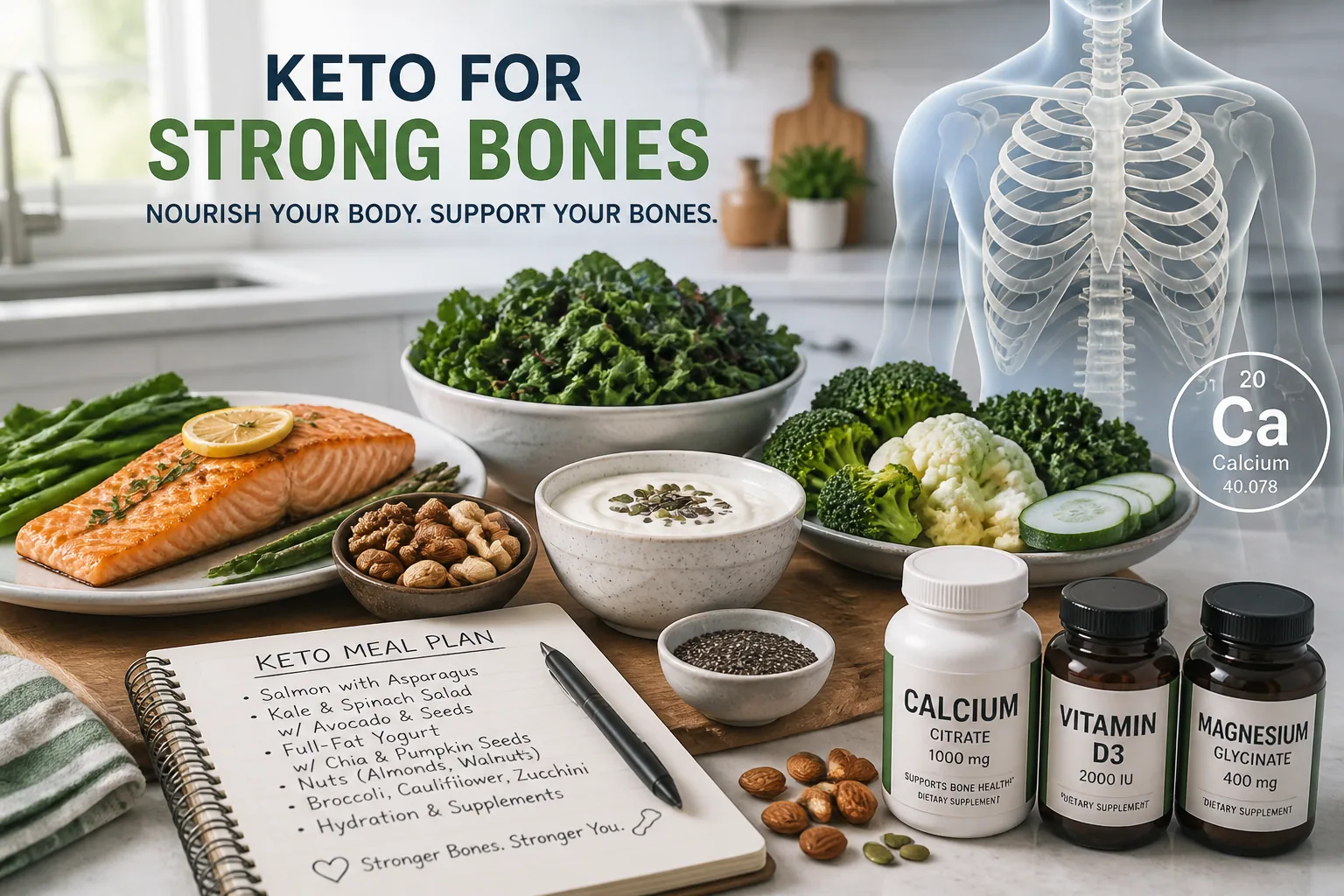
Long-Term Keto: How to Sustain a Healthy Ketogenic Lifestyle Without Compromising Bone and Overall Health
Keto can be a powerful tool for weight loss, appetite control, and metabolic health. But once you have been doing it for six months or longer, the goal changes. You are no longer just trying to get into ketosis. You are trying to stay healthy in ketosis for the long haul.
That is where the conversation gets more nuanced. Short-term ketogenic dieting and long-term ketogenic living are not the same thing. In the beginning, many people can tolerate a fairly strict, repetitive version of keto and still feel great. Over time, though, the risks become more about nutrient gaps, training recovery, hormonal adaptation, bone health, and whether your version of keto is actually sustainable.
The good news is that the research does not suggest keto automatically damages bone health in every adult. In fact, a systematic review of low-calorie and very-low-calorie ketogenic diet trials in overweight and obese adults found no significant changes in bone mineral density or bone mineral content after weight loss, with only one subgroup of women showing a temporary shift in bone turnover markers without an increased osteoporosis risk. Source: https://pmc.ncbi.nlm.nih.gov/articles/PMC9932495/
At the same time, the evidence is mixed enough that long-term keto deserves respect. Animal studies often show reduced bone mass and worse bone properties under chronic ketogenic feeding, and pediatric epilepsy data show measurable bone loss risk over time. So if you want keto to be a lifestyle rather than a phase, you need a smarter strategy.
Why Long-Term Keto Needs a Different Strategy Than Short-Term Weight Loss
The first months of keto are often driven by a clear objective: lose body fat, reduce hunger, and stabilize blood sugar. During that phase, people tend to be highly motivated, more consistent with food choices, and sometimes more meticulous about tracking carbs. But long-term keto introduces a different reality.
Your food choices may narrow. Your tolerance for repetitive meals may decline. Training demands may increase. Hormonal adaptation may show up. And if you are not intentionally rebuilding your diet around nutrient density, the same food pattern that helped you lose weight can quietly become too low in calcium, magnesium, potassium, fiber, and even total protein.
That is why maintenance keto should be built around adequacy, not just restriction. Instead of asking, “How do I stay under 20 grams of carbs?” a more useful question is, “How do I keep ketosis or low-carb benefits while protecting bone, muscle, hormones, and micronutrient status?”
This shift matters even more because some long-term outcomes are not visible in the mirror. Bone remodeling is slow. Mineral depletion can happen gradually. And a person can feel fine for quite a while while still drifting into insufficiency.
What the Latest Research Says About Keto and Bone Mineral Density
Human research on keto and bone health is reassuring in some contexts, but not definitive. In adults, especially those using ketogenic diets for weight loss, short-term studies often do not show major harm to bone mineral density or bone mineral content. That is important, because it suggests keto is not inherently bone destructive when properly designed and used over limited periods.
However, the absence of clear short-term harm is not the same as proof of long-term safety. The best available reviews still note that high-quality human trials lasting more than two years are lacking. That means the evidence base is incomplete for people who want to stay keto indefinitely. Source: https://www.ncbi.nlm.nih.gov/books/NBK499830/?report=classic
The pediatric epilepsy literature is more cautionary. In children on classic ketogenic diets for more than six months, one cohort found a mean lumbar spine BMD Z-score around -1.3, mild yearly declines, and fractures in about 8.8% of patients. Another study in children on keto for 0.5 to 6.5 years found a trend toward declining lumbar spine BMD, with faster loss in more mobile children and frequent urinary calcium abnormalities. Sources: https://pubmed.ncbi.nlm.nih.gov/31398763/ and https://pubmed.ncbi.nlm.nih.gov/28778055/
These pediatric findings do not mean every adult on keto will lose bone. Children have different growth demands, epilepsy treatment complexities, and nutritional needs. But they do show that long-term ketogenic feeding can affect skeletal metabolism under certain conditions, especially when the diet is rigid and medically therapeutic.
Animal models add another layer of caution. Chronic ketogenic feeding in animals often leads to lower bone mass, poorer bone mechanics, and in some cases osteoporosis-like changes. Researchers suspect the risk may be influenced by acid load, protein and fat type, and overall dietary composition. Source: https://pmc.ncbi.nlm.nih.gov/articles/PMC12735435/
Taken together, the data suggest a balanced conclusion: keto is not automatically harmful to bone, but bone health should be actively protected rather than assumed.
Who Is Most Vulnerable to Bone Loss on a Ketogenic Diet
Not everyone on long-term keto carries the same risk. Some people appear more vulnerable than others, and understanding that can help you decide how cautious to be.
Children, especially those using keto for epilepsy, are clearly a higher-risk group because they are still building bone mass. People with reduced mobility may also be vulnerable because mechanical loading is one of the strongest signals for maintaining bone density. If you do not regularly challenge the skeleton through walking, lifting, jumping, or other impact work, bone remodeling may slow down.
People with limited dietary diversity are another concern. If your keto pattern excludes dairy, leafy greens, nuts, seeds, and mineral-rich proteins, your chance of falling short on calcium, magnesium, and potassium rises quickly. Those starting keto with higher body weight may also face greater stress on bone and more rapid body composition changes during weight loss.
Post-menopausal women may be more vulnerable because estrogen decline already increases bone loss risk. Athletes under high training stress may also need extra attention, since low energy availability, repetitive impact, and insufficient recovery can all affect bone turnover. Finally, people who stay very strict for years without planned maintenance phases may be at higher risk simply because their dietary monotony makes deficiencies more likely.
This is why long-term keto should be individualized. A medically supervised version of keto for epilepsy is not the same as a performance-oriented keto plan, and neither one is identical to a casual low-carb lifestyle. Risk depends on age, hormones, activity level, food selection, and how aggressively carbs are restricted.
Why Nutrient Deficiencies Can Sneak Up on Long-Term Keto Followers
One of the biggest long-term keto problems is that lab results can look normal for a while even when intake is slipping. A 12-week study in obese adults found that calcium, magnesium, iron, phosphorus, and potassium intakes dropped below recommended levels on keto, even though most serum markers stayed normal. Calcium even fell significantly in blood. Source: https://pubmed.ncbi.nlm.nih.gov/31445313/
That matters because serum nutrients are often tightly regulated. Your body will borrow from stores, especially bone, to preserve blood levels. So a normal lab does not always mean intake is adequate. It may simply mean you have not hit the point where deficiency is obvious yet.
Long-term keto also tends to reduce dietary variety. People may rely heavily on meat, cheese, eggs, oils, avocado, and low-carb packaged foods. Those can all fit keto, but they do not automatically provide enough minerals, especially if vegetables and dairy are limited or if portion sizes are small.
Another hidden issue is food replacement. When carbs are removed, some people do not fully replace the displaced foods with nutrient-dense alternatives. Instead of replacing grains and fruit with mineral-rich vegetables, legumes, dairy, seafood, or seeds, they simply eat less variety overall. That is how long-term deficiency sneaks in.
The solution is not to abandon keto. It is to treat keto like a nutrient-density strategy, not just a carb cap.
Calcium on Keto: Best Food Sources and When Supplements Make Sense
Calcium is one of the first minerals to watch on long-term keto because it supports bone structure, muscle contraction, and nerve function. If calcium intake is chronically low, the skeleton can become the backup reservoir.
On keto, the best food-first calcium sources include sardines with bones, canned salmon with bones, full-fat Greek yogurt, kefir, cheese, calcium-set tofu, and low-carb leafy greens such as kale and bok choy. Some seeds and nuts contribute smaller amounts, though they should not be your main calcium strategy.
If you do not eat dairy or fish with bones, you need an even more deliberate plan. It can be very hard to reach adequate calcium through a narrow keto menu without adding fortified foods or supplementation.
Supplements can make sense when food intake is clearly insufficient, when dairy is not tolerated, or when a healthcare professional identifies low intake or concerning bone markers. The key is not to supplement blindly. Calcium works best as part of a broader bone-supportive plan that includes vitamin D, magnesium, protein, and resistance training.
If you use a supplement, it is usually wiser to use it to fill a documented gap rather than to overload the body with high doses that ignore the rest of the mineral balance.
Vitamin D and Bone Health: How to Optimize Levels on Keto
Vitamin D is central to calcium absorption and skeletal health, which makes it especially important for long-term keto. Even a diet rich in calcium may not do enough if vitamin D status is poor.
Keto itself does not guarantee vitamin D adequacy. In practice, levels depend more on sun exposure, skin pigmentation, geography, season, body composition, and dietary intake. Fatty fish, egg yolks, and fortified foods can help, but many people still need lab-guided supplementation.
This is one area where working with a clinician is useful. If your 25-hydroxyvitamin D level is low or borderline, supplementation can improve the odds that your calcium intake is actually being used effectively. That is especially relevant if you are post-menopausal, training hard, or have any history of bone loss.
The best approach is to measure, not guess. Vitamin D is not a replacement for bone loading or mineral intake, but it is one of the most efficient ways to support the bone side of long-term keto.
Magnesium and Potassium: The Overlooked Minerals That Matter
Magnesium and potassium are often overlooked because they are not as discussed as carbs or protein, but they matter a lot on keto. Magnesium supports energy production, muscle function, sleep quality, and bone structure. Potassium is essential for fluid balance, muscle contraction, and blood pressure regulation.
The problem is that many classic keto foods are not especially rich in these minerals unless the diet is carefully built. The 12-week micronutrient study found intakes of both magnesium and potassium dropped below recommended levels on keto. Source: https://pubmed.ncbi.nlm.nih.gov/31445313/
Food-first ways to improve magnesium include pumpkin seeds, chia seeds, hemp seeds, almonds, spinach, and avocado. Potassium can come from avocado, leafy greens, mushrooms, salmon, yogurt, and certain low-carb vegetables. Bone broth can be a useful hydration support, though it should not be treated as a complete mineral solution.
If cramps, constipation, sleep disruption, low energy, or palpitations show up, mineral intake should be reviewed. These symptoms are not specific to deficiency, but they are common clues that the current keto setup is too narrow.
Protein, Hormones, and Metabolism: Rebalancing Macros for Maintenance
Many people stay stuck in weight-loss mode long after they have lost the weight. That can be a mistake. Once you are maintaining, macro targets often need to change.
Protein becomes especially important. The International Society of Sports Nutrition recommends 1.4 to 2.2 g/kg/day for athletes and active adults, and keto studies suggest that people who reach these ranges often preserve lean mass better. Still, protein alone does not fully prevent lean mass loss in every case, which is why resistance training and energy balance matter too. Source: https://pmc.ncbi.nlm.nih.gov/articles/PMC11212571/
If your maintenance keto is very high in fat but too low in protein, you may feel full but under-recovered. Over time that can affect muscle mass, training performance, and possibly bone support, because muscle helps load the skeleton and supports metabolic health.
Hormones also deserve attention. Research suggests that eucaloric, normoproteic ketogenic diets can improve some gonadal hormone profiles in adults. In men, testosterone and IGF-1 responses may depend on fat-free mass and exercise level. In women with PCOS, keto may reduce free and total testosterone, improve LH to FSH ratio, raise SHBG, and support menstrual regularity. Source: https://pubmed.ncbi.nlm.nih.gov/40618222/
The practical takeaway is that macros should be matched to your real life. If you train, lift, or are trying to protect bone and muscle, maintenance keto usually needs more protein and enough total calories, not just fewer carbs.
Should You Try Cyclic Keto or Carb Refeeds for Long-Term Sustainability?
For some people, yes. Cyclic keto or planned carb refeeds can help with adherence, training output, and psychological sustainability. They may also be useful if your energy, sleep, or performance is suffering on a very strict continuous ketogenic approach.
The point is not to “cheat.” The point is to make the diet livable for years, not weeks. Some people do well on a strict ketogenic baseline with periodic higher-carb days around hard training. Others prefer a more moderate low-carb pattern that keeps benefits while reducing the stress of constant restriction.
The right approach depends on your goals. If you use keto for seizure control or another medical purpose, changes must be discussed with your healthcare team. If you use keto for weight maintenance, flexibility may improve long-term adherence and reduce burnout.
What matters most is that carb cycling is planned, not random. If the refeed helps training and keeps total food quality high, it may support long-term consistency. If it becomes a binge cycle, it defeats the purpose.
Resistance Training and Weight-Bearing Exercise for Bone Protection
If you want to protect bone on keto, exercise is not optional. Mechanical loading is one of the strongest signals the body uses to maintain or build bone density.
Resistance training is especially valuable because it loads the hips, spine, legs, and upper body in a way that supports both muscle and skeletal health. Weight-bearing activities like brisk walking, hiking, stair climbing, jogging, jumping drills, and sport-specific movement can further reinforce bone adaptation.
This becomes even more important if you are losing weight, because rapid or prolonged weight loss can reduce the mechanical load on bone. That is not automatically a problem, but it does mean your training strategy should deliberately replace some of the stimulus that body weight used to provide.
Aim for consistency rather than perfection. Two to four focused strength sessions per week, plus regular weight-bearing movement, can do far more for long-term bone support than extreme carb restriction ever will.
Which Health Markers to Monitor With Your Healthcare Provider
Long-term keto works best when it is monitored like a real health strategy. That does not mean obsessive testing, but it does mean periodic check-ins with someone who understands the diet and your goals.
Useful markers to discuss include vitamin D status, calcium intake, magnesium status, kidney function, lipid profile, fasting glucose or A1c, and if relevant, bone-related evaluation such as bone mineral density testing or other bone markers. If you have a history of fractures, osteopenia, menopause, eating disorder history, or significant weight loss, monitoring becomes even more important.
If you have symptoms like fatigue, cramps, constipation, poor recovery, irregular cycles, or recurrent injury, those are also reasons to reassess your plan. The goal is to identify nutritional drift before it turns into a bigger problem.
Think of this as maintenance intelligence. Keto can be effective, but it should not be a blind experiment.
Keto Shopping Toolkit: Bone-Supportive Foods to Keep in Rotation
A long-term keto diet becomes much easier when your kitchen is stocked with foods that support bones, minerals, and adherence at the same time.
Strong staples include sardines, salmon, eggs, Greek yogurt, kefir, cheese, tofu if tolerated, leafy greens, broccoli, cauliflower, avocado, olives, chia seeds, pumpkin seeds, almonds, walnuts, and mineral-rich broths. If you tolerate them, these foods make it easier to keep carbs low without drifting into nutrient poverty.
It also helps to keep simple meal templates on repeat. For example, salmon with sautéed greens and avocado, eggs with yogurt and chia, sardines on cucumber or salad, or a chicken bowl with cauliflower rice and extra olive oil. The goal is not gourmet variety every day. The goal is dependable nutritional coverage.
This is also where a tool like Keeto - Keto Made Easy can be helpful. If you are scanning products in the store and want to quickly confirm whether they fit your carb budget, you can use https://findthe.app/keeto-5m0vbj to reduce guesswork and make shopping faster, especially when you are trying to build a nutrient-dense keto pantry.
How to Read Labels for Hidden Anti-Nutrients and Nutritional Traps
On long-term keto, the problem is not only obvious carbs. It is also the nutritional traps hiding in so-called keto products.
Label reading should go beyond net carbs. Check serving size first, because many packaged keto snacks are technically low in carbs only because the serving is tiny. Then look at total ingredients and ask whether the product adds real nourishment or just preserves ketosis in the short term.
A few common traps include highly processed “keto” snacks with little mineral value, products with sugar alcohols that upset digestion, and replacement foods that crowd out better options. Another trap is relying on flavored bars, chips, and desserts so often that your overall micronutrient intake falls.
When possible, compare packaged foods to whole-food alternatives. The more your keto plan depends on bars and packaged snacks, the more likely you are to create hidden deficiencies. A strong long-term keto plan uses convenience foods strategically, not as the foundation.
How Tools Like Keeto Can Help Prevent Long-Term Nutritional Blind Spots
Long-term keto is partly a math problem, but it is also a decision fatigue problem. The more often you have to calculate net carbs manually, the easier it becomes to make rushed or inconsistent choices. That is where a scanner can help.
Keeto lets you scan a product barcode and instantly see whether it fits your keto plan, how many net carbs it contains, and what part of your daily carb budget it uses. That kind of real-time feedback can be especially useful when you are trying to choose between several similar products or build a grocery cart quickly.
It is not a substitute for nutrition knowledge, but it can reduce blind spots. For long-term keto followers, that matters because nutritional errors often happen at the margins, not in obvious meals. A small daily miscalculation repeated over months can slowly push you away from your goals.
Used well, tools like this can support a more sustainable, less stressful version of keto. And less stress usually means better adherence.
A Practical Long-Term Keto Plan You Can Actually Sustain
If you want long-term keto to work, simplify the plan into repeatable habits. Start with food quality. Build meals around protein, mineral-rich vegetables, and bone-supportive foods. Make sure calcium, vitamin D, magnesium, and potassium are being covered through food first, then supplement only where needed.
Next, update your macros for maintenance. Do not stay stuck in aggressive weight-loss ratios if your goal is now health and sustainability. Aim for enough protein to preserve muscle, enough total energy to recover, and enough flexibility to keep the diet livable.
Then add movement. Strength training and weight-bearing exercise are foundational, not optional extras. They help protect both the skeleton and metabolic health, especially as body weight changes.
Finally, monitor the big picture. Watch how you feel, not just what the scale says. Check in with a healthcare provider when appropriate. If you have a history of bone issues or are in a higher-risk group, be more proactive rather than less.
Long-term keto can absolutely be done in a healthy way. But the version that works for months is rarely the same version that works for years. The sustainable path is the one that respects bone health, nutrient density, training, hormones, and real life.