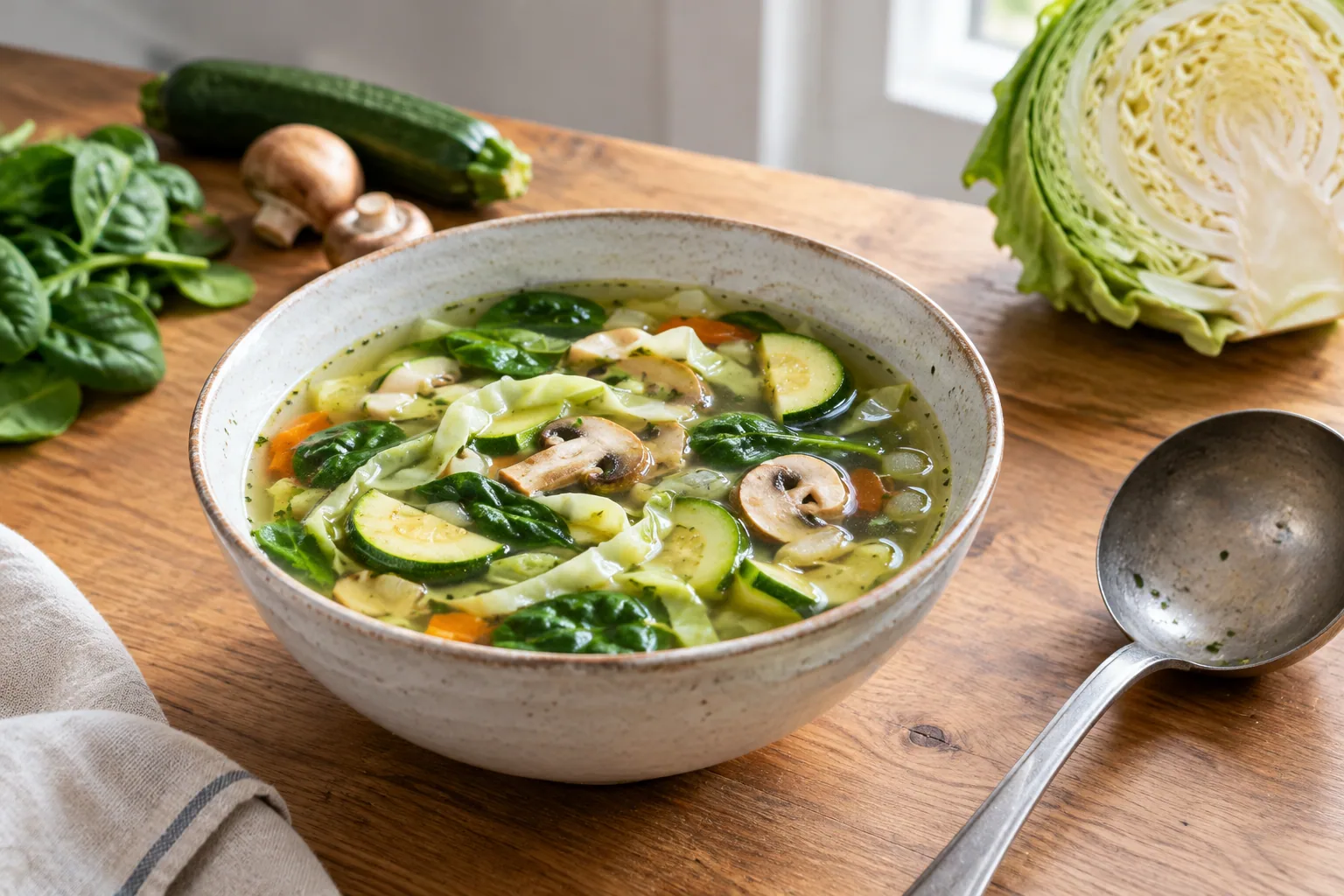
Cauliflower, cabbage, zucchini, celery, mushrooms, spinach, and kale are good lower-carb vegetables for soup. Choose them for the texture you want, then portion the finished soup within your daily carb budget, including the broth, dairy, sauces, and toppings. For the best texture, simmer firm vegetables first and add zucchini and tender greens near the end.
The best keto vegetables for soup
These vegetables do different jobs. Cauliflower can give a blended soup body, cabbage adds substantial spoonfuls, and spinach wilts into broth without needing a long simmer.
The times below are starting points, not fixed finish times. They assume fresh vegetables cut to the sizes listed and a gentle simmer; taste a piece before moving to the next step.
| Vegetable | Flavor and texture | Best soup styles | Prep and when to add |
|---|---|---|---|
| Cauliflower | Mild; tender in chunks or smooth when blended | Creamy soup, chicken soup, chunky vegetable soup | Cut into 1-inch florets. Simmer about 10–15 minutes, until fork-tender; allow longer for blending if needed. |
| Cabbage | Mildly sweet; keeps some chew | Chicken soup, clear broth, sausage soup | Slice into ¼-inch ribbons. Add with the firmer vegetables and simmer about 10–15 minutes. |
| Zucchini | Mild; softens quickly | Clear vegetable soup, chicken soup | Cut into ½-inch pieces. Add for roughly the final 4–6 minutes. |
| Celery | Savory; lightly crisp or soft, depending on cooking time | Chicken soup, vegetable soup, creamy soup bases | Cut into ¼-inch slices. Sauté with aromatics, then simmer until as tender as you like. |
| Mushrooms | Savory; retain a chewy bite | Clear broth, chicken soup, creamy mushroom soup | Cut into ¼-inch slices. Sauté before adding broth for a more concentrated flavor. |
| Spinach | Mild; delicate once wilted | Chicken soup, creamy soup, quick vegetable soup | Add fresh leaves during the final 1–2 minutes. |
| Kale | Earthy; firmer than spinach | Clear vegetable soup, chicken soup | Remove tough stems and slice leaves into thin ribbons. Simmer about 5–10 minutes, checking for tenderness. |
Don’t treat equal cups of these vegetables as nutritionally interchangeable. Leafy greens pack down, florets leave air gaps, and cooked vegetables weigh differently from raw ones. For carb tracking, weigh your ingredients and match the weight to the correct raw, cooked, or packaged food entry.
What to use instead of potatoes, corn, and peas
Choose a substitute by its job in the soup, rather than expecting one vegetable to replace every starchy ingredient.
| If you want… | Try… | What changes |
|---|---|---|
| Tender chunks instead of potato | Cauliflower florets | They soften readily and can break apart with prolonged stirring. |
| A smooth, thick base | Blended cauliflower | It adds body, but not the same starchiness as potato. |
| Small simmered pieces with some bite | Halved or quartered radishes | Their sharpness mellows with cooking, but they don’t thicken broth like potatoes. |
| More bulk instead of corn or peas | Shredded cabbage | It adds strands and chew, not little sweet kernels. |
For radishes, cut pieces to about ½ inch and start checking after 10–15 minutes of simmering. Continue until the center is tender enough for you.
Carrots, onions, peas, and corn aren’t categorically forbidden. They’re portion-dependent ingredients: measure what goes into the pot and include it in the batch total. A little onion for the base is a different decision from using it as a main vegetable.
If you want the familiar flavor of carrots in chicken soup, use a measured amount alongside celery and cabbage. This guide to including carrots in a keto carb budget can help you decide how much fits.
When to add each vegetable to the pot
Use this order for a mixed soup so the quickest-cooking vegetables don’t turn mushy while you wait for the firm ones.
- Prep by cooking speed. Keep sliced celery and aromatics together, firm vegetables in another bowl, and zucchini and greens separate. Remove tough kale stems or finely chop them to cook with the celery.
- Sauté the base. Heat oil or butter over medium heat. Cook celery and any measured onion until beginning to soften. Add mushrooms and cook until they release moisture and that moisture mostly evaporates. Add minced garlic briefly at the end, before the broth.
- Simmer firm vegetables. Add broth, cauliflower, cabbage, or radishes. Bring to a boil, then lower the heat to a gentle simmer. Check tenderness rather than relying only on the clock.
- Add kale, then zucchini. Give mature kale a head start. Add zucchini when the firm vegetables are almost done.
- Finish with spinach. Stir it in just before serving and stop cooking once it wilts. Add any creamy ingredients over low heat rather than at a rolling boil.
Prolonged simmering makes zucchini collapse and cauliflower break into smaller pieces. Spinach loses its delicate texture, while kale becomes softer and less distinct. That’s useful in a blended soup, but less appealing when you want separate vegetables in clear broth.
Frozen vegetables need their own timing
Check the package instructions rather than automatically using the fresh-vegetable times above. Frozen vegetables are often blanched before freezing, and their size and preparation affect how quickly they soften.
Add plain frozen cauliflower directly to simmering broth if the package allows it. Add frozen zucchini late and check frequently. Frozen chopped spinach can go into the soup earlier than fresh leaves so it heats through and separates; if you thaw and squeeze it first, weigh and log it in that prepared state.
Vegetable combinations for three soup styles
These are flexible stovetop formulas, not lab-tested recipes. Each makes about four servings, but the finished volume depends on evaporation and how much vegetable you use. Check tenderness as you cook, and calculate nutrition from your actual ingredients rather than assigning a generic carb count to each bowl.
Chicken soup with celery, cabbage, and spinach
For about 4 servings:
- 1 tablespoon olive oil
- 150 g celery, cut into ¼-inch slices
- 200 g cabbage, cut into ¼-inch ribbons
- 4 cups chicken broth
- 300 g cooked, shredded chicken
- 60 g fresh spinach
- Salt and pepper, to taste
- Heat the oil over medium heat. Sauté the celery for about 4–5 minutes, stirring, until it begins to soften.
- Add the cabbage and broth. Bring to a boil, reduce to a gentle simmer, and cook for about 10–15 minutes, until the vegetables are tender.
- Stir in the cooked chicken and simmer until it is hot throughout.
- Add the spinach for the final 1–2 minutes. Taste before adding salt, especially if your broth is already salted.
Clear vegetable soup with mushrooms, zucchini, and kale
For about 4 servings:
- 1 tablespoon olive oil
- 200 g mushrooms, cut into ¼-inch slices
- 80 g kale leaves, tough stems removed, thinly sliced
- 250 g zucchini, cut into ½-inch pieces
- 4 cups vegetable broth
- Salt, pepper, and dried herbs, to taste
- Heat the oil over medium heat. Add the mushrooms and cook, stirring occasionally, until their released liquid mostly evaporates.
- Add the broth and kale. Bring to a gentle simmer and cook for about 5 minutes.
- Add the zucchini and simmer for another 4–6 minutes. Stop when the zucchini is just tender and the kale has the texture you like.
- Taste and season before serving.
If your available vegetables differ, enter them into the keto recipe generator for another combination. Check the suggested quantities and nutrition against the ingredients you actually use.
Creamy cauliflower soup without flour
For about 4 servings:
- 1 tablespoon butter or olive oil
- 100 g celery, cut into ¼-inch slices
- 500 g cauliflower, cut into 1-inch florets
- 3 cups chicken or vegetable broth
- ¼ cup heavy cream, optional
- Salt and pepper, to taste
- Heat the butter or oil over medium heat. Sauté the celery for about 4–5 minutes.
- Add the cauliflower and broth. Bring to a gentle simmer and cook for about 15–20 minutes, until the cauliflower crushes easily with a fork.
- Remove from the heat. Use an immersion blender to blend until smooth, keeping its head submerged to limit splashing.
- Stir in the optional cream over low heat. Add more broth a little at a time if the soup is too thick, and include that extra broth in your nutrition calculation.
Blended cauliflower supplies body without flour. For a chunky-creamy soup, remove some tender florets before blending, then return them to the pot.
How to work out carbs in your finished soup
A raw-vegetable comparison cannot tell you the carbs in a finished bowl. Broth, tomato products, dairy, sauces, and toppings all need to be counted.
- Record every ingredient and amount. Use package labels for broth and dairy, and a consistent food database for produce. Match each entry to the ingredient’s raw, cooked, drained, or frozen state.
- Calculate each ingredient’s contribution. Scale its listed carbohydrate and fiber amounts to the weight or number of servings you used.
- Add the whole pot. If you track net carbs, subtract total dietary fiber from total carbohydrate for these vegetable-based ingredients. If your plan tracks total carbs, don’t subtract fiber.
- Measure the finished yield. Weigh the soup in a tared container, or subtract the empty pot’s weight from the filled pot’s weight.
- Weigh your portion. Divide the portion weight by the finished batch weight, then multiply that fraction by the batch’s total or net carbs.
Blending doesn’t remove carbs. Evaporation removes water and makes the soup more concentrated, so a smaller finished batch has more carbs per equal-weight serving. For chunky soup, stir before portioning and distribute the solids evenly, since one mostly-broth bowl won’t match one packed with vegetables.
How to shop and prep for better soup texture
Use this short checklist before checkout:
- Choose plain fresh or frozen vegetables in cuts that suit your soup.
- Read mixed-bag ingredient lists for potatoes, corn, peas, sauces, and seasoning blends. Count them rather than assuming the whole bag fits your plan.
- Check broth labels, including the serving size and number of servings in the carton.
- Include cream, cream cheese, tomato products, and toppings in your shopping and carb calculations.
- Keep zucchini and greens separate from firm vegetables during prep so you can add them later.
For more help comparing plain bags with mixed products, see how to choose frozen vegetables for keto cooking.
You can scan packaged broth, frozen vegetables, and creamy additions with Keeto to see their net carbs and share of your daily carb budget. Then organize your measured ingredients in a recipe-based shopping list.
If you’re making several meals, consider adding spinach or zucchini only to the portion you’re about to eat. Reheat the soup base first, then add the tender vegetables and cook just until done instead of repeatedly simmering the entire batch.
FAQ
Can I use bagged coleslaw mix in keto soup?
Yes, plain shredded cabbage or a cabbage-and-carrot mix can work if the measured portion fits your carb budget. Check the ingredient list and nutrition label, especially if the bag includes dressing or other additions. Fine shreds soften faster than thick cabbage ribbons, so start checking them earlier.
How can I thicken keto vegetable soup without flour?
Blend some of the cooked cauliflower and broth, then stir that puree back into the pot. Simmering uncovered also thickens soup by reducing water, but it concentrates both carbs and salt per spoonful. For your next batch, start with slightly less broth and add more after blending until the texture suits you.