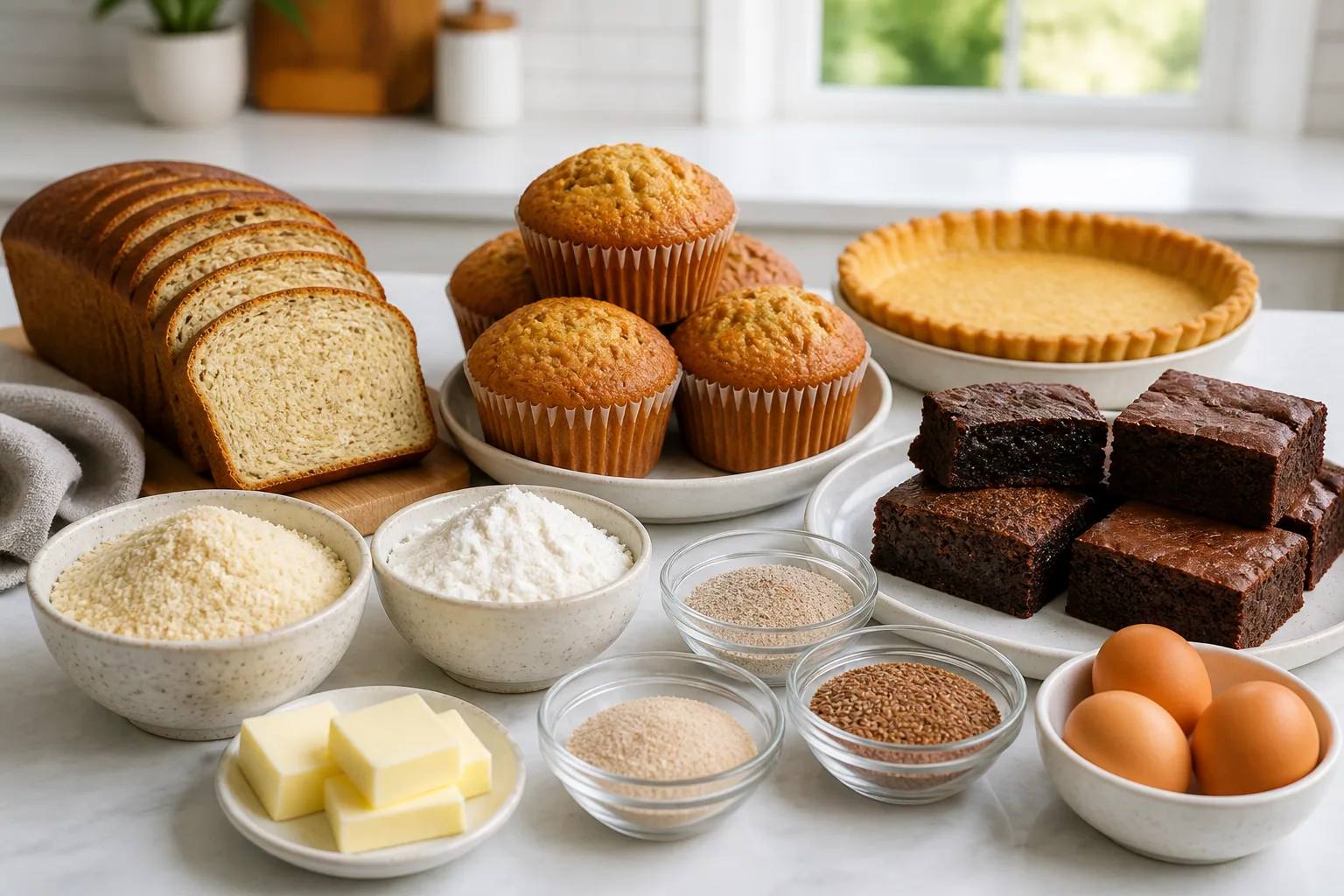
Keto Texture Secrets: How to Nail Crisp, Chewy, and Fluffy Results Every Time
Keto baking has a reputation problem. The flavors can be excellent, the macros can be perfect, and yet the result still feels off. A crust goes soggy. A muffin turns dense. A bread center stays gummy. A cookie looks done but eats strangely chewy in all the wrong ways. In most cases, the real issue is not sweetness or seasoning. It is texture.
That is why learning how keto ingredients behave is such a big deal. Low-carb flours, binders, fats, and eggs do not act like wheat flour, so the old rules do not always work. Once you understand how moisture moves, how structure forms, and how crispness develops, keto baking starts to make much more sense. You stop guessing and start building the exact crumb, chew, or crunch you want.
Why Texture Is the Real Challenge in Keto Baking
Most traditional baking relies on gluten for structure and elasticity. Keto recipes do not have that safety net, so texture has to come from other ingredients and from technique. That is why two recipes with the same ingredients can produce very different results. One may be light and tender, while another is heavy, oily, or dry.
In keto baking, moisture is only part of the story. You also need balance. Too much water without enough structure creates gumminess. Too much absorbency without enough fat creates crumbling. Too much fat without the right binder can lead to greasy, fragile bakes. The goal is to make those elements work together rather than fight each other.
This is also why some keto recipes taste good but still disappoint. A cake can have a nice flavor yet feel damp and dense. A bread can slice cleanly but not toast well. A pastry can brown nicely but never become crisp enough. Texture is what turns a good keto recipe into one you actually want to make again.
How Keto Flours Behave: Almond Flour vs Coconut Flour
Almond flour and coconut flour are the two most common keto baking flours, but they behave almost like opposite ingredients. Almond flour is naturally high in fat and relatively low in starch, which gives baked goods richness and tenderness. In fact, almond flour contains about 49g fat per 100g, along with meaningful protein, so it contributes a soft, moist crumb and helps desserts feel satisfying. It can also encourage browning and, if overused with too much liquid, a soggy crust. Source: https://www.almonds.org/sites/default/files/2025-02/Almond_Flour_Technical_Takeaways.pdf
Coconut flour is the opposite in many ways. It is incredibly absorbent and can take in between 4 to 8 grams of water per gram of flour. That makes it useful for thickening batters, but it also means it can easily dry out a recipe if the liquid balance is not adjusted. Recipes made with only coconut flour often end up crumbly or dry unless they include more moisture or enough resting time for hydration. Source: https://scienceinsights.org/which-is-better-almond-flour-or-coconut-flour/
That absorbency is not necessarily a flaw. It is simply a trait you must account for. Coconut flour can give a lighter crumb when handled correctly, but it usually needs stronger moisture support than almond flour. Almond flour tends to be more forgiving and often gives a more tender, more familiar eating experience. Research on low-carb cupcakes found that almond flour versions were perceived as more tender, more moist, and more flavor-preferred than mostly or fully coconut flour versions, even when the coconut flour samples retained more actual water after baking. Source: https://pmc.ncbi.nlm.nih.gov/articles/PMC8666506/
The key takeaway is that neither flour is universally better. Almond flour is usually better for tenderness, moistness, and richness. Coconut flour is usually better for absorbency and thickening. In practice, many of the best keto recipes use them together, because each one compensates for the other.
The Role of Psyllium Husk and Flax in Structure and Chew
If keto flours are the body of a recipe, psyllium husk and flax often act like the skeleton. They help low-carb doughs hold together, trap moisture, and create a more bread-like chew. This matters especially in bread, rolls, pizza dough, and other recipes where you want stretch or sliceability.
Psyllium husk powder is especially valuable because it is nearly zero net carb and extremely effective at improving structure and moisture retention. It also helps create chewiness, which is something keto baking often lacks. A common hydration approach for psyllium and almond flour baking is about 90 to 130% water relative to the dry mix by weight. That range often gives better structure while avoiding a gummy or overly dense loaf. Source: https://naturesbasket.org.nz/blogs/recipes/psyllium-keto-gluten-free-baking-ratios-hydration-nz
Flax can contribute a similar kind of support, though it usually makes a denser, earthier crumb than psyllium. It helps bind moisture and add body, especially in muffins, crackers, and rustic breads. But like psyllium, it has to be used with enough liquid. Without proper hydration, flax-heavy batters can taste dry or gritty instead of pleasantly chewy.
A useful mindset is to think of these ingredients as structure helpers rather than flour substitutes. They are what prevent keto recipes from collapsing into crumbs or baking up with a weak, fragile interior. When used well, they make low-carb bakes feel more complete and more satisfying.
Best Flour and Binder Combinations for Crisp, Chewy, or Fluffy Results
Different textures call for different combinations. If you want crispness, you usually need enough fat and enough surface drying to promote browning. If you want chew, you need binders like psyllium or flax paired with proper hydration. If you want fluffiness, you need enough lift, adequate moisture, and a structure that can hold gas without turning heavy.
For crisp recipes like crackers, pizza crust, or certain cookies, almond flour often works well because its higher fat content helps browning and gives a richer bite. Add a little psyllium or flax if you need a firmer structure. Use less liquid than you would in a cake, and bake long enough to dry the surface fully. That final drying stage is usually what turns soft into crisp.
For chewy breads and rolls, psyllium husk is often the most useful binder. It traps water and forms a gel-like structure that mimics some of the elasticity missing from gluten-free dough. Almond flour can soften the crumb and improve eating quality, while a controlled amount of coconut flour can help absorb excess moisture. The result is often better than using either flour alone.
For fluffy muffins, cupcakes, or cakes, a gentler hand is needed. Almond flour tends to work better than coconut flour because it gives a more tender texture. The cupcake research supports this, showing that almond flour versions were rated more tender and moist. Source: https://pmc.ncbi.nlm.nih.gov/articles/PMC8666506/
The best keto texture often comes from blending ingredients instead of relying on one hero ingredient. Almond flour gives softness. Coconut flour gives absorbency. Psyllium gives body. Flax adds binding and rustic chew. Used together in the right proportions, they produce a much more balanced result than any single ingredient can on its own.
How Fats Change Moisture, Crumb, and Crispness
Fat does much more than add flavor. It changes how moisture behaves, how delicate a crumb feels, and how long a baked good stays soft or crisp. In keto baking, where flour structure is already unusual, fat becomes even more important.
Butter is especially interesting because it is not pure fat. It is roughly 80% fat, about 15% water, and contains milk solids. That means it can do several jobs at once. The water in butter can create steam during baking, which can support lift. The milk solids help with browning and flavor. Butter also contributes a richer, more rounded mouthfeel. Source: https://epicbaker.com/ingredients-baking-science/butter-vs-oil-in-cakes/
Oil behaves differently because it is nearly 100% fat. It usually creates a moister crumb that stays soft longer, but it does not help build crispness in the same way. That is useful in cakes and muffins where softness is the goal, but less ideal when you want a crust that snaps or browns aggressively. Source: https://epicbaker.com/ingredients-baking-science/butter-vs-oil-in-cakes/
This is why keto bakers often choose fats strategically. Butter is often a good choice when you want flavor, browning, and some structure support. Oil can be better when you want tenderness and prolonged softness. If a recipe seems too dry, a small amount of oil can improve the crumb. If it seems too soft or greasy, butter or a better bake temperature may improve the final texture.
What Egg Yolks, Cream, Butter, Ghee, and Oils Really Do
Eggs are one of the most powerful texture tools in keto cooking. In particular, egg yolks are rich in lecithin and phospholipids, which act as natural emulsifiers. That helps fat distribute more evenly, stabilizes air bubbles, improves crumb color, and can slow staling. Source: https://www.incredibleegg.org/professionals/manufacturers/real-egg-functionality/tenderization-texture/
More yolks usually mean a richer, more tender result. They can help keto cakes feel less fragile and more cohesive. They also support a golden color, which matters because low-carb baked goods can sometimes look underdone even when they are fully baked. Yolks help bridge that visual gap.
Cream adds both fat and moisture, which can be very useful in custards, frostings, and softer baked goods. It contributes richness without making the texture as heavy as some whole dairy mixtures can. Butter, because of its water content, can help with steam and crust development. Ghee, on the other hand, is more concentrated fat, so it tends to behave more like oil in some respects while still giving a buttery flavor.
Avocado oil is another popular keto fat because it is neutral and stable. It is especially helpful in recipes where you want softness without a strong flavor. In general, the fat you choose should match the texture you want. Richness, softness, browning, and crispness are not interchangeable, and each fat shifts the result in a different direction.
Mixing Matters: Resting, Folding, and Avoiding Overmixing
Even with perfect ingredients, method can make or break a keto recipe. One of the biggest mistakes is treating all batters the same way. Keto batters often need resting, gentle folding, and more patience than wheat-based recipes.
Resting is especially important with coconut flour because it needs time to absorb liquid. Allowing a coconut flour batter to sit for at least 10 minutes before baking helps it thicken and hydrate, which improves shape and reduces the risk of a gluey center. Source: https://www.nutricialearningcenter.com/globalassets/pdfs/neurology/webinar-slides_cooking-tips_aug2020.pdf
The same principle helps with psyllium-based doughs. They often look loose at first and then firm up as they sit. If you bake too early, the dough may not have had time to develop the structure you need. That is one reason keto baking can feel unpredictable at first. The batter is still evolving before it goes into the oven.
Folding is also important in cake-like recipes where you want to preserve some air. Overmixing can knock out lift and create a compact, tight crumb. On the other hand, undermixing can leave pockets of dry flour or uneven hydration. The goal is usually to mix just until the ingredients are evenly combined, then let the batter rest if the recipe calls for it.
Temperature, Browning, and Choosing Dry Heat or Steam
Baking temperature is one of the easiest keto adjustments to overlook. Many low-carb baked goods brown more quickly than their wheat-based counterparts, especially when almond flour and butter are involved. A practical rule is that almond flour goods may need to bake about 25°F lower than standard flour recipes to avoid overbrowning. Source: https://www.nutricialearningcenter.com/globalassets/pdfs/neurology/webinar-slides_cooking-tips_aug2020.pdf
If you bake too hot, the outside can set and darken before the inside finishes cooking. That is how you end up with a crust that looks done but a center that is still gummy. Lower heat can help more even baking, while a slightly longer bake time allows moisture to distribute and evaporate properly.
Dry heat is usually best when crispness is the goal. It helps drive off moisture from the surface and encourages browning. Steam can be useful early in certain bread recipes if you want better rise or a softer exterior at first, but too much steam can delay browning and keep the crust from developing properly. In keto baking, where moisture levels are already tricky, the best strategy is often controlled dryness rather than too much humidity.
This is also why the same recipe may behave differently in different ovens. A convection setting, dark pan, glass dish, or tightly packed loaf pan can all change how quickly moisture escapes. Texture is not only about ingredients. It is also about how effectively the oven transforms those ingredients into a finished structure.
Why Cooling and Overnight Resting Can Transform Texture
Keto baked goods often improve dramatically after cooling. That is not just a storage issue. It is part of the cooking process. As the item cools, starches and binders continue to set, moisture redistributes, and the crumb firms up.
This matters even more for low-carb breads and cakes that can seem slightly underdone when they first come out of the oven. Give them time. Cooling fully can turn a fragile loaf into a sliceable one. In some cases, resting overnight makes the texture noticeably better, especially for crust development and overall structure. Source: https://www.nutricialearningcenter.com/globalassets/pdfs/neurology/webinar-slides_cooking-tips_aug2020.pdf
If you cut too early, steam escapes before the interior has finished setting. The result is often a gummy center or a compressed crumb. If you want the best texture, patience is not optional. It is part of the recipe.
Smart Storage Tips to Prevent Sogginess or Gummy Centers
Storage matters because keto baked goods often contain more moisture-sensitive ingredients than traditional ones. Refrigeration can help some items last longer, but it can also make others feel dense or firm. Airtight containers help prevent drying, but they can also trap steam if the baked good is still warm.
The best first rule is simple: never store something warm unless condensation is part of the plan. Let it cool completely first. If you seal in heat, moisture collects on the surface and ruins crispness. That is especially important for crusts, cookies, and toasted items.
For softer items like muffins or quick breads, airtight storage at room temperature is often fine for a short period, as long as the item is fully cooled. For crisp items, store them in a way that minimizes trapped moisture and re-crisp them briefly if needed before serving. If a loaf seems too soft on day two, a short dry reheat can bring back some of its texture.
Proper storage is less glamorous than ingredient science, but it is often the difference between a satisfying batch and a disappointing one. Keto texture can be delicate, so handling after baking matters just as much as what happens in the oven.
Common Keto Texture Problems and How to Fix Them
If your keto bakes keep missing the mark, the problem is usually diagnosable. Here is a practical way to think about the most common issues and what they often mean.
Dry, Crumbly Bakes
Dryness usually points to too much coconut flour, not enough fat, or not enough hydration time. Coconut flour absorbs huge amounts of liquid, so recipes that feel balanced at mixing time can still dry out after baking. Try reducing coconut flour, adding more eggs or moisture, and allowing the batter to rest before baking. A blend with almond flour often improves tenderness.
Gummy Centers
Gumminess often comes from too much liquid, too much psyllium, underbaking, or cutting too soon. If your loaf stays wet in the middle, check whether the batter needed more rest, a slightly lower oven temperature, or more bake time. Also make sure the hydration ratio is appropriate. Psyllium can help structure, but too much can create a dense, gummy interior.
Flat or Weak Structure
Flat bakes often mean not enough binding, not enough lift, or too much liquid for the flour blend. Psyllium and flax can help, especially in bread-like recipes. Egg yolks improve emulsification, but if you need more rise, the overall mixing and baking method may need adjustment too. Sometimes the issue is not the ingredient list but the lack of a setting phase, which is why cooling is so important.
Oil Separation or Greasiness
If fat pools or the crumb feels greasy, the recipe may have too much oil, not enough emulsification, or insufficient structure to hold the fat in place. Egg yolks can help stabilize the mix, and almond flour may perform better than heavier coconut flour-only formulations in many tender baked goods. You may also need to reduce liquid slightly or improve mixing so the batter emulsifies properly.
Soggy Crusts
Soggy crusts often happen when there is too much moisture, not enough bake time, or improper cooling and storage. Use a drier bake environment, extend baking slightly, and let the item cool fully on a rack. If you are working with butter-heavy doughs, remember that butter brings water along with flavor, so the bake may need a little more drying time than expected.
Your Keto Texture Cheat Sheet for Better Results Every Time
If you want crisp: use more almond flour, controlled fat, and enough bake time to dry the surface. Butter can help browning, but do not trap too much moisture in storage.
If you want chewy: lean on psyllium husk, balanced hydration, and proper resting. Let the dough fully hydrate before judging the texture.
If you want fluffy: use almond flour as the main base, mix gently, avoid overloading with coconut flour, and give the batter enough lift and bake time to set without collapsing.
If you want tender: add egg yolks, use fats strategically, and avoid excess absorbent flour. Almond flour usually gives a more tender result than coconut flour alone, and research backs that up. Source: https://pmc.ncbi.nlm.nih.gov/articles/PMC8666506/
If you want consistency: measure carefully, respect hydration, rest batters when needed, bake at the right temperature, cool completely, and store properly. Keto texture is rarely an accident. It is usually the result of small choices that add up.
And if you want help staying on track while experimenting with these recipes, a tool like Keeto - Keto Made Easy can make everyday keto decisions much easier. It lets you scan products, check net carbs instantly, and even build keto-friendly recipes from ingredients you already have. You can find it here: https://findthe.app/keeto-5m0vbj
Once you understand how keto ingredients behave, the whole process becomes less frustrating. You are no longer just trying to make a low-carb version of a favorite recipe. You are designing texture on purpose. That is the real secret to crisp, chewy, and fluffy keto results every time.