Keto Pantry Staples 101: The Affordable Ingredients That Let You Cook Everything for a Fraction of the Price
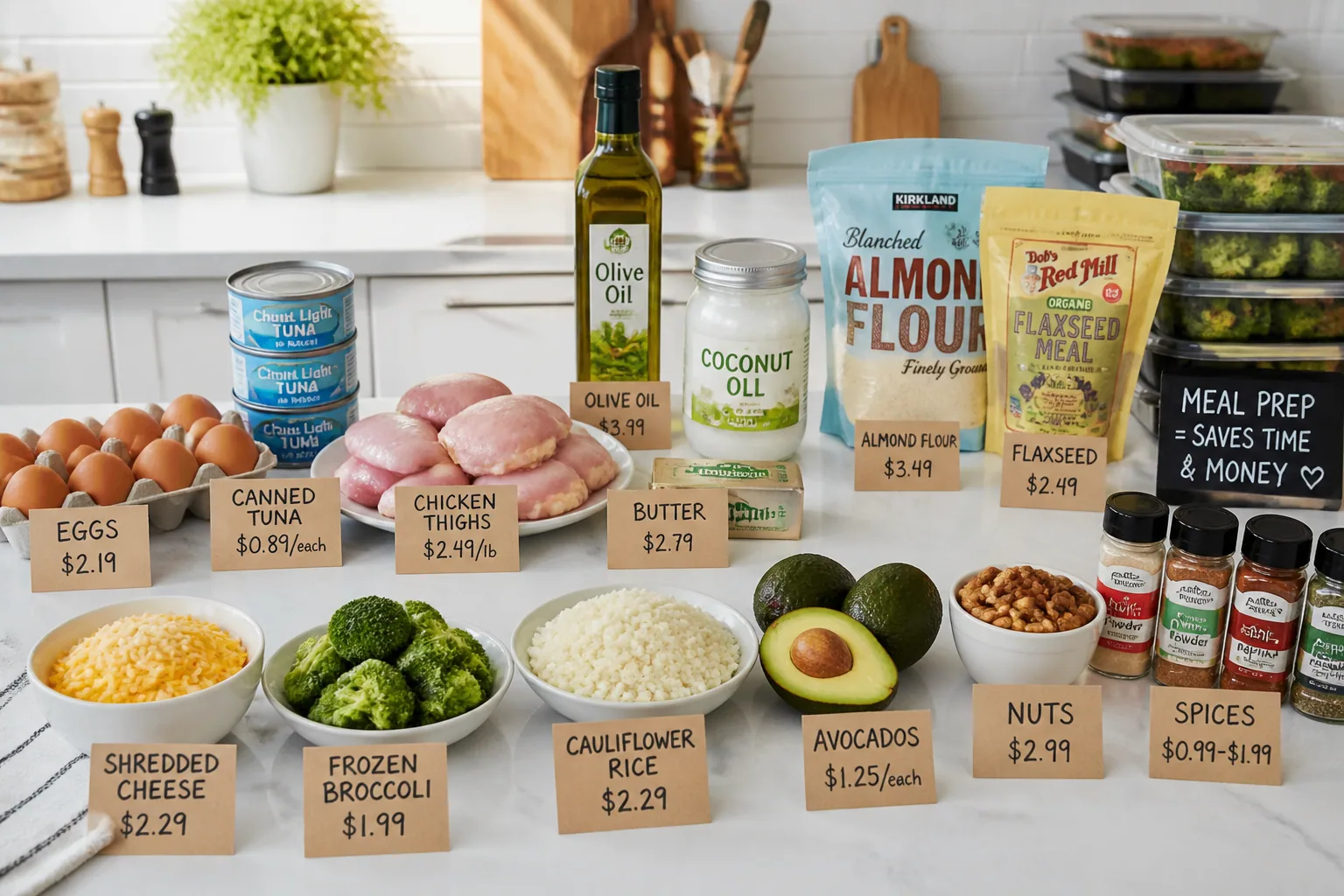
Keto does not have to be a specialty-food lifestyle. It only gets expensive when your kitchen is built around one-off products, trendy snacks, and ingredients you use once and forget in the back of the cabinet. The real budget keto strategy is much simpler: stock a small pantry of flexible staples that work across breakfasts, lunches, dinners, snacks, and even desserts. Once you have those basics, you can mix and match your way into dozens of meals without constantly buying new products.
This guide breaks down the keto pantry staples that do the most work for the least money. We will cover fats, proteins, low-carb baking ingredients, sweeteners, produce, and flavor boosters, then turn them into practical meal ideas and smart shopping habits. If you want to stay low carb without overspending, this is the pantry reset that makes it possible.
Why Keto Feels Expensive and How a Smart Pantry Fixes It
A lot of people assume keto is expensive because the first shopping trips often include almond flour, specialty bars, packaged desserts, and branded products that look convenient but do not stretch very far. The cost problem is not really keto itself. It is the way many beginners shop for it. When a recipe needs a rare ingredient that only appears once, the price per meal jumps fast.
A smart pantry fixes that by shifting the focus to repeatable ingredients. Eggs can become breakfast, lunch, or a quick dinner. Chicken thighs can be roasted, shredded, pan-fried, or simmered in soup. Frozen vegetables can fill out bowls, casseroles, and skillet meals. A block of cheese can be sliced, grated, melted, or turned into crispy snacks. When each ingredient plays multiple roles, the cost per meal drops sharply.
That is why budget keto is less about finding the cheapest individual item and more about building a system. The best pantry staples are shelf-stable or freezer-friendly, easy to find, and versatile enough that they show up in more than one recipe. You want ingredients that help you cook real food, not products that only exist to mimic one carb-heavy dish.
The Rules for Choosing Budget-Friendly Keto Staples
Before filling your pantry, it helps to have a few simple rules. First, choose ingredients that work in many recipes. Second, prefer items that store well and can be bought on sale in larger quantities. Third, look for foods that offer either protein, fat, fiber, or strong flavor, because those are the building blocks of satisfying keto meals. Fourth, skip anything that feels impressive but will sit unused for months.
A good budget keto pantry also balances convenience and flexibility. Some foods save money because they are naturally cheap, like eggs and ground meat. Others save money because you only need a small amount at a time, like psyllium husk, xanthan gum, or mustard. The best pantry staples are the ones you use up completely, not the ones that make your cart look keto but quietly increase waste.
The simplest test is this: can you imagine using the ingredient in at least three different meals this week? If the answer is no, it is probably not a staple. If the answer is yes, it may earn a permanent place in your kitchen.
Smart Fats to Buy: Butter, Olive Oil, Coconut Oil, and Mayo
Fats are the backbone of keto, but they do not need to be exotic. Butter is one of the best value fats because it brings richness, flavor, and cooking versatility at a low cost per use. It works in eggs, vegetables, sauces, baked goods, and pan frying. It also stores well in the refrigerator and can be frozen if you buy extra during a sale. Keto budget guides consistently highlight butter as one of the cheapest ways to add satisfying calories to a meal.
Olive oil is another essential. It is not just for salad dressing. You can use it to roast vegetables, saute meats, finish cooked dishes, and build quick vinaigrettes. A single bottle can cover a lot of kitchen ground, which makes it far more useful than oils purchased for only one niche recipe. Coconut oil is worth buying if you actually use it for baking, fat bombs, or higher-heat recipes, but it should earn its place rather than sit as a trendy backup. Mayo is also a smart staple because it can become tuna salad, egg salad, chicken salad, creamy dip, or a base for quick sauces.
If you are choosing between fancy keto oils and these basic fats, the basic fats usually win. They are cheaper, easier to find, and much more likely to get used before they expire. The goal is not to own every fat, but to own the few that solve most cooking problems.
Best Affordable Protein Staples: Eggs, Chicken Thighs, Canned Fish, and Ground Meat
Protein is where budget keto can either shine or spiral out of control. The trick is to focus on affordable cuts and formats that cook fast and work in several meals. Eggs deserve a top spot because they are one of the cheapest complete proteins available. According to ProteinBenchmark, eggs cost about $2.84 per 100 g of protein at 2026 U.S. retail prices, which is dramatically cheaper than steak, bacon, or many specialty keto products. Source: https://proteinbenchmark.com/protein-affordability
Chicken thighs are another budget hero. They usually cost less than chicken breast, and they bring more fat and flavor, which matters on keto. They can be baked, grilled, shredded, or simmered into soups and casseroles. Ground beef is equally useful because it can become taco bowls, burgers, meatballs, stuffed vegetables, skillet meals, or breakfast hash. If you buy 80/20 ground beef, you get a better fat profile and more flavor per dollar than leaner cuts.
Canned fish, especially tuna and salmon, is one of the easiest ways to keep a keto meal cheap and fast. It needs no prep, stores for a long time, and works well in salads, patties, stuffed avocados, or quick lunch bowls. It is exactly the kind of staple that saves you from expensive last-minute takeout when you need a meal in five minutes.
In practical terms, these staples can keep a week of keto meals surprisingly affordable. KetoDietCorner notes that ground beef, chicken thighs, canned tuna or salmon, frozen spinach, cabbage, cauliflower, butter, olive oil, and block cheese are among the cheapest whole-food staples for keto meals, and that three meals plus snacks a day can run about $55 to $65 per week when built from these basics. Source: https://ketodietcorner.com/keto-meal-plans/keto-on-a-budget/
Plant-Based Keto Proteins That Actually Save Money
Plant-based protein on keto is not about replacing meat completely. It is about adding affordable ingredients that make meals more filling without pushing carbs too high. Nuts and seeds are especially useful because they bring fat, fiber, and some protein in a compact format. Almonds, walnuts, pecans, flaxseed meal, chia seeds, and hemp hearts all have different uses, so you do not need every one at once. Buying them in bulk or store brands usually lowers the cost quite a bit.
Chia and flax are particularly good value because a small amount adds texture and thickening power. Chia can become pudding or a topping for yogurt-style bowls, while flaxseed meal works in baking and low-carb porridges. Hemp hearts are great for quick protein boosts in salads or breakfast bowls. These ingredients are not as cheap per gram of protein as eggs, but they can make meals feel more substantial and varied without requiring more meat.
The key is restraint. Nuts and seeds can become expensive if you treat them like snack food first and pantry staple second. Buy them because they solve a specific meal problem, not because they are labeled keto.
Low-Carb Flours Worth Buying and Which Ones to Skip
Low-carb baking can get costly if you buy too many specialty flours. For most kitchens, almond flour and coconut flour are the two that matter most. CarbMeNot reports that almond flour has about 3 g net carbs per 1/4 cup and coconut flour has around 3 g net carbs per 2 tablespoons, making both far better than wheat flour for keto baking. Source: https://www.carbmenot.com/blog/keto-flour
Almond flour is the more versatile option for many beginners. It works in pancakes, muffins, breading, cookies, and low-carb cakes. Coconut flour is more absorbent, so a little goes a long way, which makes it inexpensive per use once you know how to cook with it. The problem is that many people buy both, plus several other specialty flours, and then only use one recipe from each bag. That is not budget-friendly.
If you are just starting out, choose one primary flour and learn it well. Almond flour is often the easiest first buy. Add coconut flour later if you know you enjoy baking often. Skip the rest unless a specific recipe truly calls for them. A small, well-used pantry beats a large collection of unopened bags every time.
Keto Sweeteners That Stretch Across Recipes
Sweeteners can either be a smart pantry buy or a wasteful trap. The best options are the ones that work in multiple recipes and do not require you to buy a new dessert ingredient each time. Erythritol and monk fruit sweetener are common favorites because they can be used in baking, drinks, and no-bake treats. They are intense enough that a small amount stretches across many servings.
Other high-value dessert staples include unsweetened cocoa powder, sugar-free chocolate chips, baking powder, baking soda, psyllium husks, and xanthan gum. Carb Manager’s pantry list highlights these as core keto dry goods because they are useful in small amounts and can transform basic ingredients into more satisfying recipes. Source: https://assets.carbmanager.com/static/marketing/ebooks/ShoppingListBonus.pdf
The point is not to stock every low-carb sweetener on the market. It is to buy the few that support the kinds of recipes you actually make. If you rarely bake, you do not need a huge dessert aisle in your pantry. If you bake often, a small set of reliable ingredients will give you much better value than packaged keto desserts.
Frozen vs Seasonal Produce: The Cheapest Way to Stay Low Carb
Vegetables are where many keto eaters accidentally overspend, especially when they buy out-of-season fresh produce that spoils before they use it. Frozen vegetables are usually the easiest fix. Mealift and KetoDietCorner note that frozen broccoli, cauliflower, and spinach often cost 30 to 50 percent less than fresh while keeping almost identical nutrition. Source: https://mealift.app/blog/keto-grocery-list
That makes frozen produce one of the most reliable pantry-freezer staples you can own. Broccoli can be roasted, steamed, or added to casseroles. Cauliflower can become rice, mash, soup base, or a skillet filler. Spinach can go into omelets, cream sauces, soups, and baked dishes. Because these vegetables keep well, they also reduce waste, which is a hidden budget win.
Seasonal fresh produce still has a place, especially when you can buy cabbage, zucchini, leafy greens, cucumbers, or avocados at a good price. The smart move is to let price guide the choice. If fresh is cheap, buy fresh. If not, frozen is usually the better deal and often the more convenient option too.
Flavor Boosters That Make Simple Ingredients Taste Expensive
One of the best budget keto skills is learning how to make cheap ingredients taste like a complete meal. That starts with flavor boosters. Shelf-stable staples like bone broth, full-fat coconut milk, coconut aminos, hot sauce, yellow mustard, and apple cider vinegar add depth without adding many carbs or much cost. Mealift’s pantry table highlights these as building blocks that stretch meals and increase impact. Source: https://www.mealift.app/blog/keto-grocery-list
Spices and condiments matter more than many beginners expect. Garlic powder, onion powder, paprika, chili flakes, Italian seasoning, bouillon cubes, and mustard can make eggs, meat, and vegetables taste very different from one another even when the core ingredients stay the same. Cheese is another huge flavor multiplier. A block of cheddar or similar cheese can be sliced into snacks, melted into sauces, shredded over casseroles, or used to add richness to a simple bowl.
The reason these items are so valuable is that they create variety without forcing you to buy entirely different meals. A tray of chicken thighs and broccoli can taste like a totally different dinner depending on whether you season it with garlic and butter, curry and coconut milk, or mustard and cheese.
The 12 to 16 Core Keto Staples That Unlock Most Recipes
If you only want the essentials, this is the short list that unlocks most budget keto meals. Eggs. Butter. Olive oil. Mayo. Chicken thighs. Ground beef. Canned tuna or salmon. Block cheese. Frozen spinach. Frozen cauliflower. Frozen broccoli. Cabbage. Almond flour. Erythritol or monk fruit sweetener. Psyllium husks. A few strong condiments or spices like mustard, hot sauce, bouillon, and apple cider vinegar.
You do not need every item every week, but you should have enough of them that you can assemble breakfast, lunch, dinner, and a snack without a special trip. These staples cover scrambled eggs and omelets, chicken bowls, tuna salad, burgers, casseroles, cauliflower mash, baked goods, and quick sauces. That is the whole point. A strong pantry should let you cook many different meals from a very small set of ingredients.
If you want an even easier way to manage those staples while shopping, scanning, and tracking what fits your carb budget, a tool like Keeto can help. You can learn more here: https://findthe.app/keeto-5m0vbj
Easy Ingredient Swaps to Avoid Buying Specialty Items
The fastest way to save money is to stop buying keto products that only solve one problem. If a recipe calls for a specialty item, ask whether one of your pantry staples can do the same job. Cauliflower rice can replace expensive packaged grain-free bases. Cabbage can stand in for noodles, wraps, and stir-fry filler. Egg-based dishes can replace breakfast sandwiches, crustless quiches, and quick lunch wraps without any fancy products at all.
You can also swap ingredients inside recipes. Use chicken thighs instead of pre-cut chicken strips. Use block cheese instead of shredded bags when the price is better. Use frozen spinach instead of a fresh clamshell that wilts before you cook it. Use mayo and mustard to build sauces instead of buying multiple bottled keto dressings. Those small decisions add up quickly.
The goal is not to avoid convenience forever. It is to make sure convenience costs less when you do buy it. A smart pantry gives you enough flexibility to skip specialty items most of the time.
How to Shop Sales, Store Staples, and Stock Up Without Waste
Budget keto works best when you buy with a little strategy. Watch the sale cycle for eggs, butter, cheese, ground meat, and chicken thighs, since these are the items most likely to create weekly savings. Buy extra when the price is low, then freeze what you will not use immediately. Butter, cheese, meat, and many cooked proteins all freeze well if packaged correctly.
Storage matters too. Keep dry pantry items grouped together so you can see what needs to be used first. Use older items before newer ones. Put frozen produce where you can reach it easily. If ingredients are hidden, they are more likely to be forgotten and wasted. A budget pantry is not just about buying cheap food. It is about actually using what you buy.
It also helps to shop with a flexible plan rather than a fixed script. If chicken thighs are on sale, build your meals around them. If cabbage is cheaper than cauliflower, use cabbage for a few days. If cheese prices drop, stock up and switch some meals to casseroles or egg bakes. The more adaptable your pantry is, the less vulnerable you are to price swings.
Sample Cheap Keto Meals You Can Make from These Staples
Once the pantry is set up, meal planning gets much easier. A cheap keto breakfast could be scrambled eggs cooked in butter with spinach and cheddar. Lunch could be tuna salad with mayo, mustard, and cabbage slaw. Dinner might be roasted chicken thighs with cauliflower mash and broccoli. For a snack, you could have cheese slices, hard-boiled eggs, or a small handful of nuts.
Another low-cost day could look like this: an omelet with leftover ground beef, a quick bowl of chicken broth with cabbage and spices, and a burger patty with frozen vegetables and melted cheese. For something slightly richer, you could make a coconut milk curry with chicken thighs and spinach, then serve it over cauliflower rice. None of these meals require trendy ingredients, and all of them reuse the same pantry staples in different ways.
That is where keto gets easier and cheaper at the same time. Once you understand the core ingredients, you stop seeing each meal as a new shopping event. You start seeing it as a different combination of the same affordable building blocks.
Final Pantry Checklist for a Versatile Low-Cost Keto Kitchen
If you are building your pantry from scratch, start with the ingredients that solve the most problems first. Begin with eggs, butter, olive oil, mayo, chicken thighs, ground beef, canned fish, block cheese, frozen broccoli, frozen cauliflower, frozen spinach, and cabbage. Then add almond flour, one keto sweetener, and a small set of flavor boosters such as mustard, hot sauce, bouillon, and vinegar. If you bake, add coconut flour, cocoa powder, baking powder, baking soda, psyllium husks, and xanthan gum as needed.
A pantry like this is enough to cook breakfasts, lunches, dinners, snacks, and desserts without constantly buying specialty foods. It is also flexible enough to survive price changes, sales, and busy weeks when you need fast meals. That is the real secret to affordable keto: not more products, just better staples.
If you keep your pantry focused, shop sales, and reuse ingredients across multiple meals, keto becomes much more manageable. And if you need help checking whether a store item fits your carb goals while you shop, Keeto can make that decision much faster and easier: https://findthe.app/keeto-5m0vbj