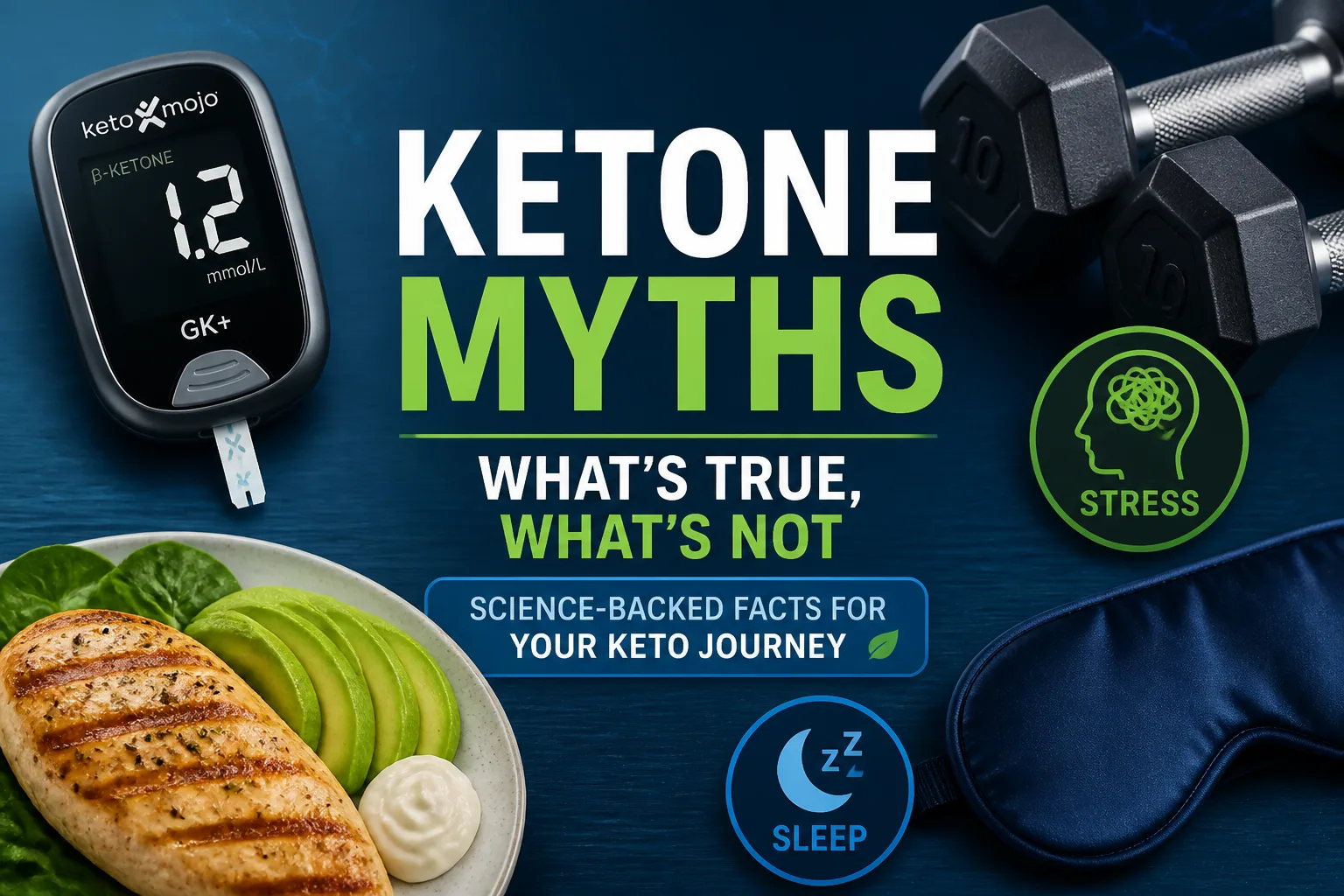
Keto Metabolism Myths Busted: What Really Impacts Ketone Levels
Ketone numbers can be weirdly emotional. One day you see a higher reading and feel like you are doing everything right. The next day the number drops, and suddenly it feels like ketosis has disappeared. But the truth is much less dramatic. Ketone production is influenced by a mix of food intake, exercise, sleep, stress, and how your body is using fuel at that moment. That means a lower reading does not automatically mean failure, and a higher reading does not always mean you are getting better results.
If you have been chasing perfect ketone levels, this article will help you reset the goal. We will break down the most common myths about ketone production, explain what actually moves ketone readings, and show you how to track the right signals for your specific goal, whether that is fat loss, mental clarity, or better metabolic flexibility.
Why Ketone Numbers Cause So Much Confusion
Part of the confusion comes from the fact that ketones are both a fuel and a biomarker. A blood ketone reading tells you something real about your current metabolism, but it does not tell the whole story. You can be in nutritional ketosis without seeing especially high numbers, and you can see a temporary spike in ketones from fasting or exercise without necessarily being better adapted to burning fat long term.
Research helps put the numbers in context. Nutritional ketosis is generally defined as blood beta-hydroxybutyrate, or BHB, at 0.5 mM or higher, usually in the setting of carbohydrate restriction and moderate protein intake. Under well-formulated ketogenic diets, ketone levels rarely exceed about 5 mM because the body begins using ketones more efficiently and also applies feedback control to limit further production. In other words, there is a practical ceiling, and chasing ever-higher numbers is usually not the point. Source: https://pmc.ncbi.nlm.nih.gov/articles/PMC11327213/
This is why two people eating a very similar keto diet can see different readings. They may have different activity levels, sleep quality, stress load, glycogen stores, hydration status, or insulin response. Ketone values are a snapshot, not a verdict.
Ketosis vs High Ketones: Not the Same Thing
Being in ketosis means your body is producing and using ketones because carbohydrate availability and insulin levels are low enough to shift fuel use toward fat. High ketone readings simply mean there are more ketones circulating at that moment. Those are related ideas, but they are not identical.
This matters because many people assume that higher ketones always equal better fat loss, sharper thinking, or a deeper state of ketosis. That is not always true. Many of the metabolic and cognitive benefits associated with ketosis appear in the moderate range, often around 1 to 3 mM BHB. Beyond that, especially during prolonged fasting or when using exogenous ketones, the body may actually reduce its own ketone production through negative feedback. Source: https://pmc.ncbi.nlm.nih.gov/articles/PMC10635661/
So if your ketones are stable but not sky high, that can still be a very successful keto state. What matters more is whether your body is using fuel in a way that matches your goal.
Myth #1: Too Much Protein Always Kicks You Out of Ketosis
This is one of the most persistent keto myths. Protein is often treated like a danger zone, as if one extra chicken breast will instantly shut down ketone production. That is not how the body works. Protein is essential for preserving lean mass, supporting recovery, and making a ketogenic diet sustainable, especially for active people.
Yes, higher protein intake can increase gluconeogenesis, the process where the liver makes glucose from non-carbohydrate sources. But gluconeogenesis is not an on-off switch that automatically destroys ketosis. It is a demand-driven process, not a simple conversion of every gram of protein into sugar. Your body uses it based on need, not panic.
Research in endurance-trained men found that 1.8 g/kg/day of protein increased glucose turnover compared with lower or very high protein intake, but it did not mean ketosis was automatically lost. Another report noted individuals maintaining blood ketones around 1.0 mM while eating 1.7 g/kg/day of protein, as long as carbohydrates remained very low. Sources: https://pmc.ncbi.nlm.nih.gov/articles/PMC3229558/ and https://digitalcommons.lindenwood.edu/context/faculty-research-papers/article/1657/viewcontent/International_society_of_sports_nutrition_position_stand__ketogenic_diets.pdf
In practice, protein is more likely to help than hurt if your goal is body composition. The bigger risk for many keto learners is actually undereating protein and then feeling hungry, fatigued, or unable to maintain muscle while dieting.
How Gluconeogenesis Actually Works
To understand why protein does not automatically ruin ketosis, it helps to look at what gluconeogenesis really is. During ketosis, the liver is producing ketones from fat-derived acetyl-CoA because acetyl-CoA from beta-oxidation exceeds the capacity of the TCA cycle, partly because oxaloacetate is diverted toward glucose production. This means ketone generation depends on a coordinated hormonal and metabolic state, not on protein alone. Source: https://www.ncbi.nlm.nih.gov/books/NBK493179/
When carbohydrates are low, the body still needs a certain amount of glucose for tissues that require it. So it makes some glucose from amino acids, lactate, and glycerol. That is normal and expected. It does not mean you are being kicked out of ketosis every time gluconeogenesis happens.
The key idea is this: if insulin stays low, carbohydrates stay very low, and fat availability is high, the body can remain in ketosis even with moderate to somewhat higher protein intake.
Safe Protein Ranges for Most Keto Learners
There is no single perfect protein target for everyone, but a useful starting point for many keto learners is a moderate intake that supports satiety and muscle maintenance without pushing total calories too high. For many people, that means roughly 1.2 to 1.8 g of protein per kilogram of reference body weight per day, with active individuals often leaning toward the higher end.
The research above supports the idea that moderate protein intake is compatible with ketosis when carbs are kept low. That matters because keto is not just for people who want to maximize ketones. It is often used for fat loss, blood sugar control, reduced appetite, and better energy stability. For those goals, enough protein is usually a feature, not a flaw.
A simple rule of thumb is this: if your ketones are low and you are also hungry, losing strength, or recovering poorly, the solution may not be less protein. It may be better carb control, better sleep, or a more realistic meal structure.
Myth #2: Fasting Is the Fastest Way to Fix Low Ketones
Fasting often raises ketones, so it is easy to assume that fasting is the fastest or best way to rescue low ketone readings. Sometimes it is useful, but it is not always the right solution. A fasting window can help if your goal is a short-term rise in ketones, but it is not the only way to support ketosis and it is not ideal for everyone.
Intermittent fasting changes fuel use by lowering insulin, increasing fat mobilization, and giving the liver more free fatty acids to convert into ketones. In other words, fasting helps create the conditions for ketogenesis. But if your sleep is bad, your stress is high, or your meals are too carb-heavy, fasting alone may not solve the problem for long.
The goal is not to force ketones up at all costs. It is to create a metabolic environment where the body can access stored fat and switch efficiently between fuels.
How Intermittent Fasting Changes Ketone Production
During fasting, insulin drops and lipolysis rises, which means more free fatty acids are released from fat tissue. Those fatty acids travel to the liver, where they are converted into ketones. This is one reason fasting often produces a noticeable ketone rise, especially in people who are already carbohydrate restricted.
But the size of the effect depends on your starting point. Someone who is already adapted to low carb eating may see a smaller spike than a person who is still relying heavily on glucose. And if fasting creates too much stress, poor sleep, or overtraining, the benefits may be blunted.
So yes, fasting can be a useful tool. It is just not a magic fix for every ketone dip.
Myth #3: Any Exercise Boosts Ketones the Same Way
Exercise absolutely influences ketones, but not all exercise affects them equally. The type, intensity, timing, and whether you are fed or fasted all matter. A hard workout after a high-carb meal will not create the same ketone response as a moderate session done in a fasted state.
Research shows that exercise in a fasted state increases fat oxidation, free fatty acid release, and the activation of enzymes involved in beta-oxidation, which supports higher ketone production than the same workout performed in the fed state. Source: https://pmc.ncbi.nlm.nih.gov/articles/PMC6983467/
A review on ketone bodies and exercise performance noted that moderate aerobic exercise at around 50 to 60 percent of VO2max in an overnight-fasted person often raises ketones to about 0.5 to 1.0 mM during exercise, with even higher levels in recovery when glycogen is depleted. Source: https://pmc.ncbi.nlm.nih.gov/articles/PMC5309297/
That means exercise can be a powerful ketone-supporting tool, but the details matter. If your goal is to nudge ketones upward, a brisk walk, an easy bike ride, or moderate steady-state cardio in a fasted or low-carb state may be more effective than a very intense workout followed by stress and exhaustion.
Best Types and Timing of Exercise for Ketone Support
For many people, the sweet spot is moderate aerobic activity combined with regular movement throughout the day. This kind of exercise encourages fat use without creating excessive stress hormones. Fasted morning walks are especially popular because they are easy to recover from and often pair well with low-carb eating.
That does not mean resistance training is unhelpful. Strength training supports muscle mass, insulin sensitivity, and long-term metabolic health. It may not always create an immediate ketone surge, but it contributes to better keto outcomes over time.
If your goal is ketone support, think in terms of consistency rather than intensity. The best exercise is the kind you can repeat without burning yourself out.
Myth #4: Sleep Has Nothing to Do With Ketosis
Sleep is one of the most underrated factors in ketone production. People often focus entirely on food macros while ignoring the fact that poor sleep can shift hormones in ways that make ketosis harder to maintain.
One night of total sleep deprivation has been shown to increase plasma cortisol and subjective stress, especially the next morning. Elevated cortisol promotes gluconeogenesis and suppresses lipolysis, which can reduce the free fatty acid availability needed for ketone production. Source: https://pmc.ncbi.nlm.nih.gov/articles/PMC5401766/
This helps explain why some people see lower ketones after a bad night of sleep even when they ate perfectly the day before. It is not just about carbs. It is also about hormonal signaling.
How Stress and Cortisol Can Lower Ketone Readings
Ketogenesis is hormonally regulated. Low insulin and higher levels of counterregulatory hormones such as glucagon, cortisol, and catecholamines are part of the ketone-producing state. But there is a balance. If stress becomes chronic, cortisol can push the body toward more glucose production and interfere with the fat release needed for ketone synthesis. Source: https://www.ncbi.nlm.nih.gov/books/NBK493179/
That does not mean cortisol is bad. It means the body uses cortisol as part of a normal response to fasting, exercise, and energy demand. The problem is prolonged elevation, which can work against the calm, efficient fat-burning state people are trying to create on keto.
If your ketones fluctuate a lot, especially during stressful periods, the answer may be less about changing your macros and more about improving recovery, sleep, hydration, and workload.
Why Your Ketone Goal Depends on Fat Loss, Focus, or Metabolic Health
Not everyone on keto is chasing the same outcome, and that is why the same ketone number can mean different things to different people. If your main goal is fat loss, the most important markers may be appetite control, adherence, stable energy, and a sustainable calorie deficit. Ketones matter, but they are not the only variable.
If your goal is mental clarity, you may care more about avoiding glucose swings and maintaining a steady moderate ketone level than about hitting a specific peak number. If your goal is metabolic health, the bigger win may be improved insulin sensitivity and greater metabolic flexibility, meaning your body can switch more smoothly between glucose and fat or ketones. Source: https://www.levels.com/blog/how-monitoring-ketones-and-glucose-can-help-you-achieve-metabolic-flexibility
This is the main mindset shift: ketones are a tool, not the trophy. The best ketone level is the one that supports the outcome you actually want.
What to Track If Your Ketones Keep Fluctuating
If your ketones move up and down, do not look at the number in isolation. Track the context around it. That context usually explains more than the ketone reading itself.
Useful variables include carbohydrate intake, protein intake, meal timing, sleep duration, stress level, training type, hydration, and recent fasting. If you are measuring blood ketones, also pay attention to the time of day and whether you measured before or after exercise.
For many people, the pattern is obvious once they start writing it down. A low reading after a poor night of sleep or a hard workout is not a mystery. A higher reading after a fasted walk or a lighter eating day is not magic. It is just physiology doing its job.
A Practical Checklist to Stabilize or Improve Ketone Levels
If you want steadier ketones, start simple. First, keep carbohydrates consistently low enough to support nutritional ketosis. Second, avoid both under-eating and overdoing protein to the point that it makes your meals unsustainable. Third, include movement most days, especially moderate aerobic work and regular walking.
Next, protect sleep as if it were part of your keto plan, because it is. A consistent bedtime, fewer late-night stimulants, and better recovery can do more for ketone stability than another round of panic fasting. Finally, watch stress. Chronic stress changes the hormonal environment that ketogenesis depends on.
If you want a little help staying on top of food choices while simplifying the process, Keeto - Keto Made Easy can make grocery decisions less stressful. It scans products, checks net carbs, and helps you stay within your carb target without doing math in the aisle: https://findthe.app/keeto-5m0vbj
A good keto checklist is not about perfection. It is about reducing the number of variables that can push your body away from the fuel pattern you want.
Final Takeaways: Focus on Patterns, Not Panic
Ketone levels are useful, but they are not a scorecard for how well you are doing keto. Protein does not automatically kick you out of ketosis. Fasting can raise ketones, but it is not always necessary. Exercise can help, especially when it is moderate and timed well. Sleep and stress matter more than many people realize because hormones like cortisol can reshape ketone production.
The bottom line is simple. Nutritional ketosis is about a metabolic state, not a single number. If you focus on consistent low carbs, enough protein, good recovery, and repeatable habits, your ketones will usually settle into a range that supports your goals. That is a much calmer and more effective way to do keto than chasing the highest reading on the meter.