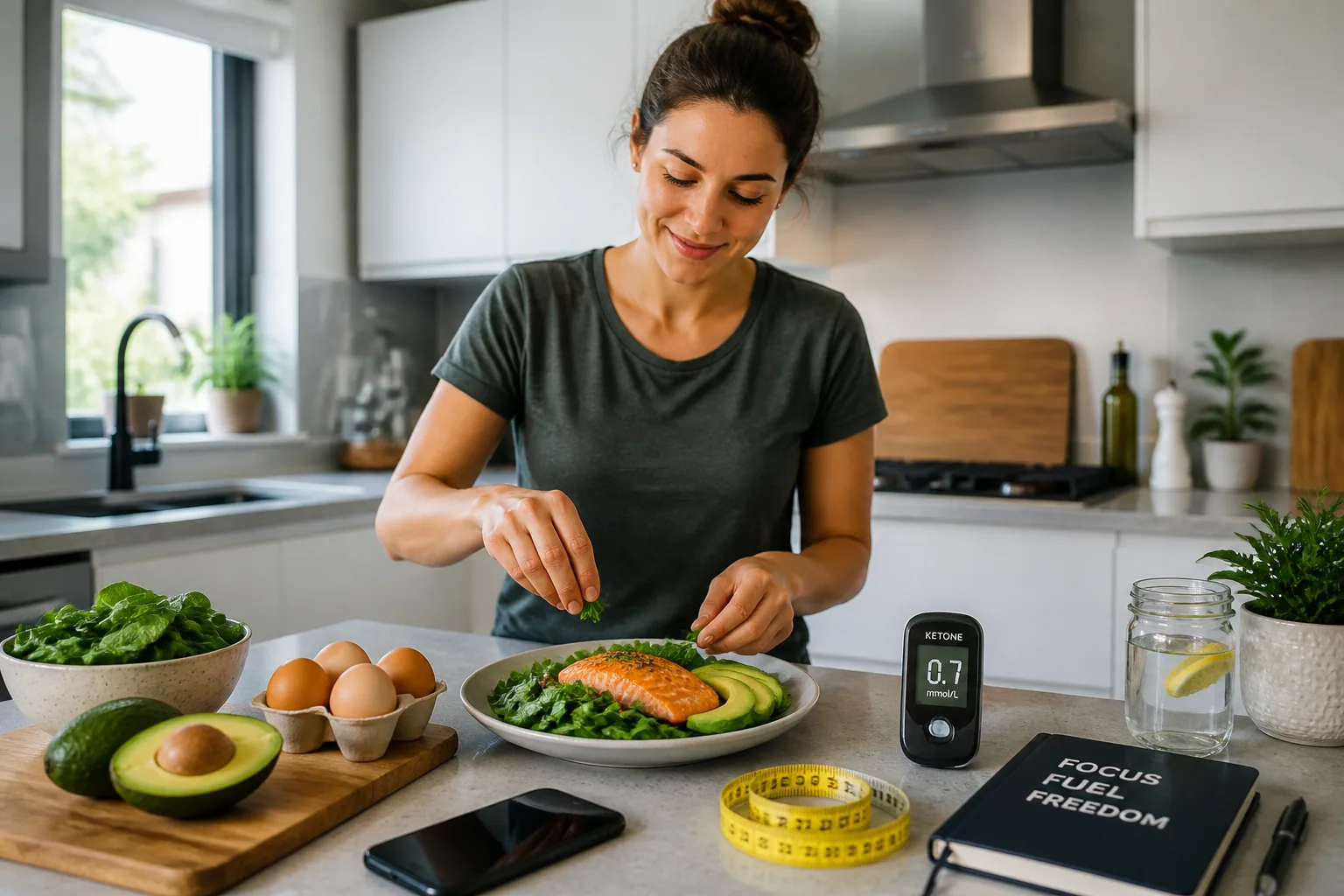
Keto Intuition: When to Ease Up on Tracking Without Sabotage
For a lot of experienced keto dieters, tracking macros starts out as a powerful tool. It teaches you what fits, what doesn’t, and how easy it is to overshoot carbs without noticing. But over time, the same habit that once created clarity can start to create friction. Food becomes a math problem, meals feel less enjoyable, and every bite can begin to feel like a test. The goal is not to abandon structure. The goal is to know when strict logging has done its job, and when it may be getting in the way of long-term consistency.
That is where keto intuition comes in. It is the ability to estimate meals well enough to stay in ketosis, without needing to weigh and log everything forever. It is not guesswork. It is a skill built from repetition, portion awareness, and a clear understanding of which foods are most likely to derail progress. If you are at the point where you want more flexibility but do not want to lose momentum, this guide will help you step back from tracking in a way that is smart, gradual, and sustainable.
Why Long-Term Keto Tracking Can Start to Backfire
Strict tracking is helpful at the beginning of a keto journey because it creates boundaries. You learn your carb ceiling, how much protein you actually need, and how calorie-dense keto foods can be. But long-term, that same system can begin to backfire. Instead of supporting consistency, it can create mental fatigue, anxiety around numbers, and a constant feeling that you are either on plan or off plan with no middle ground.
There is also a practical issue: the longer people track on their own, the more the numbers can drift. Research suggests that self-guided keto dieters often end up consuming 200 to 300 extra calories per day by the three-week mark without realizing it, which is a big reason why progress can slow even when people feel consistent. That does not mean tracking is bad. It means accuracy fades when every bite has to be estimated day after day.
Another common reason tracking becomes less useful is that not every stall is a true plateau. A genuine keto plateau is often defined as no change in scale weight, measurements, or clothing fit for at least 3 to 4 weeks despite sticking to low-carb, high-fat macros. Short stalls under four weeks are often normal physiologic responses involving water retention, hormonal shifts, or the body adjusting to fat-based fuel. In other words, sometimes the problem is not your plan. It is just the timeline.
Signs You May Be Ready to Ease Up on Tracking
If you are wondering whether it is time to stop logging every detail, look at your relationship with tracking, not just your results. One sign is food fatigue. If every meal feels repetitive because you are choosing foods only because they are easy to measure, the system may be too rigid for where you are now. Another sign is anxiety. When tracking starts to trigger guilt, shame, or obsessive checking, it is no longer just a tool. It has become a stressor.
You may also be ready if you can identify the main keto traps without needing a tracker to catch them. For example, you already know that sauces, dressings, condiments, packaged keto snacks, dairy, nuts, and extra oils can creep up fast. If you routinely recognize those risks before you eat, that is a strong sign your awareness has improved. The same is true if you can look at a plate and make a pretty accurate estimate of how much protein, fat, and carbs it contains.
Plateaus can also be a clue. If you have been consistent for 3 to 4 weeks or more with no change in weight, measurements, or clothing fit, it is worth checking whether hidden carbs or portion creep have quietly entered the picture. Research on keto stalls suggests they often last 3 to 6 weeks, and can sometimes run longer, especially when your body composition is changing or your lifestyle has shifted. That means you do not want to overreact to every stall, but you also do not want to keep over-tracking forever if the numbers are no longer helping.
What Macro Intuition Actually Means on Keto
Macro intuition is not eating loosely and hoping for the best. It is the ability to estimate enough accurately to stay within a keto framework without needing full-time logs. On keto, that usually means knowing your carb limit, recognizing good protein portions, and understanding how quickly fats add up when you are using oils, butter, cream, cheese, nuts, and fatty cuts of meat.
A typical keto macro split is around 70 to 75 percent fat, 20 to 25 percent protein, and 5 to 10 percent net carbs, with many people starting conservatively at 20 to 25 grams of net carbs per day. That does not mean everyone needs to calculate those percentages daily forever. It means you should internalize the structure well enough to build meals that fit it naturally.
The easiest way to think about intuition is as a learned pattern recognition skill. After weeks or months of logging, you start to notice what 3 to 4 ounces of cooked protein looks like, how much oil a tablespoon really is, and which foods are more carb-dense than they appear. Over time, many long-term macro trackers report that they need logging less because they have become more confident estimating portions and macros on their own.
How to Estimate Carbs, Protein, and Fats Without Logging Everything
The easiest place to start is with carbs, because that is the macro most likely to kick you out of ketosis if you miss it. Hidden carbs are everywhere, especially in condiments, sauces, flavored drinks, “keto” packaged products, and restaurant meals. If you stop tracking, make carb awareness your first line of defense. A simple rule is to build your meals around low-carb proteins and vegetables first, then use fats as a finishing touch instead of letting them become the main event.
Visual portion cues help a lot. A palm-sized portion of protein is often around 3 to 4 ounces cooked, which usually gives you about 25 to 30 grams of protein. A thumb-sized portion of fat is roughly 1 tablespoon of oil or a small handful of nuts. A cupped hand or fist can help you estimate a carb-containing side, though on keto that portion may need to be much smaller or replaced with leafy vegetables and other low-carb choices.
Protein deserves special attention because many keto dieters accidentally under-eat it when they are focused on keeping fat high. Once you stop logging, it helps to anchor every meal with a clear protein serving first. Then add low-carb vegetables, then fat to taste. This approach protects satiety and helps prevent the common mistake of replacing measured meals with snacky, vague portions that feel keto-friendly but are actually calorie-dense.
Fats are the macro most likely to creep up when you are no longer using an app. Oils, butter, nuts, cheese, cream, mayo, and nut butters are all easy to overpour or over-scoop. The fix is not to fear fat. The fix is to use it deliberately. Ask whether the added fat is there for satiety and flavor, or whether it is just automatic habit. That one question prevents a lot of silent calorie creep.
A Gradual Step-Down Plan for Reducing Tracking Safely
If you are nervous about quitting full tracking, do not stop abruptly. Step down instead. One simple method is to track only carbs for a while while keeping protein and fats estimated with visual cues. This preserves the most important boundary for ketosis while reducing the burden of full macro logging.
Another option is to track only one or two meals a day. Many people find breakfast and lunch are easiest to estimate consistently, while dinner is the meal most likely to become social, flexible, or harder to measure. By checking only the meals that matter most, you keep accountability without making every day feel like a data entry project.
A weekday-only tracking approach can also work well. This gives you structure during the workweek and lets you practice more flexible eating on weekends. If you use this method, make sure weekends do not become a free-for-all. The point is to test your intuition, not to hide from it.
The smartest approach is to reduce tracking in stages and review what happens at each step. If your energy, ketone readings, measurements, and clothing fit stay stable, then you are probably ready for the next level of flexibility. If not, move back one step and tighten the process again. That is not failure. That is calibration.
Smart Accountability Options That Don’t Require Full-Time Logging
You do not have to choose between obsessive tracking and complete freehand eating. There are plenty of middle-ground accountability tools. A weekly weigh-in can be enough for some people, especially if paired with waist measurements and a quick check-in on how your clothes fit. Others prefer to scan packaged foods at the store instead of logging every meal. For that kind of real-time decision support, a tool like Keeto - Keto Made Easy can be useful, since it lets you scan a barcode and instantly see whether a product is keto-friendly and how many net carbs it contains.
Another helpful habit is a simple photo log. Take pictures of your meals without assigning numbers to everything. This makes it easier to spot patterns later, like repeated high-carb add-ons or oversized portions of nuts and cheese. If you prefer more structure, you can also use a brief end-of-day review: Did I stay under my carb target? Did I snack mindlessly? Did I add extra fats out of habit? These questions keep you honest without dragging you back into full-time logging.
Common Mistakes That Happen When You Stop Tracking
The biggest mistake is assuming that because food is keto-friendly, it is automatically safe in any amount. That is how people end up overdoing cheese, cream, nuts, nut butters, bacon, and keto desserts. These foods can fit keto, but they are also easy to overeat because they are dense in calories and often very rewarding to eat.
Another common problem is mindless snacking. When full tracking disappears, some people unconsciously replace planned meals with constant grazing. Even if each snack is low in carbs, the repeated bites can add up fast. Keto works best when there is enough structure to avoid turning every kitchen visit into an eating opportunity.
Hidden carbs are the other big trap. Salad dressings, marinades, flavored yogurts, sugar-free sauces, restaurant seasoning blends, and packaged keto products often contain more net carbs than people expect. If progress suddenly slows after stopping logs, go straight to the usual suspects first rather than assuming the diet has stopped working.
How to Catch Hidden Carbs and Portion Creep Early
The easiest way to catch hidden carbs early is to simplify your food choices. The more ingredient-heavy a meal is, the easier it is for carbs to hide. Meals built around a clear protein, a low-carb vegetable, and a measured fat source are much easier to estimate than casseroles, bars, snack mixes, and “keto” convenience foods.
Portion creep is best caught by using a few anchors. If you regularly eat the same breakfast, lunch, or snack, memorize the portion sizes and keep them consistent. If you cook with oils, measure them for a while before trusting your eye. If nuts or cheese are your weak spot, pre-portion them instead of eating straight from the bag or container. Small controls like that prevent large problems later.
A weekly reality check can help too. If your waist measurement is rising, your clothes are tightening, or your ketone readings are becoming less consistent, that is useful feedback even if your calorie counts no longer exist. You do not need daily logging to notice a trend, but you do need a simple system for noticing one when it appears.
Better Ways to Measure Keto Success Beyond the Scale
The scale is useful, but it is not the only thing that matters on keto. Water shifts, hormonal cycles, sodium intake, stress, sleep, and exercise can all change the number without reflecting fat loss or gain. That is why non-scale markers are so valuable, especially when you are easing off tracking and want to know whether your new approach is still working.
Pay attention to energy levels and mental clarity. Many people on well-run keto feel steadier between meals, less foggy, and less prone to crashes. Waist circumference is another strong marker because it often reflects body composition changes more reliably than day-to-day weight. Clothing fit can tell you a lot too, especially if the waistband, thighs, and sleeves start feeling different even when the scale stalls.
Ketone readings can also be helpful, especially blood ketones if you already use them. They are not the whole story, but they can confirm that your carb intake and meal pattern are still supporting ketosis. The key is to use these signals together rather than obsessing over only one metric.
How to Know If Your New Low-Tracking Approach Is Working
The best sign that your low-tracking approach is working is stability. If your energy stays steady, your appetite feels manageable, your waist measurement is holding or shrinking, and your clothes still fit the same or better, then your intuition is probably doing its job. A short stall does not automatically mean the new approach failed, especially since many keto plateaus last 3 to 6 weeks and some stalls are just temporary water or hormonal noise.
What you want to see is a pattern over time, not perfection in every single day. If you are consistently under your carb target, avoiding grazing, and keeping portions of calorie-dense foods in check, then you are building a sustainable long-term system. If progress slips, you can always reintroduce more tracking for a while, tighten the carb budget, or audit the foods that are most likely to be causing creep.
In the end, keto intuition is about freedom with guardrails. You are not giving up awareness. You are turning awareness into a simpler, more durable routine. That is what makes keto sustainable for the long run: not perfect logging forever, but the confidence to know when you can ease up and how to get back on track if you need to.