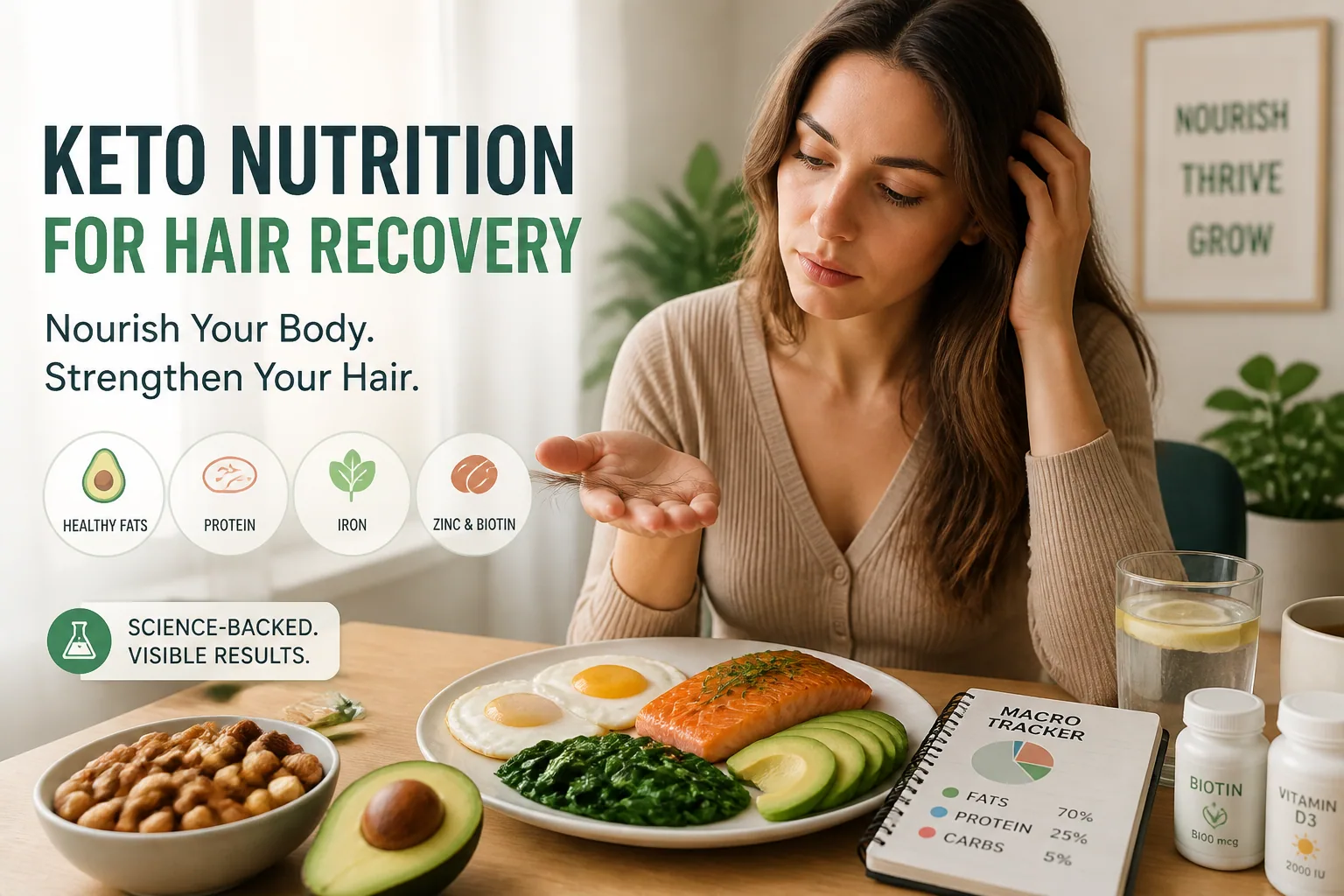
Keto Hair Health: How Your Macros, Micros, and Meal Timing Can Save Your Strands
Starting keto can feel like a reset for your body, but your hair does not always get the memo right away. For some people, the first few months on a ketogenic diet bring unexpected shedding, more breakage, or a sudden feeling that their ponytail is thinner than it used to be. That can be frustrating, especially when you are doing everything “right” for fat loss, blood sugar, or energy. The good news is that hair changes after going keto are usually not a sign that ketosis itself is inherently bad for hair. More often, they are tied to rapid weight loss, aggressive calorie cuts, stress, nutrient gaps, or poorly planned meal timing. In other words, the issue is usually the way keto is implemented, not keto by definition.
Why Hair Changes Can Happen on Keto
Hair is one of the first places your body shows that something is off, because it is not essential for immediate survival. When energy intake drops sharply, your body tends to prioritize organs, hormones, and basic metabolic function before it prioritizes hair growth. That means a highly restrictive keto phase can create a temporary environment where follicles get fewer resources, and shedding increases. Many people assume that because keto is low carb, the hair issue must be related to carbohydrates specifically. In reality, the bigger concern is often the combination of lower calories, less dietary variety, and stress on the system during a fast weight-loss phase.
This is especially relevant if you started keto and also cut portions aggressively, skipped meals often, or added fasting windows on top of the diet. Those changes can stack together and make hair more vulnerable. The hair follicle is a sensitive structure, and it responds to the overall environment, not just one macro. If protein is too low, if iron stores are already borderline, or if micronutrient intake falls during food restriction, hair may be one of the first places you notice it.
Is It Ketosis or Rapid Weight Loss? What Research Really Says
A key point from the research is that severe caloric restriction and dramatic weight loss can trigger telogen effluvium, a temporary shedding condition. In the classic JAMA report on crash dieters, people who lost about 11.7 to 24.8 kg over a short period experienced shedding that typically began 2 to 5 months after the diet started and often resolved over the following months with regrowth. That timing matters because people often blame the current week of eating when the real trigger happened months earlier. Source: https://jamanetwork.com/journals/jama/article-abstract/346207
So is ketosis itself causing the hair loss? Not necessarily. Ketosis is a metabolic state. Hair loss is more likely when ketosis is paired with rapid loss, chronic stress, low energy availability, or nutrient shortfalls. In practice, the way many people enter keto is quite abrupt, so the diet gets blamed when the body is actually reacting to the overall strain. If weight is dropping very quickly, if exercise volume is high, or if sleep is poor, the risk of temporary shedding goes up.
The Hair Growth Cycle: Why Shedding Often Shows Up Weeks Later
Hair grows in cycles. The anagen phase is the active growth stage, the catagen phase is a short transition, and the telogen phase is the resting stage before the hair sheds and a new strand begins. When the body experiences stress, a larger share of hairs can be pushed into telogen all at once. That is why shedding often appears delayed. The trigger might be a crash diet, illness, or major stressor, but the visible hair fall may not show up until 2 to 5 months later.
This delay can make keto hair loss feel mysterious. Someone may have started a strict low-carb plan in January and notice shedding in April or May, long after they have mentally moved on from the initial diet change. The pattern is often diffuse rather than patchy, which is one reason telogen effluvium is so commonly confused with other hair concerns. The upside is that telogen effluvium is often reversible once the underlying trigger is addressed and the body has enough support to recover.
Protein on Keto: How Much You Really Need for Stronger Strands
Protein is one of the most important nutrients for hair because hair itself is made primarily of keratin, a structural protein. On keto, it is easy to focus so much on carbs and fat that protein accidentally becomes an afterthought. But if protein intake is too low, hair can suffer. Harvard Health notes a baseline protein recommendation of about 0.36 g per pound of body weight, or about 0.8 g/kg, with higher needs for larger, more active, older, or pregnant individuals. Source: https://www.health.harvard.edu/skin-and-hair-health/can-insufficient-protein-intake-cause-hair-loss
For many people on keto, that baseline is not enough to feel truly optimal, especially during weight loss or frequent training. Hair health generally benefits when protein is prioritized at each meal instead of being squeezed in at the end of the day. If you are under-eating calories overall, even a technically “adequate” protein number may not fully protect hair because your body may still be in a deficit that is too deep for too long. A more hair-friendly keto approach usually means building meals around a strong protein anchor, then adding fats and low-carb vegetables around it.
Good keto protein sources include eggs, salmon, sardines, chicken, turkey, beef, lamb, Greek yogurt if tolerated, cottage cheese if it fits your macros, and collagen-containing cuts like bone broth or slow-cooked meats. Collagen is not a complete protein on its own, but it can complement an already solid protein intake. The main goal is consistency, not perfection.
Iron, Ferritin, and Hair Loss: The Overlooked Keto Risk
Iron status is one of the most overlooked variables in hair shedding, especially for women. Research has found a strong relationship between low ferritin and chronic hair shedding patterns such as female pattern hair loss and chronic telogen effluvium. In one Duke University study, low ferritin thresholds were common in these groups, and low iron stores were also common in controls, which shows how widespread the issue can be. Source: https://pubmed.ncbi.nlm.nih.gov/20947203/
Why does this matter on keto? Because some keto eaters unknowingly reduce iron intake when they cut out certain foods or keep meals too repetitive. This is especially true if red meat is limited, if appetite is low, or if someone relies heavily on cheese, nuts, oils, and low-protein snacks. Ferritin is not a number to guess at, and hair concerns are one of the situations where a clinician may want to check iron studies. If your ferritin is low, hair regrowth can be difficult no matter how “clean” your keto meals are.
A practical keto-friendly strategy is to include iron-rich foods regularly, such as beef, lamb, liver if you tolerate it, dark meat poultry, sardines, and shellfish. Pairing iron-rich meals with vitamin C from low-carb vegetables like bell peppers, broccoli, or leafy greens may help support absorption. If you suspect iron issues, testing matters more than self-prescribing supplements, because iron is one nutrient you do not want to guess on.
Vitamin D, Biotin, Zinc, and B Vitamins for Follicle Support
Several micronutrients are especially important for healthy follicles. Vitamin D has drawn a lot of attention because the vitamin D receptor helps maintain the hair follicle growth phase. In fact, research shows that VDR activity is essential for maintaining anagen, and defects in this pathway can interfere with normal cycling. In another study, oral vitamin D3 given to women with diffuse hair loss was associated with significant improvement in regrowth in about 82.5% of cases. Sources: https://academic.oup.com/mend/article/19/4/855/2741289 and https://www.jstage.jst.go.jp/article/jnsv/67/1/67_68/_article
Zinc is another important one. A recent study in Kurdish adults with hair loss found severe zinc deficiency in about 9.6% of participants with hair loss, versus none in the control group, and mild to moderate deficiency in about 34.4% versus about 1.3% in controls. That does not prove zinc deficiency is the only cause, but it does show that low zinc is common enough to deserve attention. Source: https://pubmed.ncbi.nlm.nih.gov/39165624/
Biotin gets a lot of attention online, but true deficiency is relatively rare. Even so, deficiency can lead to thinning, brittle hair, and shedding. Some research suggests that ketogenic or low-carb intake may increase the risk of biotin problems in certain settings, and a mouse study found that a ketogenic biotin-deficient diet exaggerated deficiency effects more rapidly than a standard biotin-deficient diet. A broader review also notes that B7, B12, folate, and riboflavin deficiencies can be linked to hair loss. Sources: https://www.sciencedirect.com/science/article/pii/S0899900713002244 and https://pmc.ncbi.nlm.nih.gov/articles/PMC6380979/
The best approach is usually food first, then targeted supplementation if needed. Eggs, meat, seafood, leafy greens, nuts, seeds, dairy if tolerated, and mushrooms can all help fill in micronutrient gaps. If you are planning to supplement, it is smart to look at the full picture rather than chasing one trendy vitamin.
Best Keto-Friendly Foods for Hair Health
If your goal is to stay in ketosis while also protecting your strands, your plate needs to work harder for you. Focus on foods that deliver protein, iron, zinc, B vitamins, and healthy fats without pushing carbs too high. Fatty fish like salmon and sardines are especially helpful because they provide protein plus omega-3s. Eggs are another excellent staple because they are nutrient-dense and easy to build into a low-carb meal plan.
Grass-fed beef, lamb, shellfish, and dark poultry meat can help support iron and zinc intake. Leafy greens like spinach and kale contribute folate, magnesium, and vitamin C. Avocado, olives, chia seeds, flaxseed, walnuts, and pumpkin seeds are useful for healthy fats and trace minerals. If dairy works for you, plain Greek yogurt and cottage cheese can be high-protein options that fit many keto plans. The main idea is variety. A repetitive keto menu built around only bacon, cheese, and coffee is not a hair-supportive strategy.
Hydration and electrolytes also matter more than people think. If you are under-hydrated or chronically low in sodium, potassium, and magnesium, you may feel fatigued and stressed, which can indirectly affect recovery and overall metabolic resilience. Hair likes stability.
Do You Need Supplements? What to Consider Before Buying
Supplements can help, but they are not a substitute for adequate food intake. If you are shedding hair, the first question is whether your calories, protein, and micronutrients are actually sufficient. A supplement may be useful when a true deficiency exists or when food intake is limited, but random “hair gummies” often provide too little of what matters, or they provide it without addressing the root cause.
Before buying anything, consider testing and context. Ferritin, vitamin D, zinc, thyroid markers, and sometimes B12 or folate may be worth discussing with a clinician. If you do supplement biotin, remember that it can interfere with some lab tests, so it should be used carefully and discussed with a professional when testing is planned. Iron and vitamin D should be handled especially thoughtfully because more is not always better. Targeted supplementation is more useful than broad self-treatment.
This is also where a tool like Keeto - Keto Made Easy can make a real difference for day-to-day eating. If you are trying to keep your meals low carb while also choosing more nutrient-dense foods, the app can help you scan products, check net carbs instantly, and stay within your carb budget without constant math. You can learn more here: https://findthe.app/keeto-5m0vbj
Meal Timing, Fasting Windows, and Circadian Rhythms
Meal timing is not just a trendy biohacking topic. It can influence circadian rhythms, metabolism, and stress signaling. Research shows that meal timing regulates peripheral circadian gene expression, and shifting feeding windows can alter rhythms tied to glucose and metabolic function. Late meals versus earlier meals can create different patterns in the body, which matters because your digestive system and metabolic tissues follow a clock. Sources: https://pubmed.ncbi.nlm.nih.gov/28578930/ and https://www.nature.com/articles/s41575-020-00401-5
Why might this matter for hair? Hair follicles are responsive to overall physiologic stress, and anything that disrupts sleep, hormone balance, or recovery can create an unfriendly environment for growth. Extreme time-restricted eating or fasting may also backfire for some people. Recent coverage in Nature highlighted evidence that fasting can slow hair regrowth by triggering stress responses that affect hair-follicle stem-cell survival. That does not mean everyone who fasts will lose hair, but it does mean longer fasting windows are not automatically better if your body is already under strain. Source: https://www.nature.com/articles/d41586-024-04084-9
If you are struggling with shedding, consider whether your eating window is too narrow, whether you are going too long between meals, or whether late-night eating is disrupting your sleep. Sometimes a more moderate schedule, such as consistent meals with enough protein earlier in the day, is easier on the body than aggressive fasting plus aggressive dieting at the same time.
Common Keto Mistakes That Can Worsen Shedding
A few common keto mistakes can make hair loss more likely. The first is eating too little for too long. The second is pushing carbs extremely low while also under-eating protein. The third is failing to include enough iron-rich and mineral-rich foods because the menu gets too repetitive. The fourth is relying on snack foods instead of real meals. The fifth is adding fasting and intense exercise on top of a new calorie deficit without giving the body time to adapt.
Another issue is assuming that if you are in ketosis, all metabolic needs are automatically covered. Ketosis may help some people manage appetite, but it does not guarantee nutrient adequacy. If your scalp and hair are sending warning signs, it is worth checking whether your plan is too aggressive. Hair does not usually respond well to “more restriction.” It responds better to stable energy, enough protein, and fewer gaps in micronutrient intake.
How to Stay in Ketosis While Supporting Hair Regrowth
The best version of keto for hair health is not the most extreme one. It is the one you can maintain while keeping your body well nourished. Start by protecting protein intake at each meal. Then build meals around nutrient-dense whole foods rather than only keto packaged products. Make sure iron, zinc, vitamin D, and B vitamins are coming from food whenever possible, and use supplements only when they are truly needed.
If you are actively losing weight, slow the pace down if possible. Hair loss related to crash dieting often improves when the diet becomes less severe and the body is no longer in a deep deficit. Aim for enough calories to support training, sleep, and recovery. Keep your fasting windows reasonable if you notice more shedding, and pay attention to whether late meals or erratic meal timing are affecting your energy and rest. Small changes can make a big difference over time.
Most importantly, remember that hair regrowth is slow. Even when the trigger is corrected, the visible results can take months. That can be hard emotionally, but it is also a reminder that consistency matters more than quick fixes.
When Hair Loss Signals It’s Time to Talk to a Doctor
Some shedding on keto can be temporary and diet-related, but not all hair loss should be brushed off. It is a good idea to speak with a clinician if shedding is severe, if you notice bald patches, scalp pain, itching, or scaling, if hair loss lasts longer than a few months, or if you also have symptoms like fatigue, heavy periods, weight changes unrelated to diet, or signs of thyroid problems. A doctor can help look for iron deficiency, vitamin D deficiency, thyroid dysfunction, hormone issues, and other medical causes that may need treatment.
If you are concerned, do not simply abandon all diet goals in panic. Instead, treat the hair signal as useful feedback. It may mean you need more protein, better food variety, fewer fasting hours, a slower weight-loss pace, or lab testing to identify a true deficiency. Keto can be compatible with healthy hair, but only when the plan supports the whole body, not just the scale.