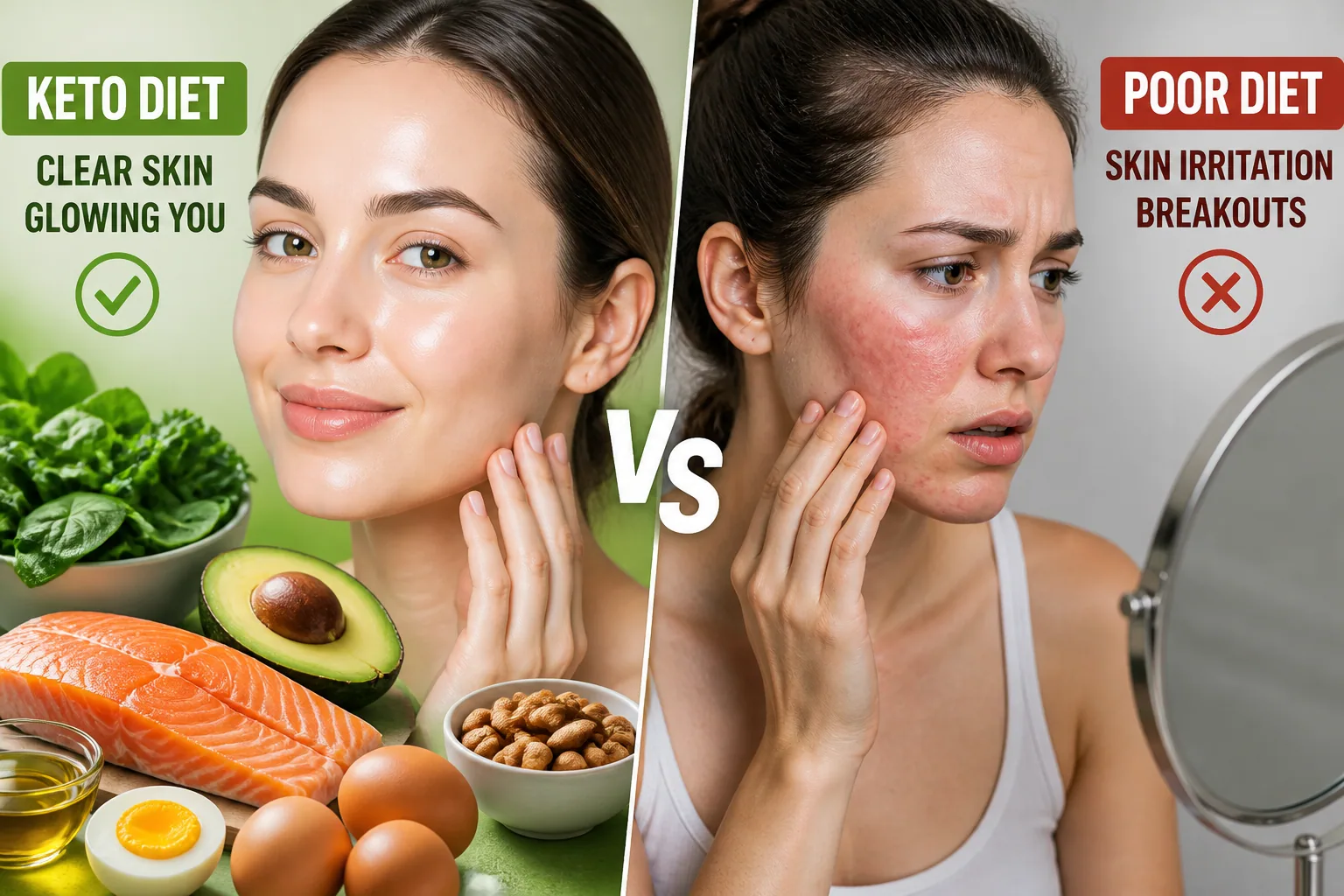
Keto for Skin: How Ketogenic Diets Can Help or Harm Your Complexion
Ketogenic diets can change skin in both directions. For some people, going low carb seems to calm breakouts, reduce redness, and even improve chronic inflammatory conditions. For others, the same diet brings dryness, new rashes, or flare-ups that make them wonder whether ketosis is worth it. The truth is that keto affects several skin-related pathways at once, including insulin signaling, inflammation, hydration status, nutrient intake, and even the gut-skin axis. That means the result is not the same for everyone.
This is why a balanced look matters. Keto is not automatically good or bad for skin. It can be helpful in some situations, especially when blood sugar swings and inflammation are part of the problem. But if the diet is overly restrictive, poorly formulated, or missing key nutrients, the skin can pay the price. Understanding both sides makes it easier to spot what is helping and what is harming your complexion.
Why Skin Can Change on Keto
Skin often reflects what is happening internally. When carbohydrate intake drops, insulin levels usually fall, and that can shift sebum production, inflammation, and metabolic signaling. Many people also change food quality when they start keto, eating fewer ultra-processed foods and more whole foods. That alone can improve skin for some people. On the other hand, a poorly planned keto diet may become heavy in processed meats, low in fiber, and light on vegetables and micronutrients, which can create the opposite effect.
There is also the simple fact that the skin barrier depends on adequate hydration, essential fatty acids, vitamins, and minerals. If any of those are missing, skin can become dry, irritated, or more reactive. So when someone says, “keto cleared my skin” or “keto ruined my skin,” both experiences can be true depending on the version of keto they followed and how their body responded.
The Science: Ketosis, Inflammation, and Insulin Signaling
One of the biggest reasons keto may improve skin is reduced insulin and IGF-1 signaling. In a systematic review and meta-analysis of 12 human trials involving 522 participants, ketogenic diets lowered serum IGF-1 by about 20%, fasting insulin by about 29%, and blood glucose by about 6%: https://pubmed.ncbi.nlm.nih.gov/39396675/ Those shifts matter because insulin and IGF-1 are linked to oil production, cell growth, and inflammatory signaling in acne-prone skin.
Keto may also lower inflammation through several routes at once. Recent reviews suggest that reduced glucose and insulin spikes, less visceral adipose tissue, and changes in gut microbes may all contribute to lower inflammatory tone. In practical terms, that can mean less background inflammation, which may help conditions that tend to flare when the body is under metabolic stress.
But this does not mean ketosis is automatically anti-inflammatory for every person. If the diet is too aggressive, if calories are too low, or if fat sources are poor quality, inflammation can rise in different ways. Skin often shows this imbalance before other symptoms do.
How the Gut-Skin Axis May Influence Results
The gut-skin axis is a useful way to think about why diet can affect complexion. The gut and skin communicate through immune signals, microbial metabolites, and inflammatory pathways. A keto diet may alter gut microbiota, which can sometimes help reduce inflammatory signaling, but results vary depending on fiber intake and food quality.
If keto pushes someone toward fewer plants, fewer fermentable fibers, and a more repetitive food pattern, the gut environment may become less supportive. That can affect bowel regularity, microbial diversity, and inflammatory balance, all of which may show up on the skin. In contrast, a well-built keto approach that includes non-starchy vegetables, seeds, nuts in moderation, and enough fluids may support a more stable gut-skin relationship.
Can Keto Help Acne? What Current Research Suggests
Acne is one of the most commonly discussed skin conditions in relation to keto, and the mechanism makes sense. Lower insulin and IGF-1 signaling may reduce the hormonal drive behind excess sebum and clogged pores. For people whose acne is worsened by high-glycemic eating patterns, a ketogenic approach can feel like a reset.
That said, the research is still indirect. We have stronger evidence for reduced insulin and IGF-1 than for keto as a standalone acne treatment. In real life, acne improvement may happen because the diet reduces sugar, refined starches, and highly processed foods rather than because ketosis itself is magical. Still, for some readers, that distinction does not change the outcome: breakouts improve when blood sugar is steadier.
If acne gets worse on keto, it may be worth looking beyond the carbohydrate count. New protein powders, dairy-heavy fat sources, electrolyte drinks, or gut changes can all contribute. Sometimes the issue is not keto itself, but what got added or removed when keto began.
Psoriasis and Keto: Where the Evidence Looks Promising
Among skin conditions, psoriasis has some of the most encouraging keto-related data. In a randomized crossover trial in patients with obesity and psoriasis, 8 weeks on a ketogenic diet significantly reduced PASI scores, DAPSA scores, and inflammatory cytokines including IL-6, IL-17, and IL-23 compared with baseline. Those changes were not seen during the Mediterranean diet period: https://pubmed.ncbi.nlm.nih.gov/38473723/
Another 10-week weight-loss study using a 4-week very low-calorie ketogenic diet followed by a 6-week hypocaloric Mediterranean diet found that mean PASI scores fell from about 13.8 to 3.2, with a 50% PASI response in 97.3% of participants and a 75% response in 64.9%: https://www.sciencedirect.com/science/article/pii/S089990072030040X It also improved itch and quality-of-life measures.
A separate 4-week study in psoriasis patients reported roughly 50% reductions in PASI, body surface area, dermatology life quality index, and itch severity, along with decreases in IL-1β, TNF-α, and IFN-γ, plus improvements in metabolic markers and vitamin B12 and folate levels: https://pmc.ncbi.nlm.nih.gov/articles/PMC8016365/ Together, these findings suggest that psoriasis may improve when keto supports weight loss, lowers systemic inflammation, and improves metabolic health.
Even so, psoriasis is complex. Not everyone will respond the same way, and some people may need medication regardless of dietary changes. Keto can be a supportive tool, not a replacement for individualized dermatologic care.
Hidradenitis Suppurativa, Blood Sugar, and Low-Carb Diets
Hidradenitis suppurativa, or HS, is another condition where metabolic health seems to matter. HS is strongly associated with insulin resistance, obesity, and chronic inflammation. Because keto can reduce blood sugar and insulin spikes, it may help some people with HS by addressing part of the metabolic burden that fuels flares.
The evidence is less robust than for psoriasis, but the biologic rationale is reasonable. If someone notices fewer HS flares after reducing sugar and refined carbs, that may reflect less inflammatory signaling and less mechanical stress associated with weight changes. However, because HS can be triggered by friction, stress, hormones, and smoking as well, keto is rarely the whole answer.
If HS is part of the picture, it is especially important to keep the diet sustainable. Extreme restriction can backfire by raising stress and making the plan impossible to maintain. For chronic inflammatory conditions, consistency usually beats perfection.
When Keto Backfires: Dryness, Breakouts, and Flare-Ups
Not every skin change on keto is a positive one. Some people develop dryness, flaking, irritation, or a sense that their skin barrier is weaker than before. Overly aggressive carb restriction, especially when paired with very low calories, can lead to dehydration and electrolyte imbalances such as low potassium or magnesium, which may temporarily impair the skin barrier and worsen dryness: https://www.nm.org/healthbeat/healthy-tips/nutrition/pros-and-cons-of-ketogenic-diet
Breakouts can also occur for reasons that are easy to miss. Some people increase dairy, whey, or saturated fat-heavy foods when starting keto. Others consume more packaged keto products with questionable ingredient quality. In those cases, the problem may not be ketosis itself, but the pattern of foods used to get there.
If your skin becomes dull, tight, itchy, or suddenly more reactive after starting keto, that is a clue to look at fluids, electrolytes, fat sources, and total calories before assuming the diet is a failure.
What Is Keto Rash? Understanding Prurigo Pigmentosa
One of the most underrecognized downsides of keto is prurigo pigmentosa, often called keto rash. This is a real inflammatory skin condition that can appear after starting a very low-carb diet. In a review of 19 plus reported cases, rash onset averaged about 31 days after beginning keto and often resolved about 18 days after stopping the diet or increasing carbohydrate intake: https://pmc.ncbi.nlm.nih.gov/articles/PMC8903224/
The typical rash is intensely itchy and appears as red papules or vesicles, often on the chest, back, or neck. Over time, it may leave a reticulated hyperpigmentation pattern. Reported cases have been more common in females, and onset has ranged from about 6 days to several weeks after keto begins: https://pmc.ncbi.nlm.nih.gov/articles/PMC8903224/
Doctors often treat it with doxycycline or minocycline, but in some cases simply reintroducing some carbohydrate has helped the rash settle. If you suspect keto rash, it is worth getting it checked rather than assuming it is eczema, acne, or an allergy.
Common Triggers That Can Worsen Skin on Keto
When skin gets worse on keto, the trigger is often one of a few common patterns. The first is too little hydration. The second is not enough electrolytes, especially if someone is eating fewer processed foods and not replacing sodium, potassium, and magnesium. The third is fat quality, which matters more than many people realize.
If most of your keto calories come from bacon, butter, cream, and fried foods, you may be creating a more inflammatory pattern than if your fats come from olive oil, avocado, nuts, seeds, fatty fish, and whole eggs. Another common trigger is too little fiber. Even on keto, the gut still benefits from vegetables and other low-carb plant foods.
Stress, poor sleep, and rapid weight loss can also show up on the skin. If your body is under strain, your complexion often becomes less forgiving.
Nutrient Deficiencies to Watch: Zinc, Omega-3s, Vitamins, and More
Ketogenic diets can be nutrient dense, but they can also be surprisingly easy to make deficient if food variety is limited. Long-term keto use has been linked to deficiencies in vitamin C, biotin, and zinc, all of which matter for skin integrity, wound healing, and barrier function: https://pmc.ncbi.nlm.nih.gov/articles/PMC12571665/
Zinc is especially important because low zinc status can affect healing, inflammation, and acne-prone skin. Vitamin C supports collagen synthesis and antioxidant defense. Biotin is often marketed as a hair and skin vitamin, but true deficiency can present with rash and skin changes. Folate and vitamin B12 also matter, and one psoriasis study found that these improved alongside skin outcomes during a ketogenic intervention: https://pmc.ncbi.nlm.nih.gov/articles/PMC8016365/
This is why a carefully built keto plan should not just ask, “How do I stay under 20 grams?” It should also ask, “How do I cover micronutrients every day?”
Does Fat Quality Matter? Why Bacon-and-Butter Keto Is Not the Same as Whole-Food Keto
Yes, fat quality matters a lot. Keto is often described by macronutrient ratios, but the source of those fats can shape inflammation. Diets that rely heavily on saturated fat and omega-6 dominant oils may worsen inflammatory balance in susceptible people, while omega-3 fatty acids appear more protective. The National Institutes of Health notes that essential fatty acid deficiency can lead to rough, scaly skin and dermatitis, which shows how central fat quality is to skin health: https://ods.od.nih.gov/factsheets/Omega3FattyAcids-HealthProfessional/?source=organic
This is one reason why two people can both say they are doing keto and have completely different skin outcomes. One may be eating salmon, olive oil, leafy greens, chia, and eggs. Another may be eating processed meat, cheese, and packaged keto snacks. Those are not equivalent diets from a skin perspective.
How to Protect Your Skin While Staying in Ketosis
If you want the metabolic benefits of keto without the skin downsides, the main goal is balance. Keep carbs low enough for your target, but do not make the diet needlessly extreme. Include non-starchy vegetables, enough protein, and a variety of healthy fats. Make hydration and electrolytes part of the plan, not an afterthought.
It also helps to be more intentional when shopping. A tool like Keeto - Keto Made Easy can make that easier by letting you scan products, check net carbs instantly, and keep your daily carb budget visible without guesswork: https://findthe.app/keeto-5m0vbj. For many people, that kind of quick feedback helps them avoid accidentally relying on ultra-processed foods that may not support skin health.
A skin-supportive keto pattern usually includes foods that work for both metabolism and barrier function: fatty fish for omega-3s, olive oil and avocado for monounsaturated fats, colorful low-carb vegetables for antioxidants, and enough fiber to keep digestion steady. If you tolerate them, fermented foods may also be useful for the gut-skin connection.
Supplements, Skincare, and Lifestyle Tweaks That May Help
Supplements can help if there is a real gap, but they should not be used blindly. Magnesium may be useful if low intake or cramps suggest a deficiency. Zinc may help if intake is poor or if acne and poor healing are recurring issues. Omega-3 supplements can be useful when fatty fish is not eaten regularly. Vitamin C and a general multivitamin may be reasonable in more restrictive keto phases, especially if fruit intake is very low.
For skincare, the basics still matter. Use a gentle cleanser, avoid over-exfoliating, moisturize consistently, and protect the skin barrier if dryness appears. If keto increases dryness, a richer moisturizer and fewer harsh actives may help more than changing the entire diet immediately. Sleep, stress management, and adequate protein also matter because skin repair is not isolated from the rest of the body.
When to Ease Up on Keto or Talk to a Dermatologist
If you develop a new itchy rash, especially on the chest, back, or neck, do not assume it is a harmless side effect. Keto rash may need medical treatment. If you are dealing with painful nodules, severe psoriasis, persistent acne, or worsening eczema, it is worth speaking with a dermatologist before making major diet changes on your own.
You should also consider easing up on carb restriction if you notice ongoing fatigue, dizziness, dehydration, constipation, or skin that becomes increasingly dry and fragile. Sometimes a slightly higher-carb version of low carb is better for long-term health and skin stability than an ultra-strict approach.
Bottom Line: Who Might Benefit and Who Should Be Cautious
Keto may help skin when the main drivers are insulin resistance, metabolic inflammation, or high-glycemic eating patterns. That makes it especially interesting for some people with acne, psoriasis, or hidradenitis suppurativa. The research on psoriasis is particularly encouraging, and the mechanistic data on insulin and IGF-1 give a plausible explanation for why some complexions look clearer on keto.
But keto can also backfire if it is too strict, too low in calories, too low in fluids and electrolytes, or too narrow in food quality. Nutrient gaps, poor fat choices, and keto rash are real issues, not rare myths. The most skin-friendly version of keto is usually the one that is least extreme and most nutrient aware.
If your skin improves on keto, that is useful information. If it worsens, that is useful too. Either way, your complexion is giving feedback. The goal is not to force ketosis at all costs, but to use it in a way that supports your skin, your health, and your ability to stick with the plan long term.