Keto for Shift Workers: How to Stay in Ketosis Through Night Shifts, Rotating Schedules, and Long Hours
Keto can work very well for shift workers, but not because the schedule is easy. In fact, the opposite is usually true. If you are a nurse, first responder, driver, warehouse worker, or anyone living on rotating shifts and overnight hours, you already know that meals, sleep, cravings, and energy do not follow a clean 9-to-5 pattern. That is exactly why keto has to be approached a little differently in this setting.
The good news is that staying in ketosis is absolutely possible when your routine changes from week to week. The key is to stop thinking about keto as only a food list and start treating it like a system for timing, planning, hydration, and recovery. When you build around your circadian rhythm instead of fighting it, keto becomes much more sustainable.
Why Shift Work Makes Keto Harder Than a 9-to-5 Routine
Standard keto advice often assumes a predictable day: breakfast, lunch, dinner, maybe a workout, then sleep at night. Shift workers do not get that structure. You may eat your first meal at 7 PM, your last meal at 3 AM, then try to sleep in daylight. Or you may rotate from days to nights every few days, which makes consistency even harder.
That disruption matters because the body does not just respond to what you eat. It also responds to when you eat. Night work can change glucose handling, appetite, and insulin response, which makes carb-heavy meals especially problematic during biological night. In a lab-controlled trial, participants working simulated night shifts showed significantly higher postprandial glucose and insulin compared with day-shift conditions even though they ate the same mixed meals, which shows how much circadian timing can influence metabolism. Source: https://onlinelibrary.wiley.com/doi/full/10.1111/nbu.70060
For keto, that means the usual benefits of low-carb eating may be even more valuable. If your body is already struggling with rhythm disruption, reducing glucose swings can help smooth out energy crashes and cravings. But you still need a plan for meal timing, snack access, and recovery sleep or the schedule will wear you down.
How Irregular Circadian Rhythms Affect Hunger, Energy, and Ketosis
Shift work can make hunger feel random. One night you may be starving at 1 AM, and the next night you may not feel like eating until after your shift ends. That is partly because circadian rhythms influence hormones linked to appetite and satiety. It is also because sleep loss and stress can push people toward quick energy sources, which usually means sugar and refined carbs.
This is one reason keto can help. Stable blood sugar often means fewer dramatic hunger swings. But the challenge is that being tired can feel a lot like being hungry, and being dehydrated can also feel like cravings. If you are not paying attention, it is easy to mistake fatigue for the need to eat something carb-heavy.
Research also suggests that the timing of food matters during night work. A cluster randomized trial found that avoiding a large meal during the biological night, or even replacing it with just a small snack, helped preserve glucose tolerance over four nights of simulated shift work. Another Australian pilot trial found that a 5-hour overnight fast from 1:00 to 6:00 AM had high adherence and was linked with modest weight loss compared with typical overnight eating. Sources: https://pmc.ncbi.nlm.nih.gov/articles/PMC11663163/ and https://www.sciencedirect.com/science/article/pii/S0939475321001253
The practical takeaway is simple. You do not need to graze all night just because you are awake. In many cases, a structured eating window works better than constant snacking, especially if it keeps your overnight intake lighter and more predictable.
Meal Timing for Overnight, Rotating, and Extended Shifts
There is no single meal schedule that works for every shift worker, but there are a few strong principles. First, eat most of your calories during your most active part of the wake cycle. Second, keep meals lighter during the biological night when possible. Third, avoid making every break a food break.
If you work an overnight shift, a useful approach is to eat a more substantial meal before the shift begins, then rely on one small keto snack or a lighter meal during the middle of the night if needed. That aligns with research showing that a small snack or fasting overnight can be better than a full meal during night work. If you are doing rotating shifts, keep your core eating pattern as stable as possible even when your sleep changes. Consistency matters more than perfection.
For extended shifts, like 12 to 16 hours, plan your intake before the shift starts. Do not wait until you are ravenous. Bring food with you and decide in advance when you will eat. That reduces the odds of impulsive choices from vending machines, convenience stores, or hospital cafeterias.
If your shift ends close to bedtime, avoid a huge meal right before sleep. Late eating is linked with worse sleep quality and more circadian misalignment in healthcare shift workers. Predictable meal timing and diet structure are associated with better sleep patterns, which makes a strong case for keeping your post-shift meal smaller and simpler. Source: https://doi.org/10.1016/j.actpsy.2025.105900
The Best Portable Keto Meals and Snacks for Workers on the Go
Portable food is one of the biggest success factors for keto shift workers. If you cannot reliably access a kitchen, your food has to travel well, stay fresh, and be easy to eat fast. The best options are the ones that are simple, filling, and low enough in carbs that you do not need to second-guess them.
Good portable keto choices include nuts and seeds, cheese sticks, hard-boiled eggs, jerky or meat sticks without added sugar, tuna or sardines in tins, cottage cheese, Greek yogurt in single servings, and nut butter packets. Fat bombs can work too if you tolerate them well, especially for long shifts where you need something small but satisfying. These choices help you avoid getting trapped by high-carb convenience food when your energy is low. Source: https://quickproteinmeals.com/night-shift-protein-snacks/
For a better result, pair protein with fat rather than reaching for snack foods that are mostly fat or mostly protein alone. A hard-boiled egg with cheese, or meat sticks with olives, tends to keep you fuller than an isolated snack. If you need a post-shift bite before bed, keep it modest and low carb so you do not trigger a bigger appetite or disrupt sleep more than necessary.
How to Beat Energy Crashes and Cravings Without Reaching for Carbs
Energy crashes on keto are common during the transition period, and shift workers often feel them more intensely because of sleep debt. The first mistake is assuming every crash means you need sugar. Often, you need water, sodium, or actual rest.
Common keto-induction symptoms include fatigue, headache, light-headedness, muscle cramps, and brain fog. In adults, decreased energy is reported by about 18%, headache by 8 to 25%, and light-headedness or dizziness by 15 to 21%. Those symptoms often improve when hydration and electrolytes are corrected. Source: https://pmc.ncbi.nlm.nih.gov/articles/PMC11978633/
A practical approach is to build a crash-prevention routine. Start your shift with a proper keto meal, not just coffee. Keep a backup snack available. Drink water consistently. And if you are feeling flat, check whether you actually need sodium before assuming you need food. Keto can create a kind of hidden depletion if you are not careful.
Also pay attention to meal composition during night work. A study comparing high-protein, moderate-carb meals with low-protein, high-carb meals served at 1 AM found that the high-protein, moderate-carb option produced a lower glucose response. That supports the idea that protein-forward meals are often a better choice when you need sustained alertness without a blood sugar spike. Source: https://pubmed.ncbi.nlm.nih.gov/32668588/
Electrolytes, Hydration, and Caffeine: Getting the Balance Right
Electrolytes are one of the most overlooked parts of keto for shift workers. When insulin drops on a low-carb diet, the kidneys excrete more sodium, which can lead to dehydration and electrolyte imbalance. That is one reason some people feel bad when they start keto, especially if they are already sweating, moving, or standing for long hours. Source: https://www.metabolicmind.org/wp-content/uploads/2026/04/Intro Guide to THINK 2.pdf
To stay ahead of that, salt your food intentionally and do not be afraid of broth, electrolyte drinks without sugar, or mineral-rich foods. Potassium and magnesium also matter, especially if your job is physically demanding or if you get leg cramps, headaches, or poor sleep. Hydration helps, but water alone is not always enough.
Caffeine is useful, but it can also backfire. For night shifts, caffeine can improve alertness, yet too much can make it harder to sleep after the shift ends. A better strategy is to use caffeine early in the shift and taper it off before the final hours. If you rely on coffee to survive every shift, you may be masking sleep deprivation rather than managing it. Pair caffeine with water and electrolytes so you are not running on fumes.
Sleep Recovery on Keto: Rest Strategies for Burnout Prevention
If you want keto to be sustainable, you have to protect sleep as aggressively as you protect carbs. Sleep loss can increase cravings, worsen energy, and make it harder to regulate appetite. For shift workers, recovery sleep is not a luxury. It is part of the plan.
Keep your post-shift routine as consistent as possible. Dim light on the way home if you can. Avoid a huge meal right before bed. Cool, dark rooms help. Many shift workers also benefit from blackout curtains, eye masks, earplugs, and a wind-down routine that tells the nervous system it is time to shut off.
Late and irregular eating has been associated with poorer sleep quality in healthcare shift workers, so the goal is not just low carb. The goal is predictable structure. Even if your exact sleep time changes, try to keep your pre-sleep behavior similar from shift to shift. That consistency can help your body transition more smoothly between work and rest.
Using Carb Trackers, Wearables, and Keto Scanners to Stay Consistent
Shift workers often need more than memory to stay on track. When your schedule changes weekly, it is easy to forget what you ate, underestimate carbs, or lose sight of your patterns. That is where tracking tools can make a real difference.
Apps like Keeto, Keto Carb Tracker can help you scan products, set a daily carb limit, and keep tabs on net carbs even when you are buying food quickly between shifts. For someone trying to stay under 20 grams or 30 grams a day, that kind of instant feedback removes a lot of guesswork. You can find it here: https://apps.apple.com/us/app/keeto-keto-carb-tracker/id6753916868
Wearables are also becoming more useful. The U.S. FDA recently authorized the Libre Duo 10-Day system, which continuously monitors both ketone and glucose levels, sending readings every minute and alerting trends. That kind of information can help you see how sleep loss, meals, and schedule changes affect your metabolism in real time. Source: https://www.fda.gov/news-events/press-announcements/fda-authorizes-first-wearable-device-continuously-monitors-both-ketone-levels-and-blood-sugar
If you prefer something simpler, breath acetone sensors like Keyto can offer a portable way to check ketosis without finger sticks. The point is not to obsess over data. The point is to identify patterns so you can make smarter decisions during hectic weeks.
If you want a quick, practical scanner for the grocery store, the product I would point you to is Keeto - Keto Made Easy: https://findthe.app/keeto-5m0vbj. For workers who have to make fast food decisions on the fly, that kind of tool can save a lot of mental energy.
Sample Keto Routines for Nurses, Drivers, and First Responders
A good keto routine should feel realistic, not perfect. Here are three simple examples that show how the same principles can work across different jobs.
Nurse on a Night Shift
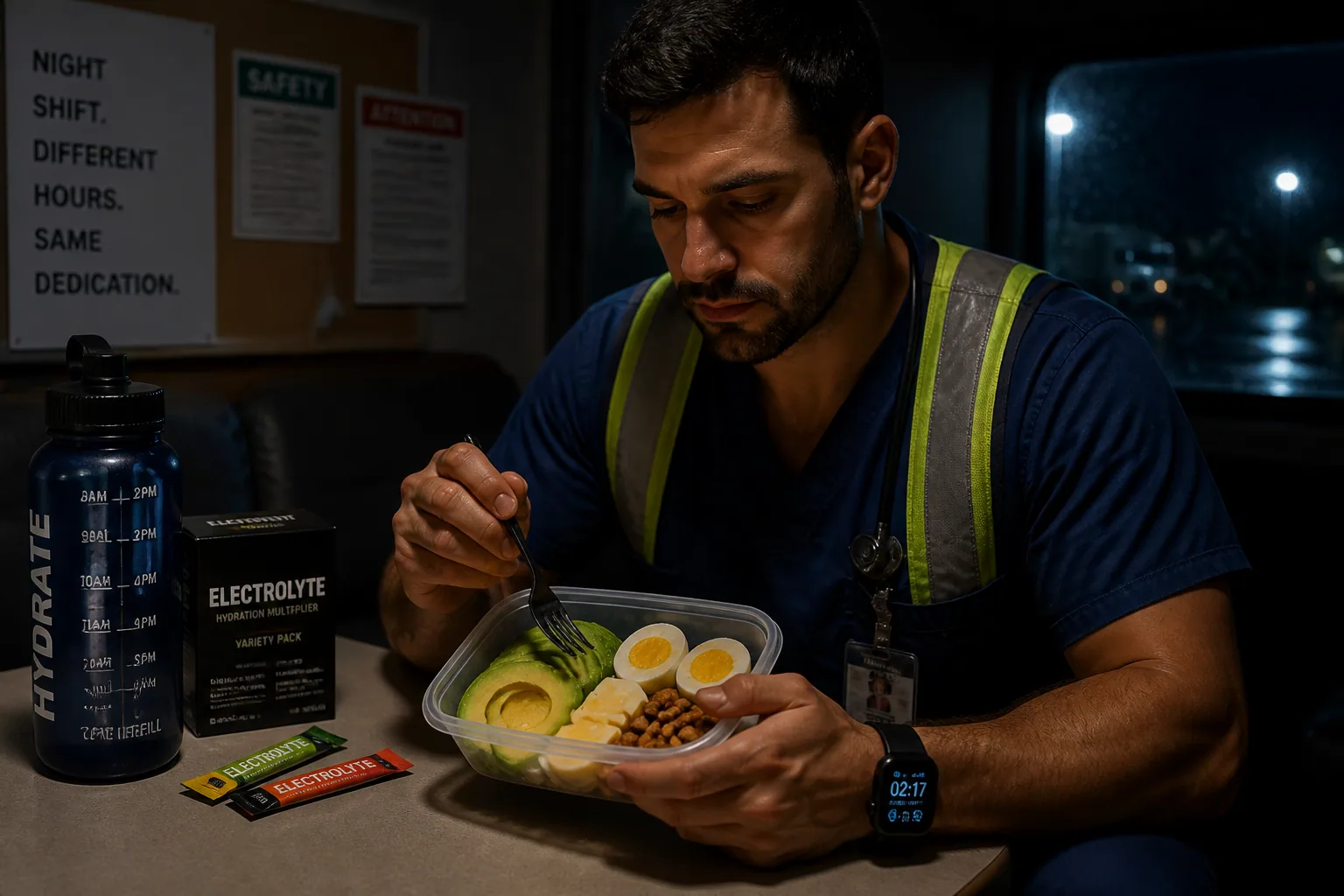
Eat a filling keto meal before clocking in, such as chicken, vegetables, and olive oil or avocado. Bring a small snack for later, like cheese and nuts or eggs and a meat stick. Keep water and electrolytes nearby. If you are hungry around 2 or 3 AM, try a light snack instead of a full meal, then keep the post-shift meal small before sleep.
Long-Haul Driver
Pack food in a cooler so you are not dependent on truck stops. Use portable foods that do not require much prep, like tins of fish, hard-boiled eggs, jerky, and cheese. Keep caffeine earlier in the drive and avoid eating large carb-heavy meals at night if your route extends into the early morning hours. Aim for structured meals instead of constant grazing.
First Responder on Rotating Call
Build a default meal template you can use no matter which shift you get. For example, one main meal, one backup snack, and one hydration plan. On lighter days, eat normally but keep carbs low. On busier days, simplify. The goal is to prevent the job from making your food choices chaotic.
Common Mistakes Shift Workers Make on Keto and How to Avoid Them
One common mistake is eating too much at night simply because you are awake. Night wakefulness does not always mean you need more calories. Sometimes you need a small keto snack, and sometimes you need to wait it out. Large overnight meals can work against both ketosis and sleep quality.
Another mistake is ignoring electrolytes and blaming keto for all fatigue. If you feel drained, crampy, dizzy, or foggy, check hydration and sodium before changing your macros. A third mistake is relying on convenience foods without checking labels. Even foods marketed as healthy can contain enough hidden carbs to knock you out of ketosis if you are not paying attention.
Many shift workers also make the mistake of changing too many variables at once. They start keto, cut caffeine, sleep less, and eat randomly all in the same week. That makes it impossible to know what is helping or hurting. Keep the plan simple: low carb, predictable timing, enough protein, smart electrolytes, and better sleep habits. That foundation is what makes keto sustainable when your work life is anything but stable.