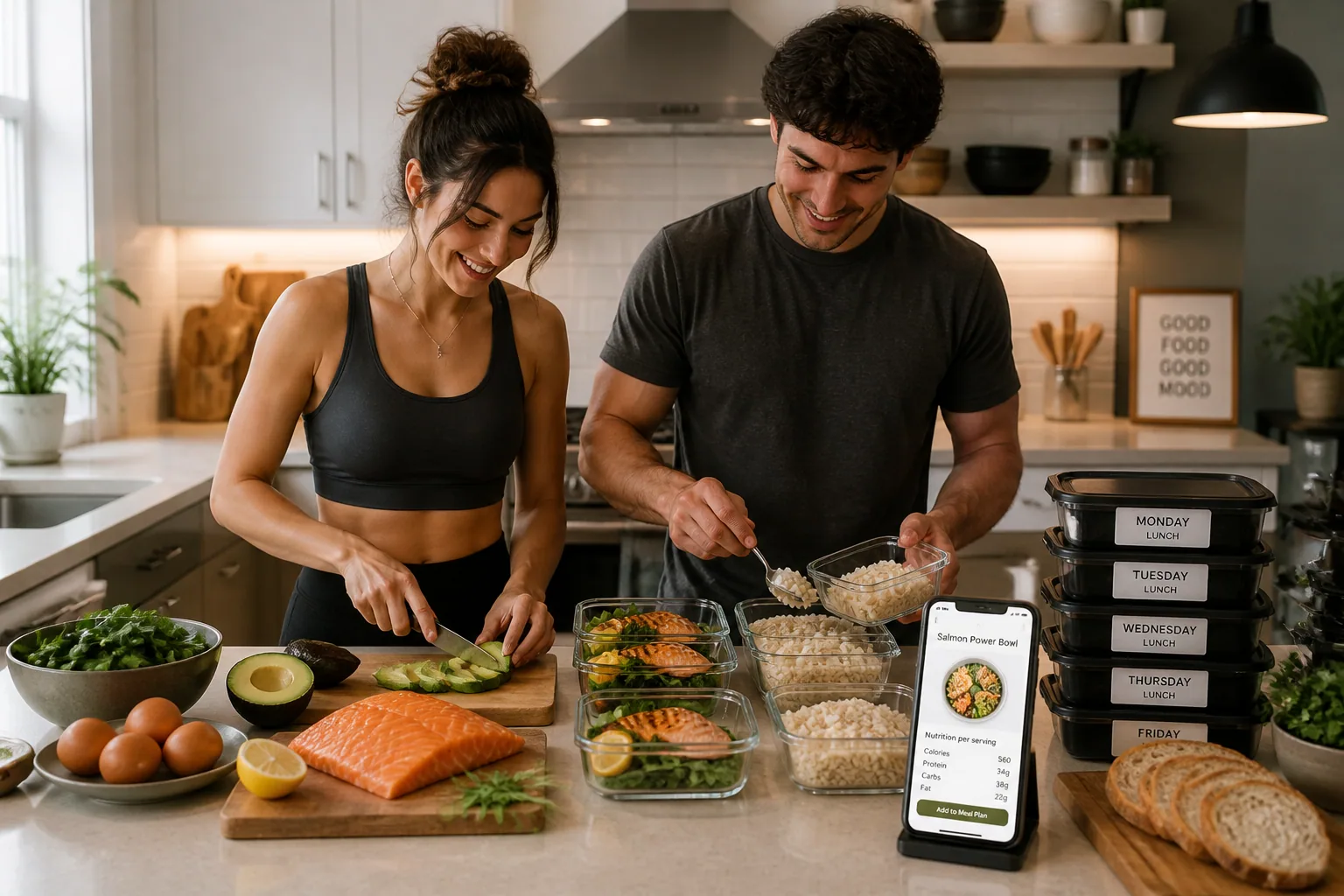
Keto for Couples: How to Support Each Other Without Friction
Keto can be a great reset for one partner, a maintenance tool for the other, or simply a lifestyle experiment that both people approach differently. But when couples do not follow the exact same plan, the kitchen can start to feel like a negotiation zone instead of a place of support. One person is counting carbs, the other is not. One is excited about meal prep, the other wants flexibility. One wants strict macros, the other just wants to eat better. That mismatch does not have to create tension, but it does need structure. The couples who do best with keto are usually not the ones who agree on everything. They are the ones who make expectations clear, keep communication calm, and create systems that reduce everyday friction.
Research suggests this is a very normal relationship challenge, not a sign that something is wrong. In a sample of 398 older German couples, only about 16% mutually adapted their diets in a symmetrical way, while around 50% had one partner adapting more than the other and roughly 34% kept individual dietary preferences. That means asymmetry is common, and couples often have to build a workable middle ground instead of assuming both people will eat the same way every day. Source: https://pubmed.ncbi.nlm.nih.gov/34364966/
Why Keto Can Create Tension in Relationships
Keto changes a lot of ordinary routines. Grocery shopping becomes more detailed. Cooking becomes more specific. Snacks are suddenly categorized as allowed or not allowed. Social plans start requiring strategy. Even good intentions can feel controlling if they are not communicated well. A partner may think they are being helpful by removing tempting foods, while the other experiences that as pressure or judgment. The problem is rarely the diet itself. More often, the problem is how the diet is introduced into shared life.
This is especially true when one partner feels undermined, even unintentionally. In a study of 224 older gay married couples with mixed-weight status, perceptions of a partner bringing home tempting foods or otherwise undermining goals were associated with poorer diet quality for both partners, partly through more food-related disagreements and higher depressive symptoms. The takeaway is simple: what happens in the kitchen affects the relationship, and the relationship affects what people eat. Source: https://pmc.ncbi.nlm.nih.gov/articles/PMC12178781/
The good news is that support matters a great deal. Confirming and affirming communication from both partners improves the effectiveness of weight-management conversations, encourages healthier eating behaviors, and makes diet and exercise discussions more productive. In other words, the tone of the conversation can matter as much as the content. Source: https://academic.oup.com/hcr/article/37/4/553/4107528
One Keto, One Not: Setting Expectations Early
If one person is doing keto and the other is not, the first conversation should not be about rules. It should be about expectations. Are you both cooking the same dinner with different sides? Will the non-keto partner keep separate snacks? Is keto temporary, or is this becoming a household default? The more specific you are now, the fewer misunderstandings you will have later.
It also helps to separate support from participation. A partner does not have to be on keto to be supportive, and being supportive does not mean pretending to share identical goals. One person may want fat loss, another may want more stable energy, and a third may just want fewer ultra-processed foods. Those goals can coexist if the couple agrees that neither person is the diet police. The shared job is not to control each other. It is to make the home easier for both people to live in.
A useful agreement is to define what is shared and what is individual. Shared: dinner plans, grocery budget, meal cleanup, and a general respect for each other’s goals. Individual: snack choices, carb target, timing of meals, and whether to track every macro. That simple distinction lowers resentment quickly.
Shared Grocery Shopping Without Confusion or Conflict
Grocery shopping is one of the biggest friction points because it combines money, planning, and temptation. The easiest way to reduce stress is to stop treating every grocery trip like a referendum on the relationship. Instead, build a shared system. Keep one master list, divide it into sections, and tag items as shared, keto, or individual. That way, neither partner has to remember what is for whom while standing in the aisle.
If you both shop together, agree on a simple division of labor. One person can handle proteins and produce while the other handles pantry staples and household items. If one partner is doing most of the keto planning, the other can still help by checking list accuracy or comparing prices. Support does not always mean choosing the same foods. Sometimes it means taking responsibility for a part of the process.
This is also where a product scanner can save a lot of awkwardness. If one partner is still learning what fits and the other is tired of answering the same questions at the store, a tool like Keeto - Keto Made Easy can take pressure off both people. Its barcode scan gives an instant keto verdict, shows net carbs, and tracks carb budget in real time, which makes grocery shopping faster and less argumentative. You can find it here: https://findthe.app/keeto-5m0vbj
Pantry Labels, Snack Zones, and Fridge Rules That Help
A couple does not need a perfect pantry. They need a predictable one. Clear labels, consistent placement, and designated zones reduce accidental mix-ups and eliminate a lot of mental labor. Pantry organization best practices recommend labeling containers clearly, using consistent placement, designating zones for staples, and keeping frequently used items at eye level so people do not confuse ingredients or forget what they already have. Source: https://www.e-a-a.com/how-to-use-labels-and-chalkboards-in-your-pantry/
This can become very practical very quickly. Keep keto snacks on one shelf and shared snacks on another. Put carb-heavy items in a bin, drawer, or basket so they are easy to find for the person who wants them and easy to avoid for the person who does not. Label leftovers with the date and, if useful, with the intended person. A small amount of structure prevents a lot of silent annoyance.
Fridge rules can be equally simple. For example, one shelf for meal prep containers, one for shared ingredients, one for individual extras. If there are certain foods that trigger conflict, do not leave them casually visible. Visibility matters because convenience matters. The more effortless it is to grab the right thing, the less willpower the household needs.
How to Cook Overlapping Meals for Different Diets
The best couple meals are often overlap meals, not separate meals. That means making one base dish and then customizing the sides, toppings, or portions. Roast chicken can become keto with cauliflower mash and a salad, while the non-keto partner adds potatoes or bread. Taco night can be built from the same meat and toppings, with one person using lettuce wraps and the other using tortillas. Stir-fries, bunless burgers, sheet-pan dinners, and bowls are all good examples of flexible formats.
This approach keeps the cooking fair. Nobody feels like a short-order cook, and nobody feels deprived. It also reduces the sense that one partner is always making the sacrifice. If possible, rotate who gets the first pick on meal style. One night leans keto, another night leans more balanced, and sometimes the meal is fully adaptable. Flexibility is often what makes consistency possible.
Recipe tools can help here too, especially if you are trying to turn whatever is in the kitchen into something both people will eat. Keeto’s AI-powered recipe generator is useful because it can turn scanned products or manual ingredients into keto-friendly recipes with step-by-step instructions and macro breakdowns. That kind of tool is helpful for couples who want fewer food debates and more actual dinner ideas.
Managing Different Goals: Weight Loss, Performance, and Maintenance
One of the biggest mistakes couples make is assuming that the same food plan should produce the same outcome. It usually does not. One partner may be doing keto for weight loss, another for performance, and another for maintenance. Those goals affect hunger, timing, protein needs, and tolerance for dietary rigidity. A person losing fat may want tighter carb tracking, while a person maintaining may need more flexibility to stay consistent long term.
That is why it helps to talk about goals in plain language rather than in moral language. Instead of saying, ‘You are being too loose’ or ‘You are too strict,’ try, ‘What result are you aiming for right now?’ and ‘What level of structure actually helps you sustain that?’ This shifts the discussion from blame to problem-solving.
Couples who understand each other’s goals are more likely to support them well. In diabetes-related couple research, greater marital satisfaction, lower attachment anxiety, and shared healthy eating plans were linked with better diet-related support, which improved adherence and glycemic control. The broader lesson is that shared understanding boosts follow-through. Source: https://docs.lib.purdue.edu/dissertations/AAI3544361/
Talking About Energy, Cravings, and Fat Tolerance Without Judgment
Keto does not feel the same for everyone. Some people feel steady and clear quickly, while others need time to adapt. Some people thrive on higher fat intake, while others feel sluggish or uncomfortable if fat is too heavy. Couples sometimes misread these differences as criticism when they are really just biological variation. One person is not doing keto ‘right’ and the other is not being dramatic. They may just have different appetites, tolerances, and adjustment periods.
A good rule is to describe the experience, not assign blame. Say, ‘I notice I get tired if dinner is too light,’ or ‘I feel better when I do not overdo fat at breakfast,’ instead of turning it into a verdict about the other person’s choices. This keeps the conversation grounded in observable patterns and makes it easier to adjust meals without defensiveness.
It also helps to normalize cravings. A craving is not a failure. It is a signal. The goal is not to shame each other into ignoring signals, but to plan around them. If one partner gets evening cravings, the couple can schedule a higher-protein dinner, prep a keto dessert option, or simply avoid keeping trigger foods in reach. The healthiest couples treat cravings like shared logistics, not personal weakness.
Handling Date Nights, Family Dinners, and Social Events
Social events are where keto tension often becomes visible. One partner may want to stay strict, while the other wants to relax and enjoy the moment. Family dinners can add another layer because food choices may be tied to tradition, hospitality, or subtle pressure from relatives. The key is to decide in advance what flexibility looks like so nobody has to negotiate in public.
For date nights, think in terms of categories. Is this a strict keto outing, a flexible keto outing, or a no-rules celebration? Naming it ahead of time removes ambiguity. For family dinners, bring one dish everyone can eat, then keep your expectations realistic. You may not control the menu, but you can control your backup plan. That might mean eating protein before you leave, scanning menu options in advance, or agreeing on a polite way to decline certain foods together.
The same principle applies to holidays and special occasions. If one person wants to indulge, the couple can decide whether that is a shared exception or an individual choice. What matters is that neither person is surprised later. Surprise is often what turns a small food decision into a relationship argument.
Using Apps, Product Scanners, and Recipe Tools as a Team
Technology can make keto much easier for couples because it reduces guesswork. If one partner is the planner and the other is the shopper, a shared toolset keeps everyone aligned. Product scanners help verify what is actually in a food instead of relying on memory or labels glanced at too quickly. Meal planners help reduce the repeated question of ‘What are we eating?’ Recipe tools help turn a half-empty fridge into dinner without stress.
A scanner like Keeto is especially useful because it instantly tells you if a product is keto-friendly, how many net carbs it contains, and what portion of your daily carb budget it represents. It also lets you set a custom carb limit and track it automatically as you scan. For couples, that means less debate in the store and fewer mismatched assumptions at home. If one partner wants to double-check a sauce, snack, or packaged ingredient, the answer is fast and concrete.
The main benefit of using tools together is not just convenience. It is shared understanding. When both partners can see the same information, there is less room for arguments that begin with ‘I thought this was fine’ or ‘I did not know that had sugar in it.’ Shared data makes the conversation less personal and more practical.
Simple Weekly Habits That Keep Keto Couple-Friendly
The best relationship habits are usually boring, repeatable, and easy to maintain. A weekly five-minute check-in can prevent a lot of frustration. Ask three questions: What meals are happening this week? What groceries do we need? Is there any event or craving trigger we should plan for? That is often enough to keep both people on the same page.
Another helpful habit is to review what is working and what is not without turning it into a critique. Maybe one person needs more snack options. Maybe the pantry labels are too vague. Maybe meal prep is too ambitious for a busy week. The point is not to perfect the system. The point is to keep improving it together.
Couples who handle keto well tend to treat it as a shared environment, not a competition. They respect individual differences, keep the kitchen organized, and use clear communication to avoid resentment. Keto then becomes less about restriction and more about teamwork. And when teamwork is strong, the diet is much easier to sustain.