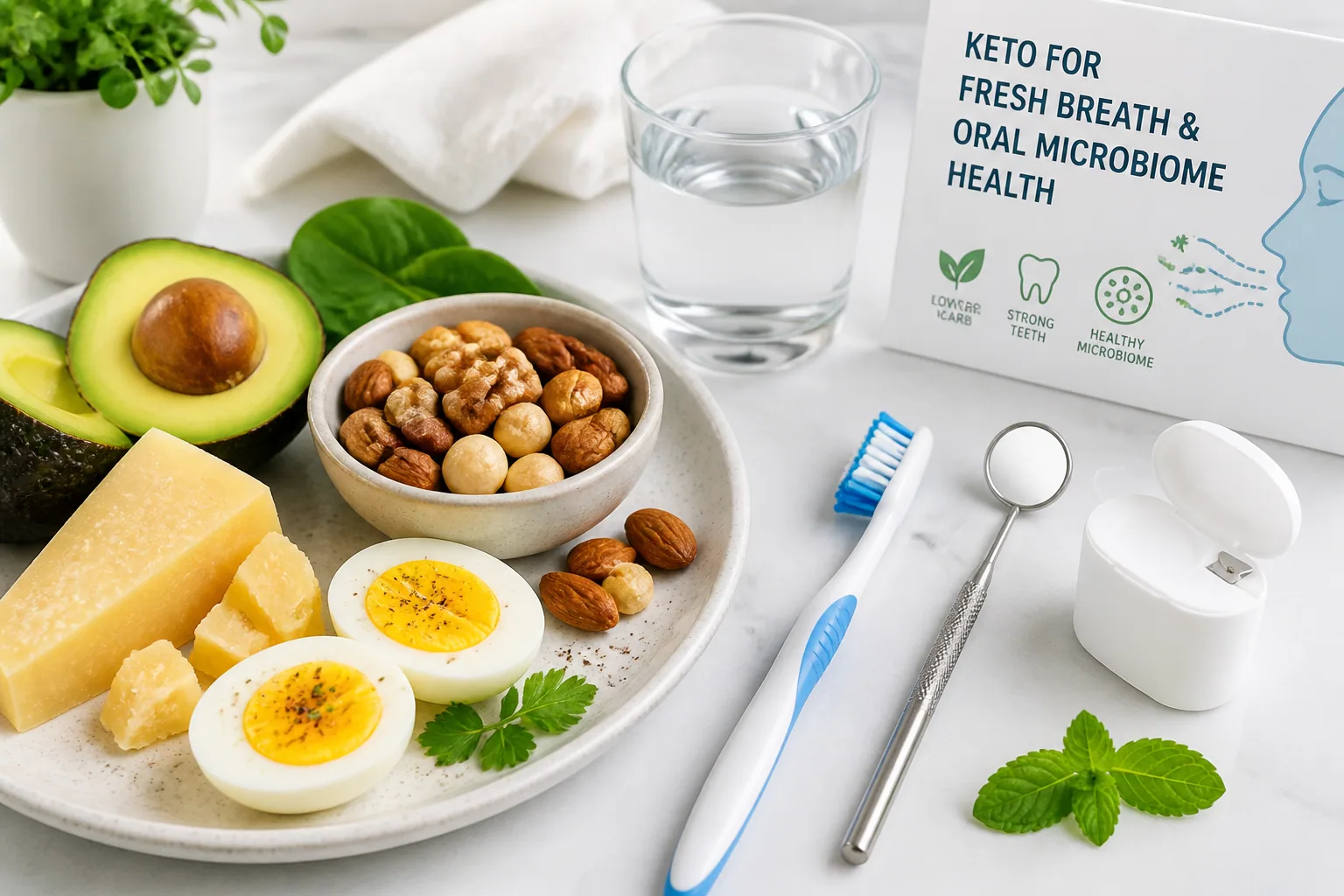
Keto, Breath & Biome: What Your Mouth Really Tells You on a Low-Carb Diet
Keto gets a lot of attention for its effects on energy, appetite, and fat loss, but the mouth often gets left out of the conversation. That is a mistake. Your teeth, gums, saliva, and oral microbiome are not separate from the rest of your metabolism. They respond to the same changes in fuel, hydration, mineral balance, and eating patterns that make or break a ketogenic diet.
For many people, keto starts with a cleaner plate and ends with a cleaner pantry. But the oral side of the story is more nuanced. Lower carbohydrate intake may reduce the fuel available to acid-producing bacteria, yet the transition can also bring dry mouth, keto breath, more frequent snacking on acidic or sweetened products, and shifts in microbial diversity. In other words, keto can help the mouth in some ways and challenge it in others.
If you already care about gut health on keto, it makes sense to care about the oral biome too. The mouth is the entry point to the digestive tract, and it is also a highly responsive ecosystem of its own. Here is what the research says, what it means in practical terms, and how to keep your breath, enamel, and gums in better shape while staying low carb.
Why Oral Health Matters on Keto More Than Most People Realize
A ketogenic diet changes the oral environment in several ways at once. Carbohydrate intake drops, ketone production rises, food frequency often changes, and people commonly increase their intake of coffee, sparkling water, sugar-free products, nuts, cheese, meat snacks, and fat-based convenience foods. Those shifts alter more than macros. They affect plaque chemistry, saliva flow, and the kinds of microbes that thrive in the mouth.
That matters because oral disease is not just about sugar. It is about repeated acid exposure, reduced buffering, enamel demineralization, microbial imbalance, and inflammation. When saliva is flowing well and pH stays in a favorable range, the mouth can keep remineralizing enamel. When saliva drops, acids linger longer, and teeth become more vulnerable even if you have cut out candy and soda.
A healthy keto diet can absolutely support oral health, but only if you avoid the common traps. The biggest one is assuming that low sugar automatically means low risk. It does not. Acidic drinks, dehydration, grazing on keto snacks, and overuse of some sugar-free products can still create the kind of oral environment that teeth dislike.
What the Latest Research Says About Keto and the Oral Microbiome
Research on ketogenic and low-carb diets suggests that the oral microbiome changes fairly quickly when carbohydrates fall. In one 5-day low-carbohydrate, high-fat intervention in athletes, bacterial diversity decreased, with increases in Neisseria and Fusobacteria and decreases in Prevotella and Veillonella. Interestingly, nitrate reduction capacity remained intact, which suggests that not every functional aspect of the oral ecosystem is lost when the diet changes. Source: https://pubmed.ncbi.nlm.nih.gov/38140382/
Another study in elite endurance athletes found that after 3 weeks on a low-carbohydrate, high-fat diet, the relative abundances of Haemophilus, Neisseria, and Prevotella decreased, while Streptococcus increased, compared with high-carbohydrate diets. Source: https://pubmed.ncbi.nlm.nih.gov/30871219/
A broader nationally representative U.S. analysis also found that diet explains a meaningful share of oral microbiome structure. Overall diet accounted for about 3.6% of the variance in oral rinse microbiome structure, comparable to disease status or smoking and greater than sociodemographic factors. High carbohydrate intake was associated with higher abundance of Fusobacteriia and Leptotrichia, and lower levels of certain Actinomyces species. Source: https://www.medrxiv.org/content/10.64898/2026.04.24.26351661v1.full
The practical takeaway is simple. The mouth responds quickly to diet, and carbohydrate reduction can reshape which bacteria dominate. That does not automatically mean keto is better or worse for every mouth. It means the oral microbiome is dynamic, and your daily habits determine whether the change is protective, neutral, or annoying.
Keto Breath Explained: Ketones, Dry Mouth, and Bacterial Shifts
Keto breath is one of the most recognizable early signs of carbohydrate restriction. It often smells fruity, sharp, or slightly metallic. The main reason is acetone, one of the ketone bodies produced when fat becomes the body’s main fuel. Some acetone is exhaled through the lungs, which is why the breath changes even if your dental hygiene stays the same.
The transition period matters too. A scoping review of ketogenic diet induction symptoms found that halitosis was experienced by about 38% of people on a ketogenic diet, compared with 8% of those on a low-fat diet. Higher degrees of breath odor were linked to lower carbohydrate intake and higher blood ketone levels. Source: https://pmc.ncbi.nlm.nih.gov/articles/PMC11978633/
But ketones are only part of the story. Many people on keto also become mildly dehydrated, especially early on. When glycogen stores drop, the body sheds water and sodium more easily. That can reduce saliva flow, and a drier mouth lets odor compounds linger longer. Dry mouth can also make your tongue feel coated, which further worsens breath.
There is also a microbial piece. When fermentable carbs are lower, some bacteria lose their preferred fuel source, which can shift the balance of species in the mouth. That does not mean all shifts are bad, but it does mean breath changes may reflect a real ecological change, not just a temporary side effect of fat burning.
The best fixes are boring but effective: hydrate, maintain electrolytes, keep meals spaced out instead of grazing, brush and floss well, and do not rely on mint as a long-term solution if dry mouth is the real issue.
How Low-Carb Eating Can Affect Saliva, pH, and Enamel Strength
Saliva is one of the mouth’s most underrated defenses. In healthy individuals, unstimulated saliva typically sits around pH 6.9 ± 0.6. When pH drops below about 5.5, enamel demineralization begins. Above that threshold, saliva supports remineralization by delivering calcium, phosphate, and buffering ions. Source: https://pmc.ncbi.nlm.nih.gov/articles/PMC11724731/
That buffering function matters a lot on keto, because enamel is constantly balancing loss and repair. Saliva is naturally supersaturated with calcium and phosphate, which makes it a key medium for steady remineralization. Source: https://pmc.ncbi.nlm.nih.gov/articles/PMC11724731/
If you eat in a way that reduces saliva flow, the mouth loses some of that protection. Common keto factors that can do this include dehydration, too much caffeine, frequent fasting without rehydration, low sodium intake, mouth breathing, and certain medications. Even if your meals are low carb, a dry mouth can leave enamel more exposed to acids from coffee, wine, sparkling water, vinegar-heavy dressings, or acidic supplements.
This is why keto oral care is not just about avoiding sugar. It is about protecting the chemistry of the mouth. If saliva is abundant, well buffered, and mineral rich, it can keep helping teeth recover after each meal. If not, even a seemingly clean keto lifestyle can slowly edge toward sensitivity and erosion.
Cavity Risk on Keto: Lower Sugar, Different Trade-Offs
One of the biggest advantages of keto for teeth is obvious: fewer free sugars usually means less fuel for acidogenic bacteria. Diets high in free sugars and carbohydrates are strongly linked to increased growth of acid-producing bacteria such as Streptococcus mutans, which ferment carbs into acids that lower plaque pH and drive tooth decay. Very low-carbohydrate diets limit that substrate and may reduce caries risk. Source: https://pmc.ncbi.nlm.nih.gov/articles/PMC10745889/
That said, cavity risk does not disappear on keto. The trade-off is that some people replace sugar with more frequent snacking on cheese crisps, nut butters, protein bars, sugar-free candy, or flavored drinks. If those products are sticky, acidic, or repeatedly sipped throughout the day, they can still keep the mouth in an acid-prone state.
Another issue is timing. Teeth generally do better when meals are consolidated and saliva gets time to recover between exposures. Grazing all day on keto treats can be worse for enamel than three balanced low-carb meals, even if total sugar stays low. The frequency of exposure often matters as much as the ingredients themselves.
The most tooth-friendly approach is to think in terms of exposure management. Lower the number of acid events, keep drink acidity in mind, and let saliva do its repair work between meals.
Gum Health, Inflammation, and the Mouth-Body Connection
The mouth is not just about cavities. Gum tissue reflects systemic inflammation, immune balance, and microbial load. A low-carb diet may help some people indirectly by reducing snacking, stabilizing glucose, and lowering the overall burden of frequent sugar exposure. But gum health also depends on plaque control, hydration, nutrient intake, and smoking status.
The oral microbiome is relevant here because shifts in bacterial communities can influence inflammation in the gums. Lower microbial diversity is not automatically bad, but it is a reminder that the ecosystem is changing. If keto is paired with poor hydration, mouth breathing, or aggressive intake of acidic beverages, gums may become more irritated even when the diet is technically low carb.
The mouth-body connection works both ways. If gums bleed, feel tender, or become puffy, it may reflect a local hygiene issue, but it can also signal broader problems with inflammation, mineral status, or diet quality. Keto can be part of a healthy routine, but it should not crowd out vitamin-rich vegetables, adequate protein, and enough minerals to support tissue repair.
The Hidden Risks in Sugar-Free Gum, Mints, and Keto Treats
Sugar-free does not always mean tooth-friendly. Some sugar-free gums and mints use acids, intense flavoring, or sticky bases that prolong exposure on the teeth. Others rely on sugar alcohols like erythritol or xylitol, which can be helpful in moderation, but still need to be used thoughtfully. The benefit often comes from stimulating saliva, not from the candy itself being harmless.
Keto desserts can also become a trap. A cookie made with almond flour and sugar-free sweetener may still be dense, sticky, or likely to be eaten between meals. That creates repeated plaque exposure, even if the ingredient list looks clean. The same goes for packaged keto bars that seem convenient but are designed to mimic candy textures.
Even better than a sugar-free sweet is a strategy that actually reduces the need for constant mouth exposure. Use gum when it helps stimulate saliva after meals, not all day long. Choose mints and treats selectively. And when in doubt, scan products before buying them so you can quickly see whether a supposedly keto-friendly item fits your carb budget and snacking goals. A tool like Keeto - Keto Made Easy can help with that: https://findthe.app/keeto-5m0vbj
Smart Snacking Habits That Protect Teeth on a Low-Carb Diet
If you want keto to be tooth-friendly, the first rule is to snack less often. That does not mean you need to fear every bite. It means you should choose snacks that are less sticky, less acidic, and less likely to linger in the mouth.
Better options tend to be whole foods that clear quickly and do not coat the teeth for long. Think eggs, plain cheese in reasonable amounts, olives, avocado, cucumber, celery with a low-stickiness dip, and unsweetened yogurt if it fits your carb target. Nuts can be fine too, but they are easy to overeat and can get lodged between teeth, so flossing matters more if they are a staple.
Drinks matter just as much as snacks. Sparkling water is often a better choice than soda, but carbonated drinks still deserve moderation if they are highly acidic or sipped over a long period. Sports drinks, diet sodas, and flavored waters can also erode enamel if the pH is low enough or if titratable acidity is high. Acidic beverages have been shown to cause enamel surface loss, and even brief saliva exposure may not fully counteract that effect. Source: https://pubmed.ncbi.nlm.nih.gov/27847745/
The best pattern is to eat, drink, and then give your mouth a rest. Let saliva work. If you need something after a meal, water is usually the safest default.
How to Support Remineralization With Hydration and Minerals
Remineralization is the quiet repair process that keeps small enamel losses from becoming bigger problems. To support it, saliva needs to stay abundant and mineral rich. That means hydration is not optional on keto, especially during the first weeks or after exercise.
Aim for steady fluid intake rather than occasional chugging. If you are losing electrolytes through increased urination or workouts, replace sodium, potassium, and magnesium appropriately. While these minerals are often discussed for energy and cramps, they also matter indirectly because they help maintain fluid balance and reduce the dry-mouth feeling that can make the oral environment less stable.
Mineral intake from food matters too. Dairy, leafy greens, fish with bones, and mineral-rich foods can support overall nutrient status. If you tolerate dairy, some cheeses may be especially helpful because they are low in carbs and can stimulate saliva. But even useful foods should fit into an overall pattern that avoids constant grazing.
A simple rule: the drier your mouth feels, the more aggressively you should protect it. That means water first, electrolytes when needed, and fewer long periods of unbroken dryness.
What to Tell Your Dentist if You’re Following Keto
Your dentist does not need a lecture on macros, but they do need relevant context. Tell them you are following a low-carb or ketogenic diet, especially if you have noticed dry mouth, changes in breath, increased sensitivity, more frequent snacking, or shifts in beverage habits.
It also helps to mention if you use sugar-free mints, gum, electrolyte drinks, acidic beverages, protein bars, or fasting protocols. Those details can matter more to oral health than the word keto itself. If your routine has changed recently, your dentist may want to monitor enamel wear, gum inflammation, saliva concerns, or early demineralization more closely.
If you are prone to cavities, ask specifically about fluoride options, remineralizing toothpaste, and whether your mouth seems dry at appointments. If you notice recurring bad breath, do not assume it is just ketones. Persistent halitosis can also reflect gum issues, tongue coating, dehydration, or hidden decay.
A Practical Oral-Care Checklist for Staying Keto Without Dental Surprises
A keto-friendly mouth routine does not need to be complicated. It just needs to be consistent. Brush twice daily with fluoride toothpaste, floss once a day, and clean your tongue if coating or breath is an issue. Hydrate throughout the day, especially in the morning and after workouts. Keep acidic drinks occasional rather than constant.
Try to consolidate food intake into meals instead of grazing all day. If you use sugar-free gum, use it strategically to stimulate saliva after meals rather than as a substitute for hydration. Be cautious with sticky keto sweets and overly acidic drinks. Favor whole-food snacks that do not cling to the teeth for long.
Watch for the warning signs: persistent dry mouth, sensitivity to cold or sweetness, bleeding gums, bad breath that does not improve with hygiene, or a chalky feeling on the teeth. Those are the kinds of symptoms worth mentioning at your next dental visit.
Keto can be compatible with excellent oral health, but only when you treat the mouth as part of the same system as the rest of the body. The diet may reduce one major cavity driver, sugar, but it can introduce new challenges through dehydration, acidity, and snacking behavior. Once you understand those trade-offs, it becomes much easier to protect your enamel, support your gums, and keep keto breath from becoming a bigger issue than it needs to be.