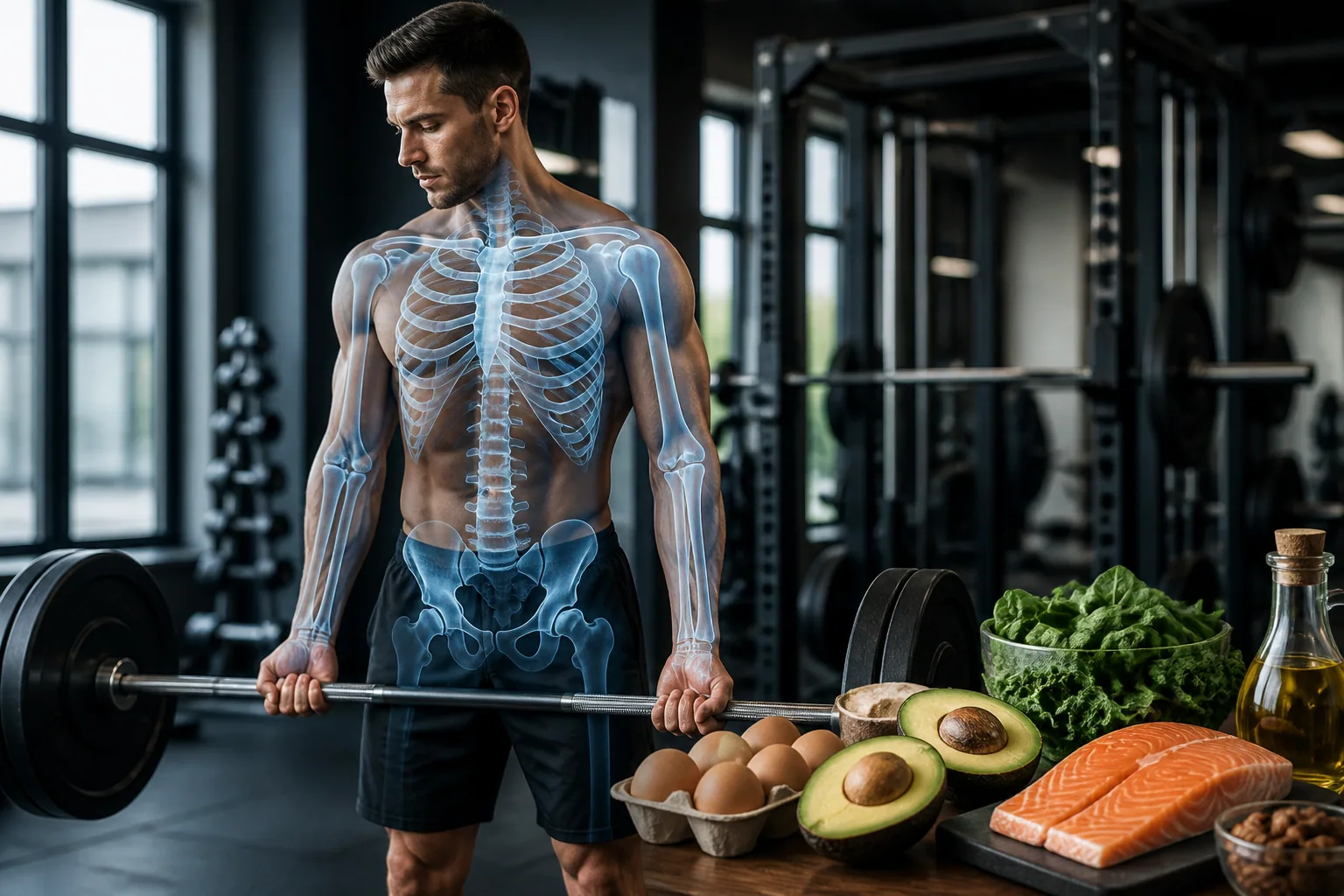
Keto, Bone Health & Exercise: How to Protect Your Skeleton During Intense Training
If you train hard and eat keto, your bones deserve as much attention as your macros. Strength training, CrossFit, running, and other high-output sports all depend on a skeleton that can adapt, remodel, and recover. That matters because bone is not static tissue. It is living tissue that responds to loading, nutrition, hormones, and recovery status every day.
For many active people, ketogenic eating can be a useful tool for appetite control, stable energy, and body composition. But long-term keto, especially when paired with a heavy training load, may create a situation where bone remodeling is not keeping pace with bone breakdown. The concern is not that keto automatically damages bone in everyone. The concern is that in certain conditions, particularly low energy intake, repeated high-intensity training, and inadequate micronutrient intake, the margin for error gets smaller.
This article breaks down what the research says, what the real risks look like for hard-training keto athletes, and how to protect bone health without abandoning low-carb eating. It also shows how tools like Keeto can help you catch nutrition gaps before they become stress fractures, lingering soreness, or a performance plateau.
Why Bone Health Matters for Athletes on Long-Term Keto
Bone health is not only about avoiding osteoporosis decades later. For athletes, it affects immediate performance, resilience, and injury risk. Strong bones help absorb impact, tolerate repetitive loading, and protect joints and connective tissue. When bone turnover shifts in the wrong direction, you can see the warning signs first as slower recovery, nagging pain, loss of power, or eventually a stress injury.
Athletes on keto often assume that if body weight is stable and workouts are still happening, bone health must be fine. Unfortunately, that is not always true. Bone can weaken quietly before obvious symptoms appear. This is especially important for people doing frequent impact training, heavy lifting, or endurance work, because those sports increase both the need for adequate mineral intake and the demand for recovery.
A keto diet can be well planned and bone supportive. The issue is not carbohydrate restriction by itself. The issue is what often travels with it: reduced total calories, lower dairy intake, less fruit and grain variety, low magnesium intake, and sometimes too little protein or too much training for the amount of fuel consumed.
What Recent Research Says About Keto, Exercise, and Bone Strength
The research is mixed, which is exactly why context matters. Human weight-loss trials of low-calorie and very low-calorie ketogenic diets have often found no significant change in bone mineral density or bone mineral content after keto, and in seven studies reviewed, BMD and BMC did not significantly decline. In one trial, women who lost about 10% of body weight showed increased bone resorption and reduced bone formation markers, but this did not translate into a clear increase in osteoporosis risk at the clinic level. Source: https://pmc.ncbi.nlm.nih.gov/articles/PMC9932495/
That said, animal studies raise more caution. A 2026 study in Bone found that ketogenic diet-fed mice showed measurable bone loss after just 4 weeks in young mice and 8 weeks in adults. Bone formation markers dropped, osteocyte lacunae expanded, and the usual gains in cortical bone mechanical strength from exercise were blunted. Source: https://pubmed.ncbi.nlm.nih.gov/41812964/
Other animal research also reports reduced bone stiffness, compromised bone mass, and lower mechanical properties across multiple ketogenic diet designs. Source: https://pmc.ncbi.nlm.nih.gov/articles/PMC10916642/
The practical takeaway is not that keto always harms bones. It is that under some conditions, especially when training stress is high and intake is not carefully managed, keto may reduce the bone-building response you would normally expect from exercise.
How Keto May Affect Bone Turnover and Recovery
Bone is constantly remodeling through the coordinated action of osteoclasts, which break down bone, and osteoblasts, which build it back up. For a healthy athlete, training creates a signal for the skeleton to adapt. But that adaptation only works if recovery resources are available.
Keto may affect this process in a few ways. First, if calories are too low, the body often prioritizes survival and performance over bone construction. Second, if calcium, magnesium, vitamin D, and protein are inadequate, the raw materials for bone remodeling are limited. Third, if training stress is high and recovery is poor, inflammation and hormonal stress may favor bone resorption over formation.
The animal data suggest that ketogenic feeding can blunt the normal bone gains expected from exercise. That matters because exercise is usually considered one of the most powerful bone-protective interventions. If a diet reduces that response, the athlete may be working hard while getting less skeletal return than expected.
This does not mean keto is incompatible with exercise. It means the combination requires more intentional planning. A hard-training athlete on keto should think less about whether carbs are low enough and more about whether the entire system supports remodeling, repair, and adaptation.
The Biggest Risk Factors for Bone Loss in Hard-Training Keto Athletes
The highest-risk situations usually involve several factors at once. One of the biggest is chronic low energy availability. If you are training intensely but eating too little, bone health tends to suffer regardless of diet style. Calorie restriction itself is repeatedly linked to increased bone resorption markers, which helps explain why aggressive cutting phases can be risky.
Another major factor is low dietary variety. Many keto athletes cut out or greatly reduce dairy, fortified foods, legumes, and some fruits and grains. That can unintentionally lower calcium, magnesium, potassium, and sometimes vitamin D intake. A diet can stay very low-carb and still be bone supportive, but it takes more planning than many people expect.
Hormonal stress is another issue. Hard training, poor sleep, frequent fasting, and under-fueling can push the body toward a higher stress state. For women in particular, low energy availability can affect menstrual function, which is closely tied to bone health. Men are not immune either. Low testosterone, poor recovery, and insufficient protein can all contribute to loss of skeletal resilience.
Endurance athletes and athletes with frequent impact loads may be especially vulnerable if they combine long sessions, strict keto, and low total intake. The research on children using long-term ketogenic diets for epilepsy also shows that bone loss can happen with prolonged use: in one study, 68% had lower BMD Z-scores at follow-up, and ambulant children experienced greater rates of bone loss along with increased urinary calcium excretion. Source: https://pubmed.ncbi.nlm.nih.gov/28778055/
Bone Health Markers to Watch: Labs, DEXA, and Performance Red Flags
If you are serious about preserving bone health, do not rely only on symptoms. Bone issues can develop quietly. A DEXA scan is useful because it gives a baseline for bone mineral density and helps track changes over time, especially if you are a long-term keto athlete or you have a history of injury, weight loss, or menstrual irregularity.
On the lab side, it can help to discuss with a clinician whether you should monitor vitamin D status, calcium-related markers, magnesium intake status, and other indicators of bone metabolism. In practice, the most useful testing plan depends on your age, sex, training volume, medical history, and whether you have already had a stress fracture or unexplained decline in performance.
Performance red flags matter too. These include persistent bone pain, repeated stress reactions, slow healing, a noticeable drop in force output, recurrent cramps, unexplained fatigue, poor sleep, and prolonged soreness that does not match your usual training cycle. If these show up alongside low food intake or a recent increase in training load, bone health should move up the priority list.
One important point: the absence of pain does not guarantee safety. That is why athletes benefit from tracking nutrition and body signals together, rather than waiting until an injury forces the issue.
How Much Calcium, Vitamin D, and Magnesium Do You Really Need?
For bone support, calcium is the non-negotiable starting point. NIH and Bone Health & Osteoporosis Foundation guidance recommends 1000 mg calcium per day for adults age 19 to 50, including women 50 and under and men 70 and under. Women over 50 and men over 70 should aim for 1200 mg per day. Adults 1 to 70 years old generally need about 600 to 800 IU vitamin D daily, while older adults may need around 800 to 1000 IU per day. Source: https://www.niams.nih.gov/health-topics/calcium-and-vitamin-d-important-bone-health
Some sports nutrition sources suggest female athletes may benefit from about 1500 mg calcium per day to optimize bone health, especially when training stress is high. Vitamin D is especially important because it enhances calcium absorption and supports bone metabolism. Source: https://pmc.ncbi.nlm.nih.gov/articles/PMC8566643/
Magnesium is often overlooked, but it matters for bone structure and remodeling because it acts as a cofactor in bone mineralization. Deficiency is associated with poorer bone density. Source: https://ods.od.nih.gov/pubs/The_Scoop_May_2024.pdf
The practical keto challenge is that many people focus heavily on fats and protein while underestimating minerals. If you are eating dairy-free, eating few leafy greens, or heavily restricting food volume, it is easy to fall short without realizing it. On keto, mineral tracking is not optional if you care about long-term skeletal resilience.
Protein Quality, Distribution, and Total Intake for Bone Support
Protein is essential for bone because bone tissue is built on a collagen framework that must be continuously repaired. Athletes sometimes worry that higher protein intake will hurt bone health, but the bigger risk for a hard-training keto athlete is usually the opposite, too little protein or poor protein quality.
A good bone-supportive approach is to get enough total protein consistently across the day. Spreading intake over several meals can support muscle repair, recovery, and the amino acid supply needed for connective tissue and bone remodeling. For athletes, this is especially important during heavy blocks of training, weight loss phases, or when appetite is suppressed.
Protein quality matters as well. Keto plans built around bacon, cheese, and processed meats may be convenient, but they are not ideal as the only protein sources. More nutrient-dense options, including eggs, fish, poultry, Greek yogurt if tolerated, and other minimally processed foods, can make it easier to meet protein needs while still supporting calcium and magnesium intake.
The key is balance. Very low carb eating can work well if protein is adequate and not treated as an afterthought. For bone health, protein should support recovery, not compete with it.
Fats That Help: Omega-3s and Other Keto-Friendly Nutrition Tweaks
Keto already emphasizes fat, but not all fats support recovery equally. Omega-3 fats are especially interesting because they may help modulate inflammation and support recovery processes that indirectly affect bone health. While they are not a magic bone supplement, they can be a useful part of a broader strategy for athletes who train hard.
Keto-friendly omega-3 sources include fatty fish like salmon, sardines, and mackerel, as well as fish oil when appropriate. If you avoid fish, you may need to be more deliberate about choosing foods or supplements that support a healthier fat profile overall.
Other helpful tweaks include eating enough total food, not just enough fat, and including mineral-rich low-carb vegetables. Leafy greens, avocados, nuts, seeds, and dairy or fortified alternatives can help fill in the micronutrient gaps that tend to show up in restrictive keto plans.
The broader dietary pattern also matters. Review data suggests Mediterranean-style diets may be more protective against fractures, while calorie restriction diets more consistently increase bone resorption markers. Source: https://pmc.ncbi.nlm.nih.gov/articles/PMC12735435/
Training Strategies That Support Bone Density Instead of Breaking It Down
Exercise is usually bone protective when it provides enough mechanical loading and enough recovery. Bone likes challenge, but it does not like constant punishment. The best training plan for bone health usually combines impact, resistance work, and rest.
Strength training is one of the most useful tools for maintaining or improving bone density because it creates high mechanical tension. Impact work, jumping, sprinting, and loaded carries can also stimulate the skeleton when programmed appropriately. The goal is progressive loading, not endless fatigue.
At the same time, very high volumes of repetitive endurance work can become a problem if they are paired with low energy intake. The combination of intense training plus chronic under-fueling is where bone risk rises quickly. On keto, this can happen more easily because appetite suppression and food restriction can make it harder to match intake to output.
A better approach is to cycle stress intelligently. Keep hard sessions hard, but make recovery sessions truly easy. Use deload weeks, vary impact volume, and avoid stacking the most demanding workouts when food intake has been low for several days in a row.
How to Avoid Overtraining and Under-Recovery on Keto
Overtraining is not just about being tired. It is about failing to recover from the load you impose. On keto, under-recovery can sneak in because calories, protein, and minerals are sometimes lower than they look on paper. You may be eating enough fat to feel satisfied while still falling short on the nutrients that support tissue repair.
Some signs of under-recovery include sleep disruption, elevated resting heart rate, persistent soreness, irritability, poor training motivation, repeated minor injuries, and plateaued performance. If these show up together, your plan may need more food, not more discipline.
Recovery on keto should be approached as part of bone health, not a separate topic. That means adequate sleep, enough total calories, enough protein, and enough minerals every day. It also means resisting the urge to stay in a prolonged calorie deficit if your training demand is high. Bone remodeling is slower than workout motivation, and it often needs more time to respond than people expect.
Using Keeto to Spot Macro and Micronutrient Gaps Early
One of the hardest parts of keto is not knowing whether your food choices are truly filling the gaps. That is where a tool like Keeto can help. By scanning products instantly and showing net carbs and carb-budget impact, Keeto makes it easier to stay within ketosis while still choosing foods that fit a bone-supportive plan. You can learn more here: https://findthe.app/keeto-5m0vbj
This matters because the nutrition mistakes that hurt bone health are often small and cumulative. A few low-calcium days, a week of low protein, or repeated snack choices that look keto-friendly but are nutrient-poor can quietly add up. Keeto can help flag those choices faster so you are not guessing in the grocery aisle.
Used well, tracking tools support better decisions. They help you notice when a day is high in fat but low in protein, when your meal plan is missing mineral-rich foods, or when your shopping list needs more practical staples that fit both ketosis and recovery. For athletes, that kind of awareness can be the difference between steady progress and a slow slide toward fatigue and injury.
A Practical Bone-Support Checklist for Keto Athletes
If you want a simple way to protect your skeleton while training on keto, start here. First, make sure total calories are not chronically too low. Second, hit your protein target consistently and spread it across the day. Third, confirm that calcium, vitamin D, and magnesium are actually being consumed in meaningful amounts, not just assumed.
Next, keep some form of bone-loading training in the week, such as strength work, jumping, or other appropriately progressive impact. Then, protect recovery with sleep, rest days, and deloads. If you are cutting weight, be extra cautious because calorie restriction is one of the clearest risk multipliers for bone turnover problems.
It is also smart to watch for red flags early: stress reactions, recurrent aches, poor performance, missed periods, unusual fatigue, or training that suddenly feels harder than it should. If any of those appear, it is worth reviewing intake, training load, and whether a DEXA scan or clinical assessment is appropriate.
The bottom line is straightforward. Keto can be done in a way that supports strong bones, but it takes more intention than simply cutting carbs. For athletes who train hard, bone health depends on the whole system: nutrients, loading, recovery, and consistency. If you keep those pieces aligned, you can stay in ketosis without treating your skeleton like collateral damage.