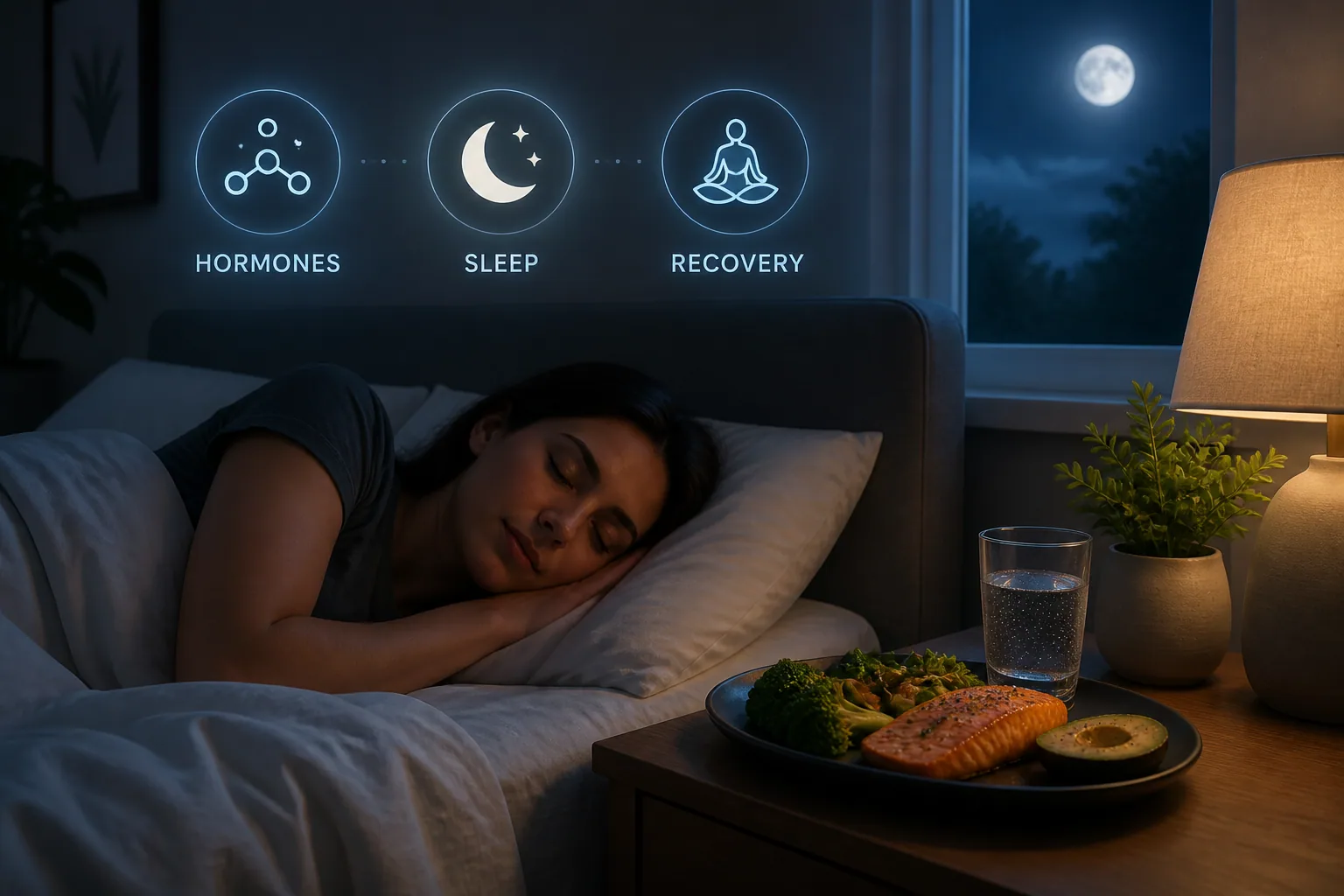
Keto at Night: How a Ketogenic Diet Impacts Sleep Quality, Hormones & Nighttime Recovery
A ketogenic diet can be a game changer for energy, appetite, and body composition, but nighttime is where things get interesting. Some people notice deeper sleep, fewer cravings, and calmer evenings. Others feel wired at bedtime, wake up more often, or drag through the morning with a foggy head. That split is not imaginary. Keto can influence sleep architecture, circadian biology, stress hormones, and recovery signals in ways that are highly individual.
In this article, we’ll break down why sleep can change when you go keto, what the research says about REM and deep sleep, how carbs and tryptophan affect melatonin, why ketones may have signaling effects beyond fuel, and how cortisol, growth hormone, meal timing, electrolytes, and light exposure all fit into the picture. We’ll also look at practical ways to make keto more sleep-friendly, especially if you train hard, work nights, or feel like your current dinner setup is working against you.
Why Sleep Can Change When You Go Keto
Sleep is not just about being tired enough to pass out. It is shaped by neurotransmitters, hormones, body temperature, blood sugar stability, digestion, and your circadian rhythm. When you switch to keto, several of those inputs change at once. Carbohydrate intake drops, insulin falls, ketone production rises, and the body begins adapting to a different fuel mix. During this transition, your sleep may improve, worsen, or fluctuate from night to night.
One of the biggest reasons is that keto changes the balance between arousal and recovery signals. For some people, steadier blood sugar and fewer late-night hunger swings make it easier to stay asleep. For others, the adaptation phase can feel like a stressor, especially if calories are too low, dinner is too light, electrolytes are off, or training volume is high. That can show up as restlessness, a racing mind, or waking up around 2 to 4 a.m. feeling oddly alert.
There is also a timing issue. The body expects certain hormonal patterns to rise and fall through the evening. If you remove a major carbohydrate signal, the downstream effects on serotonin, melatonin, cortisol, and even body temperature can shift. So when people ask whether keto helps sleep, the real answer is that it can, but only if the rest of the system is supported.
What Recent Research Says About Keto, REM, and Deep Sleep
The sleep research on keto is still emerging, but a few findings are especially useful. In a short-term very low-carbohydrate ketogenic diet study in healthy young men, REM sleep as a percentage of total sleep time was significantly reduced after both the acute phase and after 48 hours of ketosis, while slow wave sleep, also called N3 or deep sleep, significantly increased. You can find that study here: https://pubmed.ncbi.nlm.nih.gov/18681982/
That pattern matters because REM and deep sleep do different jobs. Slow wave sleep is heavily associated with physical restoration, growth hormone release, and recovery from training stress. REM sleep is tied more closely to memory processing, emotional regulation, and brain recovery. A diet that nudges you toward more deep sleep and less REM may feel great for some people, but not for everyone, especially if REM reduction becomes too pronounced or if it comes with fragmented sleep.
Other research suggests the picture is not universally negative. In a 6-month modified Atkins ketogenic diet study in people with relapsing multiple sclerosis, participants had a mean decrease of 1.90 points in the Epworth Sleepiness Scale, plus reduced symptoms of insomnia, obstructive sleep apnea, and restless leg syndrome, even though sleep duration did not change. Source: https://pmc.ncbi.nlm.nih.gov/articles/PMC11393576/
There is also evidence that exogenous ketone ester ingestion after evening high-intensity interval training improved sleep efficiency by about 3 percent, reduced wake after sleep onset, and counteracted exercise-induced reductions in REM sleep. That suggests ketones themselves may affect recovery and sleep continuity in ways that go beyond simply replacing carbohydrate. Source: https://pubmed.ncbi.nlm.nih.gov/37259248/
Taken together, the research points to a simple conclusion: keto does not have one universal sleep effect. It seems to reshape sleep stages, sometimes in helpful ways, but the outcome depends on your adaptation status, stress load, training, and meal timing.
Ketosis, Tryptophan, and Melatonin: The Circadian Connection
Melatonin is one of the body’s main nighttime signals. It rises in the evening as light fades, helping the brain recognize that it is time to sleep. Carbohydrate intake can influence this process indirectly by changing the availability of tryptophan, the amino acid precursor to serotonin and melatonin.
Research comparing isocaloric high-protein low-carbohydrate meals with low-protein high-carbohydrate meals in young men found that the higher-carbohydrate meal increased the tryptophan to large neutral amino acid ratio, which was associated with greater melatonin secretion, faster sleep onset, more REM sleep, and fewer awakenings. The same line of research also found that evening high-protein low-carb meals were linked with more light sleep, delayed REM onset, more wakefulness, and lower sleep efficiency. Source: https://pmc.ncbi.nlm.nih.gov/articles/PMC9782994/
That does not mean carbs are required for good sleep, but it does suggest that very low-carb dinners may not be ideal for everyone, especially if you already have trouble falling asleep. If you are feeling alert at night on keto, one question to ask is whether your evening meal is too protein-heavy, too fat-heavy, or too light overall. The circadian system likes consistency, and a strategically placed amount of carbohydrate may help some people wind down more naturally.
This is especially relevant for people who are already sensitive to stress or have a delayed sleep phase. Night owls tend to fall asleep later, and if keto further reduces the usual melatonin-friendly cues from dinner, the bedtime problem can become more noticeable. In other words, the issue may not be keto itself, but keto plus a circadian pattern that is already running late.
How Ketone Signaling May Influence Nighttime Calm and Alertness
Ketones are often described as a fuel source, but they also act like signaling molecules. Biochemical signals associated with fat-based metabolism include elevated ketone bodies, increased adenosine, orexin activation, AMPK signaling, and adaptive responses to reactive oxygen species. These pathways are involved in energy homeostasis and may help explain why some people feel mentally steady, focused, or calm in ketosis. Source: https://pmc.ncbi.nlm.nih.gov/articles/PMC11390529/
Adenosine is especially interesting because it is tied to sleep pressure. Over the course of the day, adenosine builds up and contributes to the drive to sleep. If ketotic metabolism alters that signaling in a favorable way, it could help create a more stable nighttime transition for some people. But because orexin is also involved in wakefulness and alertness, ketosis may sometimes feel activating instead of sedating, particularly in people who are lean, stressed, or newly adapted.
This is one reason the keto experience is so different from person to person. One person may feel clean, quiet mental energy at night. Another may feel as if their brain refuses to power down. Both can be valid responses to the same metabolic shift. The best question is not whether ketosis is sedating or stimulating in general, but whether it is creating the right balance for your nervous system.
Cortisol on Keto: Why Some People Feel Wired at Bedtime
Cortisol often gets blamed for every sleep issue, but it has an important role in adaptation and energy mobilization. In the early stages of a low-carbohydrate or ketogenic diet, higher cortisol levels are common, especially resting cortisol. Research suggests this tends to happen in the first 1 to 3 weeks, and often returns to baseline with longer-term adherence of at least 3 weeks. Source: https://pmc.ncbi.nlm.nih.gov/articles/PMC9716400/
That early cortisol bump can be a big reason people feel edgy, wakeful, or sleep-fragmented when they first start keto. If your body thinks fuel is scarce, it may increase stress signaling to keep glucose available for tissues that still need it. This is more likely to become noticeable if you are also dieting aggressively, training hard, or sleeping poorly already.
The good news is that this response is not always permanent. In a six-week low-carbohydrate diet study in healthy men, insulin dropped significantly, but there were no significant changes in cortisol, testosterone, growth hormone, or IGF-1. Source: https://journals.plos.org/plosone/article?id=10.1371%2Fjournal.pone.0269440
There is also interesting evidence from people with Cushing’s disease, where a ketogenic diet for 5 weeks decreased ACTH and urinary free cortisol in most patients, with some showing reduced salivary cortisol and a lower cortisol response after dexamethasone suppression. Source: https://pmc.ncbi.nlm.nih.gov/articles/PMC10649442/
So while keto can initially raise cortisol in some healthy people, it may have a different relationship with cortisol over time and in different clinical contexts. If you feel wired at bedtime on keto, the answer may be less about abandoning the diet and more about reducing total stress load, making dinner more balanced, and giving your body enough time to adapt.
Growth Hormone, Muscle Recovery, and Overnight Repair
Sleep is one of the body’s most important recovery windows, and growth hormone plays a major role in that process. Deep sleep is strongly associated with overnight repair, tissue rebuilding, and metabolic restoration. Because ketogenic diets can increase slow wave sleep in some settings, they may support physical recovery for certain people, especially if energy intake is adequate and training stress is managed well.
That said, recovery is not only about sleep stages. If you are in a large calorie deficit or not getting enough protein, your body may prioritize survival over repair. In that case, even if deep sleep increases, the overall recovery outcome may still be poor. Athletes often miss this point. They assume being in ketosis automatically means better fat burning and therefore better recovery, but recovery is more complex than substrate choice.
If your goal is muscle gain or performance, pay close attention to how your body responds after evening training. Some people do fine with a strict keto approach, while others sleep better and recover better with a modest amount of carbohydrate after hard sessions. The ketone ester study after evening HIIT is a reminder that the metabolic context around exercise can change sleep quality, not just the diet itself. Source: https://pubmed.ncbi.nlm.nih.gov/37259248/
Why Shift Workers and Night Owls May Respond Differently
Shift workers and night owls are already dealing with a circadian mismatch. Their sleep-wake timing is often out of sync with natural light patterns, social routines, and meal timing. Keto may either help or complicate that situation depending on how it changes hunger, alertness, and evening energy levels.
A night owl who already struggles to fall asleep may find that a very low-carb dinner makes the problem worse if melatonin signaling becomes less robust or if blood sugar stability is not the real issue. A shift worker may also have a harder time interpreting fatigue on keto because their sleep pressure is already distorted by changing light exposure and inconsistent bedtime windows.
For these groups, the best approach is often to make keto more predictable rather than more extreme. Consistent meal timing, adequate electrolytes, a dinner that is not too heavy in fat, and a realistic wind-down routine can matter more than pushing carbs as low as possible. If you work nights, the goal is not a perfect biological rhythm. The goal is a stable enough rhythm that sleep can happen when the schedule allows it.
Could Your Dinner Macros Be Hurting Your Sleep?
Dinner macros can make or break your night. A meal that is too large, too fatty, too protein-heavy, or too close to bedtime can lead to reflux, digestive discomfort, or a sense of internal overheating. On keto, this is especially important because people often compensate for lower carbs by eating a very heavy fat-based dinner.
That can backfire. Fat digests slowly, and a large evening fat load may keep the digestive system active when the body should be shifting toward rest. If you notice that you feel sluggish and bloated at bedtime, or wake up feeling unrefreshed, the issue may be meal size rather than ketosis itself. Many people sleep better with a moderate dinner and a lighter final meal if needed.
Protein matters too. While adequate protein supports recovery, an overly protein-dominant, very low-carb dinner may shift sleep architecture in an unfavorable direction for some people, with more light sleep, delayed REM, and more awakenings. The key is balance. You want enough protein for repair, enough fat for satiety, and, for some people, a small amount of carbohydrate to support sleep onset.
Meal Timing Mistakes That Trigger Night Wakings or Grogginess
The timing of your last meal can be just as important as the macros. One common mistake is eating too late because you are trying to fit in calories for training recovery, then going to bed before digestion has settled. Another mistake is going to bed underfed, especially during the first weeks of keto adaptation, when hunger and cortisol can be higher.
Night wakings can happen when blood sugar drops, when electrolyte balance is off, or when the body interprets the overnight fast as too aggressive. Grogginess in the morning can happen when dinner was so large, fatty, or late that sleep quality was fragmented even if you technically slept for enough hours. Both problems can look like a sleep disorder, when the real issue is meal planning.
A good rule is to experiment with dinner distance from bedtime. Some people sleep best with dinner 3 to 4 hours before bed. Others need a small pre-bed option, especially if they train late. The key is to change one variable at a time so you can actually tell what improves or worsens your night.
Electrolytes, Magnesium, and Potassium for Better Sleep on Keto
Electrolytes are one of the most overlooked reasons people feel terrible on keto at night. When insulin drops, the kidneys excrete more sodium and water, which can affect fluid balance, nerve firing, muscle relaxation, and sleep continuity. If you wake up with restless legs, leg cramps, palpitations, or a vague sense of internal agitation, electrolyte imbalance should be high on your list.
Magnesium is especially relevant because it is involved in relaxation pathways and nervous system regulation. Potassium also matters for muscle and nerve function, though it should be managed carefully through food and, when appropriate, medical guidance. Many people think they are having a mysterious keto insomnia problem when they are actually under-salted, under-hydrated, or short on magnesium.
In practice, that means making sure your keto routine includes electrolyte-rich foods and, if needed, a simple supplement strategy. The right approach can reduce nighttime restlessness and help your body settle into sleep more smoothly. If your sleep gets worse after starting keto, do not ignore the basics before assuming the diet is incompatible with your body.
Light Exposure, Stress Load, and Sleep Hygiene That Actually Help
You can have the perfect keto dinner and still sleep badly if your evening light exposure is chaotic and your stress load is too high. Blue-rich light late at night can suppress melatonin, push back sleep onset, and reinforce the sense that your brain should stay awake. That matters even more if keto has already made you more alert during the adaptation phase.
Stress is the other big factor. If work, parenting, training, travel, or calorie restriction are already draining you, the nervous system may stay in a state of vigilance at bedtime. In that context, keto does not need to be the villain, but it can be the extra variable that tips the system over the edge.
Useful sleep hygiene habits are simple, but they work best when they are consistent. Dim the lights in the last hour before bed. Keep your room cool. Avoid intense late-night training if it tends to rev you up. Create a predictable wind-down routine so your brain gets the same cues every night. On keto, where your metabolism may already be shifting, those cues become even more important.
A Simple Keto Night Routine for Better Recovery
If sleep has become harder since starting keto, it helps to think in systems rather than single causes. First, check whether you are still in the adaptation window. If so, some restlessness may improve with time. Next, look at dinner. Is it too heavy, too lean, too late, or too close to bedtime? Then look at electrolytes, especially sodium and magnesium. Finally, audit your evening light and stress pattern.
A simple routine might look like this: finish your last substantial meal a few hours before bed, keep it balanced rather than extreme, hydrate appropriately, get enough sodium and magnesium, reduce screen brightness, and do something repetitive and calming before sleep. If you train at night, consider whether your post-workout nutrition is helping or hurting your sleep architecture.
If you also want to make keto food choices easier during the day, a tool like Keeto - Keto Made Easy can help you quickly scan foods, check net carbs, and keep your carb intake consistent without doing math in the grocery aisle: https://findthe.app/keeto-5m0vbj
The bigger lesson is that keto and sleep are deeply connected, but not in a one-size-fits-all way. Some people get better sleep on keto because their blood sugar is steadier and their appetite is calmer. Others need better timing, more electrolytes, less stress, or a slightly higher-carb dinner to protect melatonin and sleep quality. Once you treat sleep as part of your keto strategy, not an afterthought, nighttime recovery usually improves.