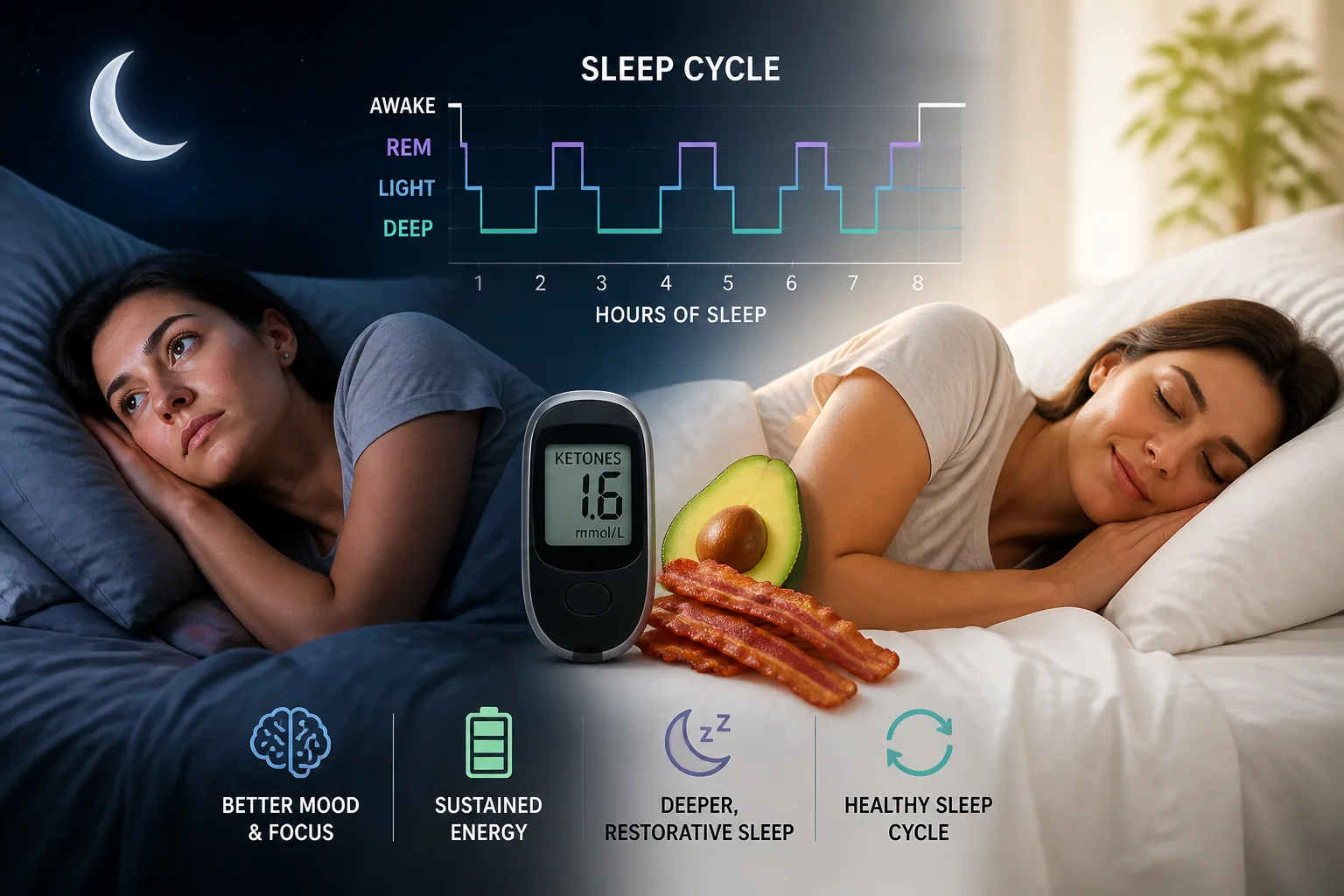
Keto and Sleep: What Science Really Says About REM, Deep Sleep, and Night Wakings
Keto and sleep is one of those topics where the internet sounds extremely certain, but the science is still more nuanced. Some people report falling asleep faster, waking up less, and feeling more mentally clear in the morning. Others say keto makes them restless, gives them vivid dreams, or leaves them wide awake at 3 a.m. Both experiences can be real. The key question is not whether keto “helps” or “hurts” sleep in every case, but why sleep changes happen, when they are temporary, and what the best current evidence actually shows.
That distinction matters because sleep is not just one thing. It includes sleep onset, total sleep time, sleep efficiency, REM sleep, deep non-REM sleep, night wakings, and how refreshed you feel the next day. A ketogenic diet can affect each of these differently depending on ketosis depth, adaptation stage, exercise load, electrolyte status, fat sources, age, sex, and whether someone already has a sleep problem before starting.
Why Keto Sleep Changes Feel So Different From Person to Person
A big reason keto sleep effects seem inconsistent is that people are not starting from the same place. Someone switching from a high-carb diet, eating fewer calories, exercising hard, and dropping sodium fast may sleep very differently from someone using a well-formulated ketogenic diet with stable meals, enough electrolytes, and good recovery. In other words, the diet is only one part of the sleep picture.
There is also a difference between perceived sleep and measured sleep. A person may feel more alert on fewer hours of sleep because ketones can alter energy availability and appetite regulation. Another person may have objectively similar sleep duration but feel worse because adaptation, stress hormones, or a late training session are fragmenting their sleep. That is why anecdotal reports alone are not enough.
What the Best Current Research Says About Keto and Sleep Quality
The strongest recent summary comes from a 2024 scoping review of 20 studies on ketogenic dietary therapies used in conditions such as epilepsy, migraine, and autism. The review found that ketogenic dietary therapies were associated with better overall sleep quality, less difficulty falling asleep, fewer nighttime awakenings, less daytime sleepiness, and an increase in REM sleep. Source: https://pubmed.ncbi.nlm.nih.gov/37932966/
That is encouraging, but it is not the same as proving keto improves sleep for every healthy adult. Many of the studies in that review involved therapeutic ketogenic diets rather than casual low-carb dieting, and the populations were often people with neurological or metabolic conditions. Still, it does show that the relationship between ketosis and sleep is not automatically negative, and in some settings it may be beneficial.
Human experimental data are mixed but useful. In a crossover trial with military personnel, a 2-week ketogenic diet of about 25 g carbs per day was compared with a high-carb diet of about 285 g carbs per day. Researchers found no significant differences in sleep duration, sleep efficiency, sleep onset latency, or subjective sleep and sleepiness measures. Source: https://pubmed.ncbi.nlm.nih.gov/35729758/
That result matters because it suggests short-term keto does not inevitably wreck sleep, at least in a relatively healthy, active male sample. At the same time, it also means people should not assume ketosis automatically improves sleep quality. The effect may simply be neutral for some individuals.
Does Keto Change REM, Deep Sleep, and Overall Sleep Architecture?
Sleep architecture refers to the pattern of sleep stages across the night, especially REM and non-REM sleep. This is where the picture gets more interesting. Several studies suggest keto can shift sleep architecture, but the direction of change depends on the model, the timing, and the person.
In a very low-carbohydrate ketogenic context at the onset of the diet, one study found more deep non-REM sleep, also called slow-wave sleep, and less REM sleep, along with increased arousal during NREM. Importantly, those changes faded after about two days of adaptation. Source: https://pmc.ncbi.nlm.nih.gov/articles/PMC10247426/
That finding fits a common real-world pattern. Early keto can feel sleep-disruptive, but some of the changes may be part of the transition phase rather than the long-term result. The nervous system is adjusting to lower glucose availability, altered fluid balance, and different fuel handling.
Other research points in a different direction. A 2024 scoping review found an association between ketogenic dietary therapies and increased REM sleep overall. Source: https://pubmed.ncbi.nlm.nih.gov/37932966/
Animal studies also suggest that sex may matter. In aged rats fed a ketogenic diet for two months, REM sleep increased in females but not in males. The same study found more REM bouts in females, while non-REM delta power and REM theta power were preserved, suggesting the microarchitecture of sleep remained intact. Source: https://pmc.ncbi.nlm.nih.gov/articles/PMC13106476/
The same line of research also reported reduced theta oscillation power and lower overall EEG power during non-REM sleep in both males and females, which may reflect a more stabilized NREM pattern rather than poorer sleep depth. Source: https://pubmed.ncbi.nlm.nih.gov/42038700/
The takeaway is simple: keto can change sleep architecture, but that does not automatically mean worse sleep. Some shifts may reflect adaptation, while others may represent a real change in sleep organization that is not necessarily harmful.
Can Low-Carb Diets Affect How Long You Sleep?
Total sleep duration is another area where people expect a dramatic answer, but the evidence is mixed. In some studies, sleep duration does not change much on keto. In others, sleep gets longer, especially when carbohydrate timing is manipulated in a structured way.
One human trial that included a low-carb, sleep-focused timing approach reported reduced sleep onset latency, increased sleep duration, improved sleep efficiency, reduced wake after sleep onset, and an increased percentage of REM sleep over four weeks. Source: https://www.sciencedirect.com/science/article/pii/S026156142400058X
That is interesting because it suggests that timing and fueling strategy may matter as much as carb restriction itself. A person eating low carb all day and training late at night may have a very different sleep outcome than someone using a controlled, predictable meal pattern that supports recovery.
There is also evidence that exogenous ketones or ketone esters may influence sleep quality in specific contexts. In well-trained cyclists, taking about 25 g of ketone ester after exercise and before sleep raised β-hydroxybutyrate to around 3 mM, improved sleep efficiency by about 3%, and countered exercise-induced drops in REM sleep as well as increases in wake after sleep onset. Source: https://pmc.ncbi.nlm.nih.gov/articles/PMC10581428/
That does not mean ketone supplements are a universal sleep solution, but it does show that the relationship between ketones and sleep is biologically plausible and context dependent.
Why Some People Sleep Better on Keto While Others Sleep Worse
There are several reasons why keto can feel calming for one person and stimulating for another. First, blood sugar swings can affect sleep. Some people wake up at night when glucose levels drop or when they have large evening meals followed by unstable overnight fueling. For them, keto may reduce those swings and improve sleep continuity.
Second, appetite regulation matters. Keto often reduces hunger, which can make late-night snacking less likely. Fewer blood sugar spikes, fewer big meals before bed, and less digestive stress may all help some people sleep more soundly.
Third, some people experience the opposite because early keto can increase stress hormones, thirst, and urination. If sodium, potassium, and magnesium intake fall too low, sleep can become lighter and more fragmented. What looks like “keto insomnia” is sometimes really a hydration or electrolyte issue.
The Role of Ketosis Depth, Adaptation Phase, and Metabolic Health
Not all keto states are the same. Mild low-carb eating, nutritional ketosis, deeper therapeutic ketosis, and very low-calorie ketogenic diets may all affect sleep differently. Deeper ketosis may be more likely to influence brain fuel use, arousal patterns, and REM dynamics, but the body also tends to adapt over time.
The adaptation phase is especially important. In the early days, people may notice insomnia, vivid dreams, morning grogginess, or more frequent waking. That does not necessarily mean keto is unsuitable. It may mean the body is transitioning away from rapid carbohydrate availability and adjusting autonomic and hormonal balance.
Metabolic health also changes the picture. Someone with insulin resistance, frequent post-meal crashes, or unstable appetite may experience better sleep once their eating pattern becomes more steady. By contrast, a lean, highly active person with low glycogen reserves may need more careful fueling to avoid nighttime stress responses.
In short, the depth of ketosis and the quality of adaptation often determine whether sleep improves, stays the same, or worsens.
Do Fat Type and MCTs Make a Difference for Sleep?
Fat source matters more than many people realize. Medium-chain triglycerides, or MCTs, are metabolized differently from longer-chain fats and can raise ketones more quickly. That makes them attractive for people trying to reach ketosis without severe carb restriction.
But MCT-based approaches may not affect sleep in the same way as a classic ketogenic diet. In a mouse model fed an MCT-based ketogenic diet, REM sleep was reduced, while non-REM duration and wakefulness were not significantly altered after two weeks. Source: https://pubmed.ncbi.nlm.nih.gov/37254426/
This suggests that simply raising ketones does not guarantee the same sleep effect you might see with a broader ketogenic diet. The fuel mix, total calories, and the way ketones are generated may all matter. MCTs may be useful for some people, but if sleep gets lighter or dreams become intense, the type and amount of fat may be part of the reason.
Sex, Age, Hormones, and Other Hidden Variables That Matter
Sleep response to keto is not identical across sexes or age groups. The aged rat study is a good example of why sex differences cannot be ignored. Females showed increased REM sleep, while males did not. Source: https://pmc.ncbi.nlm.nih.gov/articles/PMC13106476/
Hormones likely play a role too. Changes in estrogen, progesterone, thyroid signaling, cortisol, and leptin can all shape sleep quality and nighttime awakenings. For people in perimenopause, postpartum recovery, or periods of high training stress, keto may interact with an already sensitive sleep system.
Age matters as well. Older adults often have lighter sleep and more awakenings to begin with, so any dietary change that alters fluid balance, hunger, or arousal may be more noticeable. Athletes are another special case because training load can independently reduce REM sleep and increase wake after sleep onset, which may confuse the picture when they also change diet.
Common Keto Sleep Problems: Insomnia, Night Wakings, and Morning Grogginess
The most common complaints are difficulty falling asleep, waking up at night, waking too early, vivid dreams, and feeling foggy in the morning. These symptoms are often temporary, but they should not be ignored if they persist.
Insomnia during keto is frequently linked to adaptation, under-eating, late exercise, or electrolyte depletion. Night wakings can be associated with thirst, sodium loss, or a meal pattern that is too aggressive for a person’s activity level. Morning grogginess sometimes reflects not poor sleep quality, but insufficient total sleep time or a sudden change in the body’s usual fuel rhythm.
Vivid dreams are commonly reported in very low-calorie or ketogenic phases. That does not necessarily mean something is wrong. It may simply reflect changes in REM timing, more REM recall, or a rebound in dream awareness as sleep architecture shifts.
Practical Fixes: Electrolytes, Macros, Meal Timing, and Evening Routines
If keto seems to be hurting your sleep, the first place to look is usually not mystery supplements. It is the basics: electrolytes, meal timing, total calories, and whether your carb target is too strict for your current situation.
Start with sodium. Keto causes greater sodium excretion in many people, especially early on. Low sodium can contribute to restlessness, headaches, dizziness, and middle-of-the-night waking. Then check potassium and magnesium intake, ideally from food first and supplementation when appropriate.
Next, look at meal timing. Some people sleep better with their largest meal earlier in the day and a lighter dinner. Others do better with a modest evening meal that prevents overnight hunger. If you train hard, a small amount of carbohydrate in the evening may improve sleep without knocking you out of ketosis for the whole day.
Also pay attention to fat and protein balance. Too little protein can impair recovery and satiety, while too much fat right before bed may cause digestive discomfort. A well-formulated keto plan is not just “low carb”. It is a plan that supports your energy needs and recovery.
If you want an easier way to keep your carb intake consistent while troubleshooting sleep, a tool like Keeto can help you scan groceries, track net carbs, and build meals that stay within your target range: https://findthe.app/keeto-5m0vbj
When Vivid Dreams, Lighter Sleep, or Restlessness Are Temporary
Some sleep changes on keto are likely part of the transition period. If symptoms appear in the first few days to two weeks, especially after a big carbohydrate cut, they may settle once your body adapts. The study showing early increases in deep sleep and reduced REM found those effects faded after about two days, which is a good reminder that the first phase can look very different from the steady state. Source: https://pmc.ncbi.nlm.nih.gov/articles/PMC10247426/
Temporary changes are more likely when the person is otherwise healthy, eating enough calories, and gradually settling into ketosis. If sleep steadily improves after adaptation, that is usually a good sign. If vivid dreams are the only change and daytime function is fine, there may be no need to intervene.
When Sleep Issues Could Signal a Bigger Health Problem
Persistent insomnia, frequent nocturnal waking, unrefreshing sleep, loud snoring, gasping, or excessive daytime sleepiness should not be blamed on keto automatically. These may point to sleep apnea, iron deficiency, thyroid dysfunction, hormonal imbalance, anxiety, depression, or another medical issue that deserves evaluation.
The same is true if you are losing weight rapidly, feeling weak, getting palpitations, or waking up drenched in sweat. Those symptoms can reflect under-fueling, medication issues, blood sugar problems, or something unrelated to diet. Keto may coincide with the symptom, but not necessarily cause it.
If sleep problems continue beyond the adaptation period, or if they are severe enough to affect safety, mood, or daytime functioning, it is worth speaking with a clinician rather than endlessly adjusting macros on your own.
How to Track Whether Keto Is Helping or Hurting Your Sleep
The best way to judge your own response is to track sleep systematically for at least two to four weeks. Look at sleep onset time, number of awakenings, total sleep duration, morning alertness, training recovery, and any dream or mood changes. If you use a wearable, focus on trends rather than single nights.
It also helps to log food timing, carb intake, sodium, magnesium, caffeine, alcohol, exercise, and stress. Sleep does not happen in a vacuum, and many apparent keto effects are really the sum of several small variables. A simple journal often reveals patterns quickly, such as worse sleep after under-eating, late workouts, or overly aggressive carb restriction.
The goal is not to chase perfect sleep scores. It is to identify whether keto is improving your recovery, staying neutral, or creating a problem that needs a change in approach.
Bottom Line: What Science Really Supports Right Now
What science supports right now is more subtle than the usual online debate. Keto is not universally bad for sleep, and it is not a guaranteed sleep enhancer either. Current research suggests it can improve sleep quality in some people, may reduce nighttime awakenings and daytime sleepiness in certain therapeutic settings, and may shift REM sleep or sleep architecture depending on context. Source: https://pubmed.ncbi.nlm.nih.gov/37932966/
At the same time, early adaptation can temporarily worsen sleep, and factors such as ketosis depth, exercise, sex, age, hormones, fat type, and electrolyte status can change the outcome. If you are trying keto and your sleep is off, that does not mean you failed. It usually means one or more variables needs tuning.
So the most honest answer is this: keto can help sleep for some people, do nothing for others, and disrupt sleep if the transition is too abrupt or the diet is not well structured. Pay attention to the data, listen to your body, and adjust with intention.