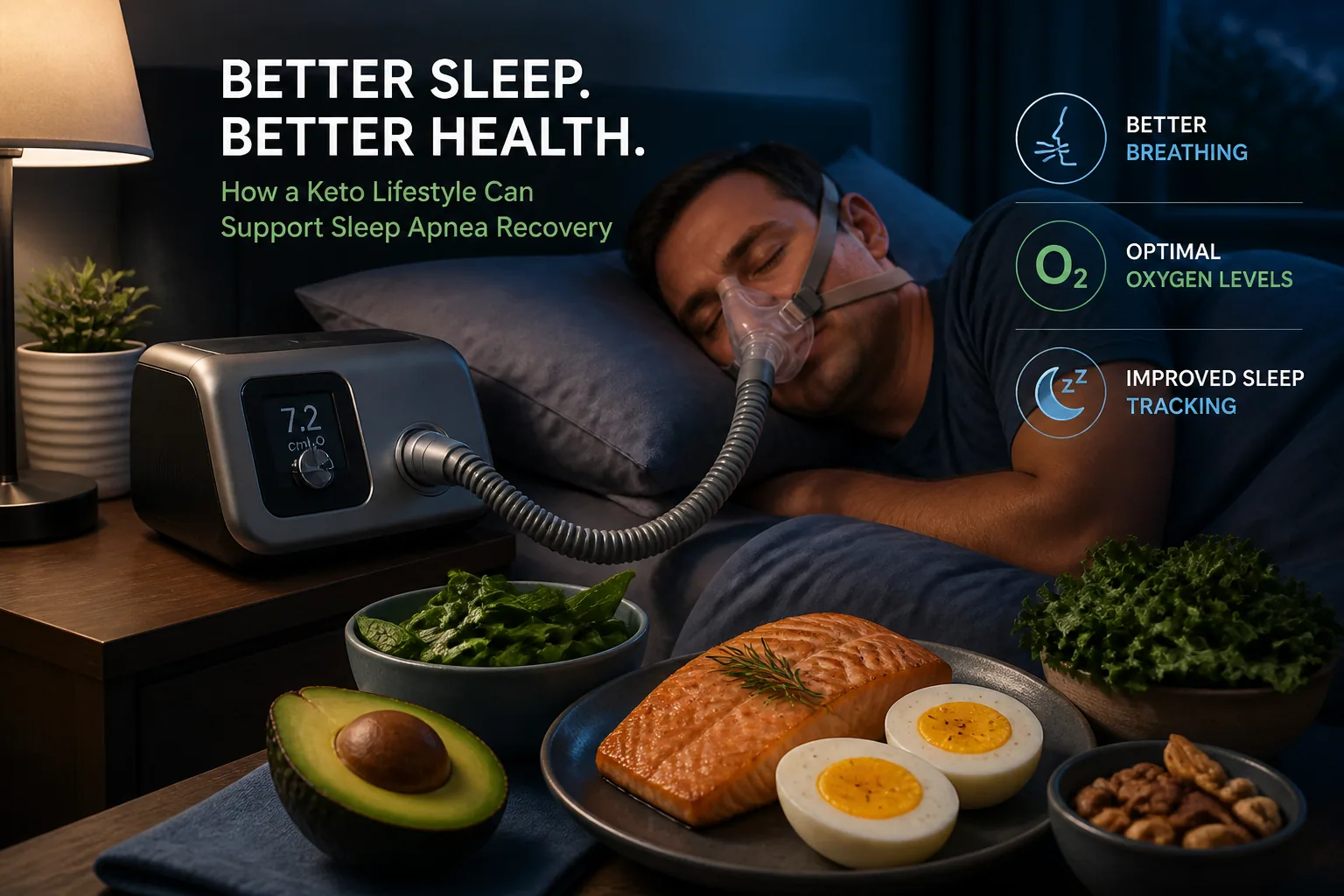
Keto & Sleep Apnea: Can Low-Carb Diets Improve Your Night Sleep?
Sleep apnea is often dismissed as loud snoring or restless sleep, but obstructive sleep apnea (OSA) is much more than that. When breathing repeatedly stops and starts during the night, oxygen levels can dip, sleep becomes fragmented, and the body spends hours under stress. Over time, that can affect daytime energy, blood pressure, insulin sensitivity, mood, and cardiovascular risk. For many people, the big question is whether a ketogenic or low-carb diet can do more than support weight loss. Can it also help reduce the severity of sleep apnea itself?
The short answer is: possibly, but the evidence is still evolving. Weight loss remains the most reliable way a low-carb approach may improve OSA, yet there are also signs that ketosis, improved insulin control, reduced inflammation, and changes in visceral and upper-airway fat may matter too. In this article, we will look at what the research says, what mechanisms may be involved, how to monitor changes, and what to discuss with a doctor if you already have sleep apnea or suspect you may have it.
Why Sleep Apnea Matters More Than Just Snoring
OSA happens when the airway collapses during sleep, often because soft tissues around the throat become too narrow or too easily compressible. The result is repeated breathing interruptions, oxygen desaturations, and brief arousals that may never fully wake a person but still disrupt normal sleep architecture. People can wake feeling unrefreshed, have morning headaches, struggle with concentration, and feel sleepy during the day. More importantly, untreated OSA is linked to hypertension, insulin resistance, metabolic syndrome, arrhythmias, and increased cardiovascular strain.
Obesity is one of the strongest risk factors for OSA, but it is not just about total body weight. Fat distribution matters, especially in the neck, tongue, soft palate, and abdomen. These fat deposits can narrow the airway mechanically and reduce lung volume, making collapse more likely. That is why any eating pattern that improves body composition, inflammation, and metabolic health may be relevant, not just the number on the scale.
What New Research Says About Keto, Low-Carb Diets, and OSA
The most consistent finding in the research is that weight loss helps OSA. In one intensive weight-loss lifestyle trial in severely obese patients on CPAP, the program reduced AHI by about 23.7 events per hour at 3 months while also improving insulin control, lipid markers, and inflammation. A meta-analysis also found that for each 1-unit drop in BMI, AHI fell by about 2.83 events per hour, with improvements in fasting insulin, cholesterol, triglycerides, and blood pressure as well. Those are meaningful changes, and they strongly support weight reduction as a major lever in sleep apnea management.
However, the more interesting question is whether a ketogenic or low-carb diet adds something beyond weight loss. Evidence is mixed. In a pilot randomized study of 70 obese patients with severe OSA who were already scheduled for bariatric surgery, adding a low-calorie ketogenic diet to CPAP for 4 weeks led to greater reductions in weight, C-reactive protein, and blood pressure than CPAP alone, but it did not significantly improve AHI compared with CPAP alone. That suggests keto-style eating may improve cardiometabolic risk markers quickly, even if breathing metrics do not always change immediately.
At the same time, research on food quality is also interesting. In a cohort of newly diagnosed OSA patients, those eating a high-fat diet had about twice the AHI severity compared with those eating less fat, with approximate values of 36.6 versus 18.2 events per hour. That does not prove high fat causes worse apnea, but it does remind us that the relationship between diet and sleep breathing is not just about calories. Food pattern, metabolic health, and fat distribution may all play a role.
How AHI, Oxygen Saturation, and Inflammation May Improve
When people talk about sleep apnea improvement, AHI is usually the main number they want to see. AHI, or apnea-hypopnea index, counts how many breathing interruptions happen per hour of sleep. A lower AHI usually means milder apnea. But oxygen saturation matters too, because repeated drops in oxygen are part of what makes OSA so hard on the body. Some people may not see dramatic AHI changes right away, yet still experience better oxygen stability, fewer desaturations, and lower inflammatory markers.
That inflammatory piece is important. In the CPAP plus low-calorie ketogenic diet trial, CRP improved more with the ketogenic intervention than with CPAP alone. CRP is a marker of systemic inflammation, and lower CRP can reflect a healthier metabolic state. OSA itself is associated with inflammation, and obesity tends to amplify this burden. So even if the airway mechanics do not transform overnight, a keto or low-carb approach may still help shift the underlying biology in a favorable direction.
This is one reason a practical approach should focus on more than just weight. If you are trying a low-carb diet for sleep apnea, it can be useful to track AHI, oxygen saturation, resting blood pressure, daytime sleepiness, and inflammatory or metabolic labs if your clinician orders them. The sleep apnea story is often broader than one single metric.
Why Benefits May Go Beyond Simple Weight Loss
Weight loss clearly matters, but it may not be the whole explanation. Low-carb and ketogenic diets can improve glucose control and reduce insulin levels, and insulin resistance is closely tied to metabolic syndrome and OSA. Since OSA and insulin resistance often reinforce one another, better metabolic signaling may help reduce the cycle of fatigue, weight gain, and airway vulnerability. In the meta-analysis mentioned earlier, fasting insulin improved along with BMI, blood pressure, and lipid markers, which suggests the benefits are not only mechanical.
There is also a plausible anti-inflammatory effect. Ketogenic diets often reduce overall glycemic load, which may lower post-meal glucose swings and downstream inflammatory stress. Some people also spontaneously reduce ultra-processed foods, refined carbohydrates, and late-night eating when they go low-carb, which may improve sleep quality indirectly. The main point is that improvements in OSA may come from a combination of weight loss, less inflammation, and better metabolic health rather than a single factor alone.
Ketosis, Insulin Resistance, and Airway Function: The Possible Links
Ketosis changes fuel use, but it may also influence how the body handles appetite, insulin, and fat storage. Lower insulin levels can support fat mobilization, especially when calorie intake is also reduced. That matters because OSA is not only linked to generalized obesity; it is linked to where fat is stored and how easily the upper airway collapses during sleep. A low-carb diet may help shift the body away from storing excess fat in metabolically harmful areas.
The biologic link is still being studied, but the logic is straightforward. Improved insulin resistance can lead to better metabolic flexibility, less fat accumulation over time, and reduced inflammatory signaling. Since insulin resistance and OSA commonly travel together, a diet that improves both may offer a double benefit. That said, keto should not be presented as a stand-alone cure. It is better understood as one possible tool within a broader sleep apnea strategy.
Can Neck Fat and Visceral Fat Affect Nighttime Breathing?
Yes, and this is where the research becomes especially interesting. Visceral fat, the fat stored around internal organs, is strongly implicated in worsening OSA. In one trial comparing a very low-calorie ketogenic diet with a standard low-calorie diet, the ketogenic group had a significantly greater reduction in visceral adipose tissue and liver fat over two months. Another 24-month VLCKD study found sustained reductions in visceral fat, with the reduction correlated to decreased disease burden over time. That matters because visceral fat is not just an energy store; it is metabolically active and linked to inflammation and cardiometabolic risk.
Upper-airway fat appears important too. Imaging studies after major weight loss have shown that reductions in tongue fat and lateral pharyngeal wall volume correlate strongly with reductions in AHI. In fact, tongue fat reduction may remain significant even after controlling for total weight loss. Another study after bariatric surgery found that with about 27 percent weight loss over 6 months, velopharyngeal airway volume increased while tongue and lateral pharyngeal wall volumes decreased, along with reductions in intra-tissue fat in upper-airway structures. These changes likely help the airway stay open during sleep.
This is one of the most promising reasons keto may help some people with OSA. If the diet leads to meaningful fat loss in the neck, tongue, and abdominal region, it could improve airway mechanics from the inside out. In other words, losing fat in the right places may matter just as much as losing it overall.
What Type of Low-Carb Approach Seems Most Effective?
The strongest short-term data for metabolic improvement often comes from very low-calorie ketogenic diets, especially in people with obesity who need faster reductions in weight and visceral fat. In the studies above, the low-calorie ketogenic approach was associated with improvements in weight, CRP, blood pressure, and visceral fat. That does not mean everyone needs a strict VLCKD, but it does suggest that when weight loss is the main goal, a more structured ketogenic plan may produce faster measurable changes.
For some people, a standard low-carb diet may be more sustainable. In practice, adherence often matters more than perfection. A plan that is slightly less strict but can be followed for months may help more than an aggressive protocol that fails after a few weeks. Many people do well with a carb target in the 20 to 50 gram net-carb range, though individual needs vary, especially if someone is physically active, on medication, or trying to preserve muscle mass. It is usually best to coordinate carb targets with a clinician if you have diabetes, take glucose-lowering medication, or have diagnosed sleep apnea and other chronic conditions.
If you want a simple way to stay consistent, a tool like Keeto can make the process much easier. The smart scanner at https://findthe.app/keeto-5m0vbj helps you check whether packaged foods fit your keto plan, see net carbs instantly, and keep track of your daily carb budget without doing the math every time.
How to Track Sleep Apnea Changes on Keto
If you start keto or a low-carb diet and hope to see better sleep, track the right signals. The most important are sleep quality, snoring intensity, daytime sleepiness, morning headaches, blood pressure, and if possible, objective breathing data. A few weeks of better energy is encouraging, but it does not always mean OSA has improved enough to be safe. Because sleep apnea can be dangerous even when symptoms feel mild, objective tracking is valuable.
A good baseline is to record your weight, waist circumference, resting blood pressure, and any symptoms before changing your diet. Then continue monitoring weekly or monthly. If you already use CPAP, keep using it unless your sleep doctor tells you otherwise. A low-carb diet can support treatment, but it should not replace prescribed therapy on its own.
Home Sleep Devices vs Lab Sleep Studies: What’s Worth Using?
Home sleep apnea tests and consumer sleep devices can be useful, but they serve different purposes. Home testing can help screen for OSA or reassess severity in some situations, especially if symptoms or body weight change significantly. Lab sleep studies remain the gold standard because they measure breathing, oxygen levels, sleep stages, arousals, and other variables with more precision. If you are making major dietary changes and suspect your apnea is improving, a formal sleep study is the best way to confirm it.
Consumer wearables can still be helpful for trends. They may show changes in resting heart rate, sleep duration, or nighttime awakenings, which can indirectly reflect better sleep. But they should not be used to declare OSA resolved. If your symptoms improve dramatically, that is worth discussing with a sleep specialist, especially if you use CPAP or have moderate to severe disease.
Warning Signs That Mean You Should Talk to a Doctor
You should seek medical advice if you have loud habitual snoring, witnessed pauses in breathing, gasping at night, excessive daytime sleepiness, morning headaches, trouble concentrating, high blood pressure, or a strong family history of sleep apnea. These are especially important if you are overweight, have type 2 diabetes, or already have cardiovascular disease. If you experience chest pain, severe shortness of breath, or near-miss driving episodes from sleepiness, treat it as urgent.
Also, if you begin keto and notice fatigue, dizziness, palpitations, constipation, worsening sleep, or trouble tolerating CPAP, do not assume these are normal adaptation symptoms. They may indicate dehydration, electrolyte imbalance, medication issues, or a need to adjust the plan. Sleep apnea management should be supervised when the condition is moderate to severe, or when other medical problems are present.
Risks, Research Gaps, and Long-Term Sustainability
The research is promising, but there are still important gaps. Many studies are small, short, or focused on people with obesity preparing for surgery, which makes it harder to generalize results to everyone with OSA. Also, not every study shows a direct AHI improvement from ketogenic intervention, even when weight, blood pressure, and inflammation improve. So the evidence supports keto as a potentially useful tool, but not as a guaranteed fix.
There are also practical concerns. Very low-carb diets can be hard to maintain long term, especially if they are overly restrictive or poorly planned. Some people experience constipation, fatigue, low fiber intake, or difficulty socializing around food. Others may need medication adjustments as they lose weight or improve insulin sensitivity. If you have kidney disease, gallbladder disease, a history of eating disorders, or are pregnant, you should get individualized medical advice before starting keto.
The best long-term approach is often the one you can sustain while protecting sleep, metabolic health, and quality of life. For some, that is strict ketosis. For others, it is a moderate low-carb pattern centered on whole foods, enough protein, vegetables, and steady calorie control. The ideal diet is the one that improves your health without creating a new problem.
A Practical Keto Action Plan for Better Sleep and Breathing
If your goal is to use keto or low-carb eating to support sleep apnea improvement, start with a clear plan. First, identify your baseline: body weight, waist size, blood pressure, snoring severity, sleepiness, and, if available, AHI and oxygen data. Second, choose a low-carb strategy you can actually follow. Third, focus on whole foods, adequate protein, and enough electrolytes and fluids to avoid feeling drained. Fourth, give the plan enough time to work before judging results.
As you progress, pay attention to trends rather than day-to-day noise. Are you snoring less? Waking less often? Feeling more alert during the day? Is your blood pressure improving? Are you losing weight around the waist and neck? These signs may suggest your plan is helping, even before a repeat sleep test confirms it.
And most importantly, do not stop prescribed sleep apnea treatment without guidance. Keto may help reduce severity in some people, especially when it drives meaningful weight loss and reductions in visceral and upper-airway fat, but OSA can remain dangerous even when symptoms are better. Think of diet as part of the treatment stack, not a replacement for diagnosis, CPAP, or medical follow-up when needed.