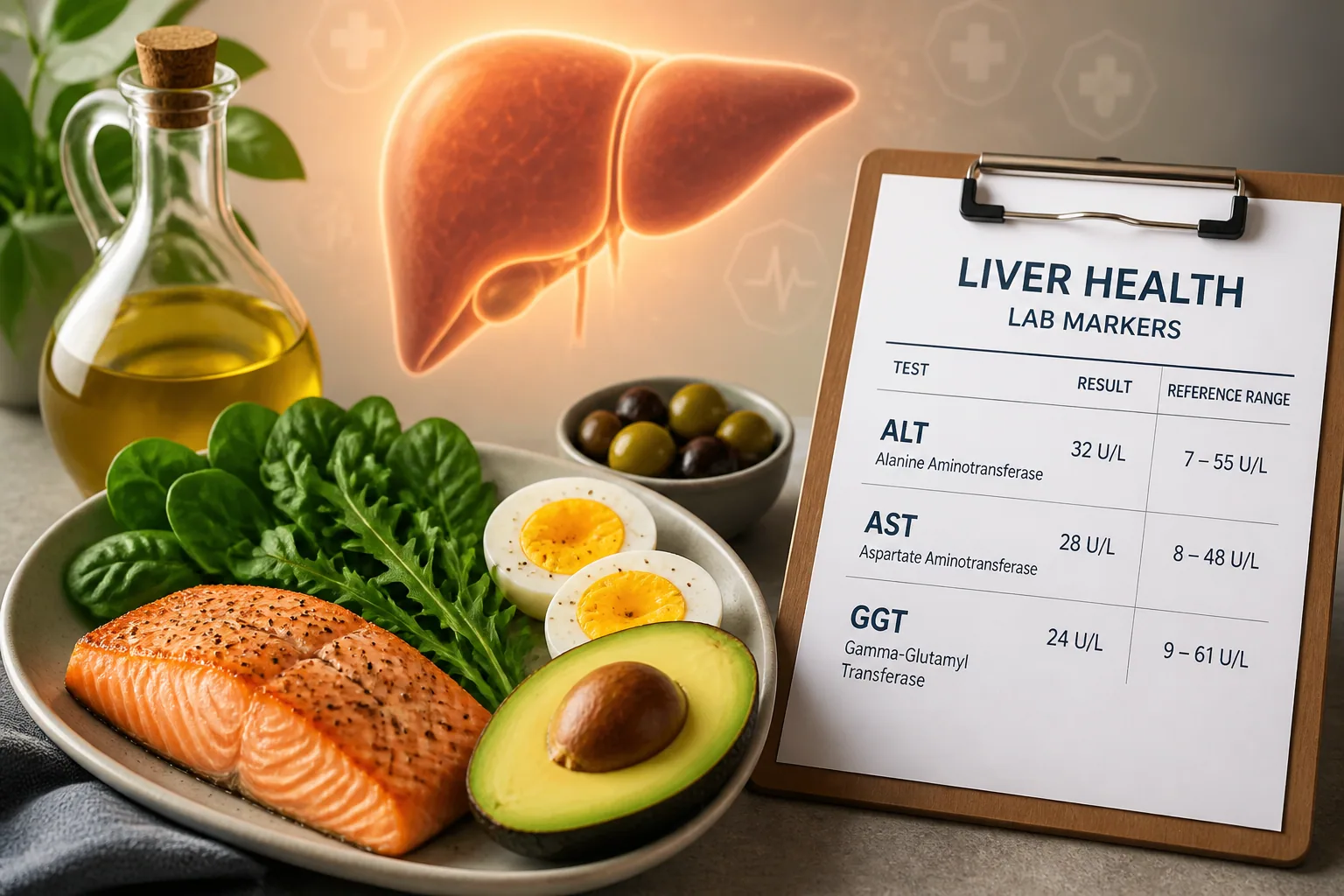
Keto & Liver Health: What New Research Says About Fatty Liver, Enzymes, and Safe Fat Intake
Keto has become one of the most talked-about diets for people trying to improve metabolic health, lose weight, and manage fatty liver. But in 2026, the conversation is more nuanced than ever. Some studies show that a ketogenic diet can lower liver fat and improve markers tied to MASLD and NAFLD, while other data suggest that certain people may see liver enzymes rise, especially when the diet is very high in saturated fat, low in fiber, or paired with other stressors.
If you are watching ALT, AST, or GGT, or you have been told you have fatty liver, the key question is not simply whether keto is “good” or “bad” for the liver. It is whether the version of keto you are doing is helping your metabolism, reducing liver fat, and fitting your overall health picture. The latest research shows that both outcomes are possible.
Why Keto and Liver Health Are Being Talked About More in 2026
The reason liver health and keto are linked so often right now is that researchers are looking more closely at metabolic dysfunction-associated steatotic liver disease, or MASLD, which is the newer term for what many people still call NAFLD. This condition is tightly connected to insulin resistance, excess liver fat, abdominal weight gain, and abnormal triglycerides.
A 2026 retrospective study of 102 patients with MASLD found that 12 weeks of ketogenic dieting reduced liver fat more than a calorie-restricted diet. The median change in controlled attenuation parameter, a marker used to estimate liver fat, was -62.0 dB/m with keto versus -36.0 dB/m with calorie restriction, with a significant difference between groups. At the same time, liver enzymes and inflammatory markers did not differ significantly. Source: https://www.frontiersin.org/journals/nutrition/articles/10.3389/fnut.2026.1790674/full
That is an important clue. It suggests keto may improve liver fat even when routine blood markers do not change dramatically. But it also means that bloodwork alone does not tell the whole story, and that liver response can be more complex than a single ALT result.
What ALT, AST, and GGT Actually Measure
ALT, AST, and GGT are common liver-related blood markers, but they do not all mean the same thing. ALT, or alanine aminotransferase, is often considered more specific to liver cell irritation. AST, or aspartate aminotransferase, can rise from the liver but can also come from muscle and other tissues. GGT, or gamma-glutamyl transferase, often rises when there is bile duct stress, oxidative stress, alcohol exposure, or metabolic strain.
These numbers are not diagnoses by themselves. They are clues. Elevated enzymes can reflect fatty liver, alcohol use, medication effects, recent hard exercise, rapid weight loss, inflammation, or other stressors. That is why a person can see improved body weight and triglycerides on keto while liver labs remain unchanged, or even move in the wrong direction for a period of time.
In other words, the labs need context. A small bump in ALT or AST does not automatically mean keto is harming the liver, but persistent or large changes should never be ignored.
What Elevated Liver Enzymes May Mean on a Ketogenic Diet
When someone starts keto and their liver enzymes rise, there are several possible explanations. One is that the liver is adapting to rapid changes in fuel use, especially if there has been a large shift in calories, carbohydrates, and fat oxidation. Another is that the overall diet composition is not ideal, especially if it is heavy in processed foods or saturated fat and low in fiber and micronutrients.
It is also possible that the enzyme change is unrelated to keto itself. Alcohol intake, over-the-counter medications, prescription drugs, supplements, undiagnosed gallbladder issues, hepatitis, recent intense exercise, or an underlying liver condition can all contribute. This is why the question should not be, “Did keto cause this?” but rather, “What else changed, and what is the full metabolic picture?”
Interestingly, a systematic review and meta-analysis of 20 randomized trials found that ketogenic diets significantly lowered ALT, AST, GGT, and ALP on average, though they did not significantly improve liver stiffness or fibrosis. It also found that longer interventions, especially beyond 12 weeks, showed smaller enzyme reductions, particularly in people with BMI 30 or higher. Source: https://pubmed.ncbi.nlm.nih.gov/41206623/?fc=None&ff=20251109100255&v=2.18.0.post22+67771e2
That finding matters because it shows the average effect of keto is often favorable, but not universally so. Individual response can vary based on baseline liver health, degree of insulin resistance, adherence, and food quality.
How Keto May Improve Fatty Liver in People With Insulin Resistance
For people with insulin resistance, hypertriglyceridemia, and excess liver fat, keto can work through several mechanisms. Lower carbohydrate intake tends to reduce insulin levels, which can decrease de novo lipogenesis, the process by which the liver makes new fat from excess carbohydrate. When insulin drops and glycogen stores fall, the body often uses more stored fat for energy, including fat stored in the liver.
That is why many studies report meaningful reductions in intrahepatic triglycerides, or IHTG, on ketogenic diets. A 6-day human study in people with excess liver fat found IHTG dropped by about 31 percent, from 10.3 percent to 7.1 percent, and GGT fell from about 48 to 38 U/L. ALP also declined, while ALT and AST did not change significantly. Source: https://pmc.ncbi.nlm.nih.gov/articles/PMC7132133/
A separate 8-week randomized controlled trial in MASLD found that a home-delivered ketogenic diet produced greater weight loss, better improvements in waist circumference, visceral fat, triglycerides, and AST compared with general lifestyle advice. However, steatosis measured by transient elastography did not differ significantly between groups. Source: https://pmc.ncbi.nlm.nih.gov/articles/PMC11743996/
So yes, keto can help fatty liver, especially when insulin resistance is part of the problem. But the benefits may show up first in body composition, triglycerides, and liver fat content, not always in dramatic short-term enzyme changes.
Why Some People See Higher Liver Enzymes on Keto
There are several reasons a ketogenic diet may coincide with higher ALT, AST, or GGT in some people. One is that the diet may be extremely high in fat overall, especially if the extra fat is coming from a lot of saturated fat. Animal research has suggested that very high-fat ketogenic diets can increase cholesterol, ALT, and inflammatory markers, though animal data do not always translate directly to humans. Source: https://link.springer.com/article/10.1186/s40795-025-01057-7
Human data also hint that the type of fat matters. In a study comparing ketogenic diets rich in saturated versus polyunsaturated fats, the polyunsaturated-fat version improved insulin sensitivity and did not raise total or LDL cholesterol, while the saturated-fat version did. Source: https://pubmed.ncbi.nlm.nih.gov/15070924/
A recent cross-sectional study of NAFLD patients found those following a ketogenic diet had higher ALT and AST than people eating low-fat or balanced diets, while ALP did not differ significantly. Source: https://www.frontiersin.org/journals/nutrition/articles/10.3389/fnut.2026.1794910/full
That does not prove keto is harmful by itself. It does suggest that in real-world settings, the way keto is done can matter a lot. People on keto may also differ in calories, alcohol intake, activity, body weight, and existing liver disease. If the diet is built around bacon, butter, cream, and ultra-processed keto snacks, the outcome may be very different from one based on fish, olive oil, nuts, seeds, eggs, avocado, and vegetables.
The Biggest Variables: Fat Sources, Calories, Fiber, and Metabolic Health
When liver labs worsen on keto, the biggest variables usually fall into four buckets: the quality of fat, total calorie intake, fiber intake, and the person’s metabolic starting point.
First, fat quality matters. A keto diet that leans heavily on highly processed omega-6-heavy oils or large amounts of saturated fat may create a less favorable lipid and inflammation profile than a diet built around more unsaturated fats. Second, calories matter. Chronic overeating can keep liver fat elevated even if carbohydrate intake is low. Third, fiber matters because it supports gut health, bile metabolism, satiety, and better post-meal glucose control. Fourth, baseline insulin resistance, obesity, and existing liver disease strongly affect how someone responds.
This is why two people can eat “keto” and have completely different results. One may see improved liver fat and enzymes, while another sees rising markers because the diet is too calorie-dense, too low in fiber, or too saturated-fat heavy for their physiology.
Best Fats for a More Liver-Friendly Keto Approach
If your goal is a more liver-friendly ketogenic diet, it makes sense to emphasize fats that are less likely to worsen cardiometabolic risk. That generally means prioritizing monounsaturated and polyunsaturated fats over large amounts of saturated fat. The Mayo Clinic and American Heart Association both recommend favoring mono- and polyunsaturated fats and limiting saturated fat; the AHA suggests keeping saturated fat to 6 percent or less of total calories. Source: https://www.mayoclinic.org/healthy-lifestyle/nutrition-and-healthy-eating/in-depth/fat/art-20045550
In practical terms, a liver-friendlier keto plate often includes olive oil, avocado, olives, nuts, seeds, salmon, sardines, trout, eggs in reasonable portions, and whole-food fats that come packaged with protein or fiber. It usually means using butter, coconut oil, heavy cream, and fatty processed meats more sparingly, especially if blood lipids or liver enzymes are already elevated.
A useful rule is to think whole food first, not fat first. Keto does not have to mean loading up on the fattiest possible version of every meal. It can simply mean keeping carbs low while choosing fats that support your overall metabolic health.
Why Fiber Still Matters Even on Low Carb
Fiber is one of the most overlooked pieces of keto, especially for people focused only on carbs. Even if you are keeping net carbs low, the kind of carbs you do eat matters. Non-starchy vegetables, chia seeds, flax, avocado, nuts, and berries in controlled amounts can add fiber without pushing you out of ketosis.
Fiber supports liver health indirectly by helping regulate blood sugar, improving satiety, feeding beneficial gut bacteria, and supporting regular bowel movements. That matters because the gut and liver are connected through the portal circulation. When gut health is poor, metabolic stress can increase, and that may worsen fatty liver risk over time.
Low fiber is one reason some people feel great initially on keto but later run into constipation, poor appetite regulation, or a more inflammatory food pattern. Building in fiber-rich keto foods can make the diet easier to sustain and potentially gentler on the liver.
Hidden Liver Stressors: Alcohol, Sleep, Medications, and Supplements
If liver enzymes are elevated, do not assume food is the only factor. Alcohol is a major one. Even moderate drinking can complicate a fatty liver picture, especially if enzymes are already abnormal. Sleep is another underappreciated factor, since poor sleep and sleep apnea are linked to insulin resistance and fatty liver progression.
Medication review also matters. Some prescriptions and over-the-counter drugs can affect liver enzymes, and some supplements can too. This does not mean they are unsafe across the board, but it does mean that a new rise in labs deserves a full review of what changed recently.
The same goes for rapid weight loss. While weight loss often improves fatty liver, very fast changes can sometimes temporarily shift liver markers. The overall trend over time is more important than a single snapshot.
How to Monitor Liver Health While Staying Ketogenic
If you want to do keto more safely while keeping an eye on liver health, it helps to track more than just body weight. A good monitoring plan usually includes ALT, AST, GGT, triglycerides, HDL, fasting glucose, fasting insulin if available, and sometimes imaging or fibrosis assessment if your clinician thinks it is needed.
What matters most is trend over time. If your enzymes were elevated before keto and gradually improve as weight, waist size, and triglycerides fall, that is reassuring. If they rise substantially, stay elevated, or come with symptoms, that deserves attention. It can also help to track how you feel, not just what the lab says.
A practical tip for staying consistent with food choices is to use a simple tool like Keeto - Keto Made Easy, which can help you quickly scan products, check net carbs, and keep your intake aligned with your keto goals: https://findthe.app/keeto-5m0vbj
When to Talk to a Healthcare Provider
You should talk to a healthcare provider if liver enzymes remain elevated on repeat testing, if they are rising over time, or if you have symptoms like jaundice, dark urine, pale stools, right upper abdominal pain, unexplained nausea, itching, or significant fatigue. You should also seek medical input if you have known liver disease, heavy alcohol use, diabetes, or take medications that affect the liver.
It is especially important to get evaluated if you are losing weight very rapidly, if your enzymes are more than mildly abnormal, or if you are unsure whether your symptoms are coming from the liver, gallbladder, muscle, or something else. Keto can be part of a healthy strategy, but it should not be used to dismiss warning signs.
A Safer, Smarter Way to Do Keto if You’re Concerned About Your Liver
If liver health is on your mind, the safest version of keto is usually the one that is less extreme and more whole-food based. That means keeping carbs low, but not turning the diet into an unlimited-fat challenge. It means choosing olive oil, avocado, nuts, seeds, fish, and other unsaturated fats more often. It means including plenty of low-carb vegetables and enough fiber to support digestion and metabolic health.
It also means avoiding chronic overeating, limiting alcohol, protecting sleep, and reviewing medications and supplements with a professional when needed. For many people with insulin resistance and fatty liver, keto can be a useful tool. For others, especially those with rising enzymes or a more complex liver history, a modified low-carb approach may be better tolerated.
The newest research points to a simple conclusion: keto is not automatically bad for the liver, and it is not automatically protective either. The details matter. If the diet helps lower liver fat, improve insulin sensitivity, and support sustainable habits, it may be a strong option. If it is built on poor fat choices, too many calories, and too little fiber, it may work against the very goals you are trying to achieve.