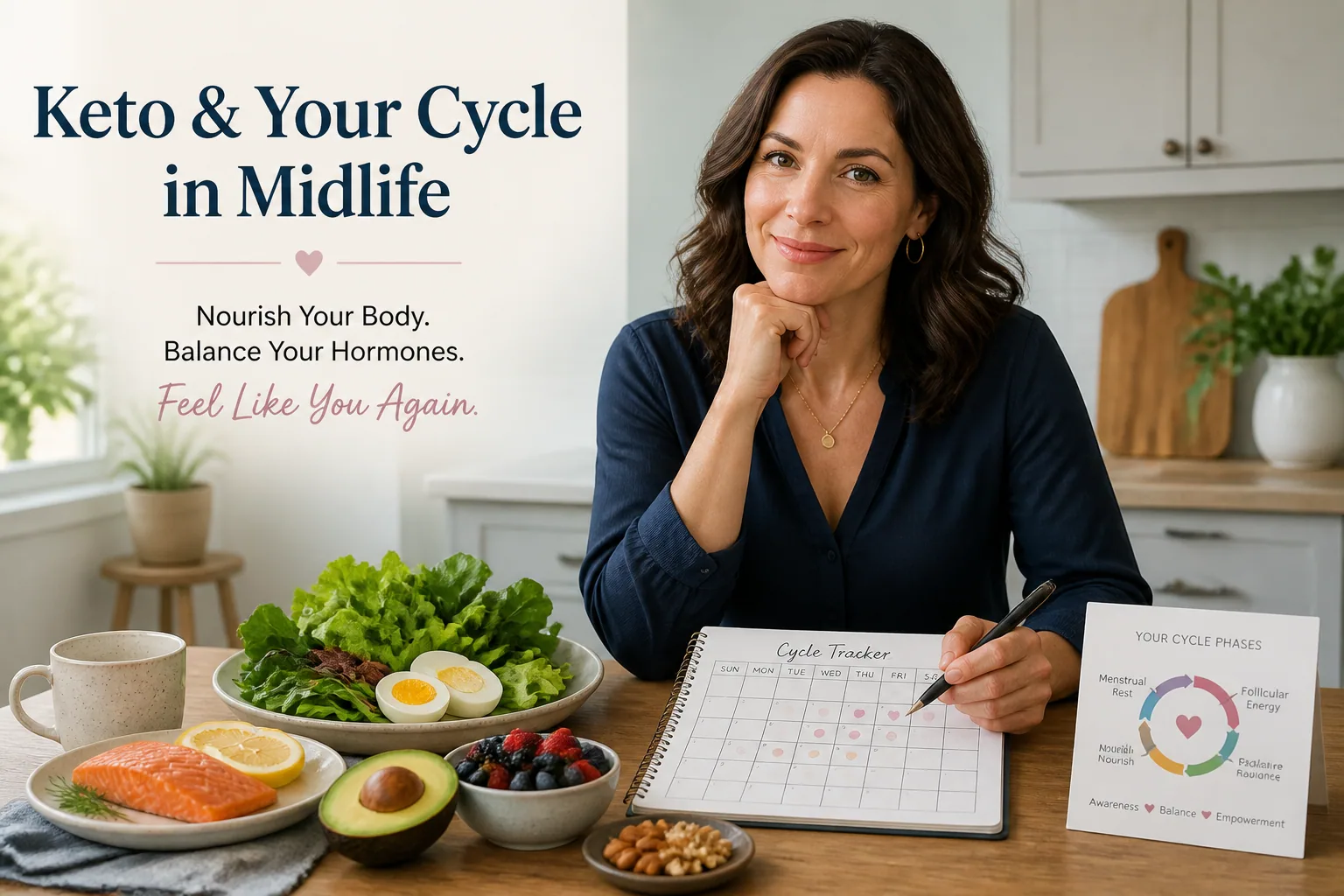
Keto & Female Hormones: How to Thrive Through Your Cycle and Every Life Stage
Keto can be an excellent tool for some women, but it does not always feel the same from one body to another, or even from one week to the next. That is because female hormones are not static. They shift across the menstrual cycle, change during perimenopause, and settle into a new rhythm after menopause. Those shifts can affect insulin sensitivity, hunger, mood, recovery, sleep, and even how quickly fat loss shows up on the scale.
For many women, the problem is not keto itself. The problem is trying to follow a rigid version of keto that ignores hormone changes, stress load, and life stage. A one-size-fits-all approach can backfire when your body needs more carbs, more calories, more electrolytes, or simply more recovery. The goal is not to force your body into compliance. The goal is to support it well enough that keto becomes sustainable.
Why Keto Can Feel Different for Women
Women are often told to just “stay consistent” and push through hunger, fatigue, or stalled weight loss. But consistency only helps when the plan matches physiology. Female hormones influence how the body handles glucose, stress, appetite, and energy expenditure. That means the same keto meal plan can feel easy in one phase of the cycle and miserable in another.
Research supports this idea. In the BioCycle study of 257 healthy, regularly menstruating women, insulin resistance rose from about 1.35 in the mid-follicular phase to about 1.59 in the early luteal phase, then stayed somewhat elevated in the late luteal phase. In plain terms, insulin sensitivity tends to dip after ovulation, which can change how women respond to carbohydrate restriction and calorie deficits across the month. A separate continuous glucose monitoring study across 149 menstrual cycles also found that median glucose levels were lowest in the late follicular phase, then increased in the luteal phase and peaked before menstruation, independent of BMI and weight. Those findings help explain why some women feel great on stricter keto at certain times, then suddenly feel more inflamed, hungry, or flat before their period. Sources: https://pmc.ncbi.nlm.nih.gov/articles/PMC2999972/ and https://www.nature.com/articles/s41746-023-00884-x
This is why the best keto plan for women is not always the lowest-carb plan. It is the plan that adapts to changing hormone needs without abandoning the core benefits of lower-carb eating.
How Female Hormones Influence Energy, Hunger, and Fat Loss
Estrogen and progesterone play a major role in how a woman feels on keto. Estrogen generally supports better insulin sensitivity and may make lower-carb eating feel easier during some parts of the cycle. Progesterone, which rises after ovulation, can increase body temperature, appetite, and perceived stress, and many women notice more cravings, worse sleep, or lower exercise tolerance during this phase.
That does not mean progesterone is the enemy. It means your body is doing more work. When progesterone rises, many women naturally need more fuel, more rest, or more sodium and potassium to feel normal. If those needs are ignored, the symptoms can look like “keto fatigue,” when in reality the body is asking for support.
Fat loss can also slow temporarily when hormones shift. Water retention before menstruation can mask progress, and appetite increases can make a tight calorie deficit feel much harder. Sometimes the scale is not reflecting fat gain at all. It is reflecting normal hormonal changes in fluid balance and glucose handling.
Keto Through the Menstrual Cycle: What Changes by Phase
Instead of thinking about keto as a fixed carb number every single day, it can help to think in phases. Your body may tolerate lower carbs better in the first half of the cycle, then need a little more flexibility in the second half. This does not mean abandoning keto. It means using it intelligently.
The two main phases to pay attention to are the follicular phase, which starts on day one of your period and lasts until ovulation, and the luteal phase, which follows ovulation and continues until menstruation begins again. These phases often feel very different in terms of appetite, energy, sleep, and exercise recovery.
Follicular Phase: When Lower-Carb Keto May Feel Easier
During the follicular phase, estrogen tends to rise and many women experience steadier energy, better workout performance, and stronger insulin sensitivity. This is often the easiest time to keep carbs lower if you enjoy a more classic keto approach. Cravings may be lower, hunger may feel more manageable, and mental clarity often improves.
This can be a good time to lean into your routine. You may find it easier to keep carbs low, maintain a modest calorie deficit if fat loss is your goal, and complete more demanding workouts. Many women tolerate fasting better during this phase too, though fasting is not required for good results. The point is simply that the body often feels more metabolically flexible before ovulation.
If you are tracking results, the follicular phase can be a useful time to assess whether your keto plan is actually working. Are energy levels stable? Is hunger reasonable? Are workouts recovering well? If yes, the plan may be a good fit. If not, it may be too aggressive even when hormones are at their most favorable.
Luteal Phase: When to Increase Carbs, Calories, or Electrolytes
The luteal phase is where many women run into trouble with strict keto. After ovulation, progesterone rises and insulin sensitivity often declines a bit. Hunger can increase, cravings can get stronger, sleep can become lighter, and exercise can feel harder. For some women, staying ultra low-carb during this phase is not sustainable.
This is often the best time to experiment with slightly higher carbs, a small calorie increase, or a stronger electrolyte focus. That does not mean eating high-carb. It may mean adding enough carbs from whole foods to support training, mood, and sleep while still staying generally low-carb. For some women, that flexibility is the difference between staying consistent and bingeing later.
Electrolytes matter here as well. Keto increases sodium and potassium loss because lower insulin causes the kidneys to excrete more of these minerals. Adequate magnesium and calcium are important too. Non-pregnant women’s potassium needs are about 2.6 g per day, and many women on keto feel much better when sodium, potassium, and magnesium are intentionally replaced instead of left to chance. Source: https://www.carbmanager.com/article/xtqunbeaacaacgdw/importance-of-electrolytes-on-keto
If you are especially prone to PMS, headaches, fatigue, or constipation before your period, those symptoms may be magnified by low electrolytes rather than carbs alone. Sometimes the fix is not to quit keto. Sometimes it is to add salt, mineral-rich foods, and enough fluids.
Carb Cycling on Keto: When It Helps and When It Hurts
Carb cycling can be useful for some women, especially those who train hard, feel depleted in the luteal phase, or notice that very low-carb eating harms sleep or mood. Used well, it can provide more fuel when the body appears to need it and return to lower-carb eating when it feels easier again.
It can help when it is used strategically, not emotionally. For example, a woman might stay stricter low-carb during the follicular phase, then increase carbs modestly around the luteal phase or harder training days. That approach can support recovery without turning every week into a free-for-all.
Carb cycling hurts when it becomes random, overly high, or used as a cycle of restriction and compensation. If “carb cycling” means under-eating all week and then overeating at night, the issue is usually not the carbs. It is the lack of structure, insufficient protein, or chronic stress. The best version of carb cycling still respects total calories, protein, and food quality.
Best Protein and Fat Choices for Hormone Support
Protein is one of the most underrated tools for women on keto. It supports lean mass, helps control appetite, and is especially important during perimenopause and menopause when muscle loss becomes easier and recovery can slow down. After menopause, women are more prone to muscle loss, abdominal fat gain, slower metabolism, and sarcopenia, and higher protein intake around 1.0 to 1.2 g/kg/day can help preserve lean mass and metabolic health when paired with resistance training. Sources: https://www.mdpi.com/2673-9488/4/3/16 and https://mcpress.mayoclinic.org/women-health/how-much-protein-do-you-really-need-after-menopause/
For most women, the first keto adjustment should not be “eat even less.” It should be “make sure protein is high enough.” Choose quality sources like eggs, fish, poultry, Greek yogurt if tolerated, tofu, tempeh, lean meats, and protein-rich low-carb options that you can actually sustain. Protein helps protect your body from the metabolic slowdown that can happen when calories are too low for too long.
Fat matters too, but keto does not require forcing fat intake higher than needed. Healthy fats like olive oil, avocado, nuts, seeds, fatty fish, and olives can help with satiety and hormone support, but adding excessive fat on top of sufficient protein can stall fat loss. For many women, keto works best when protein is prioritized, carbs are adjusted thoughtfully, and fat is used to satisfy hunger rather than chase arbitrary targets.
The Hidden Risks of Going Too Low-Carb or Too Low-Calorie
One of the most common mistakes women make on keto is combining very low carbs with very low calories for too long. That can create a perfect storm of fatigue, irritability, poor sleep, stalled cycles, reduced training performance, and stronger cravings later. If the body interprets the diet as a threat, it can reduce output in ways that look like stubborn weight loss resistance.
The risk is not limited to short-term discomfort. Hormone health can also be affected. A randomized crossover trial found that healthy normal-weight participants eating keto at around 15 percent carbs for 3 weeks had lower triiodothyronine, or T3, than when eating a higher-carb diet, even when calories were the same. That suggests keto can suppress active thyroid hormone independent of weight loss. Source: https://pmc.ncbi.nlm.nih.gov/articles/PMC9165850/
This matters because low thyroid output can show up as fatigue, cold intolerance, constipation, hair shedding, dry skin, and slower progress. If you are eating very little, training intensely, sleeping poorly, and still trying to push harder, your body may be signaling that the overall load is too much.
Thyroid, Reproductive Hormones, and Other Signs You Need to Adjust
Your body gives warning signs when keto becomes too aggressive. Common red flags include persistent fatigue, feeling cold all the time, irritability, insomnia, hair loss, missed periods, worsening PMS, low libido, plateauing recovery, and obsessive food thoughts. These are not badges of honor. They are signals that the current plan may need to change.
There is also evidence that shifting out of ketosis can change reproductive and endocrine biomarkers in healthy premenopausal women, including SHBG, which suggests female hormone regulation is sensitive to metabolic state. Source: https://pubmed.ncbi.nlm.nih.gov/41586225/
If your period becomes irregular, disappears, becomes much heavier, or your symptoms worsen on strict keto, it is worth reviewing total intake, stress, sleep, and overall carbohydrate restriction. For some women, the best move is to increase carbs slightly. For others, the key is simply to stop under-eating. Either way, the answer is usually adjustment, not doubling down.
Keto in Perimenopause: Managing Mood, Sleep, and Weight Changes
Perimenopause can make keto feel unpredictable. Estrogen and progesterone begin to fluctuate more dramatically, which can affect mood, sleep, body temperature, hunger, and where fat is stored. Many women in this stage become more sensitive to stress and less tolerant of aggressive dieting.
That means a very strict keto approach may backfire if it increases insomnia, intensifies hot flashes, or creates too much restriction. A more flexible low-carb plan often works better. Protein becomes even more important, strength training matters more than ever, and sleep quality deserves serious attention because poor sleep raises cravings and reduces metabolic resilience.
If you are in perimenopause, keto should feel supportive, not punishing. The win is not perfection. The win is steadier energy, better appetite control, improved body composition, and enough flexibility to keep going for months and years, not just days.
Keto in Menopause: Supporting Metabolic Health Without Overrestriction
After menopause, insulin resistance and abdominal fat gain can become more common, which is one reason many women explore keto during this stage. Lower-carb eating can help simplify blood sugar control and reduce appetite swings. But menopause also increases the importance of resistance training, protein, and recovery, because muscle becomes harder to preserve and easier to lose.
That is why protein targets deserve more attention in menopause than many keto plans give them. The combination of adequate protein, enough total calories, and regular resistance training can support strength, metabolic rate, and long-term independence. Keto can fit into that picture well when it does not become too restrictive.
A practical menopause-friendly keto approach often looks like this: prioritize protein, keep carbs moderate to low rather than extremely low if needed, include enough fiber-rich vegetables, and avoid using food restriction as the main strategy for controlling weight. This is about supporting the body’s new hormonal baseline, not fighting against it.
How Stress, Cortisol, and Poor Sleep Can Undermine Results
Stress can make keto feel ineffective even when the food plan is solid. High cortisol can increase cravings, disrupt sleep, promote water retention, and make blood sugar less predictable. If you are under-slept and over-stressed, your body may react to keto as one more stressor rather than a helpful tool.
Sleep is especially important because it shapes hunger hormones, recovery, and glucose regulation. If you sleep poorly, you may wake up more hungry, crave more carbohydrates, and feel less resilient in workouts. That is why a woman can be “doing keto right” on paper and still not see the results she expects.
Before cutting carbs lower, ask whether the real issue is sleep debt, work stress, emotional overload, or too much training. In many cases, better recovery produces better fat loss than more restriction does.
A Smarter, More Flexible Keto Approach for Women
A sustainable keto strategy for women should look more like a framework than a rulebook. In the follicular phase, you may feel great with lower carbs and a slightly tighter routine. In the luteal phase, you may do better with more carbs, more electrolytes, and a little more food overall. In perimenopause and menopause, protein, strength training, sleep, and stress management often matter just as much as carb count.
If you want to make keto easier to manage day to day, tools that reduce mental load can help. For example, Keeto - Keto Made Easy can make grocery decisions simpler by letting you scan products and instantly see whether they fit your carb target, which is especially useful when you are adjusting intake by cycle phase or life stage. You can learn more here: https://findthe.app/keeto-5m0vbj
The most important takeaway is this: your hormones are not obstacles to overcome. They are signals to respond to. Keto tends to work best for women when it is flexible, nutrient-dense, protein-forward, and matched to the reality of the menstrual cycle, perimenopause, menopause, stress, and recovery. That is how you build results that last.