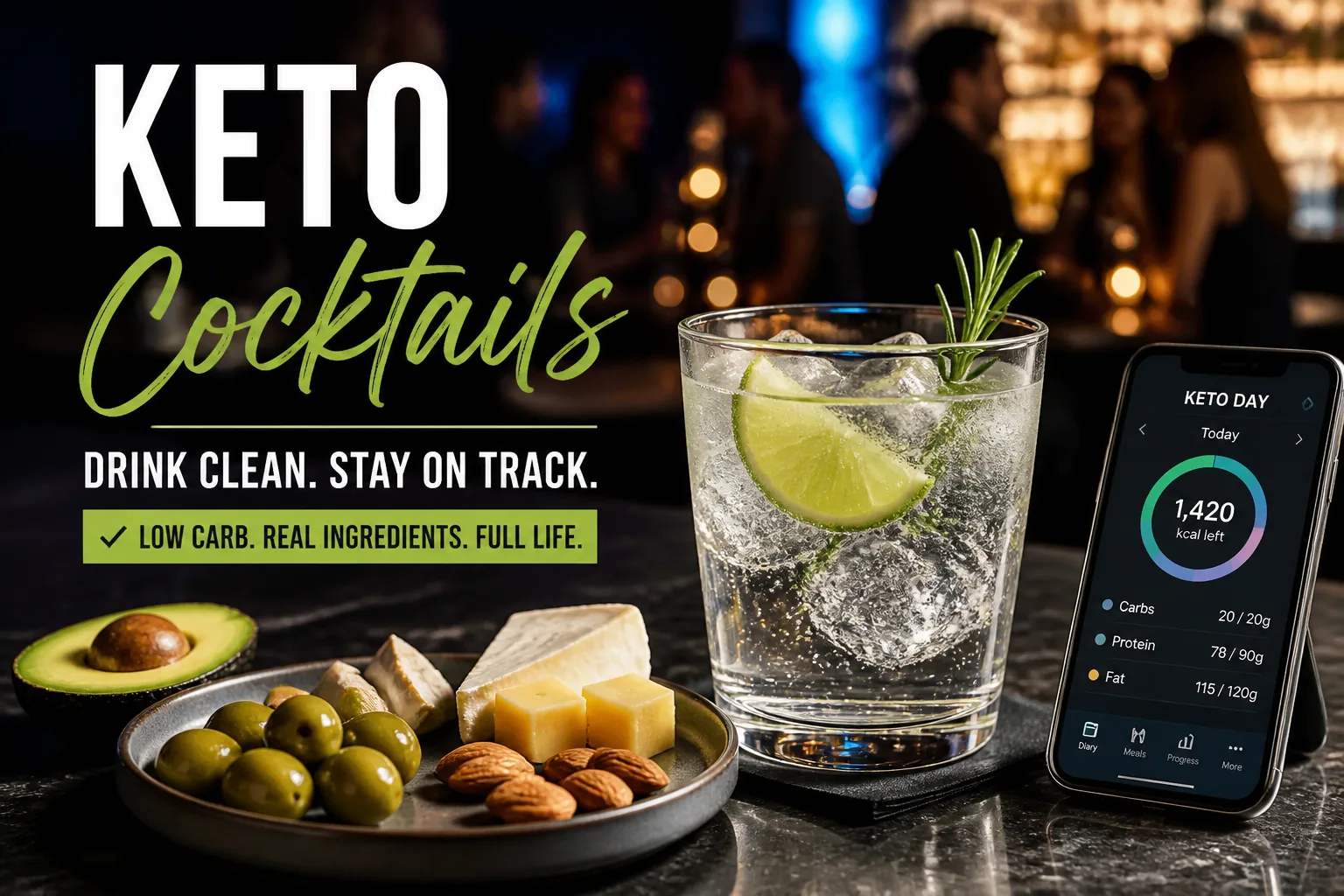
Keto & Cheers: A Smart Guide to Low-Carb Alcohol Without Sabotaging Your Ketosis
If you follow keto, alcohol can feel oddly complicated. One friend says a glass of wine is fine. Another says any drink will kick you out of ketosis. The truth is more nuanced than that. You can enjoy alcohol occasionally and still stay on track, but the type of drink, the mixer, the timing, and the amount all matter.
This guide breaks down what actually happens in your body when you drink on keto, which drinks fit better into a low-carb lifestyle, and how to avoid the common cocktail mistakes that quietly add up fast. The goal is not perfection. It is making smarter choices so one night out does not turn into a full week of damage control.
Why Alcohol on Keto Feels So Confusing
Alcohol gets confusing on keto because it behaves differently from food macros. Carbs can raise blood sugar. Fat can support satiety. Protein can help preserve muscle. Alcohol, however, is handled as a toxin first. Your body does not treat it like a normal fuel source, which means it can temporarily change how you burn energy.
That is why people often notice two things at once: they may stay technically within their carb limit, yet still feel like fat loss slows down after drinking. Both can be true. You might not leave ketosis in the strict sense, but your body may pause fat burning while it clears alcohol from your system.
What Happens in Your Body When You Drink on Keto
When you consume alcohol, your body metabolizes ethanol first through the ADH pathway, turning it into acetaldehyde and then acetate. During that process, oxidation of both fat and carbohydrates is reduced, which means your body essentially puts other fuel burning on hold until the alcohol is processed. Research from PMC explains that ethanol is metabolized first and that fat and carb oxidation both decline while that happens: https://pmc.ncbi.nlm.nih.gov/articles/PMC6527027/
This matters because alcohol is not calorie free. It provides about 7 calories per gram, which is more than carbs or protein at 4 kcal per gram, though still less than fat at 9 kcal per gram. So even if a drink does not bring in many carbs, it can still bring in a meaningful amount of energy. That is one reason alcohol can quietly affect progress even when your carb count looks fine: https://scienceinsights.org/how-alcohol-affects-weight-loss-and-fat-burning/
There is also a timing effect. Even moderate alcohol intake can reduce whole-body fat burning by roughly 30 to 40 percent over a 24-hour period, according to the research summary cited above. That does not mean one drink ruins your week. It does mean alcohol is not a neutral choice if fat loss is your priority.
Does Alcohol Kick You Out of Ketosis or Just Slow Fat Burning?
Usually, the more accurate answer is that alcohol is more likely to slow fat burning than to instantly kick you out of ketosis. Ketosis is mainly driven by keeping net carbs low enough that your body produces ketones. Pure spirits and some low-carb drinks contain very few carbs, so they do not automatically break ketosis on their own.
But alcohol still changes the picture. Since your body prioritizes clearing alcohol first, it temporarily deprioritizes fat oxidation. So if your goal is weight loss, body recomposition, or simply more predictable ketosis, the biggest issue is often not the carbs in the drink itself. It is the metabolic pause that happens while your body handles the alcohol.
There is also the behavioral side. Alcohol can lower inhibitions, make you more likely to snack, and make it easier to overdo mixers, bar food, or late-night desserts. So the direct metabolic effect and the real-world eating effect can combine into a bigger setback than people expect.
The Best Low-Carb Alcohol Choices: Spirits, Dry Wines, and More
If you want the easiest keto-friendly options, start with distilled spirits. Vodka, whiskey, gin, tequila, and brandy contain negligible to zero carbs in their pure form, as long as you are not adding sugary mixers. A standard 1.5-ounce shot usually lands around 100 calories depending on proof, so they are low-carb but still calorie-dense enough to respect your intake: https://www.healthline.com/health/alcohol-and-weight-loss
Dry wines are another solid choice. A typical 5-ounce pour of dry red or white wine generally has around 4 grams of net carbs, while sparkling brut wines or champagne often come in a little lower, sometimes around 2 to 3 grams. If you enjoy wine and want something more controlled than a cocktail, dry wine can fit nicely into a keto plan when portioned carefully: https://diatribe.org/sites/default/files/diaTribe Diabetes Friendly Cocktail Recipes.pdf
If you prefer beer, you will need to be much more selective. Regular beers typically contain 10 to 15 grams of carbohydrates per 12-ounce serving, which can use up a large portion of a strict keto daily carb allowance very quickly. That is why beer is often the category that surprises people the most: it feels light, but it can be very carb-heavy: https://biologyinsights.com/is-beer-keto-friendly-regular-vs-low-carb-options/
Popular Brand Examples for Keto Drinkers
Brand examples make the decision easier in real life. If you are ordering at a bar or shopping for a party, low-carb labels help a lot. Michelob Ultra is often cited as a lighter beer choice with about 2.6 grams of carbs and 95 calories per 12-ounce serving. Miller Lite comes in around 3.2 grams of carbs and 96 calories for the same amount: https://scienceinsights.org/what-is-the-healthiest-light-beer-to-drink/
Corona Premier is another lower-carb option at roughly 2.6 grams of carbs and about 90 calories per 12-ounce serving, while Coors Light is closer to 5 grams of carbs and about 102 calories. If you want a beer-style option but still want to stay relatively low on carbs, these are the kinds of numbers to look for: https://scienceinsights.org/what-is-the-healthiest-light-beer-to-drink/
For the lightest end of the beer spectrum, Budweiser Select 55 has about 1.9 grams of carbs and 55 calories per 12-ounce serving, though the tradeoff is lower alcohol content at about 2.4 percent ABV. That can be useful if you want something more session-friendly without giving up your carb budget too quickly: https://vinepair.com/articles/best-keto-low-carb-beers/
Light Beers and Hard Seltzers: Which Ones Fit Your Macros?
Hard seltzers are popular for keto because they are usually simple and predictable. Most U.S. hard seltzers have about 1 to 2 grams of carbs per 12-ounce can and around 100 calories. Some of the slimmest options, like Michelob Ultra Organic Seltzer and Corona Hard Seltzer, are reported at around 0 grams of carbs, though calories can vary slightly: https://www.carbmenot.com/blog/low-carb-hard-seltzer
Compared with regular beer, hard seltzers usually give you more breathing room. That can matter if you plan to have more than one drink. Still, zero carb does not mean zero impact. Alcohol is still alcohol, and your body still processes it first.
If you are choosing between a light beer and a seltzer, the better pick often comes down to your macro budget and how much flavor satisfaction you want. A light beer may feel more substantial, but a seltzer is often easier to fit into a strict 20-gram carb day.
The Biggest Carb Traps in Mixers and Cocktails
This is where a lot of keto drinkers get tripped up. The base spirit may be carb-free, but the mixer can turn it into a sugar bomb. Fruit juice is one of the biggest offenders. So are syrups, sweet and sour mix, regular cola, and tonic water. Tonic sounds harmless, but it often contains enough sugar to matter fast.
The problem is that cocktails can hide carbs in plain sight. A margarita, mojito, rum punch, or vodka cranberry may sound like a simple drink order, but depending on the recipe, the sugar content can be high enough to wipe out a strict day of keto. That is why cocktail ingredients matter just as much as the alcohol itself: https://www.healthline.com/health/alcohol-and-weight-loss
Another trap is the idea that a drink is safe because it tastes tart or “not too sweet.” Tart does not always mean low carb. Many bar recipes use juice or premade mixers to create that flavor.
Smarter Mixer Swaps for Low-Carb Drinks
The easiest keto swap is soda water or sparkling water with a spirit. Add lime, lemon, or a small splash of fresh citrus for flavor without turning your drink into dessert. Diet soda and other zero-sugar mixers can also work if you tolerate them well and want something more familiar.
If you like cocktails with a little bite, try vodka soda, gin and soda, tequila with soda and lime, or whiskey on the rocks with a citrus peel. Dry wine and brut sparkling wine are also simple choices when you want to avoid mixing issues altogether.
A good rule is to ask yourself whether the mixer is doing any real nutritional work. If it is mostly sugar, juice, or syrup, it is probably not keto-friendly. If it is mostly water, bubbles, or a zero-sugar mixer, you are in much safer territory.
How to Fit Alcohol Into Your Keto Macros
The practical way to fit alcohol into keto is to treat it like part of your daily budget, not a free add-on. If you track macros, log your drink before you order it. That helps you see whether the drink fits comfortably or whether it will crowd out dinner, snacks, or your carb allotment for the day.
This is where a tool like Keeto - Keto Made Easy can be genuinely helpful for everyday decision-making, especially when you are scanning products or checking carb counts quickly: https://findthe.app/keeto-5m0vbj
Because alcohol has calories but little nutritional value, it is easy for it to sneak into your intake without giving much back. If your target is fat loss, consider a simple tradeoff mindset. For example, one or two low-carb drinks may fit, but a whole evening of cocktails plus snacks may crowd out the deficit you were trying to maintain.
What to Eat Before, During, and After Drinking
Eating before drinking can make a big difference. When alcohol is consumed on an empty stomach, it peaks faster. When you drink with food, especially with fats and protein, absorption slows and peak blood alcohol concentration is delayed. That can help you feel more in control and reduce the chance of overdoing it: https://www.ncbi.nlm.nih.gov/books/NBK20360/
Before drinking, a keto-friendly meal might include protein, healthy fats, and non-starchy vegetables. Think salmon with greens, chicken with avocado, or a burger bowl without the bun. The goal is not to “soak up” alcohol completely. It is to avoid hitting your bloodstream on an empty stomach.
During drinking, keep a few basics in mind. Sip water between drinks. Avoid grazing on chips, fries, and breaded appetizers. If food is part of the plan, choose things like cheese, olives, wings without sugary sauce, or a bunless burger.
After drinking, the biggest priorities are hydration, electrolytes, and sleep support. Alcohol can leave you more depleted than you expect, and on keto that can feel even stronger because you may already be paying attention to sodium, potassium, and magnesium.
Drinking Around Workouts, Fasting, and Social Events
If you train regularly, it is smart to think about alcohol in relation to workouts. Drinking right before a hard session is usually not ideal. Performance can suffer, hydration can worsen, and recovery may be less effective. If you are planning to drink, it is often better to keep your workout earlier in the day or on a different day.
Fasting and alcohol can also be a tricky combination. If you are doing intermittent fasting, drinking on an empty stomach can intensify alcohol’s effects. That means faster absorption, a stronger buzz, and less room for error. Many keto followers find it easier to break their fast with a proper meal before a social event if alcohol will be involved.
At social events, the best strategy is often planning ahead. Decide how many drinks you actually want, what kinds they will be, and what you will eat alongside them. Having a rough plan makes it easier to stay flexible without drifting into impulse choices.
Hangovers, Sleep, Electrolytes, and Keto Recovery
Keto and alcohol can combine in ways that make the next morning feel rough if you are not prepared. Poor sleep, dehydration, and low electrolytes can all make hangovers feel worse. Since alcohol is already a diuretic, being mindful about fluids matters even more on a low-carb diet.
Water is the first step, but electrolytes are often the missing piece. Sodium, potassium, and magnesium support fluid balance and can help you feel more normal the next day. A salty broth, electrolyte drink without added sugar, or a well-seasoned meal can help you reset.
Sleep also deserves attention. Alcohol may make you feel sleepy at first, but it can disrupt sleep quality later in the night. That means recovery can suffer even if your carb intake stayed perfect. If you know you have a busy day ahead, it may be worth keeping alcohol to a minimum or skipping it altogether.
A Simple Cheat Sheet for Ordering Keto-Friendly Drinks Anywhere
Here is the simplest way to order without overthinking it. First, choose a base that is naturally low carb. Spirits, dry wine, brut sparkling wine, light beer, and most hard seltzers are your best bets. Second, avoid sugary mixers, juice, and regular tonic. Third, keep the drink count realistic for your goals.
Good orders include vodka soda with lime, tequila soda, gin and soda, whiskey neat, dry red wine, brut champagne, Michelob Ultra, Miller Lite, Corona Premier, or a low-carb hard seltzer. If you want a second round, repeat the first good choice instead of improvising with a sugary cocktail.
The big takeaway is simple: keto and alcohol can coexist if you stay intentional. You do not need to be perfect, but you do need to be aware. Choose low-carb drinks, respect the fact that alcohol pauses fat burning, and build a little structure around food, hydration, and timing. That way, you can still enjoy the night without feeling like you have thrown your progress away.