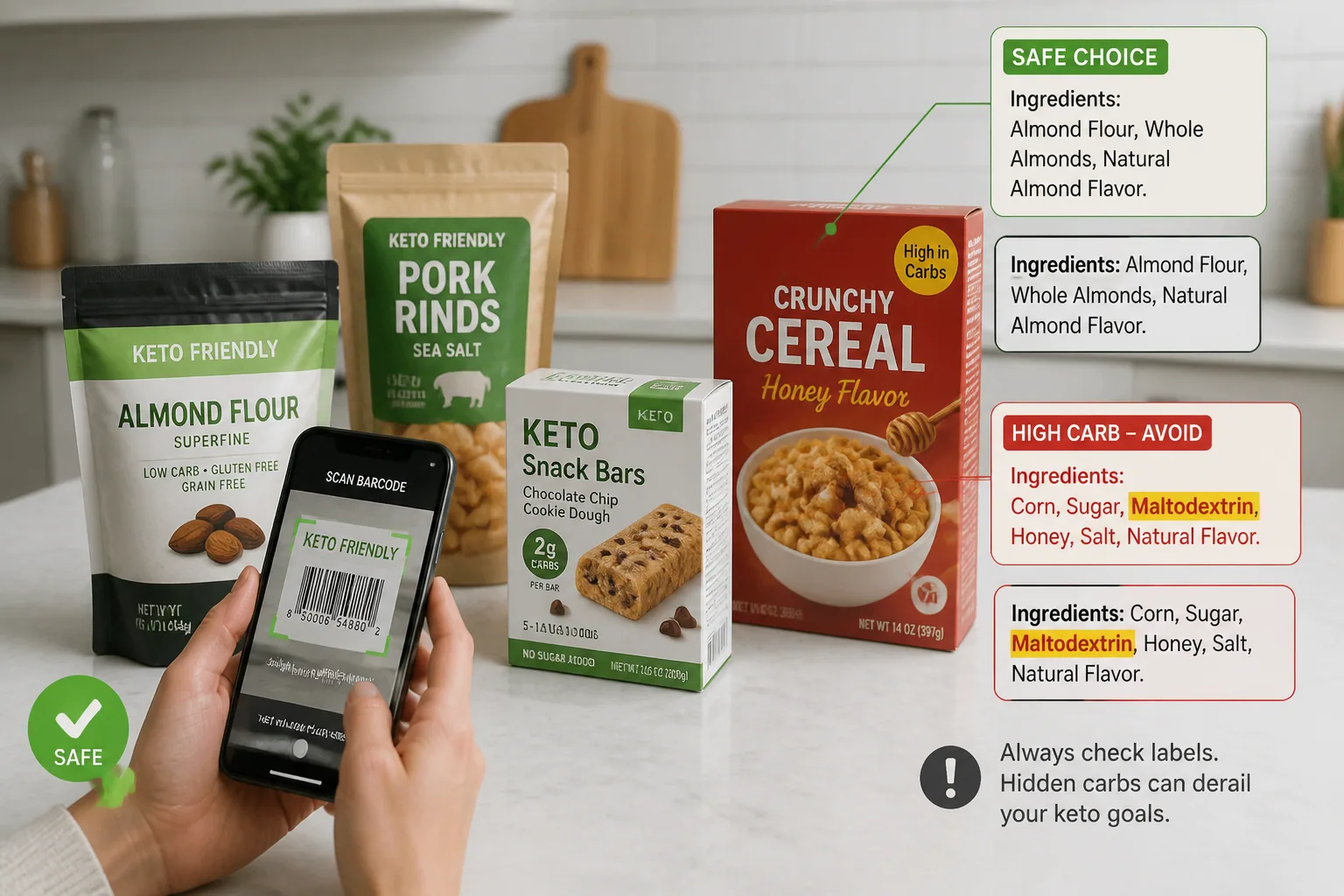
Hidden Carbs: How Common Keto ‘Safe’ Foods Could Be Sabotaging Your Macros
If you are new to keto, one of the fastest ways to get frustrated is by trusting foods that look safe on the front of the package but quietly push you over your carb limit. That is exactly where hidden carbs become a problem. A condiment, a flavored butter, a deli meat, or even a “sugar-free” supplement can carry starches, fillers, sweeteners, or thickening agents that add up faster than most people expect.
The issue is not just that these ingredients exist. It is that they often hide in plain sight, under marketing claims like low-carb, sugar-free, no added sugar, or fruit-based. For keto beginners and macro-trackers, that can mean the difference between staying in ketosis and wondering why progress has stalled.
Why Hidden Carbs Matter More Than Most Keto Beginners Realize
On keto, even small carb leaks matter. If your target is 20 grams a day, a few teaspoons of sauce here, a flavored medicine there, and a deli meat with added starch can consume a big chunk of your budget before lunch. The real challenge is that hidden carbs are rarely dramatic on their own. They show up in tiny amounts across many “safe” foods, which makes them easy to ignore and hard to track accurately.
This is why keto often feels straightforward in theory but complicated in practice. A food can fit the diet in one version and be completely different in another. One mustard or sauce may be close to zero net carbs, while a nearly identical-looking product contains added starches or syrups that raise the total quickly. The label, not the marketing, is what matters.
The Everyday ‘Keto-Safe’ Foods Most Likely to Surprise You
Some of the most common hidden-carb traps are the foods people stop questioning once they start keto. Sugar-free sauces are a big one. So are flavored butters, deli meats, condiments, supplements, chewables, and certain over-the-counter medicines. They all seem harmless, but they are often formulated for taste, texture, shelf stability, or manufacturing ease, not for low-carb eating.
Condiments are especially tricky because many brands marketed as sugar-free or low-carb still use modified food starch, maltodextrin, corn starch, syrup solids, or fruit juice concentrates. The Primal and Walden Farms both point out that these ingredients can significantly increase total carbs even when the front label sounds keto-friendly. You can read more here: https://www.theprimal.com/blog/sugar-free-ketchup-and-other-sugar-free-sauces and https://waldenfarms.com/blogs/blog-posts/hidden-carbs-in-your-sauces
Deli meats are another common surprise. Some options have zero carbs, while others include sugar, wheat protein, or starch-based fillers that raise the count. According to the NIH deli selections chart, roast beef or turkey breast often come in at 0 grams per serving, while a smoked buffet ham serving can be much higher. A separate ham specification sheet also lists 5 grams total carbs per serving due to ingredients like cane sugar and tapioca starch. Sources: https://ors.od.nih.gov/pes/dats/food/Documents/DeliSelections.pdf and https://www.webstaurantstore.com/documents/nutrition/next_gen_sliced_deli_ham_specifications.pdf
Sugar-Free Doesn’t Always Mean Low Carb
The phrase sugar-free is one of the most misleading claims in keto shopping. It does not automatically mean carb-free, and it definitely does not mean safe for every macro goal. Sugar alcohols, starches, and fiber blends can still affect your total carb count, especially when the product is processed or heavily flavored.
This matters most with sauces and packaged snacks. A sugar-free ketchup, for example, may still contribute 1 to 2 grams of net carbs per tablespoon depending on the recipe and ingredients. KetoFocus notes that homemade or cleaner sugar-free versions can bring that count down compared with standard bottled ketchup, which often has around 4 grams of sugar per tablespoon. Source: https://www.ketofocus.com/recipes/sugar-free-ketchup/
BBQ sauce is another classic example. Regular brands often contain 8 to 16 grams of total carbs per two-tablespoon serving, mostly from sugar or high-fructose syrups. Keto-friendly alternatives can drop that to about 1 to 3 grams for the same serving size. That difference is huge when you are using sauce on grilled meats, burgers, or meal prep bowls. Sources: https://www.myketokitchen.com/keto-recipes/keto-bbq-sauce/ and https://www.dietdoctor.com/low-carb/keto/fats-sauces
Sneaky Ingredients: Maltodextrin, Fillers, Starches, and Other Red Flags
If you want to catch hidden carbs faster, learn the red-flag ingredients that show up again and again. Maltodextrin is one of the biggest ones. It is a highly processed starch that counts fully toward total carbs and can spike blood sugar. Healthline explains that it is commonly used in foods and supplements, while drug and capsule formulations may also use it as a filler. Source: https://www.healthline.com/health/food-nutrition/is-maltodextrin-bad-for-me
Other ingredients to watch for include modified food starch, corn starch, tapioca starch, syrup solids, cane sugar, dextrose, glucose, rice starch, and fruit juice concentrate. These are not always obvious from the front of the package, but they often reveal why one product with a similar name has much higher net carbs than another.
Flavored butters can also be deceptive. A butter blend that includes brown sugar or regular sugar may add 1 gram or more of carbs even in small servings, while a purely savory version made from butter, herbs, and spices often stays at 0 grams for a similar amount. DietDoctor and Carrie Morey’s flavored butter recipes show how quickly the macro profile changes once sweet elements are added. Sources: https://www.dietdoctor.com/low-carb/keto/recipes/sauces-dressings/flavored-butter and https://guideposts.org/positive-living/entertainment/recipes/dinner/carrie-moreys-flavored-butters/
How to Read Labels Beyond the Front-of-Pack Claims
The front of the package is marketing. The ingredient list is evidence. If a food says keto, sugar-free, or low-carb, that is still not enough. You need to check serving size, total carbs, fiber, sugar alcohols, and the actual ingredient list. A tiny serving can make a product look better than it is, so always compare both the serving size and the carb total.
A useful habit is to scan the ingredient list from top to bottom and ask a simple question: does this product contain anything I would not keep in my own kitchen for a simple homemade version? If the answer includes starches, syrups, fillers, or sweeteners, you likely have a hidden-carb risk. This is especially important for sauces, dressings, spreads, shelf-stable meats, and supplement gummies or tablets.
Also pay attention to similar products from the same brand. One version can be clean, while another has extra thickeners or sugar. That is why comparison shopping matters so much on keto. The name alone is not enough.
Case Study: Two Sauces That Look Similar but Have Very Different Net Carbs
Imagine standing in the grocery aisle with two barbecue sauces that look nearly identical. Both have dark labels, smoky branding, and the same serving suggestion on the bottle. But one is a regular sauce with 8 to 16 grams of carbs per two tablespoons, while the other is a sugar-free or keto version with only 1 to 3 grams. That is not a small difference. It is the difference between using sauce as a flavor accent and blowing through a major part of your day’s carbs.
This is the kind of comparison that catches people off guard. The texture, color, and packaging may seem almost the same. But one product gets its sweetness from sugar or syrup, while the other uses a different blend of sweeteners and thickeners. If you are eating sauces more than once a day, those differences stack up quickly.
A similar pattern shows up with ketchup. Standard bottled ketchup can bring around 4 grams of sugar per tablespoon, while a cleaner sugar-free or homemade version can land closer to 1 to 2 grams of net carbs. Over time, that gap can be the difference between staying comfortably within your macro target and constantly needing to “save” carbs elsewhere.
Case Study: Supplements, Vitamins, and Medicines with Unexpected Carbs
Supplements and medicines are easy to forget because most people do not think of them as food. But chewables, syrups, liquid medicines, and even some capsules can contain starches, maltodextrin, sucrose, glucose, or sugar alcohols. Gillette Children’s notes that sugar-free OTC medicines are not always keto-friendly and may still contain ingredients that contribute carbs. Source: https://www.gillettechildrens.org/your-visit/patient-education/ketogenic-diet-and-over-the-counter-medicine
This is especially important if you use medication daily or if you are tracking macros closely for therapeutic keto. A teaspoon of syrup or a chewable tablet can seem trivial, but repeated doses can become a quiet source of carb intake. When possible, look for formulations that are clearly compatible with your diet goals, and check the inactive ingredients, not just the sugar content line.
Maltodextrin deserves special attention here because it is often used in supplements, powders, and medication formulations as a binder or filler. On a keto diet, it should be counted as part of total carbs because it is still a digestible starch. That means a supplement that looks “clean” on the outside may not be clean at all once you inspect the ingredients.
How to Use Keeto and Other Scanning Tools More Strategically
One of the simplest ways to reduce label fatigue is to scan products before they ever reach your cart. That is where a tool like Keeto can make a huge difference. Instead of doing carb math in the aisle, you can scan a barcode and instantly see whether a product is keto-friendly, how many net carbs it contains, and what percentage of your daily carb budget it uses. You can learn more here: https://findthe.app/keeto-5m0vbj
The best part is not just speed. It is consistency. Manual label reading is useful, but when you shop often, tiny decisions start to slip. A scanner helps you catch the sneaky items that look normal at a glance but hide starches or sugars in the ingredient list. It also makes it easier to compare similar products side by side in real time.
Smart Settings: Alerts, Thresholds, and Saved Safe Foods
If you want to use a scanning tool well, do not just rely on the verdict. Set your own carb threshold based on your goal. Some people do best with a strict keto cap around 20 grams a day, while others may aim for 30 grams or a custom limit. Once you set that number, every scan becomes more meaningful because you can see exactly how much of your daily budget remains.
It also helps to save trusted items. When you find a sauce, deli meat, butter, or supplement that consistently fits your macros, mark it as a favorite so you do not need to re-evaluate it every shopping trip. That reduces decision fatigue and keeps your shopping list focused on repeatable wins instead of constant guesswork.
A good scanning habit is simple: scan first, compare second, buy last. If a product is borderline, check the ingredients and look for a cleaner alternative before it becomes a regular staple in your kitchen.
Best Low-Carb Swaps for Common Hidden-Carb Traps
The easiest way to protect your macros is not to fight every label forever. It is to build a short list of replacements you can trust. For sauces, choose keto versions with minimal added starches and sugars, or make a simple homemade version when possible. For ketchup, a cleaner homemade recipe often cuts carbs significantly compared with standard bottled versions.
For BBQ sauce, look for low-carb brands or recipes with only a few grams of carbs per serving instead of the heavy sugar versions. For butter, stick to savory blends made with herbs, garlic, salt, pepper, or citrus zest rather than sweetened flavored butters. For deli meats, choose turkey breast, roast beef, or other options with zero or very low carbs when available.
For nut butters, single-ingredient versions are usually the safest bet. CleanKetoApp notes that plain nut butters generally land around 6 to 7 grams net carbs per 100 grams, but flavored blends with sugar, palm oil, or seed oils can worsen the macro profile. Source: https://cleanketoapp.com/blog/ingredients/keto-nut-butter
A Simple Hidden-Carb Checklist for Every Grocery Trip
Before you put a product in your cart, ask yourself five quick questions. First, what is the total carb count per serving, not just the front label claim? Second, what is the real serving size, and is it realistic for how you will actually eat it? Third, do the ingredients include starches, maltodextrin, sugar, syrups, or juice concentrates? Fourth, is this a product I will use often enough for the carbs to matter? Fifth, is there a cleaner version with a simpler ingredient list?
If you answer these questions honestly, you will catch a surprising number of hidden-carb traps. Over time, this habit becomes second nature. You will stop assuming that every sugar-free product is safe and start choosing foods based on the numbers that actually matter.
That is the real goal of keto shopping: not perfection, but awareness. The more often you catch hidden carbs early, the easier it becomes to stay in ketosis without feeling deprived.
Final Takeaway: Small Carb Leaks Can Stall Big Keto Goals
Hidden carbs are not usually what ruins keto overnight. They work more slowly than that. A little sauce here, a flavored butter there, a deli meat with added fillers, and a medicine you never counted can quietly chip away at your carb budget until your results stop matching your effort.
The good news is that once you know where the traps are, they become much easier to spot. Read ingredient lists carefully, compare similar products, watch out for maltodextrin and starches, and use scanning tools to make decisions faster. With a few smart swaps and a better system, you can protect ketosis without turning every grocery trip into a math test.