Gut Check: How Keto Affects Digestion and How to Keep It Healthy
Starting keto often changes more than your plate. It can change how you digest food, how regular you feel, and even how your gut microbiome behaves. For some people, the shift is smooth. For others, the first few weeks come with bloating, constipation, diarrhea, headaches, fatigue, and the well-known keto flu. The good news is that many of these effects are understandable, predictable, and manageable once you know what is happening inside your body.
This guide breaks down why keto can affect digestion, what current research suggests about the gut microbiome, and what you can do to keep your gut healthier while staying in ketosis. You will also find practical tips on fiber, hydration, electrolytes, fermented foods, and tracking tools that can help you spot trigger foods and build a routine you can actually stick with.
Why Gut Health Matters on Keto
Gut health matters on any diet, but it can become especially important on keto because the diet changes the very inputs that feed your intestinal ecosystem. Your gut microbes use dietary carbohydrates, fiber, and other plant compounds as fuel. When those inputs drop sharply, the balance of microbes can shift, stool patterns can change, and symptoms like gas or constipation may show up faster than people expect.
A healthy gut is not just about comfort. It also plays a role in barrier function, nutrient absorption, immune signaling, and inflammation regulation. When digestion is working well, you are more likely to feel steady energy, better appetite control, and fewer cravings. When it is not, even a well-planned keto diet can feel hard to sustain.
What Current Research Says About Keto and the Gut Microbiome
Research suggests that a ketogenic diet can significantly reshape gut bacteria, especially in the early stages. One review found that adherence to keto tends to reduce Bifidobacterium abundance, a genus that depends on carbohydrate substrates, and can also lower certain Firmicutes that produce butyrate, a short-chain fatty acid important for gut health. The same review notes that some of these changes may begin to reverse after about six months (pmc.ncbi.nlm.nih.gov).
Other studies point in the same direction. An 8-week inpatient study showed that keto shifted gut microbial community structure and reduced Bifidobacteria levels, while also being linked with reduced intestinal Th17 T cell levels in mouse models and microbiota transfer experiments (pubmed.ncbi.nlm.nih.gov). A randomized trial in severely obese, prediabetic patients found that a 2-week keto diet lowered alpha diversity and reduced Lachnospiraceae, a group associated with short-chain fatty acid production, compared with an energy-matched standard diet (pubmed.ncbi.nlm.nih.gov).
The practical takeaway is not that keto is automatically bad for the gut. It is that the transition can temporarily reduce microbial diversity and shift the types of bacteria that thrive in your intestines. That means food quality, fiber intake, and symptom monitoring matter a lot more than many beginners realize.
How Keto May Affect Inflammation, Immunity, and Long-Term Health
One of the most interesting findings in the research is that microbiome changes on keto do not all point in the same direction. On one hand, lower levels of some beneficial fiber-feeding bacteria and fewer short-chain fatty acids can be a concern because these compounds support gut barrier integrity and immune regulation. On the other hand, some studies show that keto may reduce intestinal inflammatory markers such as Th17 cells, which could help certain people with inflammatory conditions (pubmed.ncbi.nlm.nih.gov).
This is why keto is best viewed as a metabolic tool, not a universal gut-health solution. For some people, especially those with specific health goals, the benefits may outweigh the drawbacks. For others, too little fiber and too few plant foods can create chronic constipation, less microbial diversity, and a less comfortable digestive experience over time.
Long-term wellness on keto often comes down to balance. If you keep carbs low but also keep your diet varied with non-starchy vegetables, fermented foods, and smart fiber sources, you may be able to support both ketosis and gut health at the same time.
Why Digestive Issues Are So Common When Starting Keto
Many beginners are surprised that gut symptoms show up quickly. That is because keto changes several things at once. You reduce carbs, often cut out familiar staples, increase fat intake, and may accidentally lower total food volume and fiber. At the same time, your body starts losing water and electrolytes more rapidly during the transition.
The result can be a short period of digestive instability. StatPearls notes that early ketogenic adaptation can bring constipation, diarrhea, nausea, vomiting, halitosis, headache, fatigue, dizziness, and electrolyte imbalances, largely from carbohydrate withdrawal, rapid water loss, and shifts in fluid and electrolyte balance. These symptoms usually resolve in days to weeks (ncbi.nlm.nih.gov).
A recent scoping review also found constipation to be one of the most common side effects during keto initiation, with fatigue, headache, and irritability frequently reported as part of the keto flu (frontiersin.org).
The Link Between Water Loss, Electrolytes, and Keto Flu Symptoms
When carbohydrate intake drops, the body uses up stored glycogen, and glycogen holds water. As that water is released, the body can lose sodium, potassium, and magnesium along with it. This is one reason keto flu often feels like a mix of dehydration and low energy rather than simple hunger.
Electrolyte depletion can affect much more than how you feel during workouts. It can also influence bowel movements. Not enough sodium and fluids can lead to harder stools, while low magnesium may make constipation worse for some people. If you are getting headaches, dizziness, muscle cramps, or sluggish digestion, hydration and electrolytes should move to the top of your checklist.
The basic fix is simple, even if the execution takes some trial and error. Drink enough water, salt your food appropriately, and consider replenishing potassium and magnesium through food or supplements if needed. The goal is not to chase a perfect number every day. The goal is to keep your body out of the low-fluid, low-electrolyte zone that makes keto feel miserable.
How Low Fiber Intake Can Lead to Constipation and Bloating
Fiber is one of the biggest reasons digestion changes on keto. Many people remove bread, cereal, beans, fruit, and other high-carb foods, but do not replace them with enough low-carb fiber sources. That can slow stool transit and reduce stool bulk, which commonly leads to constipation. In some cases, it also contributes to bloating because food is moving more slowly through the digestive tract.
Fiber also matters because it feeds gut microbes. A keto pattern that is extremely low in plant matter can reduce the substrates your microbiome uses to make short-chain fatty acids. Since keto is already associated with a dramatic decrease in fecal SCFAs like acetate and butyrate, keeping some fiber in the diet becomes especially important for gut barrier and immune support (pmc.ncbi.nlm.nih.gov).
If you are constipated on keto, it is worth looking at three questions first: Are you drinking enough? Are you getting enough sodium and magnesium? Are you eating enough fiber from keto-friendly foods? Very often, the answer is not more fat. It is more balance.
Best Low-Carb, High-Fiber Foods for Better Digestion
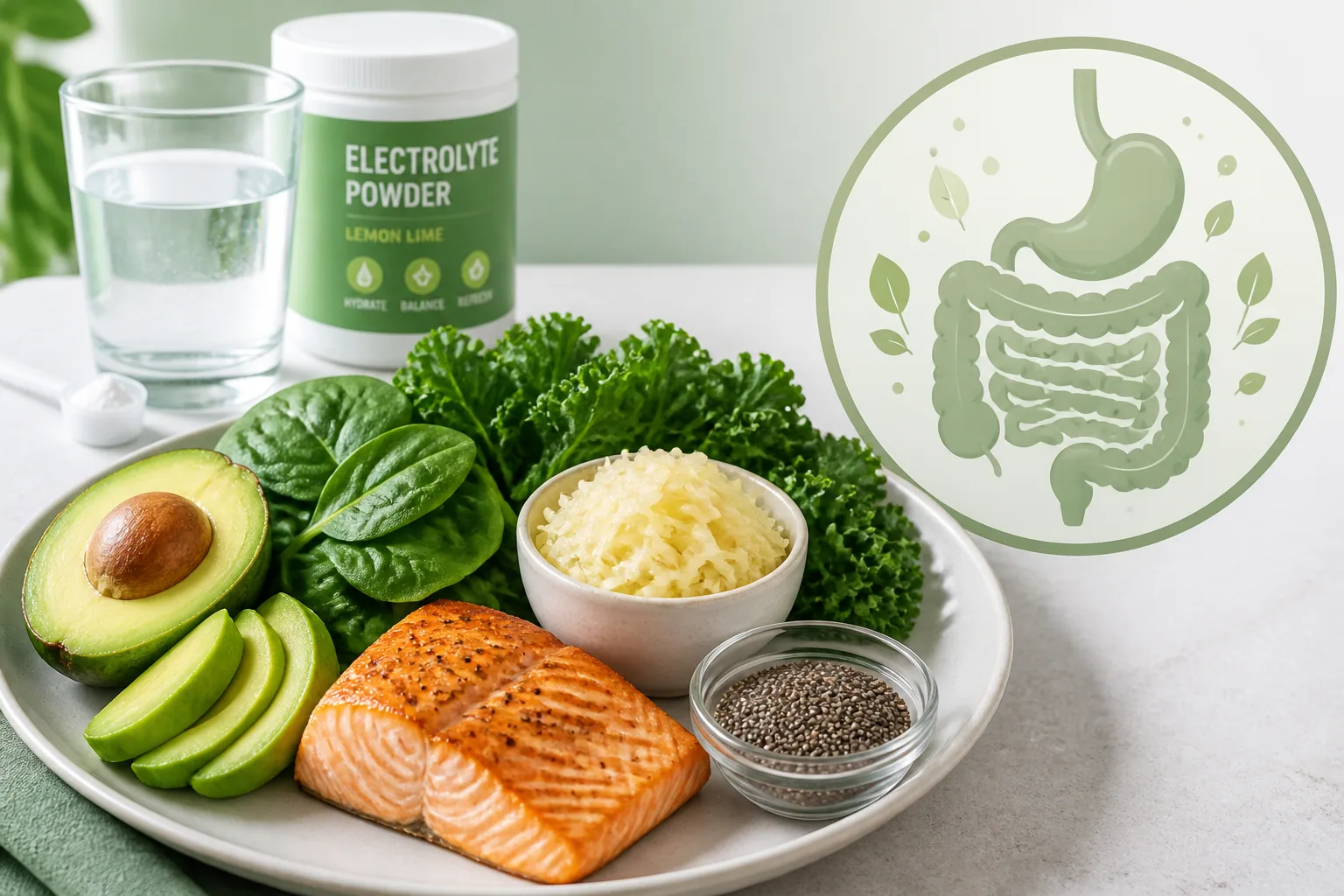
The best gut-supportive keto foods tend to be those that add fiber, micronutrients, and volume without pushing you out of ketosis. Practical options include chia seeds, ground flaxseed, avocados, broccoli, cauliflower, leafy greens, asparagus, and other non-starchy vegetables. These foods can help many adults move toward a fiber intake in the 25 to 30 gram range while still keeping net carbs manageable (biologyinsights.com).
Some of the easiest additions are also the most useful. Chia seeds can thicken yogurt or make pudding. Ground flaxseed can be stirred into smoothies or keto baking. Avocado adds fiber and potassium. Cruciferous vegetables can bulk up meals and support regularity without a huge carb load.
If you are using fiber supplements, choices like psyllium husk or soluble corn fiber may also be helpful. These can increase stool softness and regularity with minimal net carbs, which makes them practical for strict keto followers (wellness.alibaba.com).
How Fermented Foods Can Support a Healthier Gut on Keto
Fermented foods can be a smart way to support your gut microbiome while keeping carbs low. Plain unsweetened yogurt, kefir, sauerkraut, kimchi, tempeh, and miso can help reintroduce beneficial microbes and increase microbial diversity. They may also support the gut barrier and immune system, especially when they are part of a broader pattern of fiber-rich, whole-food eating (sibiosensor.com).
The key is portion control and label reading. Some fermented foods contain hidden sugars, and some dairy-based options can add more carbs than expected. A few forkfuls of sauerkraut or kimchi, a small serving of plain kefir, or a modest portion of unsweetened yogurt may be enough to get the benefit without disrupting ketosis.
If your stomach is sensitive, start small. Fermented foods can be powerful, but they can also trigger temporary gas or bloating when added too quickly. Increase slowly and pay attention to how your body responds.
Smart Ways to Reintroduce Gut-Friendly Foods Without Breaking Ketosis
One of the biggest keto mistakes is assuming gut-friendly foods and ketosis cannot coexist. They can. The trick is to reintroduce them strategically. Start by adding one new food at a time and keep the portion small for a few days. That makes it much easier to tell whether a symptom is caused by the food, the serving size, or something else entirely.
A good sequence is usually fiber first, then fermented foods, then any borderline carb foods you want to test. For example, you might add chia seeds to breakfast, then try a serving of kimchi with lunch, then test a higher-fiber vegetable or a larger portion of avocado later in the week. This gradual approach helps protect ketosis while reducing digestive surprises.
If you are meal planning, keep an eye on net carbs rather than total carbs alone. Many keto-friendly foods have enough fiber to make them digestion-friendly but still fit your daily carb budget. Tracking carefully can make the difference between eating confidently and guessing all day.
Hydration, Electrolytes, and Fiber: A Simple Gut-Support Checklist
If your digestion feels off on keto, this simple checklist is a good place to start:
Drink enough water throughout the day, not just with meals.
Replenish sodium, potassium, and magnesium, especially during the first weeks of keto.
Eat some low-carb fiber at most meals, such as leafy greens, chia, flax, avocado, or cruciferous vegetables.
Include fermented foods in small portions if you tolerate them well.
Avoid making every meal almost entirely fat with no plant matter at all.
Give your body time to adapt, but do not ignore persistent constipation, diarrhea, or pain.
How Carb and Net-Carb Tracking Tools Can Help You Find Trigger Foods
When you are trying to improve digestion on keto, carb tracking can be a surprisingly useful diagnostic tool. If a certain food consistently causes bloating or bowel changes, it helps to know exactly how much you ate and how it fit into your daily carb budget. That is where a tool like Keeto - Keto Made Easy can be especially helpful: https://findthe.app/keeto-5m0vbj
A scanner and tracking app can simplify the whole process. Instead of doing math in the grocery store, you can quickly check whether a product is keto-friendly, see its net carbs, and track how much of your daily carb allowance remains. That makes it easier to identify patterns, avoid hidden carbs, and stick with foods that support both ketosis and comfortable digestion.
Using Food History and Symptom Tracking to Improve Digestion Over Time
One of the most effective ways to improve gut health on keto is to treat your digestion like a pattern, not a mystery. Keep a simple food and symptom log for a few weeks. Write down what you ate, when you ate it, your water intake, your electrolytes, and any symptoms like bloating, constipation, loose stools, or fatigue.
Over time, you may notice that certain foods show up repeatedly before symptoms. Sometimes the trigger is a specific ingredient, such as a sugar alcohol or dairy product. Other times it is the dose of a food rather than the food itself. For example, a small serving of sauerkraut may feel fine, while a large serving is too much at once.
Food history logs are especially useful during the first month of keto because so many variables are changing at the same time. Tracking helps you separate true food reactions from ordinary adaptation effects.
Common Keto Gut Health Mistakes to Avoid
The most common mistakes are easy to make because they sound keto-friendly on the surface. One is eating too much fat without enough fiber or vegetables. Another is not replacing electrolytes when water weight drops quickly. A third is assuming that constipation is just part of keto and must be tolerated.
Other frequent issues include adding too many fermented foods at once, relying heavily on processed low-carb products with sugar alcohols, and ignoring your body’s feedback because the macros look perfect on paper. Digestion is not just about staying under a carb limit. It is about whether your meals are helping your body function well day after day.
If you are dealing with persistent symptoms, it is also worth remembering that not every digestive issue is caused by keto itself. Pre-existing food sensitivities, IBS, low stomach acid, or gallbladder issues can all influence how you respond. When symptoms are severe, ongoing, or worsening, medical guidance is important.
A Sustainable Keto Plan for Better Digestion and Regularity
The most sustainable keto approach is usually the one that supports regular digestion instead of fighting it. That means building meals around protein, healthy fats, and enough low-carb plant foods to keep your gut moving. It means paying attention to water and electrolytes every day, not just when you already feel bad. And it means using tracking tools and food logs to make decisions based on data instead of guesswork.
If you want keto to work long term, think beyond macros. Support your microbiome with variety. Support your bowels with fiber and fluids. Support your energy with electrolytes. Support your consistency by tracking what you eat and how you feel. When those pieces come together, keto becomes much easier to maintain and much more comfortable to live with.