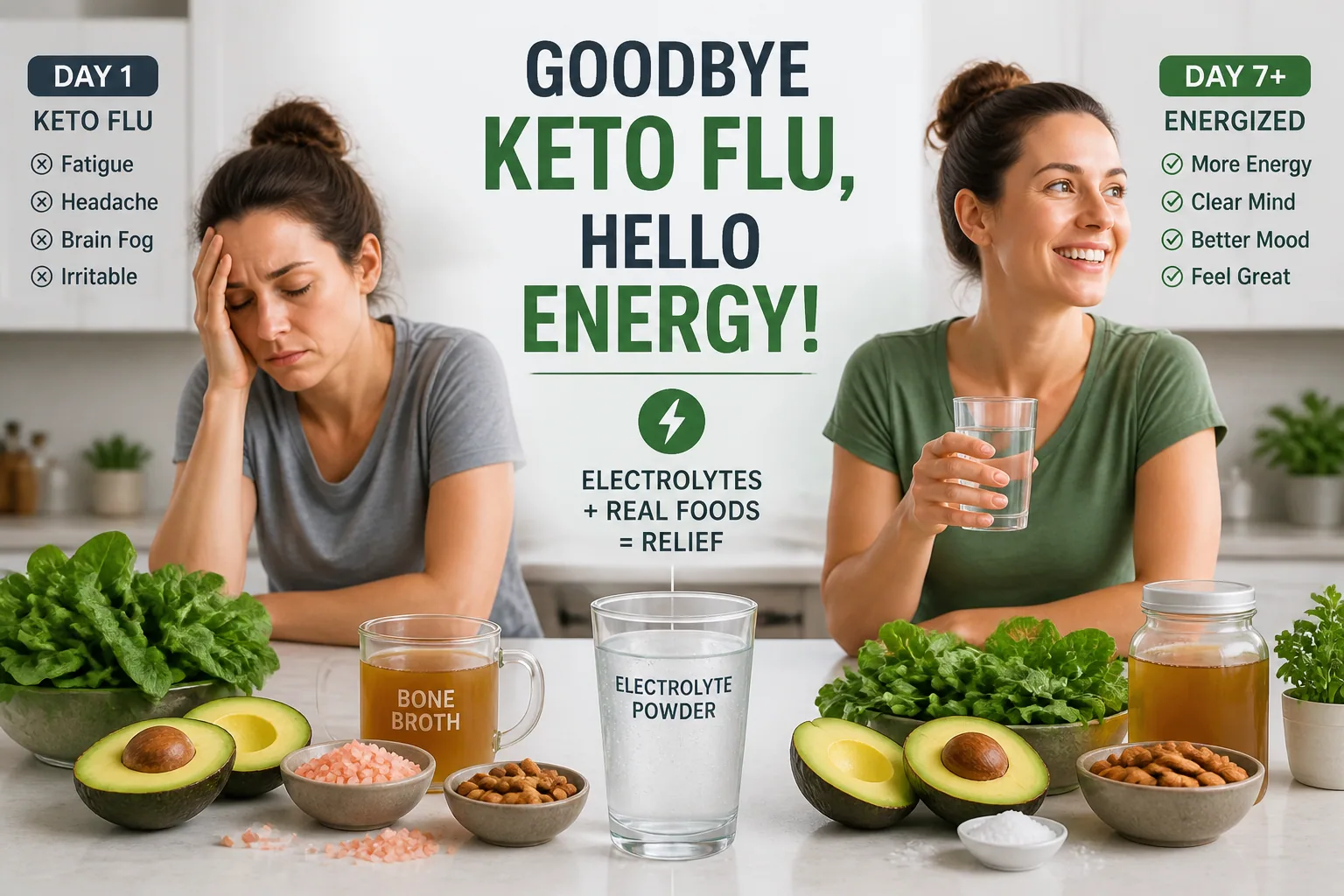
Electrolytes & Keto: Why They’re Your Secret Weapon Against the Keto Flu And How to Get Them Right
Starting keto can feel amazing at first, until it suddenly does not. One day you are excited about cutting carbs and the next you may be dealing with headache, fatigue, dizziness, brain fog, irritability, or muscle cramps. That cluster of symptoms is often called the keto flu, and in many cases it is less about keto itself and more about what happens to your fluids and minerals when carbs drop fast.
Electrolytes are one of the most overlooked parts of a successful ketogenic diet. Once you understand how sodium, potassium, and magnesium work, it becomes much easier to stay hydrated, keep your energy steady, and avoid that sluggish, depleted feeling many beginners experience.
What the Keto Flu Really Is
The keto flu is not a true illness. It is a short-term adaptation phase that can happen when your body shifts from burning carbs to running more efficiently on fat and ketones. During this transition, your body changes how it handles water and minerals, and that can create very real symptoms that feel like you are getting sick.
Common signs include headache, fatigue, lightheadedness, poor concentration, cramps, mood swings, and a general sense that your body is not quite keeping up. These symptoms often show up around days 2 to 7 after starting keto, or any time carb intake drops quickly without replacing the electrolytes you are losing. Cleveland Clinic notes that these issues are usually temporary and often improve within 1 to 2 weeks as the body adapts or electrolyte intake improves: https://health.clevelandclinic.org/weight-loss-what-30-days-on-the-keto-diet-felt-like
What Electrolytes Are and Why They Matter
Electrolytes are minerals that carry an electric charge and help regulate many essential functions in the body. They support fluid balance, muscle contraction, nerve signaling, heart rhythm, and energy production. On keto, they matter even more because the shift away from carbs changes how much sodium and water you retain, which then affects potassium and magnesium status too.
The big three to pay attention to are sodium, potassium, and magnesium. When these are too low, the body tends to let you know quickly through fatigue, cramps, headaches, constipation, poor sleep, or a drop in exercise tolerance. In other words, electrolytes are not a niche supplement trend. They are a core part of how you feel day to day on keto.
Why Going Low-Carb Causes Electrolyte Loss
When you cut carbohydrates, insulin levels fall. That drop in insulin signals the kidneys to excrete more sodium, and because water follows sodium, you also lose more fluid. As a result, potassium and magnesium can also be depleted more easily. This is why keto beginners often feel fine for a day or two and then suddenly feel drained, dehydrated, or foggy. Research summaries on keto electrolyte loss describe this sodium-water shift clearly: https://shop.getacetrack.com/fr-fr/blogs/ketosis/keto-electrolytes
This is also why a plain glass of water is not always enough. If you are losing sodium and water together, drinking more water without replacing minerals can sometimes make you feel even more washed out. That does not mean water is bad. It means hydration and electrolytes need to work together.
The Big Three: Sodium, Potassium, and Magnesium
Sodium is usually the first mineral to dip on keto. It helps maintain blood volume, supports nerve transmission, and helps prevent the low-energy, headache-prone feeling that comes with rapid fluid loss. Virta Health and other keto resources commonly suggest about 3,000 to 5,000 mg of sodium daily on a well-formulated ketogenic diet, especially early on: https://www.virtahealth.com/faq/sodium-potassium-magnesium-ketogenic-diet
Potassium works closely with sodium to regulate fluid balance, muscle contraction, and nerve function. Many keto guides suggest around 3,000 to 4,000 mg per day, with an emphasis on food sources like avocado, salmon, and leafy greens. Potassium supplementation should be approached carefully, which is one reason food-based intake is often the preferred first step: https://ketoframework.com/electrolytes-on-keto/
Magnesium is the quiet hero of the group. It is involved in muscle relaxation, sleep quality, nerve health, and exercise recovery. Keto guidance often places magnesium around 300 to 500 mg elemental magnesium per day, especially in the early stages. Forms such as glycinate, citrate, or malate are usually better tolerated and absorbed than oxide: https://ketoframework.com/electrolytes-on-keto/
Common Signs Your Electrolytes Are Off
Low sodium often shows up as headache, fatigue, lightheadedness, and brain fog. Low potassium can look like muscle cramps, constipation, weakness, or even palpitations. Low magnesium is often connected to poor sleep, muscle twitching, anxiety, and reduced exercise tolerance. These symptoms can overlap, which is why the overall pattern matters more than trying to diagnose yourself by one symptom alone.
A useful rule of thumb is to pay attention to timing. If you recently started keto, increased workouts, are sweating more, or dropped carbs very quickly, electrolyte loss becomes much more likely. Hot weather, intense exercise, rapid weight loss, and extended sweating all raise your needs further.
Keto-Friendly Food Sources of Key Electrolytes
The best long-term strategy is usually to build your electrolyte intake into meals rather than rely on supplements forever. Keto-friendly foods can cover a lot of ground when chosen intentionally. Salting your meals generously is one of the easiest ways to raise sodium intake, while bone broth can be a simple and comforting option when you need something warm and replenishing.
For potassium, focus on foods like avocado, leafy greens, salmon, and other low-carb vegetables that fit your daily carb target. Magnesium is often found in nuts, seeds, spinach, and some mineral-rich foods, though many people still benefit from extra support early on. Keto framework sources note that many beginners find that a consistent diet with liberal salting, plenty of non-starchy vegetables, avocados, nuts, and bone broth reduces the need for supplementation after 4 to 6 weeks: https://ketoframework.com/electrolytes-on-keto/
If you are still learning which packaged foods fit your plan, a tool like Keeto - Keto Made Easy can make the process much simpler. It helps you scan products, check net carbs instantly, and stay within your carb budget without getting bogged down in grocery-store math: https://findthe.app/keeto-5m0vbj
When Supplements Make Sense
Supplements are not mandatory for everyone, but they can be very useful in the beginning or during periods of higher demand. If you are dealing with cramps, dizziness, headaches, or a big energy drop, it may be a sign that food alone is not covering the gap yet. A quick fix that many people find helpful is adding about 1/2 teaspoon of salt to 16 oz of water, or sipping bone broth. Some reports say relief can happen within 15 to 30 minutes: https://stigmasupplements.com/2026/05/22/electrolytes-keto-flu/
Magnesium is the supplement most people continue to use longer term because it is harder to get enough from food alone and is commonly associated with sleep quality and muscle recovery. Potassium supplements need more caution, so food should usually be the first strategy unless a clinician advises otherwise. Sodium, by contrast, is often easiest to adjust quickly through salt and broth.
How to Track Electrolytes Without Overcomplicating It
Tracking electrolytes does not have to mean obsessing over every milligram. A simpler approach is to build a routine. Start by salting meals well, include potassium-rich keto foods daily, and make magnesium part of your evening routine if it helps with sleep or cramps. Then pay attention to symptoms, energy, hydration, and workout recovery.
If you exercise heavily, sweat a lot, or live in a hot climate, you may need more sodium and potassium than the average beginner. On the other hand, if you are eating plenty of whole foods and feeling stable, your needs may settle down after the first few weeks. The goal is not perfection. The goal is consistency and awareness.
Simple Daily Strategies to Prevent Keto Flu
The simplest prevention strategy is to get ahead of the depletion before symptoms hit. Begin each day with water and minerals, not just plain water. Salt your food liberally, especially during the first few weeks of keto. Include a potassium-rich food in at least one meal per day, and make magnesium a regular part of your routine if you are prone to sleep issues or cramps.
Also pay attention to context. If you are doing a hard workout, spending time in the heat, or losing weight quickly, your electrolyte needs are likely higher. That is when extra broth, salted water, or a well-chosen supplement can make the difference between feeling flat and feeling normal.
How Better Electrolyte Balance Supports Energy, Mood, and Recovery
When electrolytes are balanced, keto tends to feel much better. Sodium supports steadier hydration and better mental clarity. Potassium helps muscles contract properly and can reduce the crampy, weak feeling that makes workouts miserable. Magnesium supports relaxation, sleep quality, and recovery, which in turn can improve mood and daytime energy.
This matters because a lot of people blame keto itself when the real issue is mineral balance. Once sodium, potassium, and magnesium are handled well, many common early complaints fade, and the diet becomes much easier to sustain. Better electrolyte balance can mean fewer crashes, better training sessions, more stable mood, and less of that early transition discomfort.
Mistakes Keto Beginners Make With Hydration and Minerals
One of the biggest mistakes is drinking lots of plain water while staying too low on sodium. That can dilute the problem instead of fixing it. Another common mistake is assuming all fatigue is from not eating enough, when it may actually be a sign of mineral loss. Some people also underdo potassium because they focus only on salt, or they choose low-quality magnesium forms that do not agree with their stomach.
Another error is waiting for severe symptoms before acting. By the time you feel a bad headache or a big energy crash, you are already behind. It is much easier to prevent keto flu than to chase it after it starts. The early weeks of keto are the time to be proactive, not reactive.
A Practical Starter Plan for Getting Electrolytes Right
If you want a simple starting point, think in layers. First, salt your food consistently and do not fear sodium in the first few weeks of keto. Second, eat potassium-rich keto foods daily, especially avocado, leafy greens, and salmon. Third, consider magnesium in the evening if you struggle with cramps, sleep, or recovery. Fourth, increase your intake during workouts, hot weather, or heavy sweating.
If symptoms do appear, do not panic. Try a salted drink or broth first, then reassess how you feel. Most keto flu issues are temporary, and many resolve quickly once minerals and fluids are corrected. Over time, your body usually adapts and your electrolyte needs become easier to manage.
The bottom line is simple: keto works much better when electrolytes are treated as a priority instead of an afterthought. If you give your body enough sodium, potassium, and magnesium, you are far more likely to enjoy steady energy, better recovery, clearer thinking, and a smoother transition into ketosis.