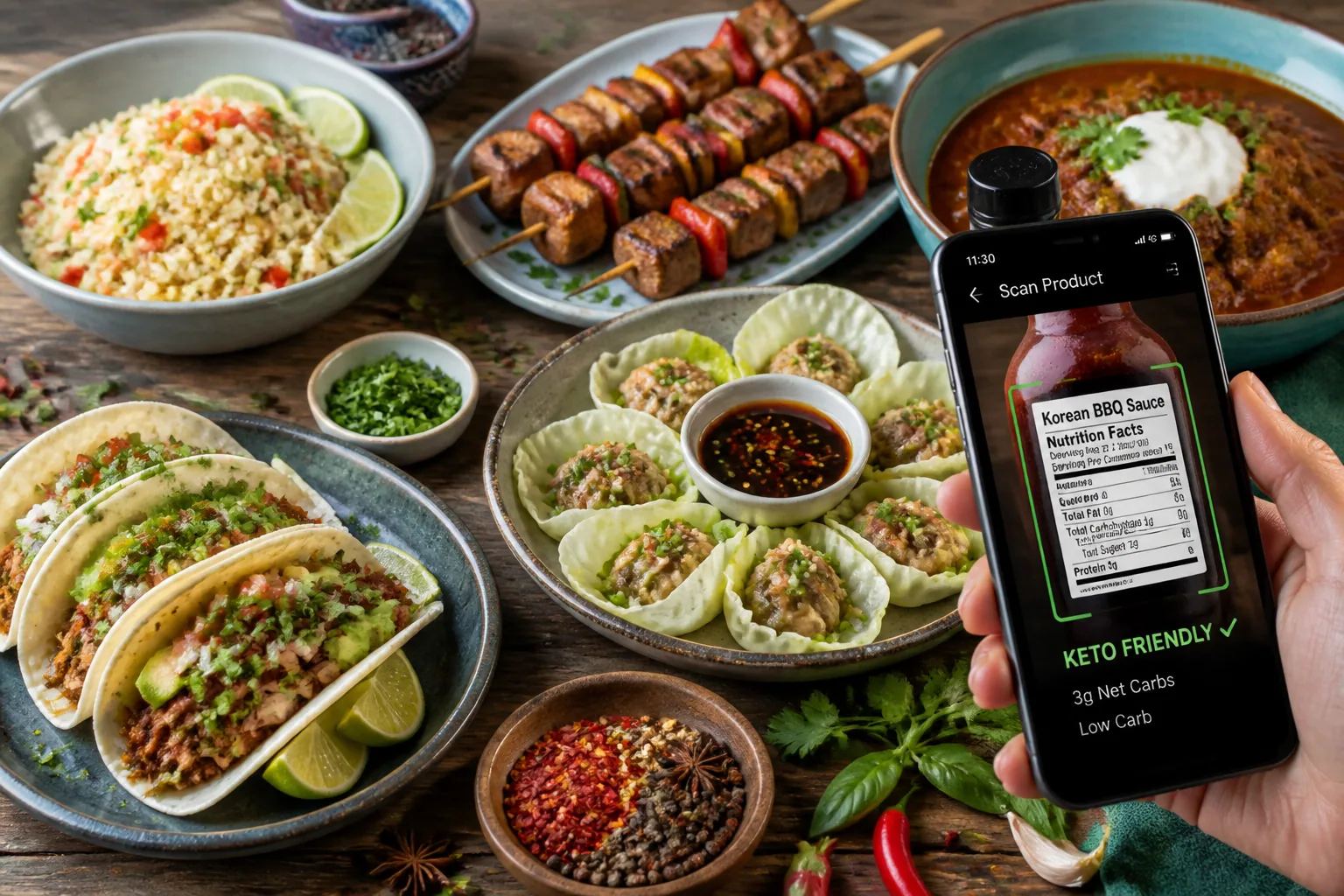
Breaking Keto Taboos: How to Keep Cultural Foods on the Menu
For many people, keto can feel less like a food plan and more like a cultural trade-off. If your comfort foods are tied to family tables, religious holidays, regional traditions, or the smell of something simmering in the kitchen after school, cutting carbs can sound like cutting connection. But it does not have to work that way. Keto is now followed by roughly 12.9 million Americans each year, about 5% of adults, which means there are plenty of people learning how to make it fit real lives, real households, and real heritage foods rather than replacing them entirely. Source: BodyKetosis https://bodyketosis.com/keto-diet-statistics/
The better way to think about keto is not as a rejection of cultural food, but as a set of flexible adjustments. You are not required to give up flavor, ritual, or belonging to reduce carbs. In many cuisines, the core of the dish is already keto-friendly: grilled meats, fish, leafy greens, stews, herbs, spices, oils, and slow-cooked aromatics. The part that often needs changing is the starch on top, beside, or under it. Once you see that distinction, keto becomes a tool for preserving tradition in a different form.
Why Keto Feels Culturally Limiting and Why It Doesn’t Have to Be
The feeling of limitation usually comes from association. Rice may mean home. Bread may mean hospitality. A tortilla may mean family gatherings. Injera, swallow, dumplings, pita, noodles, and flatbreads may not just be food, but symbols of care and identity. When keto removes those foods without context, it can feel like it is removing the culture itself.
But cultural cuisine has always adapted. Ingredients change when people move, seasons change what is available, and families modify recipes for cost, health, religion, or taste. Keto can be part of that long history of adaptation. The goal is not to make every dish identical to the original. The goal is to keep the spirit of the meal intact while changing the carb structure enough to support ketosis.
That shift in mindset matters because many people already worry about hidden sugars and starches in everyday cooking ingredients. In consumer research, 86% of people aware of hidden sugars in culinary ingredients said they were concerned, while 48% said they check ingredient lists and about 34% consider sweeteners when choosing condiments or sauces. Source: ADM consumer deep-dive report https://www.adm.com/globalassets/insights-and-innovation/formulation-challenges/sugar-reduction/adm_sugar-reduction-consumer-deep-dive-report-eng-emea-2023-compressed.pdf
That concern is valid, especially in multicultural cooking where sauces, marinades, and spice mixes can carry unexpected sugar, starch, or thickeners. The good news is that once you know what to look for, you can keep the foods you love and still stay in range.
The Best Low-Carb Ingredient Swaps for Traditional Cooking
The easiest keto changes are the ones that preserve texture and role in the meal. You are not trying to make cauliflower taste like rice in a literal sense. You are using it because it plays a similar functional role on the plate: it carries sauce, adds bulk, and keeps the meal satisfying without the carb load.
Some of the most useful swaps include cauliflower rice for rice, jicama tortillas or lettuce wraps for traditional tortillas, zucchini noodles or shirataki noodles for wheat or rice noodles, and chopped cabbage or greens for dumpling or bread-like volume. For sauces and gravies, low-carb thickeners like xanthan gum, psyllium husk, or reduced cream can replace flour or cornstarch in many recipes.
Cauliflower rice is especially useful in Mexican-inspired meals and mixed family dinners. A common keto swap can save about 18 grams of carbs per half cup when replacing rice with cauliflower rice, which makes a meaningful difference if your meal usually relies on rice as the base. Source: Essential Keto and Verywell Fit https://www.essentialketo.com/100-low-carb-swaps-for-a-ketogenic-diet/
The same logic works across cuisines. If a dish is built around a carb-heavy wrapper or starch, ask what would happen if you changed only that part. Would the meat, sauce, seasoning, and vegetables still create the same emotional experience? In many cases, yes.
Latin American Keto: Tacos, Rice Dishes, and Comfort Food Reimagined
Latin American food is often easier to adapt than people expect because so much of it centers on bold seasoning, proteins, vegetables, and sauces. The challenge is usually the tortilla, rice, beans, or chips. Fortunately, those are all highly replaceable without losing the soul of the dish.
For taco night, lettuce wraps, cabbage leaves, cheese shells, and jicama tortillas can stand in for corn or flour tortillas. Bun-less fajitas are another easy win: keep the sizzling peppers, onions, meat, salsa, guacamole, and sour cream, and simply skip the bread. Burrito bowls work well too when you keep the meat, cheese, salsa, and vegetables but leave out the tortilla and rice or replace the rice with cauliflower rice. Keto-friendly Mexican restaurant ordering often looks exactly like that. Source: KetoASAP and Verywell Fit https://www.ketoasap.com/mexican-restaurant-low-carb-options/
For rice-based comfort meals, cauliflower rice can be seasoned with tomato, garlic, cumin, onion, cilantro, and broth to mimic the body of a classic arroz dish. It is especially helpful when you want the dish to feel complete enough for a family plate. You can also use shredded cabbage in stews and sautéed dishes where rice would otherwise soak up sauce.
Many Latin American cuisines also include naturally keto-friendly elements already. Carnitas, carne asada, grilled chicken, shrimp, queso fresco, avocado, salsa verde, roasted peppers, and slow-cooked braises can all fit well. The main thing to watch is sweetness in marinades and sauces, especially bottled ones.
That is where ingredient awareness makes a major difference. A sauce can look savory and still contain enough sugar to knock you out of your targets, especially when used generously across a family meal.
Asian Keto: Noodles, Dumplings, Stir-Fries, and Sauce Swaps
Asian cuisines are wonderfully adaptable because many meals already emphasize umami, broth, aromatics, vegetables, seafood, and meat. The biggest keto barriers are often noodles, rice, and sugar-heavy sauces rather than the core flavor profile.
For noodle dishes, shirataki noodles, zucchini noodles, kelp noodles, or shredded cabbage can replace wheat or rice noodles. They work especially well in soup-based dishes, stir-fries, and saucy preparations where the noodles are mostly there to carry flavor. Dumplings can be tougher, but the fillings are often keto-friendly. You can reimagine them with egg wraps, cabbage leaves, or simply serve the filling as a bowl with dipping sauce.
Stir-fries are one of the easiest cultural bridges into keto. Use meat, shrimp, tofu if it fits your macros, bok choy, broccoli, mushrooms, peppers, and sesame oil, then adjust the sauce carefully. Soy sauce, tamari, fish sauce, chili pastes, and bottled marinades can contain hidden sugars or starches, so it helps to check labels instead of assuming they are safe.
This is especially important because processed sauces can be far sweeter than many people realize. In one monitoring report on processed sauces in Ireland, mean total sugar was about 17 grams per 100 grams of sauce, with some sauces reaching up to 38 grams per 100 grams. Source: FSAI sugar monitoring report https://www.fsai.ie/getmedia/2fb00749-868e-41ee-b451-f91f2dc3cbd7/monitoring-sugar-in-processed-foods-2024-official-publication.pdf?ext=.pdf
That is why the best keto Asian cooking often comes down to smart balancing. Use garlic, ginger, vinegar, sesame, chili, citrus, and umami-rich ingredients to make up for any sweetness you remove. The result can still feel authentic, but more aligned with your goals.
African Keto: Stews, Sides, and Smarter Carb Alternatives
African cuisines are incredibly diverse, so keto is never one-size-fits-all here. Still, many regional dishes adapt beautifully because stews, greens, meats, fish, and palm oil already provide richness without needing much starch. The real question is usually what to do with the staple side that traditionally accompanies the dish.
One example is egusi soup. It can be made keto-friendly by keeping the rich soup base and omitting starch-heavy swallows. Many versions can also be paired with cauliflower rice or sautéed greens instead of pounded yam or other high-carb sides. Source: AfricanRecipes.com.ng and Low Carb Africa https://www.africanrecipes.com.ng/keto-egusi-soup-powerful-carb-nigerian/
Yoruba cuisine also offers plenty of flexible options. Efo Riro with meats and leafy greens, okra soup, egusi soup, ewedu-based dishes without heavy starch, and grilled fish with spicy sauces can all fit better into keto with small adjustments. Swapping swallow foods for sautéed greens is one of the simplest changes, and it preserves the stew-and-side rhythm that makes the meal feel familiar. Source: DiscoveryYorùbá https://discoveryoruba.com/7-low-carb-yoruba-dishes-perfect-for-weight-loss/
Jollof rice is another dish people worry about, but the flavor base is what makes it beloved. Tomatoes, peppers, onions, spices, and broth can be used to season cauliflower rice so the plate still feels festive. You are not recreating a carb-heavy staple exactly. You are keeping the flavor architecture while changing the grain.
Many African dishes are already naturally high in fat and protein when built around goat meat, fish, palm oil, leafy greens, and slow-simmered sauces. That makes keto feel less like an imposition and more like a different way of arranging the same ingredients.
Middle Eastern Keto: Bread, Rice, Mezze, and Grilled Favorites
Middle Eastern food is deeply communal, which can make the bread and rice feel especially central. But the cuisine also offers many keto-friendly anchors: grilled meats, kebabs, salads, yogurt-based sauces, eggplant, olives, herbs, and mezze plates that can be enjoyed with the right swaps.
Instead of pita, try lettuce cups, cucumber rounds, or almond flour flatbreads when you want something scoopable. Cauliflower rice works very well as a substitute under shawarma-style meats, kofta, or spiced chicken. Eggplant, zucchini, and grilled peppers can also serve as the base for saucy dishes when rice is not part of the plan.
The mezze table is especially helpful for keto because it already encourages grazing across many small items. Hummus may be more limited because of chickpeas, but baba ghanoush, olives, labneh, cucumbers, stuffed vegetables without rice, grilled halloumi, and meat skewers can all fit much better. The strategy is not to opt out of the spread. It is to prioritize the pieces that support your carb goals.
For families, that can be a relief. You can still sit at the table, share plates, and participate in the meal without building your whole plate around bread or rice.
How to Handle Family Gatherings, Holidays, and Cultural Celebrations on Keto
This is often the hardest part, not because keto is technically difficult, but because food can carry social meaning. In some families, refusing a dish can feel disrespectful. In others, a celebration without the traditional starch can feel incomplete. The answer is to plan for participation rather than perfection.
When you can, bring one dish that fits your needs and complements the table. A keto-friendly version of a beloved side, stew, salad, or grilled item lets you contribute without making the meal about restriction. If people ask questions, frame it as a personal health choice rather than a criticism of the food. That keeps the focus on connection.
It also helps to eat strategically before events if you know the menu will be carb-heavy, then focus on proteins, vegetables, and sauces at the gathering. You do not have to explain every bite. A flexible mindset can reduce stress and make you more likely to enjoy the celebration instead of watching everyone else eat with resentment.
If a holiday has specific ritual foods, consider honoring the ritual with a smaller portion while building the rest of your plate around keto-friendly options. Many people find that this compromise allows them to preserve the feeling of the occasion while still staying on track.
Hidden Carbs in International Sauces, Spices, and Packaged Foods
International cooking often depends on packaged sauces, spice blends, marinades, and pantry items that look harmless but contain added sugar, starches, or fillers. Condiments are a major source of hidden carbs. One tablespoon of BBQ sauce can contain 4 to 10 grams of sugar, ketchup can be about 25% sugar by weight, and some salad dressings contain more sugar per serving than a cookie. Source: Glycemic Snap Blog and Men Under Microscope https://glycemicsnap.com/blog/hidden-sugars-condiments-gi
That is why cultural keto requires label reading, especially when shopping for imported products or flavored sauces. Even spice mixes can include maltodextrin, rice flour, sugar, or starches meant to prevent clumping. Marinades may contain sweeteners that are not obvious from the front label. Curry pastes, chili sauces, teriyaki-style sauces, and bottled braising liquids deserve particular attention.
When in doubt, compare the serving size to how much you actually use. A sauce that looks low-carb on paper may become a problem once you pour three or four servings over a meal. This is one reason so many keto cooks eventually rely on scanning tools and ingredient tracking rather than memory alone.
How to Use Keeto to Scan Labels and Make Better Global Grocery Choices
This is where Keeto - Keto Made Easy can be especially useful. If you are shopping for international ingredients and do not want to do carb math in the aisle, you can scan a product’s barcode and instantly see whether it is keto-friendly, how many net carbs it contains, and what portion of your daily carb budget it represents. You can learn more here: https://findthe.app/keeto-5m0vbj
That kind of quick feedback is helpful when you are comparing packaged sauces, spice blends, marinades, curry pastes, or pantry staples from different regions. Instead of guessing based on the front label, you can make a more informed choice on the spot. For people building meals across multiple cuisines, that simplicity can reduce a lot of stress.
Keeto also lets you set your own daily carb limit, track scans against that limit, and save favorites for products you trust. That makes it easier to build a repeatable shopping routine around the specific foods you already use at home. If you are someone who likes to turn pantry items into meals, its recipe features can also help you create keto-friendly versions of familiar dishes from the ingredients you already have.
In practice, the best use of a scanner like this is not to replace your judgment. It is to support it. You still decide what fits your family, your culture, and your goals. Keeto simply makes the label-reading part faster and easier.
Building a Keto Lifestyle That Respects Culture, Family, and Flavor
Keto works best when it supports the life you already live. If your meals are tied to identity, then a successful keto plan must make room for that identity. That means keeping favorite spice profiles, cooking methods, celebrations, and shared meals wherever possible, while changing the carb-heavy parts that interfere with ketosis.
The real win is not eating like someone else. It is learning how to eat in a way that honors both your health goals and your roots. For some people, that means cauliflower rice in a familiar stew. For others, it means lettuce wraps at taco night, a sauce swap at dinner, or a smaller piece of holiday bread alongside a plate built around meat and vegetables.
Over time, this approach can make keto feel less like a temporary restriction and more like a sustainable, culturally aware way of eating. You do not have to abandon the foods that shaped you. You only need to adapt them thoughtfully, one meal at a time.