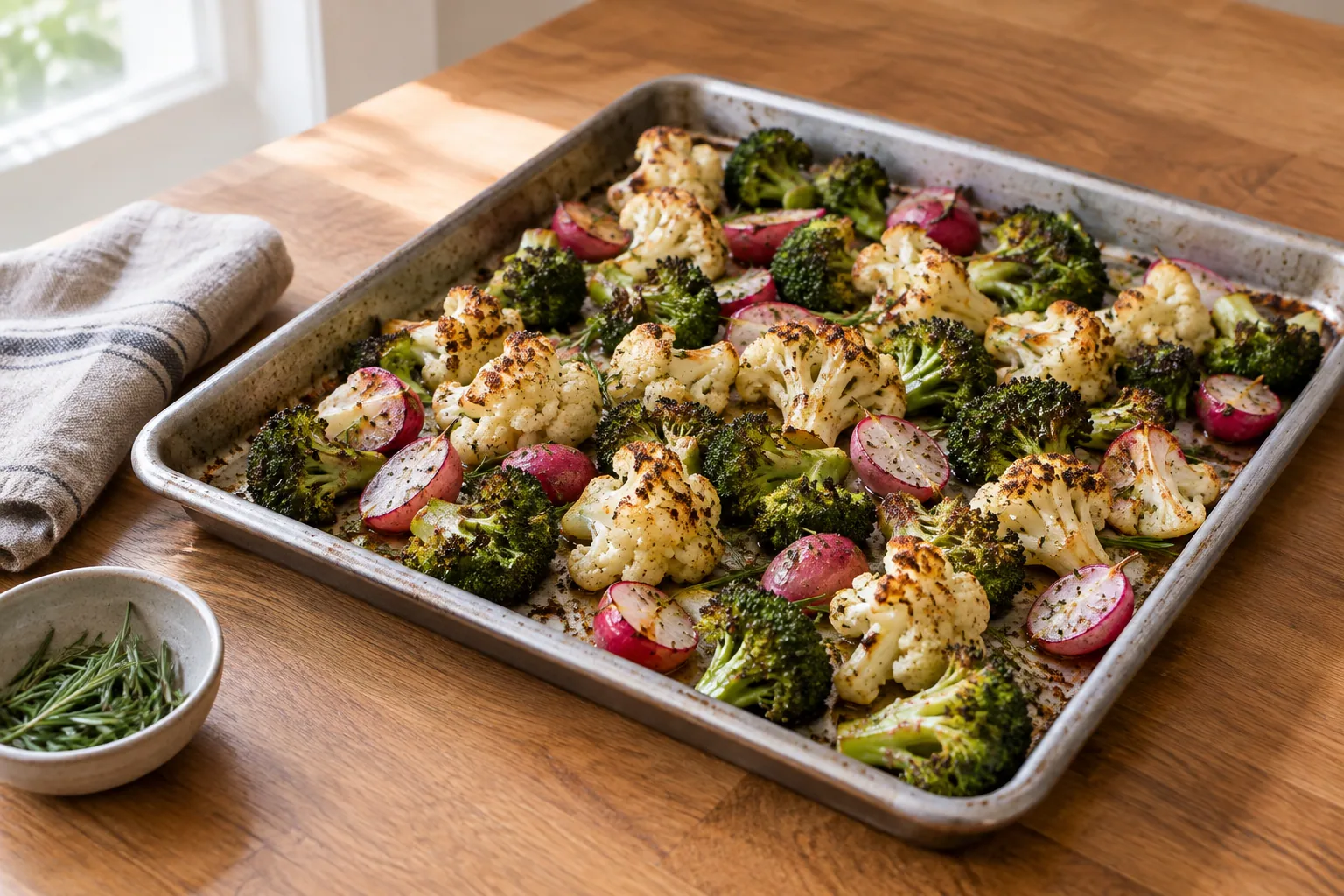
Cauliflower, broccoli, zucchini, mushrooms, asparagus, radishes, and Brussels sprouts are all good choices for a keto-friendly roasted side. Choose cauliflower and broccoli for browned florets, zucchini and asparagus for quicker cooking, mushrooms for savory flavor, and radishes for a tender potato-style substitute. Portion size matters, so measure your vegetables before roasting and count sauces and toppings separately.
The best keto vegetables to roast
Choose by the texture you want and the time you have. Radishes soften and lose much of their peppery bite, but they won’t develop a potato’s fluffy center.
| Vegetable | Main advantage | What to watch for |
|---|---|---|
| Cauliflower | Broad cut surfaces brown well | Large florets can stay firm inside |
| Broccoli | Floret tips develop crisp edges | Tiny florets can burn before stems soften |
| Zucchini | Cooks quickly and takes seasoning well | Thin slices soften and release water quickly |
| Mushrooms | Develop concentrated, savory flavor | Crowding traps the moisture they release |
| Asparagus | Needs little prep and cooks quickly | Thin spears finish sooner than thick ones |
| Radishes | Become a mild, tender root-vegetable side | Large radishes need smaller cuts or more time |
| Brussels sprouts | Halved sprouts develop browned cut faces | Loose leaves can burn before the centers cook |
For your first tray, pick one or two vegetables rather than all seven. Fewer ingredients make it easier to control doneness and divide portions.
Compare portions before filling your roasting tray
Compare equal weights in the same preparation state. A raw vegetable entry and a cooked half-cup entry aren’t interchangeable. For example, Brussels sprouts contain about 5 grams of net carbs per 100 grams raw, so that number belongs to the raw portion you weigh, not an assumed 100-gram roasted serving.
For a reliable comparison while shopping or logging food, check these fields in the matching nutrition entry:
| Field | What to use |
|---|---|
| Vegetable | The exact type, such as zucchini or button mushrooms |
| Preparation state | Raw for vegetables weighed before cooking |
| Serving weight | The same weight for each comparison, such as 100 grams |
| Household measure | The measure attached to that entry, not a guessed cup equivalent |
| Total carbohydrate and fiber | Values for that same serving |
| Calculated net carbs | Total carbohydrate minus fiber |
Roasting removes water, so vegetables usually weigh less afterward. That can concentrate the carbohydrate per gram of finished food without adding carbohydrate to the original batch. Don’t weigh a cooked portion and log it using a raw-weight entry.
To stay within your remaining daily allowance, log the planned raw portions before cooking. If the side is too large for your budget, reduce the portion or change the mix. Carrots and beets don’t need an automatic ban, but count a measured addition rather than treating every root vegetable as interchangeable.
How to roast vegetables with browned edges
Start with 425°F in a conventional oven, using the middle rack. High heat, a shallow pan, and room between pieces help vegetables roast instead of steam; these are also central to South Dakota State University Extension’s sheet-pan guidance.
- Preheat fully. Put the vegetables into a hot oven, not one that is still warming.
- Dry thoroughly. After washing, use a clean towel or salad spinner as appropriate. Pay attention to water caught in broccoli and cauliflower florets.
- Cut evenly. Match piece thickness within each vegetable. Split thick broccoli stems lengthwise rather than discarding them.
- Coat lightly. Start with 1 tablespoon of olive or avocado oil per pound of vegetables. Toss well, then add a little more only if surfaces remain dry.
- Spread on a shallow, rimmed sheet pan. Leave visible gaps. Put flat cut faces against the pan where possible.
- Check before the earliest time below. Turn larger pieces once, after the undersides have browned. Remove any pieces that finish early.
These are starting ranges, not guaranteed finish times. Your oven, pan, piece size, and preferred tenderness will change the timing.
| Vegetable | Cut or preparation | Approximate time at 425°F | Doneness cue |
|---|---|---|---|
| Cauliflower | Florets about 1½ inches across, with a flat cut side | 25–35 minutes | Brown patches; stem pierces easily |
| Broccoli | Florets about 1½ inches across; thick stems split | 18–25 minutes | Brown tips; stems tender with some bite |
| Zucchini | ¾-inch-thick half-moons | 12–18 minutes | Brown underneath; center still holds its shape |
| Mushrooms | Small ones halved; large ones quartered | 20–30 minutes | Brown surfaces; released liquid mostly evaporated |
| Asparagus | Woody ends trimmed; spears left whole | 10–15 minutes | Tender stalks; tips beginning to brown |
| Radishes | Halved, or quartered if large | 30–40 minutes | Brown cut faces; fork-tender centers |
| Brussels sprouts | Trimmed and halved | 25–35 minutes | Deeply browned cut faces; tender centers |
Use two pans if pieces touch all around or form piles. Place the pans on the upper-middle and lower-middle racks, then swap their positions and rotate them front to back midway through cooking.
Fix pale, soggy, or scorched vegetables
- Pale and wet: Spread the vegetables farther apart or move half to another pan. Let visible liquid evaporate before adding cheese or sauce.
- Burned outside, firm inside: Cut smaller pieces next time. For the current batch, lower the heat and continue checking until tender.
- Soft zucchini: Use thicker cuts and start checking earlier. It won’t become as crisp as broccoli.
- Burned garlic: Add fresh minced garlic near the end rather than at the start.
Which vegetables can roast together
Group vegetables by cooking time and moisture release. Sharing an oven doesn’t require sharing a pan.
Start radishes before adding cauliflower
Halve small radishes and quarter large ones. Cut cauliflower into roughly 1½-inch florets. Give the radishes a 10-minute head start, then add the cauliflower and roast for another 25–30 minutes, checking both for tenderness.
Use separate pans if the combination crowds one tray. You can remove the cauliflower first if its edges brown before the radishes soften.
Give zucchini a short head start over asparagus
Cut zucchini into ¾-inch half-moons and trim the asparagus. Start the zucchini, then add medium-thickness asparagus after about 5 minutes. Check both after another 10 minutes; very thin asparagus may need less time.
Keep the vegetables in separate areas so you can lift out whichever finishes first. For an even faster way to use these ingredients, try these vegetables suited to a keto stir-fry.
Give mushrooms room to release moisture
Mushrooms and zucchini can release enough water to keep neighboring vegetables damp. Roast mushrooms on their own pan when making a large mixed batch, and avoid piling them together. Combine everything after roasting rather than sacrificing browned edges to fit one tray.
Seasonings and toppings to check before adding
Season simply before roasting, then add ingredients that scorch or soften crisp edges near the end.
- Garlic and rosemary: Toss with oil, salt, and chopped rosemary before roasting. Add minced garlic for the final 3–5 minutes, tossing so it doesn’t sit in exposed clumps.
- Lemon and olive oil: Roast with oil and salt. Add lemon zest and a small squeeze of juice after cooking so the vegetables don’t sit in extra liquid.
- Parmesan and black pepper: Add finely grated Parmesan for the final 3–5 minutes, or sprinkle it on after roasting. Add pepper to taste.
Check sweet glazes, balsamic reductions, seasoning packets, and bottled sauces rather than automatically excluding them. Look at total carbohydrate, fiber, and the actual serving you’ll use. A label serving may be smaller than the amount poured over a whole tray.
For packaged ingredients, Keeto can scan a barcode and show net carbs against your daily carb budget. Use the packaged-seasoning barcode scanner while shopping, then account for your actual portion rather than assuming the default serving matches it.
Build a repeatable roasted-vegetable side
For a four-portion cauliflower-and-radish batch, put these quantities on your shopping list:
- 400 grams trimmed cauliflower florets
- 400 grams trimmed radishes
- 2 tablespoons olive or avocado oil
- ½ teaspoon salt, adjusted to taste
- Black pepper
- Optional rosemary and lemon
Weigh the vegetables after trimming, then follow the staggered roasting method above. Pair a portion with simply prepared chicken, fish, steak, or tofu, counting any marinade or sauce separately.
Log the batch using raw ingredient weights. After cooking, gently mix the vegetables and divide them among four containers, distributing both vegetables evenly. Each container represents one-quarter of the original ingredients, even though water loss has reduced the finished weight.
If you prefer weighing cooked portions, weigh the entire finished batch and divide that weight by four. Use one-quarter of the batch’s logged nutrition for each portion, not a raw nutrition entry applied to the cooked weight.
For leftovers, refrigerate promptly in shallow containers. Reheat on a shallow pan at 425°F for roughly 5–10 minutes, checking early and leaving space between pieces. A microwave is convenient, but it softens browned edges.
To use a different combination, enter your vegetables, protein, and seasonings into the keto-friendly recipe generator, then check the proposed portions before cooking.
FAQ
Can you roast frozen vegetables without thawing them?
Yes. Roast them straight from frozen on a roomy sheet pan, and expect more moisture release and potentially less browning than with fresh vegetables. Start checking around the fresh-vegetable timing, then continue as needed; use nutrition information that matches the frozen product and check added sauces or seasonings with this guide to frozen vegetables on keto.
Do you need to peel radishes before roasting them?
No, their skins can stay on. Scrub them, trim the root tips and leafy ends, and dry thoroughly. Halve small radishes and quarter larger ones so the pieces cook at a similar rate.