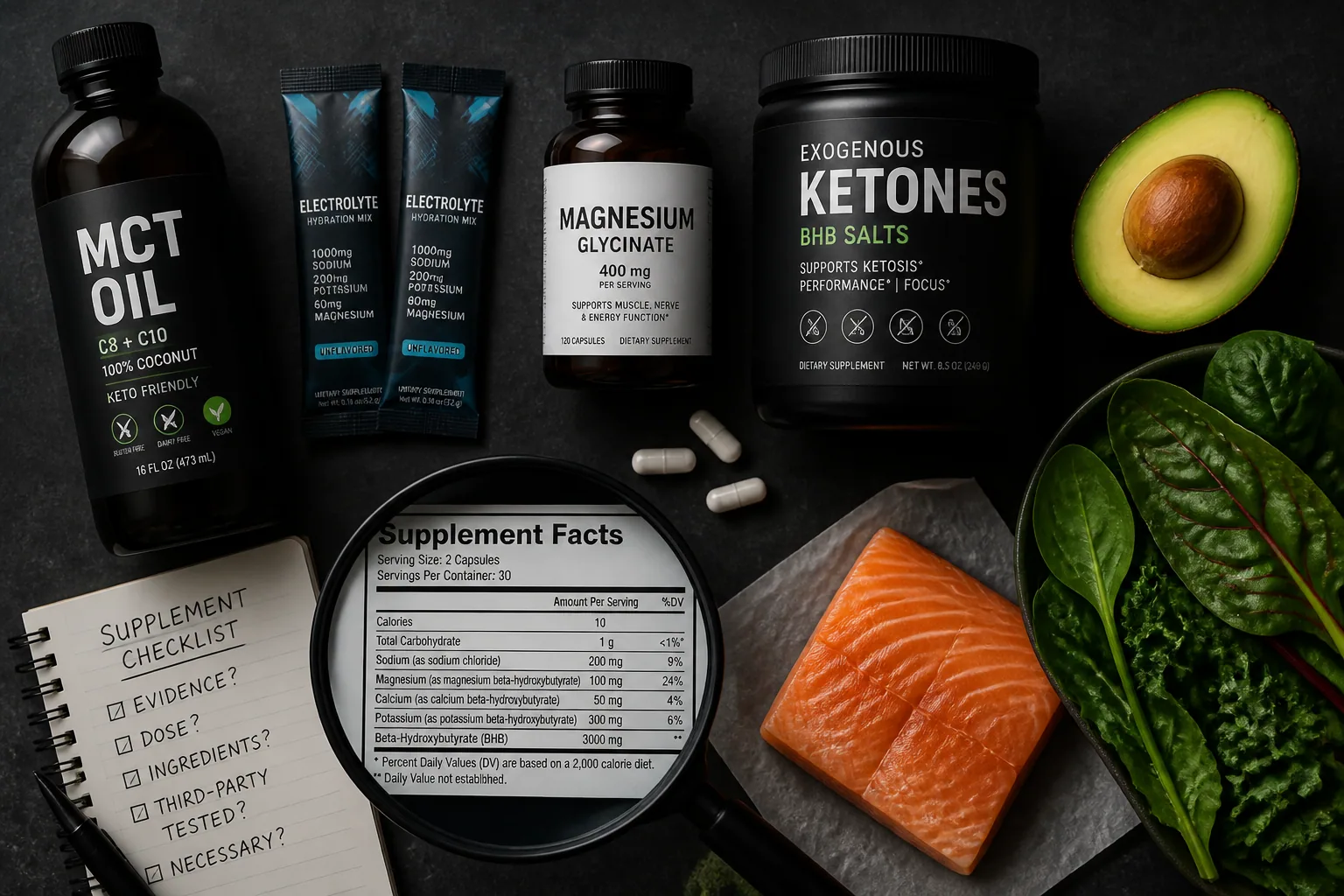
Best Keto Supplement Strategy: What to Take and What’s Just Marketing Drama
Keto supplements can be genuinely useful, but the shelf is also full of expensive shortcuts, vague promises, and products that do little more than lighten your wallet. If you already know the basics of ketogenic eating, the real question is not whether supplements exist, but which ones actually solve a problem. The short version is simple: food comes first, electrolytes matter more than most people think, and a few targeted tools can help in specific situations such as keto induction, hard training, heavy sweating, or low food variety. Everything else deserves a harder look.
Why Keto Supplements Feel So Confusing Right Now
The confusion comes from the fact that keto supplements are marketed for very different goals at once. Some products promise faster fat loss, others promise mental clarity, endurance, appetite control, or easier adaptation. The problem is that raising blood ketones is not the same thing as improving real-world outcomes. A supplement can change a lab number and still not make you feel or perform better in a meaningful way. That is why the most useful keto strategy is evidence-aware rather than hype-driven.
Research on exogenous ketones shows this gap clearly. A meta-analysis of 30 studies and 408 participants found that ketone supplements significantly increased blood beta-hydroxybutyrate, lowered glucose, and slightly increased insulin in healthy non-athletic people, but the effects varied by dose and timing https://www.sciencedirect.com/science/article/pii/S1744388123000555 In other words, they can move the biochemical needle, but the practical payoff depends on what you are trying to achieve.
The Food-First Rule: What Supplements Can and Can’t Do
A well-formulated keto diet already covers most of what you need. That is especially true for protein, fat, and the bulk of micronutrients if you are eating a varied menu of meat, fish, eggs, non-starchy vegetables, dairy if tolerated, nuts, seeds, and healthy fats. Supplements are best used to fill a gap, not to replace a missing diet structure. If your meals are chaotic, your carb intake is inconsistent, or you are constantly guessing at labels, the first win is usually better food selection, not a larger supplement stack.
That is also where a practical tool can help. If your biggest challenge is simply figuring out what fits, a scanner like Keeto - Keto Made Easy can make shopping much easier by showing net carbs instantly and helping you stay within your daily carb budget: https://findthe.app/keeto-5m0vbj. That kind of support often saves more frustration than any capsule or powder.
Exogenous Ketones Explained: BHB Salts vs Ketone Esters
Exogenous ketones are supplements that raise ketone levels from outside the body. The most common versions are beta-hydroxybutyrate, or BHB, salts and ketone esters. BHB salts are usually bound to minerals like sodium, potassium, calcium, or magnesium. Ketone esters deliver ketones without the same mineral load, which is one reason they are often more expensive and less pleasant tasting. The practical tradeoff is easy to remember: salts are more available and more affordable, while esters are more concentrated and cleaner in terms of electrolyte burden.
Safety and tolerability matter here. A 28-day randomized, double-blind trial in healthy adults found that up to 25 g/day of the ketone ester BH-BD was safe, with no clinically meaningful changes in vital signs or labs, and it significantly raised blood ketones one hour after ingestion with breakfast https://pmc.ncbi.nlm.nih.gov/articles/PMC8234448/ That supports the idea that ketone esters can reliably raise ketones, but it does not automatically mean they are necessary for most keto eaters.
There is also the cost and tolerability reality. Reviews note that ketone salts add a meaningful mineral load, especially sodium, and may cause gastrointestinal upset, while esters avoid the mineral issue but are costlier and can be harder to tolerate or obtain https://pmc.ncbi.nlm.nih.gov/articles/PMC10708260/
Do Exogenous Ketones Actually Improve Energy, Focus, or Performance?
Sometimes, but not consistently. A study in recreational male distance runners compared about 22 g versus 44 g of beta-hydroxybutyrate plus MCT against placebo and found dose-dependent rises in blood beta-hydroxybutyrate and a pre-exercise cognitive boost, but no improvement in exercise performance or perceived exertion https://nutritionandmetabolism.biomedcentral.com/articles/10.1186/s12986-020-00497-1 That is a good example of why exogenous ketones are not a magic athletic upgrade. They may help some people feel sharper or more stable, yet that does not necessarily translate into faster running, better lifting, or easier fat loss.
For experienced keto users, the most honest way to think about exogenous ketones is this: they may be situational tools for a narrow set of goals. They are more plausible during the early adaptation phase, before a workout where you want a subjective energy boost, or in specific cognitive-demand scenarios. They are much less compelling as an everyday wellness staple.
MCT Oil and MCT Powder: Fast Fuel or Overhyped Shortcut?
Medium-chain triglycerides are one of the more legitimate keto-supportive supplements because they are metabolized differently from longer-chain fats and can increase ketone production. But the type of MCT matters. Research suggests that C8, or caprylic acid, produces a much stronger ketone response than coconut oil or mixed C8-C10 blends, and doses around 15 to 20 g of C8, roughly 17 to 22 mL, are practical if tolerated https://pmc.ncbi.nlm.nih.gov/articles/PMC8650700/
The downside is gastrointestinal drama. In an early keto induction study, participants taking 30 mL of MCT oil three times per day had higher beta-hydroxybutyrate than those using sunflower oil, but many experienced GI discomfort, while lower doses were milder https://pmc.ncbi.nlm.nih.gov/articles/PMC5987302/ That pattern matters because MCTs are often sold as if more is always better, when in practice the limiting factor is frequently stomach tolerance.
If you use MCTs, treat them like a tool, not a requirement. They can be useful for breakfast coffee, pre-workout fuel, or a temporary bridge during the early weeks of keto. They are less useful if you already feel good, have stable energy, and do not want to spend money chasing a mild ketone bump.
Electrolytes on Keto: When Sodium, Potassium, and Magnesium Matter Most
Electrolytes are the most underrated keto supplement category because many of the classic early keto complaints are really fluid and mineral issues. On a well-formulated ketogenic diet, average starting ranges are often estimated at about 3,000 to 5,000 mg sodium, 3,000 to 4,000 mg potassium, and 300 to 500 mg magnesium per day https://www.virtahealth.com/faq/sodium-potassium-magnesium-ketogenic-diet These are not universal targets, but they are a useful starting point, especially if you are in the adaptation phase or sweat heavily.
If you feel headaches, fatigue, dizziness, cramps, or a sense that your workouts suddenly got harder, sodium is often the first thing to assess. Potassium and magnesium can matter too, but sodium depletion is common when carbohydrate intake drops and water balance shifts. Heavy sweaters, endurance athletes, people in hot climates, and anyone doing strict keto while training hard may benefit the most from intentional electrolyte support.
Magnesium, Omega-3s, Fiber, and Other Useful Supports
Magnesium deserves special mention because low intake is common and symptoms can be subtle. Sleep problems, constipation, muscle tightness, and cramps are all reasons some keto readers experiment with magnesium glycinate, citrate, or similar forms. The key is not to assume that every symptom is magnesium-related, but it is reasonable to view magnesium as one of the more sensible and low-drama additions to a keto routine.
Omega-3 fatty acids can also be useful, especially when keto is built around fatty foods but not necessarily the right fatty foods. In a study of overweight males following a ketogenic Mediterranean diet, supplementing with EPA and DHA for four weeks improved triglycerides, insulin sensitivity, and inflammatory markers beyond the diet alone, without harming cholesterol profile https://pmc.ncbi.nlm.nih.gov/articles/PMC4344614/ That makes omega-3s a particularly rational choice if your diet is light on fatty fish.
Fiber is another category where the internet often gets weird. Keto does not mean low-fiber by default, but many people still fall short because they reduce fruit, legumes, and some grains without replacing them with enough vegetables, seeds, chia, flax, or other fibrous foods. In therapeutic keto settings, fiber intake has often been very low and constipation is common, while functional fiber such as psyllium can improve outcomes without breaking ketosis https://journals.sagepub.com/doi/10.1177/1941406411422253 More broadly, RCT evidence in constipation shows that more than 10 g/day of soluble fibers such as psyllium or pectin over at least four weeks can improve stool frequency and consistency https://pmc.ncbi.nlm.nih.gov/articles/PMC9535527/?em.eref=xtQ4V
When Supplements Make the Most Sense: Keto Flu, Workouts, Heavy Sweating, and Vegetarian Keto
The highest-value keto supplement scenarios are usually the ones where a specific problem is easy to identify. During keto induction, electrolytes and maybe MCT can help with energy, headaches, and the transition period. If you train hard, especially endurance work, sodium and sometimes MCT may be helpful. If you sweat heavily, sodium and potassium rise in priority. If your diet has low variety or you avoid animal foods, magnesium, omega-3s, B12, iron, zinc, or iodine may become more relevant depending on your food choices and labs.
Vegetarian or mostly plant-based keto can work, but it takes more planning. That is because several of the most common food sources of key micronutrients are reduced at the same time as carb intake is reduced. In that setting, supplements are less about optimization and more about preventing avoidable gaps.
What’s Mostly Marketing Drama on the Keto Shelf
The marketing drama usually starts when a product promises too many outcomes at once. Be skeptical of blends that claim rapid fat loss, appetite control, mental clarity, endurance, and metabolic rescue from a single scoop. If a supplement sounds like it replaces a whole diet, it probably does not. The same caution applies to products with inflated ketone claims, vague proprietary blends, or ingredients listed in tiny amounts that are unlikely to matter.
Another common red flag is treating any rise in blood ketones as proof of superiority. Higher ketones are interesting, but they are not automatically equal to better health, better fat loss, or better performance. Sometimes they just mean you paid more for a biochemical response with little practical value.
Risks, Side Effects, and Supplement Interactions to Watch
The most common keto supplement side effects are digestive. MCT oil can cause cramping, urgency, or loose stools. Exogenous ketones may cause nausea or GI discomfort. Magnesium can be too loosening for some forms and doses. Electrolyte products can overshoot sodium, potassium, or magnesium if you are already getting enough from food. Even helpful supplements become a problem if the dose is too aggressive.
There are also medical cautions. People with kidney disease, uncontrolled hypertension, heart failure, or those taking medications that affect fluid balance, blood pressure, or potassium should be careful with electrolyte supplementation. Anyone on diabetes medications should be especially cautious, since ketone changes and dietary carbohydrate restriction can alter glucose control. The same goes for people who are pregnant, breastfeeding, or managing a chronic condition where nutrition changes should be supervised.
How to Read a Keto Supplement Label Without Getting Fooled
A good label should help you answer four questions quickly: what is the active ingredient, how much of it is there, how is it dosed, and does the product have any quality verification. For example, if a ketone product does not clearly tell you the amount of BHB per serving, that is a warning sign. If an MCT product does not specify whether it is mainly C8, C10, or a blend, the response you get may be less predictable. If an electrolyte mix hides behind a proprietary blend, you may not know whether the actual amounts are useful or trivial.
Check the sweeteners, fillers, and flavor systems too. Some are fine, some are not. If you are sensitive to sugar alcohols, certain gums, or strong artificial sweeteners, they may turn a theoretically good product into a stomach problem. Ingredient quality matters more than glamorous packaging.
Third-Party Testing, Certifications, and Quality Markers That Matter
Because supplements are not regulated like prescription drugs, third-party testing is one of the most practical trust signals. Look for evidence that the product has been independently tested for purity and label accuracy. Certifications similar to NSF Certified for Sport or Informed Choice are especially useful if you are an athlete or simply want extra assurance about banned substances and contamination risk. Batch testing, transparent COAs, and clear manufacturing standards are all better than vague claims about being premium or professional grade.
This is one of the few areas where being boring is good. The most trustworthy products tend to make fewer dramatic promises and more concrete quality claims.
A Smart Keto Supplement Stack by Goal: Adaptation, Performance, Recovery, and Symptom Relief
If your goal is keto adaptation, start with electrolytes and consider small amounts of MCT if your stomach tolerates it. If your goal is performance, prioritize hydration, sodium, and real pre-training nutrition before reaching for exogenous ketones. If your goal is recovery, magnesium and omega-3s may be more sensible than ketone drinks. If your goal is symptom relief, identify the symptom first, then match the tool to it rather than buying a generic keto bundle.
A minimalist stack often beats an expensive one. For many experienced keto eaters, the best setup is simply adequate sodium, enough magnesium, food-based potassium, maybe omega-3s if fish intake is low, and fiber if constipation is an issue. Exogenous ketones and larger MCT doses are optional tools, not foundation pieces.
When to Skip Supplements and When to Talk to a Health Professional
Skip supplements when your diet is already working, your energy is stable, your digestion is fine, and you are not training or sweating in ways that increase your needs. Also skip the urge to layer multiple products at once just because they are labeled keto. More is not better if the problem is actually meal composition, sleep, stress, or electrolyte intake.
Talk to a healthcare professional before adding supplements if you have kidney issues, cardiovascular disease, diabetes treated with medication, a history of electrolyte problems, or any condition where carbohydrate restriction is already medically relevant. This is especially important if you are considering significant sodium, potassium, or exogenous ketone use. The right guidance can prevent a lot of expensive guesswork.
Bottom Line: Spend on What Solves a Real Problem
The best keto supplement strategy is not to collect the longest list, but to solve the clearest problem. Electrolytes are often the highest-value starting point. Magnesium, omega-3s, and fiber are sensible supports for many people. MCT can be useful if you tolerate it. Exogenous ketones may have niche value, but they are rarely essential and often overpriced for what they deliver. If you want a simpler, more effective keto routine, spend first on food quality, label clarity, and the few supplements that address a real need rather than a marketing story.