An Eye-Opening Guide to Keto Tweaks: Small Changes That Can Unlock Better Results
If you have already lived in the beginner phase of keto, you know the basics are not usually the problem anymore. You can keep carbs low, build meals around protein and fat, and stay in ketosis most days. The harder question is what to adjust when progress slows, energy dips, or your labs do not look quite as good as you hoped. That is where keto tweaks come in.
The goal here is not to complicate keto for the sake of it. It is to make small, evidence-informed changes that may improve satiety, muscle retention, energy, performance, and markers like LDL, HDL, triglycerides, or glucose control. Some tweaks help a lot. Others create extra stress without giving much back. The trick is knowing which is which.
Why Keto Tweaks Matter After the Beginner Phase
Early keto wins are often dramatic because the diet is so different from the standard high-carb pattern. Appetite drops, water weight falls, meals feel simpler, and the structure itself can be enough to create results. But once you are adapted, the same broad approach may stop being enough to move the needle.
At that stage, small variables matter more. Protein may need adjustment if you are training hard or trying to preserve muscle. Fat quality may need refining if your cholesterol markers are rising. Snack timing may influence your workday energy or workout output. Even a short higher-carb phase may help certain people break a plateau, though it is not automatically a good idea for everyone.
Research suggests that keto can remain effective beyond basic weight loss. In a randomized trial of obese men, a high-protein ketogenic diet reduced energy intake, lowered hunger, and produced greater weight loss than a high-protein medium-carb non-ketogenic diet over four weeks, with about 6.34 kg lost versus 4.35 kg in the comparison arm. That is a reminder that fine-tuning can matter, especially when appetite control is part of the outcome you care about [https://www.sciencedirect.com/science/article/pii/S0002916523234358
The Difference Between Simplicity and Precision on Keto
Simplicity is one of keto’s biggest strengths. Fewer food decisions can mean better adherence, less snacking, and easier meal planning. But simplicity is not the same thing as optimal. A person trying to maintain body composition while lifting weights will not necessarily need the same setup as someone using keto mainly for appetite control.
Precision means changing one thing on purpose, then watching what happens. It is not about obsessing over every gram forever. It is about recognizing that a stable pattern can still be improved. For example, if you feel flat during workouts, you might test slightly more protein. If your LDL rises after months of heavy cream, butter, and bacon, you might shift toward olive oil, avocado, nuts, seeds, or fatty fish. If your afternoons crash, you might stop random grazing and instead plan a deliberate snack window.
The right balance depends on your goal. For body composition, appetite, and performance, a more exact approach can be helpful. For stress reduction and compliance, too much precision can backfire. The best keto plan is usually the one that stays effective without becoming exhausting.
Adjusting Fat-to-Protein Ratios for Muscle Retention and Satiety
Many people think keto is mostly about adding fat, but experienced keto followers often benefit from rethinking protein first. If protein is too low, satiety can suffer, recovery may lag, and muscle retention becomes less certain during weight loss. If protein is too high for someone chasing deep ketosis, ketone readings may fall a bit, though that does not automatically mean the diet is failing.
Evidence in active people suggests ketogenic diets can preserve lean tissue better than many expect. A systematic review and meta-analysis found that physically active people on ketogenic diets lost about 2.3 kg of fat mass on average while losing only around 0.3 kg of fat-free mass, compared with about 0.7 kg gain in controls when calorie balance favored a deficit [https://pmc.ncbi.nlm.nih.gov/articles/PMC8180141/ That is a useful reminder that keto does not inherently destroy muscle when protein and training are handled well.
In resistance-trained athletes, another systematic review and meta-analysis found that ketogenic diets did not impair muscle hypertrophy when protein intake and energy intake were sufficient, especially over timeframes of roughly eight weeks or more. In other words, keto can support muscle goals, but it is not magical. You still need enough total calories, enough amino acids, and a sensible training program [https://pubmed.ncbi.nlm.nih.gov/36231929/
If you are hungry between meals, the first tweak to consider is often more protein at meals rather than more fat. Protein tends to do more work for satiety. Fat adds energy density, but it is not always the best lever for appetite control. A high-protein ketogenic pattern can be especially helpful when your goal is to lose fat without feeling constantly deprived.
A practical rule is to test protein in a targeted way. Increase it modestly for one to two weeks, keep carbs stable, and avoid piling on extra fat just because protein went up. Watch hunger, training performance, and body weight trends. If you feel better and your waistline still moves in the right direction, that is a strong sign the ratio is helping.
Choosing Saturated vs Unsaturated Fats and What It May Mean for Cholesterol
Fat quality is one of the most important keto tweaks because it can change the conversation from ketone production to cardiovascular markers. Not all fats behave the same way. Some people can eat a very saturated-fat-heavy keto plan and still show acceptable labs. Others see LDL or total cholesterol rise sharply.
A randomized five-day feeding study found that ketogenic diets rich in polyunsaturated fats produced greater increases in beta-hydroxybutyrate and insulin sensitivity, while total cholesterol and LDL rose significantly in the saturated fat group [https://pubmed.ncbi.nlm.nih.gov/15070924/ That does not mean saturated fat is forbidden, but it does suggest fat source matters more than many keto beginners realize.
A separate four-week randomized controlled crossover trial in healthy normal-weight women found that an isocaloric ketogenic low-carb high-fat diet significantly increased LDL cholesterol compared with a recommended control diet, even though body weight changed minimally. The broader point is that keto can improve some markers while worsening others, so you need to look at the whole picture [https://pmc.ncbi.nlm.nih.gov/articles/PMC8001988/
A 2023 meta-analysis in normal-weight adults found that very low-carb ketogenic diets increased total cholesterol by about 1.47 mmol/L and LDL-C by about 1.08 mmol/L compared with control diets, while HDL-C also increased and triglycerides did not change significantly [https://pubmed.ncbi.nlm.nih.gov/36931263/ That is a classic keto trade-off: better triglycerides and HDL for many people, but a possible rise in LDL that may require action.
If your LDL climbs, a useful tweak is to reduce the reliance on saturated fats such as butter, coconut oil, heavy cream, and large amounts of fatty processed meats. Instead, shift more of your keto fat intake toward olive oil, avocado, nuts, seeds, and fatty fish. This is often a low-drama change that preserves ketosis while potentially improving the lipid profile.
Snack Timing Strategies to Avoid Energy Crashes
People often think the keto answer to energy dips is simply to eat less or add more fat. But timing can matter too. Some people do better with three solid meals. Others feel stronger with one strategically placed snack. The key is to stop random grazing and make snacking intentional.
Evidence and practical keto experience both suggest that a mid-morning snack, a mid-afternoon snack, or a pre-workout snack can help smooth out energy dips, especially when the snack is low in net carbs, moderate in protein, and built around healthy fats. The idea is to support energy without repeatedly nudging insulin upward throughout the day [https://shunketo.com/article/when-to-eat-snacks-on-keto
That said, snacking is not automatically good. Frequent grazing can turn a controlled eating pattern into a constant feeding pattern, which may make ketosis harder to maintain for some people and can simply become a habit rather than a need. If you are reaching for snacks because of boredom, stress, or poor meal structure, the better fix may be to improve meals, not add more food windows.
A useful experiment is to ask whether your crash is actually predictable. If it happens every day around 3 p.m., a deliberate snack may help. If it happens randomly, check sleep, hydration, electrolytes, and total calorie intake first. Sometimes the issue is not food timing at all.
If you do snack, make it small and purposeful. Think of it as a tool for performance or adherence, not an invitation to eat continuously. The best snack is the one that helps you stay stable without interfering with dinner or bedtime hunger.
Can Carb Cycling or High-Carb Days Break a Keto Plateau?
This is where keto becomes more personal and more controversial. For some people, especially those who train hard or have been dieting aggressively for a long time, a structured higher-carb day may help with adherence, glycogen replenishment, or mental relief. For others, it just restarts cravings and makes getting back into ketosis harder than expected.
The evidence for carb cycling inside strict keto is not as strong or as universal as many social media posts suggest. What is clear is that keto can reduce hunger and energy intake, which helps explain why it works for weight loss in the first place. If a higher-carb day leads to renewed appetite, your weekly calorie intake may climb enough to erase any short-term advantage [https://www.sciencedirect.com/science/article/pii/S0002916523234358
For some endurance athletes or resistance trainees, a temporary carb increase around a demanding training block can be useful. But this is a trade-off, not a free upgrade. You may see better training output and better mood, but less time in ketosis and potentially more hunger the next day. If the goal is strict therapeutic ketosis, carb cycling is usually a poor fit. If the goal is long-term adherence or performance, it might be worth a carefully controlled trial.
The simplest approach is to define the reason before the experiment. Are you trying to break a plateau, improve workouts, or make keto easier to sustain socially? Each answer suggests a different strategy. If you cannot name the reason, the tweak is probably premature.
What the Evidence Really Says About Popular Keto Adjustments
The biggest lesson from the research is that keto tweaks are not one-size-fits-all. More protein can improve satiety and help preserve muscle. A shift toward unsaturated fats may help some lipid markers. Snack timing can reduce energy crashes. Carb cycling may help a subset of people, but it is not universally helpful.
What matters most is matching the adjustment to the outcome. If you want appetite control, protein and meal structure are probably the most powerful levers. If you want better blood markers, fat quality becomes more important. If you want performance, timing and total energy intake matter. If you want convenience, fewer tweaks may actually be better.
A lot of keto advice focuses too much on chasing deeper ketone numbers. But nutritional ketosis is only one marker, not the goal itself. The real question is whether the diet is helping you feel, function, and look better while supporting your health data. A plan that slightly lowers ketones but improves labs and adherence may be superior to a more rigid plan that looks cleaner on paper.
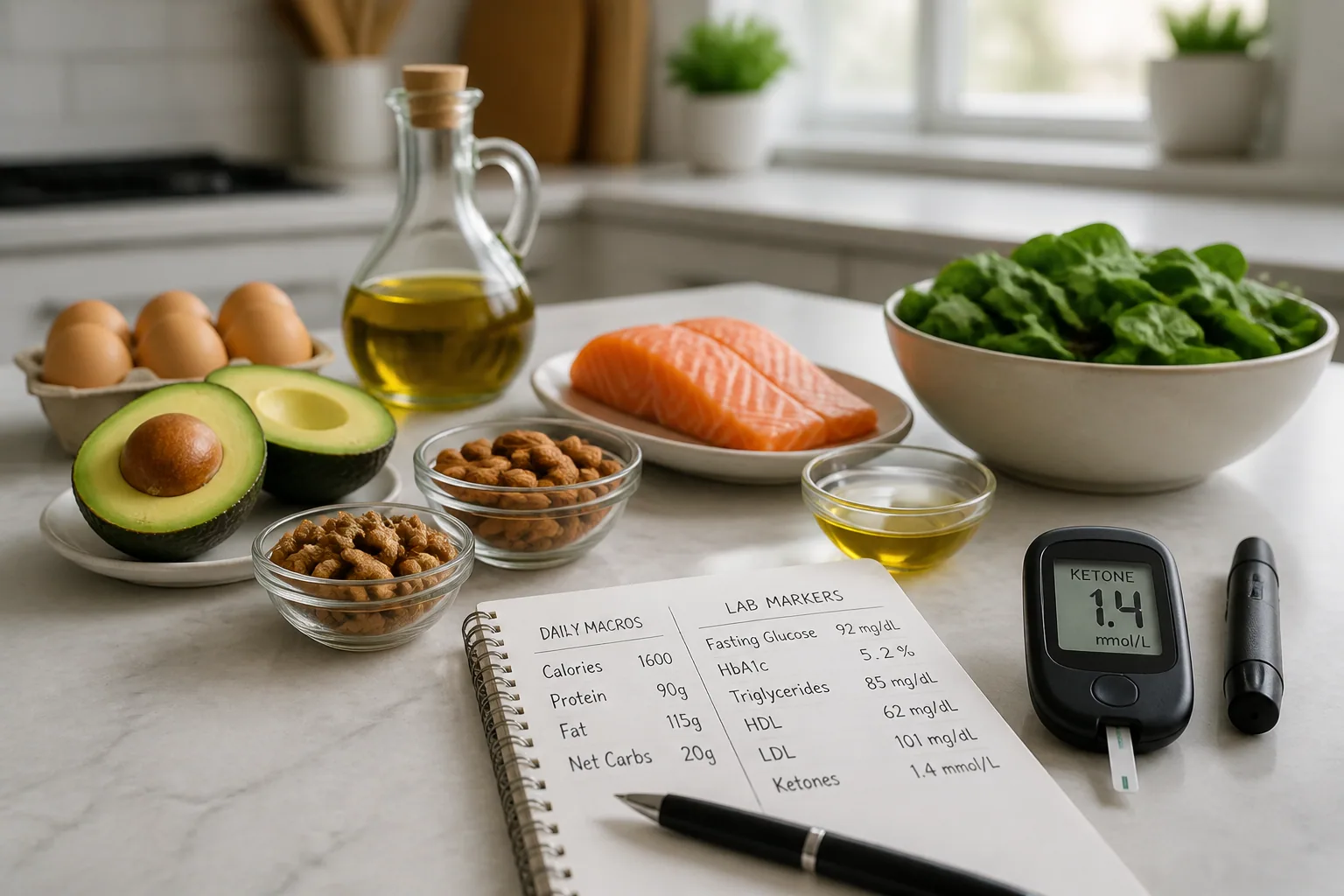
Even monitoring tools reflect this practical mindset. If you want a more objective readout, blood ketone meters and glucose meters can help you identify patterns. A study comparing blood meters found excellent reliability for beta-hydroxybutyrate, with an intraclass correlation around 0.97, and good performance for detecting nutritional ketosis [https://pmc.ncbi.nlm.nih.gov/articles/PMC7791747/ Breath acetone tools are also being developed, offering a less invasive way to estimate ketosis, although they still have limitations [https://pmc.ncbi.nlm.nih.gov/articles/PMC7835940/
How to Track Results with Labs, Ketone Meters, and Body Composition Data
If you are going to make keto tweaks, you need a way to know whether they work. Otherwise, every change turns into a guess. The best tracking system combines objective data with subjective feedback.
For objective data, bloodwork matters most. At minimum, watch LDL-C, HDL-C, triglycerides, fasting glucose, and if possible fasting insulin or HbA1c. If you are testing fat swaps, lipid markers are especially important. If you are adjusting carbs or protein, glucose and insulin-related markers can help reveal whether your strategy is improving metabolic control or not.
Body composition adds another layer. Scale weight alone can be misleading, especially if you are gaining muscle or retaining water. Progress photos, waist measurements, and if available DEXA or bioimpedance trends can tell you whether you are losing fat while preserving lean mass. That is particularly important when testing protein changes or carb cycling.
Ketone meters can be useful, but they should be used wisely. It is tempting to chase higher numbers, yet the best number is not always the highest one. What matters is whether the number aligns with your goal. A modest ketone level with excellent hunger control and good training may be better than very high ketones with fatigue and poor adherence.
Subjective markers matter too. Ask yourself whether you feel more stable between meals, whether cravings are reduced, whether workouts feel better, and whether sleep has changed. In the high-protein ketogenic trial, satiety improved and hunger dropped significantly, which shows why subjective feedback is not soft data. It often explains whether a plan is sustainable [https://www.sciencedirect.com/science/article/pii/S0002916523234358
If grocery simplicity is part of your tracking process, a tool like Keeto - Keto Made Easy can reduce friction by scanning products, estimating net carbs, and helping you stay within your daily carb budget. It is especially useful when you are testing food swaps and do not want to do constant label math. You can find it here: https://findthe.app/keeto-5m0vbj
Common Keto Tweaking Mistakes That Backfire
The first mistake is changing too many things at once. If you raise protein, switch fats, add snacks, and test carb cycling in the same month, you will not know what actually helped. You may also end up feeling like keto is failing when the real issue is simply too much experimentation.
The second mistake is assuming more fat always helps. For experienced keto followers, extra fat is often the least necessary macronutrient to add. If fat loss is the goal, excess fat can slow progress because it raises energy intake without improving satiety as much as protein can.
The third mistake is ignoring labs. If you feel great but LDL is climbing every time you increase saturated fat, that is not a detail you can dismiss. Likewise, if you are chasing ketones while your workouts suffer and you feel hungry all the time, the strategy may be too strict for your actual life.
The fourth mistake is confusing short-term scale changes with real progress. A higher-carb day can move water weight fast. A change in sodium intake can do the same. That is why body composition, waist measurements, and weekly trends matter more than one morning weigh-in.
The fifth mistake is turning keto into a full-time lab experiment. Data should support decision-making, not create anxiety. If every meal becomes a test, the diet may become mentally expensive, even if it looks optimized on paper.
Real-World Examples of Smart Keto Fine-Tuning
Consider the lifter who has been on keto for a year and is no longer losing fat. He trains four times per week, feels okay in the morning, but fades in the afternoon and is not recovering well. In that case, the best tweak may be a modest increase in protein at breakfast and lunch, rather than more butter in coffee. That change supports satiety and muscle retention while making it less likely he will overeat later.
Or think about the woman whose triglycerides improved on keto but whose LDL increased substantially after months of heavy cream, cheese, and coconut oil. She may not need to abandon keto entirely. She may simply need to shift toward olive oil, avocado, nuts, seeds, and fish while keeping carbs low enough to maintain ketosis. That is a much more targeted response than quitting the whole approach.
Another example is the busy professional who gets a predictable crash at 3 p.m. and ends up raiding the office snack drawer. For her, an intentional low-carb snack around 2:30 p.m. may prevent the crash and preserve dinner appetite. The difference is not simply eating more. It is timing food to support her actual day.
Then there is the athlete who feels flat after several weeks of strict keto and cannot push quality workouts. Depending on the sport and goal, a carefully planned higher-carb day may improve training quality. But the experiment should be narrow and deliberate, not an excuse for a full cheat weekend. The point is to test whether performance improves enough to justify the trade-off.
How to Test One Change at a Time Without Getting Overwhelmed
The easiest way to get overwhelmed is to treat every tweak like a permanent identity shift. Do not do that. Instead, treat changes like experiments with a start date, end date, and clear outcome.
Pick one goal first. For example: better satiety, lower LDL, fewer afternoon crashes, better gym performance, or improved body composition. Then choose one corresponding tweak. Increase protein. Swap saturated fats for unsaturated fats. Add a planned snack. Test a higher-carb day once per week. But only one at a time.
Next, define what success looks like. For satiety, success might mean going from constant hunger to comfortable meals with no urge to snack. For labs, it might mean LDL moving down over the next 8 to 12 weeks. For performance, it could mean better training output or less perceived exertion. If you do not define success, you will interpret results based on mood.
Give the change enough time to matter, but not so long that you drift without review. Two to four weeks may be enough for appetite and energy patterns. Labs usually need a longer window. Body composition trends can be reviewed monthly. Keep notes, keep it simple, and avoid making the next adjustment until you have learned something from the first.
The goal is not to micromanage keto forever. It is to build a version of keto that is more personal, more sustainable, and better aligned with your body. Once a tweak proves useful, keep it. If it does not, drop it without regret.
Final Takeaways: Which Keto Tweaks Are Actually Worth It?
The most worthwhile keto tweaks are the ones that improve results without making your life much harder. For many experienced keto followers, the highest-value changes are straightforward: increase protein when hunger or muscle retention is an issue, shift toward unsaturated fats when lipid markers are a concern, and use planned snack timing when energy dips are predictable.
Carb cycling and higher-carb days are more situational. They may help some athletes or long-term dieters, but they can also derail appetite control and ketosis. Use them only when there is a clear reason to test them.
The evidence points to a practical conclusion. Keto works best when it is adjusted with intention, not emotion. If you measure the right outcomes, avoid changing everything at once, and focus on the levers that match your goal, small tweaks can unlock much better results than rigid perfection ever will.